Showing posts with label opec. Show all posts

Monday, April 23, 2018

Donald Trump vs. OPEC

As of last week's price report from the US Energy Information Administration, the average US pump price of regular gasoline has gone up by $0.19 per gallon since the first week of March. That reflects normal seasonal factors but is mainly due to a jump in international crude oil prices of around $8 per barrel in the same period. President Trump's accusation that OPEC is responsible for rising fuel costs shouldn't have surprised anyone:


Last Friday's tweet prompted a quick retort from Saudi Oil Minister al-Falih: "there is no such thing as an artificial price." It doesn't require a deep study of OPEC or economics to conclude that, however phrased, Mr. Trump's remark was closer to the truth than his chosen foil's reply on this issue.

The more interesting question is whether OPEC's very intentional efforts in conjunction with Russia to tighten oil markets are actually harmful to US interests at this point. Could our instinctive reaction to rising oil prices be based on outdated thinking from the long era of perceived scarcity that began with the oil crises of the 1970s and ended, more or less, with this decade's US shale boom?

Let's recall that less than four years ago oil prices fell below $100 per barrel as the rapidly growing output of US shale, or "tight oil" production from wells in North Dakota and South and West Texas created a global oil surplus and rising oil inventories. Oil prices went into free fall around the end of 2014--eventually bottoming out below $30 per barrel--after Saudi Arabia and the rest of OPEC abandoned their output quotas and opened up the taps.

That response to the shale wave began the only period in at least four decades when the oil market could truly be characterized as free, when all producers essentially pumped as much oil as they desired. Some referred to it as OPEC's "war on shale."

However, those conditions proved to be just as hard on OPEC as on US shale producers, and by the end of 2016 OPEC blinked. The output agreement between OPEC's members and a group of non-OPEC producing countries led by Russia has been in place over a year, and it has taken this long to dry up the excess inventories that had accumulated in 2015-16. OPEC's quota compliance--historically mediocre at best--was aided significantly by geopolitical factors affecting several producers, notably the ongoing implosion of Venezuela's economy and the oil industry on which it depends.

Given all this, it's fair to say that OPEC has engineered today's higher oil prices, while its leading members contemplate even higher prices. It's much less obvious that this is bad for the US, which now has a vibrant and diverse energy sector and is finally approaching the energy independence that politicians have touted since the late 1970s.

Prior to the shift in the focus of the shale revolution from natural gas to oil, the US was still a substantial net importer of petroleum and its products. In 2010, we imported over 9 million barrels per day more than we exported. That was around half of our total petroleum supply. Today, these figures are under 4 million barrels per day and 20%, respectively.

That means that when the price of oil rises, this is no longer followed by enormous outflows of dollars leaving the US to enrich Middle East and other producers. Something like 80 cents of every dollar increase in the price of oil stays in the US, and in the short run the effect may be even more beneficial as investment in US production steps up in response.

In other words, when oil prices go up and gasoline and diesel prices follow, the main effect on the US economy is to shift money from one portion of the economy to another, rather than the whole economy springing a large leak. What makes that shift challenging is that consumers come out on the short end, while oil exploration and production companies, and to some extent oil refiners, gain.

A useful way to gauge the impact on consumers is to compare one year's prices to the previous year's. When oil prices were falling a few years ago, year-on-year drops of as much as $1.00 per gallon for gasoline (2014-15) put up to $100 billion a year back into the pockets of consumers. That provided a timely stimulus for an economy still recovering from the financial crisis of the previous decade.

As oil prices started to recover last year, these comparisons turned negative. Currently, the average regular gasoline price is $0.31/gal. higher than last year at this time. If gas prices were to stay that much higher than last year's for the rest of 2018, it would impose a drag of about $45 billion on consumer spending. $2.75/gal. is the highest US average unleaded regular price for April since 2014. Although gas is still nearly $1.00/gal. cheaper than it was then, memories tend to be short.

We may be living in a new era of energy abundance, but I am skeptical that our political instincts have caught up with these altered circumstances. The price of gasoline is still arguably the most visible price in America. When it goes up week after week, consumers notice, even in an economy running at essentially "full employment" and growing at 3% per year.

Most of those consumers are potential voters, and this is another election year with much at stake. In that light, I would not expect President Trump to abandon his attack on "artificial prices" for oil, even if it's arguable that the US economy as a whole may not be worse off with oil over $70 instead of below $60 per barrel.


Thursday, January 12, 2017

US Energy Under Trump

  • President-Elect Trump and his appointees plan a major policy and regulatory shift for energy, focusing more on economic benefits and less on environmental impacts.
  • Obama-era regulations most at risk of roll-back are those justified mainly on climate concerns not shared by Mr. Trump and his team.
  • Emissions are still likely to fall in the next four years as shale and renewable energy output grow. 
Next week's presidential inauguration will trigger the biggest policy and regulatory shift for the US energy industry in at least ten years. That's how long it has been since energy policy was set by a Republican president and Congress. Donald Trump is a different kind of Republican, though, and his goal does not seem to be a return to scarcity and high energy prices. What should we expect, instead?

To gauge how sharply the energy polices of the incoming Trump administration will diverge from those of the last eight years, we need to understand what motivates both leaders. The Obama administration's approach was driven by a deep, shared conviction that climate change is the most important challenge the US--and world--faces. The cost of energy and its impact on the economy became secondary concerns, subordinated by the belief that the added cost of climate policies would be offset in whole or part by the benefits of the green investment they unleashed--remember "green jobs"?

We saw this in President Obama's first year in office. Amid a deep recession he worked with Congress to attempt to limit greenhouse gas emissions by means of an economy-wide cap-and-trade system, on which he had campaigned. The House of Representatives passed the Waxman-Markey bill (HR.2454), a veritable dog's breakfast of economic distortions. Yet despite a filibuster-proof majority in the Senate in 2009, Waxman-Markey and every subsequent cap-and-trade bill died there.

That failure set in motion the agenda that the Obama administration has pursued ever since, to achieve via regulations the emissions reductions it could not deliver through comprehensive climate legislation. Last year's publication of the EPA's final Clean Power Plan was a key component of an effort that seems set to continue until just before Inauguration Day.

The transformation of energy regulations under President Obama was dramatic enough that a transition to any Republican administration would be a big change. The transition now in prospect will be even more jarring. Mr. Trump's rhetoric and his choices for key administration positions point to a concerted effort to unravel as many of the Obama-era regulations affecting energy as possible. That isn't just based on philosophical differences over regulation and markets. For President-Elect Trump the economy and jobs are paramount, so the Obama energy regulations must look like an unjustifiable threat to the fossil fuel supplies that still meet 81% of the nation's energy needs.

Despite that, it is unlikely the new administration will go out of its way to target renewable energy or the tax credits that have driven its growth to date. Renewables are becoming increasingly popular with conservatives. However, because Mr. Trump sees climate change as, at best, a secondary issue that may not be amenable to human intervention, his administration's won't put renewables on a pedestal as the Obama administration has done.

The biggest challenge for renewable energy may come from tax reform intended to make US companies and factories more competitive globally and shrink the incentive for them to relocate to lower-tax countries. This appears to be a high priority for the new White House and Congress, and one on which they broadly agree. If corporate tax rates drop, the value of the tax credits renewables enjoy is likely to fall, too, making wind, solar and other such projects less attractive and less competitive.

It remains to be seen how many of the Obama energy regulations can be rolled back. The most recent regulations might be averted through legislation like the Midnight Rules Relief Act, or the REINS Act, both of which would update the Congressional Review Act, a rarely used 1990s law intended to limit what presidents could impose by last-minute executive actions. Other regulations may eventually stand or fall as the courts rule. The stakes are high, particularly for regulations affecting the production of oil and gas from shale by means of hydraulic fracturing and horizontal drilling.

Energy independence was a touchstone of Mr. Trump's candidacy. Despite his campaign's focus on coal, it is fracking, as hydraulic fracturing is more commonly known, that holds the key to achieving that goal in the foreseeable future. It has been the main driver of the growth in US energy production since 2010.

The latest long-term forecast from the US Energy Information Administration (EIA) puts energy independence within reach--in the sense of the US becoming a net exporter of energy--by 2026 or sooner. However, the recent flurry of regulations affecting such things as drilling on federal land, and putting large portions of US waters off-limits for offshore drilling would not have been part of that projection. As EIA Administrator Adam Sieminski remarked at a briefing on the forecast, "If you had policy that changed relative to hydraulic fracturing, it would make a big, big difference to everything that's in here."

That's a key point, because most past notions of energy independence assumed that energy prices would have to be very high to promote lots of efficiency and conservation and stimulate large amounts of expensive new supply. The shale revolution changed that.

However, the global context is also changing. OPEC is attempting to reassert its control over the oil market, with help from non-OPEC countries like Russia. Two years of low oil prices shrank global oil and gas investment budgets by around a trillion dollars, and the International Energy Agency has warned of coming oil price spikes as a result. Forestalling tighter US regulations on fracking and offshore drilling increases the chances that US supplies could grow by enough to balance shortfalls elsewhere and avert much higher prices at the gas pump.

Energy infrastructure is likely to be another focus of the new administration, because the economic and competitive benefits of abundant energy will be diluted if, for example, Marcellus and Utica shale gas or Bakken and Permian Basin shale oil have to be exported because domestic customers don't have access to them.

That suggests an early effort to reverse decisions by the current administration to block the construction of various pipelines, starting with the Keystone XL pipeline and more recently the Dakota Access Pipeline. That will force new confrontations with activists and environmental organizations that have raised their game to a new level in the last eight years.

Such opposition would likely intensify if the new administration sought to withdraw the US from the Paris climate agreement, which recently went into effect, or submitted it for review by the US Senate as a treaty. But it's not clear that a big change in direction would require leaving Paris.

The US commitments at Paris, like those of the other signatories, were voluntary and non-binding. For that matter, recent shifts in US energy consumption and especially electricity generation have put the US in a good position to meet its initial Paris goals with little or no additional effort, as noted by outgoing Energy Secretary Moniz. The Paris Agreement will only become a major point of contention if President Trump chooses to make it one.

In his list of the top energy stories of 2016, fellow blogger Robert Rapier rated the election of Donald Trump ahead of the OPEC deal and many other important events of the year, based on its likely impact on "every segment of the US energy industry." In retrospect that was equally true of Barack Obama's election in 2008. The shift we are about to experience on energy will be that much sharper, because President Obama and President-Elect Trump both set out to make big changes to the status quo for energy, in opposite directions. We shouldn't miss one important difference, however.

The course that Barack Obama's administration followed on energy was largely predictable from the start, because it was based on openly and deeply held beliefs about energy and the environment. Donald Trump's well-known preference for deals over dogma sets up the prospect of some big surprises, in addition to what we can already anticipate.

Thursday, December 01, 2016

Some Thoughts on the OPEC Deal

From one perspective, the agreement struck by OPEC's members in Vienna yesterday marks the cartel's return to the business of managing the oil market, after a two-year experiment with the free market. Viewed another way, however, it represents what Bloomberg's Liam Denning termed a "capitulation of sorts"--an admission of defeat in the price war that OPEC effectively declared in late 2014. Yet while more than a few bottles of champagne were likely consumed around the US oil patch last night, this doesn't necessarily mean a return to the way things were just a few years ago, when oil prices seemed to cycle between high and higher.

We should look carefully to assess the real results of OPEC's attempt to squeeze higher-cost producers out of the market. On that criterion it was successful: hundreds of billions of dollars in oil exploration and production projects have been canceled or deferred, mainly by Western oil companies and other non-OPEC producers. If this was the 1990s, and oil still lacked viable competition, especially in transportation, and if demand could be relied on to continue growing steadily, the strategy OPEC has just ended would have set up many years of strong and rising prices for its members.

Yet OPEC miscalculated in at least two ways. First, as many experts have noted, it correctly identified US shale producers as the new marginal suppliers to the market but failed to anticipate how quickly these companies could respond to a dramatic price cut. Having squeezed their vendors and spread best drilling practices at warp speed, shale producers are now positioned to resume growing both output and profits as oil prices trend north of $50 per barrel--undermining the effect of OPEC's cuts as they go.

Its other miscalculation was in the capacity of the cartel's members--even some of the strongest--to endure the austerity that protracted low prices would bring. Although many of these countries have among the world's lowest-cost oil reserves to find and produce, it turned out that their effective cost structures, including transfers to their national budgets, were really no lower than those of the Western oil majors that have also struggled for the last two years.

A great deal of attention will now be focused on how OPEC implements its output cuts, and whether its non-OPEC partners like Russia live up to their end of the bargain. The history of OPEC deals suggests that is only prudent. However, a new factor is at work here that adds extra uncertainty to the outcome, even if OPEC miraculously achieved 100% compliance.

OPEC's formula for sustaining comfortably high (for them) oil prices has always relied on an economic paradox: They restrain their own, low-cost production and shift the marginal source of supply--the last barrel that sets the price--to make room for non-OPEC producers with much higher costs. That allows OPEC's members to collect outsize returns on their own production, what economists call "rent".

This time, though, at least until the looming gap in supply created by all that foregone investment in deepwater platforms and oil sands facilities starts to bite, the cost of the marginal barrel from shale won't be that much higher than OPEC's marginal cost. And all of this will be playing out in the context of historically high inventories. If that's not a recipe for volatility, I don't know what is.

Tuesday, October 11, 2016

Is the US Really Energy Independent?

Toward the end of Sunday night's presidential debate I was startled to hear Secretary Clinton reply to an audience question by stating, "We are now for the first time ever energy-independent." If the price of oil were $100, rather than $50, that might have constituted a "Free Poland" moment, recalling President Ford's famous gaffe in a 1976 debate.

This point is likely to get lost in the dueling fact-checking of both candidates' numerous claims, but while the overall US energy deficit has fallen from about a quarter of total consumption (net of exports) in 2008 to just 11% in 2015, we still import 8 million barrels per day of oil from other countries. That includes over 3 million barrels per day from OPEC, a figure that has been growing again as US oil and gas drilling slowed following the collapse of oil prices in late 2104.

Oil has always been at the heart of our notions of energy security and energy independence, because it is our most geopolitically sensitive energy source and the one for which it is hardest to devise large-scale substitutes. So although the US is certainly in a better overall position than it has been in decades, with progress on multiple aspects of energy, it is not yet energy independent, especially where it counts the most.

Moreover, the policies that Mrs. Clinton has proposed would, at least initially, be likely to expand that gap by imposing additional restrictions on hydraulic fracturing, or "fracking." Mr. Trump, for his part, seemed to devote much of his response to Mr. Bone's debate question  talking about coal, which while still a significant player in electricity production has become largely irrelevant to the topic of energy independence, because its use is being displaced by other domestic energy sources, mainly natural gas and renewables like wind and solar power.


In fact, of the various contributors to the energy independence gains the US has made from 2008-15 (shown in blue in the above chart) the largest depend on fracking. Oil still makes up most of our remaining energy deficit, after help from a million barrels per day of ethanol--50% of the energy content of which comes from domestic natural gas. Electric vehicles also help, but the roughly 400,000 on the road in the US today displace the equivalent of only about 12,000 barrels per day of oil products, too small to be visible on the scale of this graph. As a result, continued fracking of shale and tight oil resources must be the linchpin of any realistic strategy to close the remaining US energy deficit within the next decade or so.

I understand that Secretary Clinton's proposed energy policies put a higher priority on addressing climate change. However, she raised the issue of energy independence in the second debate, even though her proposals are unlikely to deliver it in the foreseeable future--or preserve our present, hard-won reduced dependence on foreign energy sources. Anyone who doubts that this is a pocketbook issue should recall where oil and gasoline prices were just three years ago, before US shale added over 4 million barrels per day to global oil supplies.

Thursday, September 29, 2016

OPEC Agrees to Agree

  • Yesterday's reported OPEC deal left many details unresolved, so oil prices remain under $50, at least for now.
  • Time has given OPEC greater leverage to make effective production cuts, and ample incentive to do so. Will that be enough to close the deal come November?
Yesterday's news that OPEC's members have agreed on the outlines of a deal to reduce output is a fine reason to end my long, unplanned hiatus between blog posts. This morning's news commentary seems focused mainly on the difficulties OPEC faces in sorting out the details by its next official meeting at the end of November. Fair enough, but we shouldn't miss the fact that what came out of the informal meeting in Algiers is qualitatively different from anything OPEC has announced since their meeting in October 2014, which pushed the oil price collapse into high gear.

It's worth taking a moment to review how we got to this point. After oil prices recovered from their last big dive during the financial crisis of 2008-9, the global oil market--best represented during this period by the price of UK Brent crude--settled into a range of roughly $70-90 per barrel. The events of the "Arab Spring" in 2011, including the revolution in Libya, pushed prices well over $100, where they remained until fall 2014.

By early 2010 US shale, or more accurately "tight oil", production was beginning to ramp up. Total US crude oil output (excluding gas liquids) had fallen steadily from 9 million barrels per day (MBD) in 1985 to a plateau around 5 MBD in the mid-to-late 2000s. Most experts thought we would be lucky if it stayed that high in the long term. So the 4 MBD of production from tight oil that came onstream by late 2014, pushing total US production back to 9 MBD, was largely unexpected.

The market impact of the first couple of million barrels per day from US shale was muted by events in the Middle East. In addition to the ongoing instability from the Arab Spring, tighter sanctions on Iran had taken another million-plus barrels per day out of exports. Prices remained high, providing a strong incentive for more tight oil drilling, which from 2013 to 2015 yielded the biggest increase in the history of US oil production.

In thinking about what OPEC might achieve with the modest cuts they are apparently discussing, it's crucial to understand that while US tight oil at its peak in 2015 was no more than 5% of the global oil market, it had a massive effect on prices, because the price of oil is set by the last barrels in or out of the market. Inventories matter, too, but less from the standpoint of their absolute levels, than how fast they are growing or shrinking.

Simply put, the unanticipated growth of US shale swamped the market but is now an established part of supply. In late 2014 OPEC's members likely concluded that, given the upward path shale was then on, they couldn't cut their output by enough to keep prices high without simply making more room for shale, so they were better off keeping things uncomfortable for the competition by standing pat. In fact, they doubled down on that by increasing output after October 2014, mainly from Saudi Arabia and other Persian Gulf producers.

Two years of low oil prices have changed the landscape in ways that I doubt OPEC's members expected. US shale contracted but didn't die. If anything, the efficiencies that shale producers found have made many of them competitive at current prices and big beneficiaries of any future price increase. The latest rig counts from Baker Hughes show a small but steady increase in drilling activity over the last several months. However, what has collapsed with little indication of revival is investment in large-scale, non-shale oil projects from non-OPEC countries.

According to analysis from Wood Mackenzie, global oil investment--actual and planned--is down by over $1 trillion for the period 2015-20. Because of the development time lag for big oil projects, that means that a potentially serious supply gap is being created a few years down the road. Remember that non-OPEC, non-shale production makes up over half of global oil output. French oil company Total has estimated the potential shortfall at 5-10 MBD by 2020, or 5-10% of global supply.

This outcome is a mixed bag for OPEC. To whatever extent its decision to increase, rather than cut output in late 2014 was a "war on shale", that has failed at the cost of many hundreds of billions of dollars of foregone revenue. The collateral damage to the global industry, particularly in places like the North Sea, has been dramatic, even if it won't become obvious until the pipeline of projects started in the $100 years dries up sometime soon. OPEC will surely be blamed for any future price spike, but the likelihood that any cut they make now would be back-filled by non-OPEC production is much less than it was in 2014 or '15.

OPEC faces a conundrum. The market remains over-supplied in the near term, and inventories are at historic levels. Failing to reach agreement in November would not greatly hamper US shale. However, it would prolong their own pain and continue to enlarge the potential supply gap and price spike that is being stored up for an uncertain future that now also includes electric vehicles and possible carbon taxes, the incentive for both of which will expand significantly if oil prices spike again.

What's a cartel to do? We will see much speculation about that during the next two months. My guess is that the need to shore up the national budgets of OPEC's member countries, which are going deeper into debt by the day, along with a desire to avoid a price spike that would merely hasten the transition to non-hyrocarbon energy, will lead to an agreement in November to make at least cosmetic cuts in production. Stay tuned.


Thursday, February 25, 2016

OPEC's War on US Producers

The comments of Saudi Arabia's oil minister at the annual CERAWeek conference in Houston this week provided some sobering insights into the strategy that the Kingdom, along with other members of OPEC, has been pursuing for the last year and a half. Perhaps the ongoing oil price collapse is not just the result of market forces, but of a conscious decision to attempt to force certain non-OPEC producers out of the market.

Notwithstanding Mr. Al-Naimi's assertion that, "We have not declared war on shale or on production from any given country or company," the actions taken by Saudi Arabia and OPEC in late 2014 and subsequently have had that effect. When he talks about expensive oil, the producers of which must "find a way to lower their costs, borrow cash or liquidate," it's fairly obvious what he is referring to: non-OPEC oil, especially US shale production, as well as conventional production in places like the North Sea, which now faces extinction. If these statements and the actions that go with them had been made in another industry, such as steel, semiconductors or cars, they would likely be labeled as anti-competitive and predatory.

We tend to think of the OPEC cartel as a group of producers that periodically cuts back output to push up the price of oil. As I've explained previously, that reputation was largely established in a few episodes in which OPEC was able to create consensus among its diverse member countries to reduce output quotas and have them adhere to the cuts, more or less.

However, cartels and monopolies have another mode of operation: flooding the market with cheap product to drive out competitors. It may be only coincidental, but shortly after OPEC concluded in November 2014 that it was abandoning its long-established strategy of cutting production to support prices, Saudi Arabia appears to have increased its output by roughly 1 million barrels per day, as shown in a recent chart in the Financial Times. This added to a glut that has rendered a large fraction of non-OPEC oil production uneconomic, as evidenced by the fourth-quarter losses reported by many publicly traded oil companies.

That matters not just to the shareholders--of which I am one--and employees of these companies, but to the global economy and anyone who uses energy, anywhere. OPEC cannot produce more than around 37% of the oil the world uses every day. The proportion that non-OPEC producers can supply will start shrinking within a few years, as natural decline rates take hold and the effects of the $380 billion in cuts to future exploration and production projects that these companies have been forced to make propagate through the system.

Cutting through the jargon, that means that because oil companies can't invest enough today, future oil production will be less than required, and prices cannot be sustained at today's low level indefinitely without a corresponding collapse in demand. Nor could biofuels and electric vehicles, which made up 0.7% of US new-car sales last year, ramp up quickly enough to fill the looming gap.

Consider what's at stake, in terms of the financial, employment and energy security gains the US has made since 2007, when shale energy was just emerging. That year, the US trade deficit in goods and services stood at over $700 billion. Energy accounted for 40% of it (see chart below), the result of relentless growth in US oil imports since the mid-1980s. Rising US petroleum consumption and falling production added to the pressure on oil markets in the early 2000s as China's growth surged. By the time oil prices spiked to nearly $150 per barrel in 2008, oil and imported petroleum products made up almost two-thirds of the US trade deficit.


Today, oil's share of a somewhat smaller trade imbalance is just over 10%. Since 2008 the US bill for net oil imports--after subtracting exports of refined products and, more recently, crude oil--has been cut by $300 billion per year. That measures only the direct displacement of millions of barrels per day of imported oil by US shale, or "tight oil" and the downward pressure on global petroleum prices exerted by that displacement. It misses the trade benefit from improved US competitiveness due to cheaper energy inputs, especially natural gas.

Compared with 2007, higher US natural gas production, a portion of which is linked to oil production, is saving American businesses and consumers around $100 billion per year, despite consumption increasing by about 20%--in the process replacing  more than a fifth of coal-fired power generation and reducing CO2 emissions. $25 billion of those savings come from lower natural gas imports, which were also on an upward trend before shale hit its stride.
 
The employment impact of the shale revolution has also been significant, particularly in the crucial period following the financial crisis and recession. From 2007 to the end of 2012, US oil and gas employment grew by 162,000 jobs, ignoring the "multiplier effect." The latter impact is evident at the state level, where US states with active shale development appear to have lost fewer jobs and added more than a million new jobs from 2008-14, while "non-shale" states struggled to get back to pre-recession employment. That effect was also visible at the county level in states like Pennsylvania, where counties with drilling gained more jobs than those without, and Ohio, where "shale counties" reduced unemployment at a faster pace than the average for the state, or the US as a whole.
 
If the shale revolution had never gotten off the ground, US oil production would be almost 5 million barrels per day lower today, and these improvements in our trade deficit and unemployment would not have happened. The price of oil would assuredly not be in the low $30s, but much likelier at $100 or more, extending the situation that prevailed from 2011's "Arab Spring" until late 2014. If OPEC succeeds in bankrupting a large part of the US shale industry, we might not revert to the energy situation of the mid-2000s overnight, but some of the most positive trends of the last few years would turn sharply negative.
 
Now, in fairness, I'm not suggesting that this situation can be explained as simply as the kind of old-fashioned price war that used to crop up periodically between gas stations on opposite corners of an intersection. The motivations of the key players are too opaque, and cause-and-effect certainly includes geopolitical considerations in the Middle East, along with the ripple effects of the shale technology revolution. It might even be possible, as some suggest, that OPEC has simply lost control of the oil market amidst increased complexity.  
 
However, to the extent that the "decimation" of the US oil and gas exploration and production sector now underway is the result of a deliberate strategy by OPEC or some of its members, that is not something that the US should treat with indifference.

This is an issue that should be receiving much more attention at the highest levels of government. The reasons it hasn't may include consumers' understandable enjoyment of the lowest gasoline prices in a decade, along with the belief in some quarters that oil is "yesterday's energy." We will eventually learn whether these views were shortsighted or premature.

Friday, February 05, 2016

An Ill-conceived Tax Idea

Yesterday we learned that President Obama's final budget proposal includes a plan to raise money for transportation projects and other uses by imposing a per-barrel tax on US oil companies. Here are a few quick thoughts on this ill-conceived idea:
  • As I understand it, the tax would be imposed on oil companies, exempting only those volumes exported from the US. The US oil industry is currently in its deepest slump since at least the 1980s. Having broken OPEC's control of prices and delivered massive savings to US consumers and businesses, it is now enduring OPEC's response: a global price war that has driven the price of oil below replacement cost levels. This is evidenced by the recent full-year losses posted by the "upstream" oil-production units of even the largest oil companies: ExxonMobil, Chevron, Shell, BP and ConocoPhillips, particularly in their US operations. The President has wanted to tax oil companies since his first day in office, but his timing here would only exacerbate these losses, putting what had been one of the healthiest parts of the US labor market under even more pressure.
  • This tax would also increase OPEC's market leverage, providing a double hit on the cost of fuel for American consumers: We would pay more immediately, when the tax was imposed and companies passed on as much of it as they could, and then even more later when OPEC raised prices as competing US production became uneconomical.
  • Focusing the tax on the raw material, crude oil, rather than on the products that actually go into transportation, as the current gasoline and diesel taxes do, is guaranteed to produce distortions and unintended consequences. For starters, exempting exports--a sop to global competitiveness?--would give producers a perverse incentive to send US oil overseas instead of refining it in the US. It would also shift consumption toward more expensive fuels like corn ethanol, which provides no net emissions benefits but has been shown to affect global food prices.
  • Singling out oil, which is not the highest-emitting fossil fuel and for which we still lack scalable alternatives, will put all parts of the US economy that rely on oil as an input at a competitive disadvantage, globally, and undermine what had become a significant US edge in global markets. Petrochemicals, in particular, would be adversely affected. The President's staff is well aware that the distribution of lifecycle emissions from oil, and the structure of the industry and markets, make policies focused on consumption far more effective than those aimed at production. This is why his administration's first act in implementing the expanded interpretation of the Clean Air Act to greenhouse gases was to tighten vehicle fuel economy standards. Taxing the upstream industry does nothing for global emissions but makes US producers less competitive, ensuring a return to rising oil imports and deteriorating energy security.
As widely reported, the Congress will not enact a budget containing this provision. It is hard to gauge whether this proposal represents a serious attempt to inject new thinking into the debate on funding transportation upgrades, or is simply one last shot across the bow of the administration's least favorite industry before leaving office in 349 days. It's not unusual for the wheels to come off as a presidency winds down, and this particularly flaky and futile idea might just be an indicator of that.

Disclosure: My portfolio includes investments in one or more of the companies mentioned above.

Wednesday, January 27, 2016

2015: A Turning Point for Energy?

  • 2015 was certainly an eventful year in energy, with plummeting oil prices and a widely anticipated global climate conference in December. It's less clear that it was a turning point. 
When I sifted through the major energy developments of 2015, I was surprised by the number of references I found to last year as a turning point, whether for the oil industry, the response to climate change, coal-fired electricity generation, or renewable energy. To this list I am tempted to add the decision to allow unrestricted exports of US crude oil for the first time in 40 years.

Major turning points are best identified with the passage of time. With so many legitimate candidates it might seem a bit deflating to note, as the chart below reflects, that the growth pattern for US energy supplies in 2015 looks a lot like the one for 2014. Despite low prices, oil and gas output posted solid gains, at least through October, while wind and solar power contributed modestly, when compared on an energy-equivalent basis.


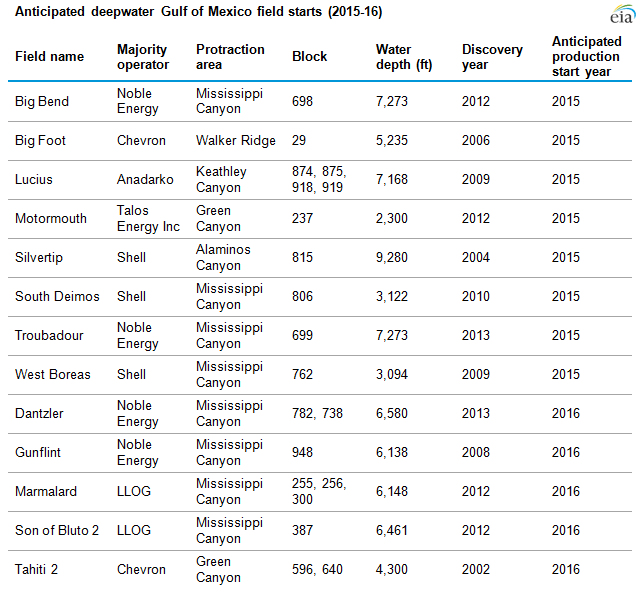
There are sound reasons to think that next year's graph may look quite different, starting with oil. The petroleum industry is still in turmoil from its turning point in late 2014, when OPEC declined to cut its output quota to restore the global oil market to balance. In North America and much of the world, drilling and investment in new projects are down sharply, and US oil production is retreating from the 44-year peak it reached in April. The subsequent decline would have been even more pronounced without the contribution of new deepwater platforms  in the Gulf of Mexico that were planned long before oil prices fell.

However, anyone identifying 2015 as the start of a global shift away from oil, rather than another cyclical low point, must contend with some contrary statistics. Global oil demand appears to have increased by around 2%--equivalent to the output of Nigeria--in response to a 70% drop in oil prices. And despite a lot of media attention, electric vehicles--the leading contender to replace the internal-combustion cars that are the main users of refined oil--have yet to catch on with mainstream consumers.

Based on data from Hybridcars.com, US sales of battery-electric vehicles (EVs) grew slightly faster than the 6% pace of the entire US car market in 2015 but still accounted for less than 0.5% of all new cars. In fact, the combined US market share of hybrids, plug-in hybrids and battery EVs fell by 18%, compared to 2014, to below 3%. This is a respectable start for vehicle electrification, but it's not much different from the beachhead that hybrids alone occupied in 2009.

Although we might look back on this situation in a few years as a turning point, I believe that will depend on the condition of OPEC and the global oil industry, as well as the level of global oil consumption, when supply and demand come back into balance and today's high oil inventories are drawn down.

At the launch of API's latest State of American Energy report earlier this month I had the opportunity to ask Jack Gerard, the President and CEO of API, how he thought the current situation might change the oil and gas industry, and whether it would push it even farther towards shale development, including outside the US. His response focused on ensuring that policies will allow US producers to compete globally and build on the advantages of US resources, capital markets and rule of law to increase their share of the market.

As for US natural gas production, rising per-well productivity and growth in the Utica shale and Permian Basin offset less drilling in general and output declines in the Marcellus shale and elsewhere.  The continued expansion of gas is remarkable, considering that natural gas futures prices (front month) averaged just $ 2.63 per million BTUs for the year and dipped below $2 in December. The LNG exports set to begin this month look very timely.

Renewable energy, mainly in the form of wind and solar power, continues to grow rapidly as its costs decline. US renewables got an unexpected boost in December when the US Congress extended the two main federal tax credits for wind, solar and other technologies, including retroactively reinstating the lapsed wind Production Tax Credit (PTC).  Renewables should also benefit from the implementation of the EPA's Clean Power Plan, and from the effect of the Paris climate agreement on the investment climate for these technologies.

We may not know for years whether the Paris Agreement was truly a turning point for climate change, as many have suggested. Another prescriptive agreement with legally binding targets, along the lines of the Kyoto Protocol, was never in the cards. However, the Paris text is replete with tentative verbs, along the lines of, "requests, invites, recognizes, aims, takes note, encourages, welcomes, etc. "  It remains up to the participating countries whether and how they fulfill their voluntary Intended Nationally Determined Contributions and financial commitments.

The Paris Agreement could turn out to be the necessary framework for firm steps by both developed and developing countries to reduce emissions and adapt to climatic changes that are already "baked in", or it might shortly be overtaken by other events, as previous climate change measures were in the aftermath of the 2008 financial crisis. The current financial problems of the world's largest emitter of greenhouse gases--arguably the most important signatory to the Paris Agreement--are not a positive signal.

With so many uncertainties in play, we should consider all of these potential turning points as signposts of changes that depend on other interconnected factors, if they are to lead to a future that breaks with the status quo. There are enough of them to make for a very interesting 2016, even if this wasn't also a US presidential election year.
 
A different version of this posting was previously published on the website of Pacific Energy Development Corporation.

Tuesday, December 29, 2015

Has OPEC Lost Control of the Price of Oil?

  • The shale revolution effectively sidelined OPEC's control over global oil prices, but the consequences of a year of low prices are shifting power back to the cartel.
In the aftermath of another inconclusive meeting of the Organization of Petroleum Exporting Countries, oil prices have been testing their lows from the 2008-9 financial crisis,  For all the attention and speculation devoted to OPEC-watching whenever they meet, the question we should be asking about OPEC is whether the current situation shares enough of the elements that defined those periods in the past when the cartel's actual market control lived up to its reputation.

That reputation was established during the twin oil crises of the 1970s. US oil production peaked in late 1970, and to the extent there was then a global oil market, the key influence in setting its supply--and thus prices--passed from the Texas Railroad Commission to OPEC, which had been around since 1960.  From 1972 to 1980, the nominal price of a barrel of oil imported from the Persian Gulf increased roughly ten-fold, with disastrous effects on the global economy.

Just a few years later, however, oil prices collapsed.  OPEC's control was undermined by new non-OPEC production from places like the North Sea and Alaskan North Slope and a remarkable 10% contraction in global oil demand. The turning point came in 1985. Saudi Arabia, which had successively cut its output from 10 million barrels per day (MBD) in 1981 to just 3.6 MBD, introduced  "netback pricing" as a way to protect and recover market share.

That move helped set up nearly 20 years of moderate oil prices, during which OPEC's most successful intervention came in response to the Asian Economic Crisis of the late 1990s, when together with Mexico, Norway, Oman and Russia, it sharply curtailed production to pull the oil market out of a tailspin.

The proponents of today's "lower for longer" view of oil prices may see compelling parallels in the circumstances of the mid-1980s, compared to today's. Production from new sources, mainly US "tight oil" from shale, has created another global oil surplus. In the 1980s nuclear power and coal were pushing oil out of its established role in power generation. Now, renewables and electricity are beginning to erode oil's share of transportation energy, while the slowdown of China's economic growth and concerns about CO2 emissions raise doubts about the future growth of oil demand.

However, these similarities break down on some fundamental points. First, the production profile of shale wells is radically different from that of large, conventional onshore oil fields or offshore platforms. Once drilled, the latter produce at substantial rates for decades, while tight oil wells may deliver two-thirds of their lifetime output in just the first three years of operation. Sustaining shale production requires continuous drilling. In fact, new non-shale projects similar to the ones that underpinned oil-price stability from 1986-2003 make up the bulk of the $200 billion of industry investment that has reportedly been cancelled in response to the current price slump.

Another major difference relates to spare capacity. During most of the 1980s and '90s, OPEC maintained significant spare oil production capacity, much of it in Saudi Arabia. That wasn't necessarily by choice, but it was what enabled OPEC to absorb the loss of around 3.5 MBD from Kuwait and Iraq in 1990-91 while continuing to meet the needs of a growing global market. The virtual disappearance of that spare capacity was a key trigger of the oil price spike of 2004-8. (See chart below.)  A little-discussed consequence of OPEC's current strategy to maintain, and in the case of Saudi Arabia to increase output has been a decline in OPEC's effective spare capacity, to just over 2 MBD, compared to 3.5 MBD in the spring of 2014.

As a result, global spare oil production capacity is essentially shifting from Saudi Arabia, which historically was willing to tap it to alleviate market disruptions, to Iran, Iraq and US shale. The responsiveness of all of these is subject to large uncertainties. Iran's production capacity has atrophied under sanctions, and it isn't clear how quickly it can ramp back up once sanctions are fully lifted. Iraq's capacity and output have increased rapidly, but key portions are threatened by ISIS.

Meanwhile, US tight oil production is falling, although numerous wells have been drilled but not completed, presumably enabling them to be brought online quickly, later--perhaps mimicking spare capacity. How that would work in practice remains to be seen. One uncertainty that was recently resolved was whether such oil could be exported from the US. As part of its recent budget compromise, Congress voted to lift the 1970s-vintage oil export restrictions. Even with US oil exports as a potential stabilizing factor, a world of lower or more uncertain spare capacity is likely be a world of higher and more volatile oil prices.

Oil prices were largely unshackled from OPEC's influence last year, after Saudi Arabia engineered a new OPEC strategy aimed at maximizing market share. However, with oil demand continuing to grow and millions of barrels per day of future non-OPEC production having been canceled--and unlikely to be reinstated any time soon--and with OPEC's spare capacity approaching its low levels of the mid-2000s, the potential price leverage of a cut in OPEC's output quota is arguably greater than it has been in some time.
 
In 2016 we will see whether OPEC finally pulls that trigger, or instead chooses to remain on a "lower for longer" path that raises big questions about the long-term aims of its biggest producers.
 
A different version of this posting was previously published on the website of Pacific Energy Development Corporation

Wednesday, December 16, 2015

A Grand Compromise on Energy?

The idea of  a Congressional "grand compromise" on energy has been debated for years. A decade ago, such an agreement might have opened up access for drilling in the Arctic National Wildlife Refuge, in exchange for "cap and trade" or some other comprehensive national greenhouse gas emissions policy. By comparison, the deal apparently included in the 2016 spending and tax bill is small beer but still worthwhile: In exchange for lifting the outdated restrictions on exporting US crude oil, Congress will respectively revive and extend tax credits for wind and solar power.

Anticipation about the prospect of US oil exports seemed higher last year, when production was growing rapidly and threatening to outgrow the capacity of US oil refineries to handle the volumes of high-quality "tight oil" flowing from shale deposits. Just this week Michael Levi of the Council on Foreign Relations, citing a study by the Energy Information Administration, suggested that allowing such exports might now be nearly inconsequential in most respects.

Although little additional oil may flow in the short term, given the current global surplus, it's worth recalling that the gap between domestic and international oil prices hasn't always been as narrow as it is today. The discount for West Texas Intermediate relative to UK Brent crude has averaged around $4 per barrel this year, but within the last three years it has been as wide as $15-20. Oil traders will tell you that average differentials between markets are essentially irrelevant. What counts is the windows when those gaps widen, during which  a lot of cargoes can move in short periods.

No matter how much or little US oil is ultimately exported, and how much additional production the lifting of the export ban will actually stimulate, the bigger impact on the global oil market is likely to be psychological. Having to find new outlets for oil shipped from West Africa, for example, because US refiners are processing more US crude and importing less from elsewhere is one thing; having to compete directly with cargoes of US oil is going to be quite another. That's where US consumers will benefit in the long run, from lower global oil prices that translate into lower prices at the gas pump.

Finally, if OPEC can choose to cease acting like a cartel--at least for the moment--and treat crude oil as a normal market, then it's timely for the US to follow suit and end an oil export ban that originated in the same 1970s oil crisis that put OPEC on the map.

How about the other side of this deal? What do we get for retroactively reinstating the expired wind production tax credit (PTC), along with extending the 30% solar tax credit that would have expired at the end of next year?

We'll certainly get more wind farms, along with some stability for an industry that has been whipsawed by past expirations and last-minute extensions of a tax credit that has been a major driver of new installations throughout its 20+ year history. Wind energy accounted for 4.4% of US grid electricity in the 12 months through September, up from a little over 1% in 2008.

However, this tax credit isn't cheap . The 4,800 Megawatts of new wind turbines installed in 2014 will receive a total of nearly $2.5 billion in subsidies--equivalent to around $19 per barrel--during the 10 years in which they will be eligible for the PTC, and 2015's additions are on track to beat that. The PTC is also the policy that enables wind power producers in places like Texas to sell electricity at prices below zero--still pocketing the 2.3¢ per kilowatt-hour (kWh) tax credit--distorting wholesale electricity markets and capacity planning.

As for solar power, it's not obvious that the tax credit extension was necessary at all, in light of the rapid decline in the cost of solar photovoltaic energy (PV). In any case, because the tax credit for solar is calculated as a percentage of installed cost, rather than a fixed subsidy per kWh of output like for wind, the technology's progress has provided an inherent phaseout of the dollar benefit. Solar's rapid growth seems likely to continue, with or without the tax credit.

The big missed opportunity from a clean energy and climate perspective is that these tax credit extensions channel billions of dollars to technologies that, at least in the case of wind, are essentially mature and widely regarded as inadequate to support a large-scale, long-term transition to low-emission energy. I would have preferred to see these federal dollars targeted to help incubate new energy technologies, along the lines of the Breakthrough Energy Coalition announced by Bill Gates and other high-tech leaders at the Paris climate conference.

The current deal, embedded within a $1.6 trillion "omnibus" spending bill, must still pass the Congress and be signed by the President. It won't please everyone, but it is at least consistent with the "all of the above" approach that has been our de facto energy strategy, at least since 2012. It also serves as a reminder that despite the commitments at Paris to reduce emissions of CO2 and other greenhouse gases, renewable energy will of necessity coexist with oil and gas for many years to come.

Monday, November 23, 2015

Shrinking the Strategic Petroleum Reserve

  • Selling oil from the Strategic Petroleum Reserve as part of the Congressional budget compromise raises serious questions about the SPR's future role.
  • Shrinking the SPR without first bringing its coverage into line with 21st century needs risks strengthening OPEC's hand. 
Last month's Congressional budget compromise included plans to sell 58 million barrels of oil from the US Strategic Petroleum Reserve, beginning in 2018. That decision raises serious questions. The world has changed enormously since the SPR was established in the 1970s, but the realignment of such an asset for the 21st century deserves a full strategic review and debate. Leaping ahead to treat the SPR like an ATM  seems unwise on multiple grounds.

My initial reaction was that the sale would result in the US government effectively buying high and selling low. However, using the last-in, first-out (LIFO) accounting common in the oil industry, the SPR release during the 2011 Libyan revolution should have removed any barrels purchased as prices surged past $100 per barrel (bbl) to over $140, prior to the financial crisis. The oil now slated to be sold in 2018-25 was likely injected between December 2003 and June 2005, when West Texas Intermediate crude oil averaged around $44/bbl. The Treasury should at least break even on these sales, allowing us to dispense with judging the trading acumen of the Congress and focus on the strategic aspects of this decision.

It is also true that the combination of revived US oil production and lower domestic petroleum demand effectively doubled the notional import protection that the SPR provides. That has made policy makers comfortable enough with the coverage the reserve provides to consider shrinking it. Yet as Energy Secretary Moniz  and a growing body of experts have concluded, the SPR's present configuration is inadequate to deal with whole categories of plausible oil-supply disruptions.

Today's SPR consists entirely of crude oil stored in caverns near the major refining centers of the Gulf Coast, to which it is connected via pipelines. However, while crude oil imports into the Gulf Coast have fallen dramatically, the long-term decline of oil production in Alaska and California has forced West Coast refiners to import 1-1.5 million bbl/day of oil, including more than half of California's crude supply, much of it from OPEC producers. In the event of an interruption of those deliveries, and under current oil-export restrictions, getting SPR oil from Texas and Louisiana to L.A. and San Francisco would pose enormous logistical challenges.

We have also learned that natural disasters such as hurricanes Katrina and Rita in 2005 and Superstorm Sandy in 2012 affect refinery operations, as well as oil deliveries.  A crude oil SPR is of little value if its contents can't be processed into the fuels that consumers and industry actually use.  The newer Northeast heating oil and gasoline reserves were intended to address that limitation, though on a much smaller scale.

It is thus fair to say that the SPR established in the Ford Administration and filled by the next five US presidents to a level now equivalent to 137 days of US crude oil imports is not diverse enough in its composition or locations, and too big for our current needs. If we could count on a continuation of cheap, abundant oil for the next two decades, selling off some SPR inventory wouldn't create problems. However, the purpose of such a reserve is to mitigate the risks of uncertain and inherently unpredictable future conditions and events. That should be factored into any decision to shrink it.

We don't have to look far to find reasons to suspect that oil prices might someday be higher and more volatile--perhaps as soon as the 2018-25 legislated sales period--or to worry that oil supplies from the Middle East might become less secure. Consider the consequences of the oil price collapse that began over a year ago. Low oil prices have indeed put pressure on the highly flexible US shale sector, where production is now expected to drop by around 500,000 bbl/day by next year. The impact on large-scale, long-lead-time capital investments in places like Canada, the North Sea and Gulf of Mexico has been even more profound. Over $200 billion of new projects and exploration activity have been deferred or canceled. Unlike shale, most of these projects could not be revived quickly if prices rebounded.

As production from existing fields declines without replacement, the current global oil surplus will dissipate, bringing the market back into balance. However, that balance is likely to be more precarious than before, since last fall's strategic shift by OPEC to protect its market share instead of managing prices entails the depletion of OPEC's "spare capacity." That means that in a future crisis, Saudi Arabia and other OPEC producers will have little flexibility to increase production to make up for lost output elsewhere.

Barring an unforeseen reduction in global  oil demand, the scenario that is beginning to take shape fits the  pattern of risks that the SPR was originally intended to address. It includes the prospect of rising US oil imports, increasing reliance on OPEC, and the threat posed by ISIS in the world's oil "breadbasket".  In that light it is hard to justify reducing the size of the SPR without a clear plan for making the remaining volume more effective at shoring up future vulnerabilities in US energy security.

In their haste to reach a deal, Congressional negotiators may also have overlooked some SPR-related alternatives that could generate revenue without draining inventories. These might include allowing other countries to buy into the reserve by means of "special drawing rights," or simply selling long-dated call options backed by the SPR, to be settled in the future by delivery or cash, at the government's discretion.

Taken together, there are ample reasons for the next Congress and administration to revisit the SPR sales provisions of the 2016 budget deal, before they go into effect.

A different version of this posting was previously published on the website of Pacific Energy Development Corporation

Tuesday, November 10, 2015

The Keystone Rejection and the Shift Back toward OPEC

Although the International Energy Agency's latest warning of future energy security risks doesn't mention the Keystone XL pipeline, it provides important context for assessing President Obama's decision turning down that project's application. The IEA's newly issued global energy forecast indicates that if oil prices remain low until the end of the decade, it "would trigger energy-security concerns by heightening reliance on a small number of low-cost producers," a polite way of referring to OPEC. The Keystone verdict could help reinforce that shift.

I've devoted a lot of posts to different aspects of the Keystone issue. In a post last year on the State Department's Final Supplemental Environmental Impact Statement, I pointed out the pipeline's relatively modest potential to affect climate change, with a range of incremental greenhouse gas emissions (GHGs) equating to 0.02-0.4% of total US emissions. Even if the full lifecycle emissions of the oil sands crude it would have transported were included, they would still not have exceed around 0.3% of global CO2-equivalent emissions. For these and other reasons, I have consistently concluded that the decision would be made on political, rather than technical grounds, consistent with the symbolism the project has taken on with environmental activists during this administration.

Whether the Keystone rejection is attributable mainly to domestic political considerations or to positioning in advance of next month's Paris climate conference is a minor distinction. As the editors of the Washington Post put it, the distortion and politicization of the issue "was a national embarrassment, reflecting poorly on the United States’ capability to treat parties equitably under law and regulation." If the IEA's assessment of the trends underlying today's low oil prices is correct, we may come to regret last Friday's ruling for other reasons, too.

Recall that last year's oil-price collapse had two principal triggers: surging US oil production from shale deposits in Texas, North Dakota and several other states, and a decision by OPEC to forgo its historic role as balancers of the global oil market and instead to produce full out. The latter explains why oil remains below $50 per barrel, even though US shale output is now retreating.

Yet while shale production is expected to rebound once prices start to recover--whenever that might occur--the same cannot necessarily be said for conventional non-OPEC production from places like the North Sea and other high-cost, mature regions. Oil companies have canceled or deferred over $200 billion in exploration and production projects, while existing oil fields accounting for more than 10 times the output of US shale will continue to decline at rates of perhaps 5-10% per year.

The combination of all these factors sets the stage for a future oil market very different from what we've experienced in the past few decades. If OPEC and particularly Saudi Arabia assume the role of baseload, rather than swing producers, the price of oil will be set by the last, most expensive barrels to be supplied. That would constitute a much more normal market than one that has been dominated by OPEC production quotas, but it would also lack the margin of 3-5 million barrels per day of "spare capacity" that OPEC has typically held in reserve. That is a recipe for increased risk and volatility ahead.

If this comes to pass, the result might not be an exact re-run of the oil crises of the 1970s. The global economy is much less reliant on oil than it was four decades ago, especially for electricity generation, which as the IEA points out will increasingly come from renewable sources. However, oil will remain indispensable for transportation for many years. In a global oil market again dominated by OPEC, additional pipeline-based supplies from a reliable neighbor like Canada would be highly desirable, and the US Strategic Petroleum Reserve, which the Congress just voted to shrink in order to raise a couple of billion dollars of revenue, could become a lot more valuable.

The decision to reject TransCanada's application for the Keystone XL pipeline was ostensibly made on long-term considerations related to climate change, but it reflects a short-sighted view of energy markets. In that light, the President's conclusion that Keystone "would not serve the national interests of the United States" seems very likely to be revisited by a future US president.


Monday, August 31, 2015

What Do Futures Markets Tell Us About Long-term Oil Prices?

  • The tendency to believe that the prices of oil futures contracts are predicting the future price of oil is understandable but not supported by the track record of such bets.
  • The prices of long-dated oil futures merely reflect where buyers and sellers are willing to strike a deal today, for their own, diverse reasons.
A recent article in the Wall Street Journal reminded me of numerous debates about the significance of energy futures prices, when I was a trader and later a trading manager for the former Texaco, Inc.  Do changes in futures contract prices actually predict future oil prices as the Journal's reporter suggests? If so, then it might be reasonable to conclude that today's low oil prices could persist for years. However, from my perspective that over-interprets the market data and ignores some important oil fundamentals.

As tempting as it might be to think so, the futures market for West Texas Intermediate (WTI) crude oil isn't a crystal ball, and neither is the market for UK Brent crude. A futures price is simply the price someone is willing to pay or receive now for oil to be delivered (or settled without delivery) later. It is typically based on business needs, rather than deep analysis.  A concrete example might be helpful.

The parties who on August 11th bought or sold oil for $56 or $57 in December 2017 likely did so, not because they were certain what the price would be then, but because they couldn't be sure and either needed to hedge another transaction or activity, or thought it constituted a reasonable bet. Aggregating a modest number of such transactions--long-dated futures trade much less frequently than those for the near months--doesn't improve the accuracy of these bets on an inherently unpredictable commodity over long intervals. Anyone who thinks it does should examine the track record of oil futures as predictions; it is a sobering exercise, especially for those who have traded this market.

Consider that while the September 2015 WTI contract closed at a little over $43 per barrel that afternoon, traders were buying and selling the same contract for more than twice as much during long stretches of 2012--about as far removed from us as the late-2017 contract prices cited in the Journal article as evidence of a persistent oil-price slump. Prices for the September 2015 contract were even higher in the middle of last year, when traders knew nearly as much about the growth of US tight oil production and its rising productivity as we do today, but crucially didn't know that OPEC would choose not to cut output to alleviate an over-supplied market as they had done in the early 1980s and late 1990s. Similar examples abound.

So how else might one explain the fact that long-dated oil contracts are trading for less today than they were this spring, if not as a prediction of a longer period of low prices ahead? Behavior and learning play key roles. With the  first anniversary of this historic price collapse just a few months off, expectations of a quick rebound in prices have faded. The possibility that the US could produce as much tight oil, for now, with fewer than half as many drilling rigs in operation as a year ago has sunk in. So has the reality that as painful as $50 oil is for some of OPEC's members, cartel leaders like Saudi Arabia show little inclination to blink first.

However, others are blinking, and that's why I'm skeptical that oil prices can remain this low indefinitely. The cuts in staff and investment budgets by major oil companies and their national oil company peers have been breathtaking, totaling $180 billion this year according to one analysis. The cuts suggest that the projects in question require significantly higher oil prices to be profitable, even after recent cost reductions, or have become too risky at current prices.

Few of these companies are big players in shale. Their bread and butter is large, conventional onshore oil fields and enormously expensive deepwater oil projects, the collective output of which is inherently subject to annual declines in output. Decline is the "silent killer" of output, to the tune of 5% or so every year. The only way to offset this trend within the portfolios of these producers is to spend large sums every year on new wells and new projects--projects that according to Rystad Energy, as cited by Bloomberg, have been cut more than at any time since 1986.

We must also put the US shale revolution in its proper context. When added to a global market that was balanced between supply and demand at around $100 per barrel, it was a game-changer, not least because no other producer or group of producers was willing to reduce output enough to accommodate this new source. However, even at today's 5.4 million barrels per day US tight oil represents only about 6% of global supply. The combination of shale plus OPEC covers less than half the world's oil demand.

The remainder must come from onshore and offshore oil fields in non-OPEC countries like Brazil, Canada, Mexico, Norway, and Russia. This non-OPEC supply has grown thanks to  a wave of completions of  large projects begun 5-10 years ago, when prices were rising rapidly. However, reduced investment now surely means lower non-OPEC production within a year or two.

The key question for future oil prices is therefore when demand, which according to the International Energy Agency is growing rapidly under low prices, and supply, for which new investment has suddenly shifted from the accelerator to the brake pedal, will cross over, erasing today's glut. It's hard to infer the answer from the thinly traded market for long-dated oil futures contracts.