When President Trump announced last week that the US would withdraw from the Paris Climate Agreement, he unleashed a flood of condemnation. Foreign leaders, US politicians, corporate executives, and environmental groups all roundly criticized the move. It also hasn't polled well.
As the initial reaction dies down, it's worth considering how this happened, what it means, and what might come next. The invaluable Axios news site has some noteworthy insights on the latter problem that I will get to shortly.
I am convinced it was a mistake to withdraw. In this I share the view of many current and former business leaders, including the Secretary of State, that the US was better off as a party to the deal and all the future negotiations it entails. Even if the goal was truly to renegotiate the agreement on more favorable terms, signaling withdrawal first seems counterproductive. However, I also see the consequences of our withdrawal in less catastrophic terms than most critics of the move.
As I noted not long after it was concluded, the Paris Agreement is by design much weaker than its predecessor, the Kyoto Protocol. Although the 2015 Paris deal was probably the strongest one that could have been negotiated at the time, it still represented a big compromise between developed and developing countries on who should reduce the bulk of future emissions and who should bear the responsibility for the consequences of past emissions. Its text is full of verbs like recognize, acknowledge, encourage, etc., and the commitments it collected were essentially voluntary.
The agreement was also explicitly negotiated so as to maximize its chances of being enacted under the executive powers of the US president, without his having to refer the agreement to the US Senate for its concurrence. That implied it could be undone in the same way.
In other words, President Obama took a calculated risk that his successor(s) would choose to be bound by his Executive Order endorsing Paris. That was tantamount to a bet on his party winning the 2016 election, since most of the Republicans who had announced at the time were opposed to it, or the Clean Power Plan that was the linchpin of future US compliance with it.
Seeking Senate approval as a treaty would have been a much bigger lift--or required an even weaker agreement--but success would have provided significant political protection for the follow-on to the unratified Kyoto Protocol. Perhaps that explains why President Trump has chosen the much slower exit path--up to three years--provided within the Paris Agreement, rather than the quicker route of pulling out of the umbrella UN Framework Convention on Climate Change. The Convention was signed by President George H.W. Bush with the bipartisan advise and consent of the Senate in 1992.
Setting politics aside, it's also not obvious that US withdrawal from Paris will put our greenhouse gas emissions on a significantly different track than if we stayed in. Even the EPA's review and likely withdrawal of its previous Clean Power Plan, which underpinned the Obama administration's strategy for meeting the voluntary goal it submitted at Paris, may have only a minor impact on global emissions.
Federal climate policy has not been the main driver of recent emissions reductions in the US power sector. Cheap, abundant natural gas from shale and the rapid adoption of renewable energy under state "renewable portfolio standards", supported by federal tax credits that were extended again in 2015, have been the primary factors in overall US emissions falling by 11% since 2005. These trends look set to continue.
The bigger question is what happens globally with the US out of the Paris Agreement--assuming the administration does not reverse course again before it can issue the required formal notice to withdraw roughly 2 1/2 years from now.
At least in the short term, I doubt much else will change. For the most part, the Nationally Determined Commitments delivered at Paris reflected what the signatories intended to do anyway. China's NDC is a perfect example. That country's ongoing air pollution crisis provides ample incentive to scale back on energy intensity and coal-fired power plants, which are the main source of its emissions.
Increasing the role of renewable energy in its national energy mix perfectly suits China's ambitions in renewable energy technology. Exhibit A for that is a solar manufacturing sector that went from insignificance to more than 50% of the global supply of photovoltaic (PV) cells in under a decade, while China's domestic market accounted for 21% of global PV installations through 2015.
The reactions to last week's announcement surely raised the stakes for other countries that might consider leaving. However, this action has also provided China and other high-emitting developing countries with an ironic mirror image of one of the main arguments on which the US government based its unwillingness to implement the Kyoto Protocol.
What ought to matter more than any of the domestic and geopolitical maneuvering around the US exit is the actual impact on the global climate. Reporting on Axios, Amy Harder (formerly of the Wall St. Journal) portrayed this as a sort of emperor's clothes moment with a column entitled, "Climate change is here to stay, so deal with it." Monday's main Axios "stream" characterized her piece as a "truth bomb."
As Harder put it, "The chances of reversing climate change are slim regardless of US involvement in the Paris agreement." That's consistent with recent assessments from the International Energy Agency and others. Citing the Bipartisan Policy Center and the UN, her column suggested a pivot to greater focus on adaptation, the hard and deeply unglamorous work of bolstering infrastructure and systems to withstand changes in the climate, including those that are already baked in. Attributing the source of changes in rainfall and sea level matters less than plugging the resulting physical gaps. That makes adaptation politically less toxic than cutting emissions, though still plenty challenging, fiscally.
As I have been watching the fallout from last week's news, I keep coming back to comparisons to the Cold War that I made when the idea of pursuing climate policy through executive action was emerging in 2010. Like the Cold War, dealing with climate change requires a similarly enduring bipartisan coalition. Major policy swings every 4 or 8 years are just too costly and ineffective, due to the planning horizons involved.
NATO may be going through a difficult moment, but it is approaching its 70th year. After seeing its key weakness exposed, can anyone honestly look at the framework of the Paris Agreement and conclude that it is likely to last as long? Yet if climate change is as serious as many suggest, those are exactly the terms in which we should be thinking.
Showing posts with label shale. Show all posts
Showing posts with label shale. Show all posts
Tuesday, June 06, 2017

Thursday, November 03, 2016
Energy and the 2016 Presidential Election
In less than a week, the most controversial and acrimonious presidential election in living memory will be over. Energy has largely been a second-tier issue in this contest, although the divergence in the candidates' views on this vital subject is stark. Fortunately, the energy consequences--planned and unintended--of the last two US presidential elections hold some useful lessons for considering the proposed energy policies of this year's two front-runners.
As we look back, please recall that for most of the 2008 campaign the average US price for unleaded regular gasoline was over $3.00 per gallon. Much of that summer it was at or above $4.00. Four years later, from Labor Day to Election Day of 2012, regular gasoline averaged $3.76 per gallon. The comparable figure for the last two months of the 2016 campaign is just under $2.25.
In 2008 energy independence was a hot issue. Then-Senator Obama ran on a platform that targeted reducing US oil imports by over 3 million barrels per day, mainly through improved fuel efficiency. In his view US oil resources were effectively tapped out--remember "3% of reserves and 25% of consumption"? The main role he envisioned for the US oil and gas industry was as a source of increased tax revenue. His primary focus was on reducing greenhouse gas emissions through large federal investments in green energy technology. He would soon deliver on that promise with the $31 billion renewable energy package included in the federal stimulus of 2009.
When he was running for reelection in 2012, President Obama had kinder words for conventional energy, particularly the large expansion of US natural gas supply due to shale gas. He even took credit for "boosting US domestic production of oil". That point provoked an extended argument in the second presidential debate that year. Importantly, when the President emphasized renewable energy, energy efficiency and emissions, it was within a broader framework of "all of the above" energy.
At the same time, following the failure of comprehensive energy and climate legislation in his first term, his administration has pursued major new regulations aimed at achieving its energy and environmental goals. However, some of the most sweeping of these, including the Clean Power Plan, have gotten hung up in the courts, while others have yet to be fully implemented.
In retrospect President Obama was lucky. The shale energy revolution wasn't on his radar in 2008 and received little or no help from his administration, but it has increased US energy production by more than 17%, net of coal's losses, since he took office. It has made a major dent in US oil imports and CO2 emissions. In the process, it saved consumers hundreds of billions of dollars on their energy bills, reduced the US trade imbalance, generated large numbers of new jobs when it mattered most, and provided the primary means for reducing US greenhouse gas emissions to their lowest level since before Bill Clinton ran for President.
Meanwhile, the renewable energy revolution on which his 2008 campaign pinned most of its hopes is still a work in progress. The cost of non-hydro renewables, mainly wind and solar power, has fallen dramatically and their deployment has grown impressively, expanding by a combined 135% from 2008 to 2014, or 15% per year. Wind and solar power are reshaping US electricity markets and changing the economics of baseload power plants, including nuclear plants. However, these sources still generate just 8% of US electricity and accounted for less than 3% of total US energy production in 2015.
What can we learn from the experience of the last two presidential terms? We are certainly in the midst of a long-term transition from a high-carbon energy economy to one using lower-carbon fuels and low- or effectively zero-carbon electricity. However, the numbers tell us that with regard to implementation, if not technology, we are closer to the beginning of that transition than to its end. The next President can double renewables, and that would still leave us reliant on conventional energy and nuclear power for three-quarters of our electricity and 90% of our total energy needs.
Going from 3% of energy from new renewables to the levels needed to meet the emissions targets that the US took on at Paris last year represents an enormous technical and financial challenge. It won't happen without a healthy economy, supported by a diverse and flexible energy mix anchored by domestic oil and natural gas from public and private lands and waters.
Although the Obama administration has added numerous regulations affecting energy, it stopped short of derailing the shale revolution. As a result, it has benefited greatly from the increased flexibility and energy security shale is providing. President Obama adapted his approach to energy and came around to recognizing the need for an energy mix that balances new, green energy with the best conventional energy sources. That's the lens through which we should view the energy proposals of this year's candidates.
There's no question that Secretary Clinton would promote the continued growth of renewable energy and the wider application of energy efficiency. If anything, she seems to be even more focused on climate change and clean energy than Barrack Obama was in 2008. However, her campaign website portrays oil and gas mainly in negative terms, with a focus on cutting their consumption, along with the industry's tax benefits. While explicitly recognizing the role that increased US natural gas production has played in reducing emissions, her policies would directly target the primary source of that growth.
Shale gas now accounts for half of all US natural gas production, but Secretary Clinton is on record supporting much stricter regulations on "fracking", the common shorthand for the technological processes involved in producing oil and gas from shale: "By the time we get through all of my conditions, I do not think there will be many places in America where fracking will continue to take place,” she said in a March debate with Senator Sanders.
Reversing the recent growth of natural gas production from shale would lead to higher emissions during the next four to eight years. With less gas available, natural gas prices would rise, and the remaining coal-fired power plants would ramp back up to fill the gap, even as renewables continued to expand. That is happening in Germany today as that country turns away from nuclear power. In the US, without the contribution from natural gas and nuclear power plants, another of which just shut down permanently, our climate goals would be out of reach.
Recently, Secretary Clinton was also cited as wanting to expand the current administration's moratorium on coal development from public lands to encompass oil and gas. As shown in the chart below, based on data from the US Energy Information Administration, this production is already trending downward, overall. Imposing a moratorium on oil and gas development on public lands would accelerate that contraction, without new wells to offset the decline from mature fields.

If implemented as described, Secretary Clinton's policy toward shale energy would have an even more pronounced effect on US energy supplies than restricting development on federal land. With oil prices low, shale oil production has already fallen by 1.2 million barrels per day since output peaked in May 2015. The drop would have been much steeper had US producers not been able to focus their greatly reduced drilling activity on their most productive prospects.
US oil imports are increasing in tandem with falling shale oil production and rising demand. We still have 260 million cars, trucks and buses that require mainly petroleum-based fuels, while electric vehicles make up a tiny fraction of the US vehicle fleet. If shale oil drilling were further curtailed by new regulations, the shortfall would be made up from non-US sources and imports would grow even faster. The party that stands to gain the most from that is OPEC.
From what I have seen and read, Secretary Clinton's proposed energy policy would undermine the all-of-the-above energy mix necessary to maintain US economic growth and energy security as we transition to cleaner energy sources. It is disconnected from the lessons of the last eight years and should not be implemented in its present form.
There is no doubt that Donald Trump views the shale revolution and the resources it has unlocked very differently from Secretary Clinton. It has been harder to gauge where he stands on other aspects of energy. During the primaries, Mr. Trump's energy policy lacked much detail, as I noted at the time. He has since largely remedied that, though many of the points raised on the energy page of his campaign's website seem mainly intended to counter Secretary Clinton's positions.
Mr. Trump's energy vision and goals are posted on his website, and he has made several speeches on the subject, focused mainly on expanding US oil and gas production and making the US a dominant global player in the markets for these commodities. His main theme is sweeping deregulation and reform, including revoking the current administration's executive orders and regulations affecting infrastructure projects, resource development, and the role of coal in power generation.
He endorses an all-of-the-above approach, but there's still little mention of renewables, efficiency or nuclear power. In any case his support for renewables is not linked to man-made climate change, which he disputes. He is also on record opposing US adherence to the Paris Climate Agreement.
How do Mr. Trump's ideas on energy square with the lessons of the last eight years? It seems clear he would rather swim with, rather than against the tide of the shale revolution. It's less clear how much additional activity that would stimulate in the near term if oil and gas prices remain low, even if regulations could be cut as he proposes. As for renewable energy, there doesn't seem to be enough information to assess where it fits into his version of "all of the above".
It's important to keep in mind that energy is not an end in itself. Stepping back from the details, and at the risk of grossly oversimplifying some complex and thorny issues, the key difference I see between the two candidates in this area is that Mrs. Clinton's energy policies seem designed mainly to serve environmental goals, while Mr. Trump's energy policies seem aimed at mainly economic goals.
In that sense, the choice here looks as binary as on many other issues this year. Just don't interpret that conclusion or my analysis above as an endorsement of either candidate.
As we look back, please recall that for most of the 2008 campaign the average US price for unleaded regular gasoline was over $3.00 per gallon. Much of that summer it was at or above $4.00. Four years later, from Labor Day to Election Day of 2012, regular gasoline averaged $3.76 per gallon. The comparable figure for the last two months of the 2016 campaign is just under $2.25.
In 2008 energy independence was a hot issue. Then-Senator Obama ran on a platform that targeted reducing US oil imports by over 3 million barrels per day, mainly through improved fuel efficiency. In his view US oil resources were effectively tapped out--remember "3% of reserves and 25% of consumption"? The main role he envisioned for the US oil and gas industry was as a source of increased tax revenue. His primary focus was on reducing greenhouse gas emissions through large federal investments in green energy technology. He would soon deliver on that promise with the $31 billion renewable energy package included in the federal stimulus of 2009.
When he was running for reelection in 2012, President Obama had kinder words for conventional energy, particularly the large expansion of US natural gas supply due to shale gas. He even took credit for "boosting US domestic production of oil". That point provoked an extended argument in the second presidential debate that year. Importantly, when the President emphasized renewable energy, energy efficiency and emissions, it was within a broader framework of "all of the above" energy.
At the same time, following the failure of comprehensive energy and climate legislation in his first term, his administration has pursued major new regulations aimed at achieving its energy and environmental goals. However, some of the most sweeping of these, including the Clean Power Plan, have gotten hung up in the courts, while others have yet to be fully implemented.
In retrospect President Obama was lucky. The shale energy revolution wasn't on his radar in 2008 and received little or no help from his administration, but it has increased US energy production by more than 17%, net of coal's losses, since he took office. It has made a major dent in US oil imports and CO2 emissions. In the process, it saved consumers hundreds of billions of dollars on their energy bills, reduced the US trade imbalance, generated large numbers of new jobs when it mattered most, and provided the primary means for reducing US greenhouse gas emissions to their lowest level since before Bill Clinton ran for President.
Meanwhile, the renewable energy revolution on which his 2008 campaign pinned most of its hopes is still a work in progress. The cost of non-hydro renewables, mainly wind and solar power, has fallen dramatically and their deployment has grown impressively, expanding by a combined 135% from 2008 to 2014, or 15% per year. Wind and solar power are reshaping US electricity markets and changing the economics of baseload power plants, including nuclear plants. However, these sources still generate just 8% of US electricity and accounted for less than 3% of total US energy production in 2015.
What can we learn from the experience of the last two presidential terms? We are certainly in the midst of a long-term transition from a high-carbon energy economy to one using lower-carbon fuels and low- or effectively zero-carbon electricity. However, the numbers tell us that with regard to implementation, if not technology, we are closer to the beginning of that transition than to its end. The next President can double renewables, and that would still leave us reliant on conventional energy and nuclear power for three-quarters of our electricity and 90% of our total energy needs.
Going from 3% of energy from new renewables to the levels needed to meet the emissions targets that the US took on at Paris last year represents an enormous technical and financial challenge. It won't happen without a healthy economy, supported by a diverse and flexible energy mix anchored by domestic oil and natural gas from public and private lands and waters.
Although the Obama administration has added numerous regulations affecting energy, it stopped short of derailing the shale revolution. As a result, it has benefited greatly from the increased flexibility and energy security shale is providing. President Obama adapted his approach to energy and came around to recognizing the need for an energy mix that balances new, green energy with the best conventional energy sources. That's the lens through which we should view the energy proposals of this year's candidates.
There's no question that Secretary Clinton would promote the continued growth of renewable energy and the wider application of energy efficiency. If anything, she seems to be even more focused on climate change and clean energy than Barrack Obama was in 2008. However, her campaign website portrays oil and gas mainly in negative terms, with a focus on cutting their consumption, along with the industry's tax benefits. While explicitly recognizing the role that increased US natural gas production has played in reducing emissions, her policies would directly target the primary source of that growth.
Shale gas now accounts for half of all US natural gas production, but Secretary Clinton is on record supporting much stricter regulations on "fracking", the common shorthand for the technological processes involved in producing oil and gas from shale: "By the time we get through all of my conditions, I do not think there will be many places in America where fracking will continue to take place,” she said in a March debate with Senator Sanders.
Reversing the recent growth of natural gas production from shale would lead to higher emissions during the next four to eight years. With less gas available, natural gas prices would rise, and the remaining coal-fired power plants would ramp back up to fill the gap, even as renewables continued to expand. That is happening in Germany today as that country turns away from nuclear power. In the US, without the contribution from natural gas and nuclear power plants, another of which just shut down permanently, our climate goals would be out of reach.

If implemented as described, Secretary Clinton's policy toward shale energy would have an even more pronounced effect on US energy supplies than restricting development on federal land. With oil prices low, shale oil production has already fallen by 1.2 million barrels per day since output peaked in May 2015. The drop would have been much steeper had US producers not been able to focus their greatly reduced drilling activity on their most productive prospects.
US oil imports are increasing in tandem with falling shale oil production and rising demand. We still have 260 million cars, trucks and buses that require mainly petroleum-based fuels, while electric vehicles make up a tiny fraction of the US vehicle fleet. If shale oil drilling were further curtailed by new regulations, the shortfall would be made up from non-US sources and imports would grow even faster. The party that stands to gain the most from that is OPEC.
From what I have seen and read, Secretary Clinton's proposed energy policy would undermine the all-of-the-above energy mix necessary to maintain US economic growth and energy security as we transition to cleaner energy sources. It is disconnected from the lessons of the last eight years and should not be implemented in its present form.
There is no doubt that Donald Trump views the shale revolution and the resources it has unlocked very differently from Secretary Clinton. It has been harder to gauge where he stands on other aspects of energy. During the primaries, Mr. Trump's energy policy lacked much detail, as I noted at the time. He has since largely remedied that, though many of the points raised on the energy page of his campaign's website seem mainly intended to counter Secretary Clinton's positions.
Mr. Trump's energy vision and goals are posted on his website, and he has made several speeches on the subject, focused mainly on expanding US oil and gas production and making the US a dominant global player in the markets for these commodities. His main theme is sweeping deregulation and reform, including revoking the current administration's executive orders and regulations affecting infrastructure projects, resource development, and the role of coal in power generation.
He endorses an all-of-the-above approach, but there's still little mention of renewables, efficiency or nuclear power. In any case his support for renewables is not linked to man-made climate change, which he disputes. He is also on record opposing US adherence to the Paris Climate Agreement.
How do Mr. Trump's ideas on energy square with the lessons of the last eight years? It seems clear he would rather swim with, rather than against the tide of the shale revolution. It's less clear how much additional activity that would stimulate in the near term if oil and gas prices remain low, even if regulations could be cut as he proposes. As for renewable energy, there doesn't seem to be enough information to assess where it fits into his version of "all of the above".
It's important to keep in mind that energy is not an end in itself. Stepping back from the details, and at the risk of grossly oversimplifying some complex and thorny issues, the key difference I see between the two candidates in this area is that Mrs. Clinton's energy policies seem designed mainly to serve environmental goals, while Mr. Trump's energy policies seem aimed at mainly economic goals.
In that sense, the choice here looks as binary as on many other issues this year. Just don't interpret that conclusion or my analysis above as an endorsement of either candidate.
Wednesday, April 20, 2016
Out of Reach Without Nuclear and Shale
- US emissions reduction goals for 2025 could not be achieved without nuclear power and the fracking technology necessary to extract shale gas.
- Recent revisions by the EPA in its estimates of methane leaks from natural gas production and use do not negate the benefits of gas in reducing emissions.
The pie chart below shows the current sources of US electricity in terms of the energy they generate, rather than their rated capacity. This is an important distinction, because the renewable electricity technologies that have been growing so rapidly--wind and solar--are variable and/or cyclical, generating only a fraction of their rated output over the course of any week, month, or year.

For example, replacing the output of a 2,000 megawatt (MW) nuclear power plant such as the Indian Point facility just north of New York City would require, not 2,000 MW of wind and solar power, but between 7,600 MW and 9,400 MW, based on the applicable capacity factors for such installations. Now scale that up to the whole country. With 99 nuclear reactors in operation, rated at a combined 98,700 MW, it would take at least 375,000 MW of new wind and solar power to displace them. As the Post's editorial points out, money spent replacing already zero-emission energy is money not spent replacing high-emitting sources.
At the rates at which wind and solar capacity were added last year, that build-out would require 24 years. That's in addition to the 36 years it would take to replace the current contribution of coal-fired power generation. It also ignores the fact that intermittent renewables require either expensive energy storage or fast-reacting backup generation to provide 24/7 reliability.
That brings us to natural gas, the main provider of back-up power for renewables, and the "fracking" (hydraulic fracturing) technology that accounts for half of US natural gas production. Fracking has transformed the US energy industry so dramatically that it is very hard to gauge the consequences of a national ban on it, even if such a policy could be enacted. Would natural gas production fall by a third to its level in 2005, when shale gas made up only around 5% of US supply, and would imports of LNG and pipeline gas from Canada ramp back up, correspondingly?
Or would production fall even farther? After all, one of the main factors behind the rapid growth of shale gas in the previous decade is that US conventional gas opportunities in places like the Gulf of Mexico were becoming scarcer and more expensive to develop than shale, which was higher-cost then than today. Either way, the constrained supply of affordable natural gas under a fracking ban would not support generating a third of US electricity from gas, vs. 20% in 2006. So we would either need even more renewables and storage--in addition to those displacing nuclear power--or, as Germany has found in pursuit of its phase-out of nuclear power, a substantial contribution from coal.
One of the primary reasons cited by Mr. Sanders and others for their opposition to shale gas, aside from overstated claims about water impacts, is the risk to the climate from associated methane leaks. Here he would seem to have some support from the US Environmental Protection Agency, which recently raised its estimates of methane leakage from natural gas systems.
Methane is a much more powerful greenhouse gas than carbon dioxide (CO2), so this is a source of serious concern. However, a detailed look at the updated EPA data does not support the contention of shale's critics that natural gas is ultimately as bad or worse for the climate than coal, a notion that has been strongly refuted by other studies.
The oil and gas industry has questioned the basis of the EPA's revisions, but for purposes of discussion let's assume that their new figures are more accurate than last year's EPA estimate, which showed US methane emissions from natural gas systems having fallen by 11% since 2005. On the new basis, the EPA estimates that in 2014 gas-related methane emissions were 20 million CO2-equivalent metric tons higher than their 2013 level on the old basis, for a year-on-year increase of more than 12%. This upward revision is nearly offset by the 15 million ton drop in methane emissions from coal mining since 2009, which was largely attributable to gas displacing coal in power generation.
In any case, the new data shows gas-related emissions essentially unchanged since 2005, despite the 44% increase in US natural gas production over that period. The key comparison is that the EPA's entire, updated estimate of methane emissions from natural gas in 2014, on a CO2-equivalent basis, is just 2.5% of total US greenhouse gas emission that year. In particular, it equates to less than half of the 360 million ton per year reduction in emissions from fossil fuel combustion in electric power generation since 2005--a reduction well over half of which the US Energy Information Administration attributed to the shift from gas to coal.
In other words, from the perspective of the greenhouse gas emissions of the entire US economy, our increased reliance on natural gas for power generation cannot be making matters worse, rather than better. That's a good thing, because as I've shown above, we simply can't install enough renewables, fast enough, to replace coal, nuclear power and shale gas at the same time.
What does all this tell us? Fundamentally, Mr. Sanders and others advocating that the US abandon both nuclear power and shale gas are mistaken or misinformed. We are many years away from being able to rely entirely on renewable energy sources and energy efficiency to run our economy. In the meantime, nuclear and shale are essential for the continuing decarbonization of US electricity, which is the linchpin of the plans behind the administration's pledge at last December's Paris Climate Conference to reduce US greenhouse gas emissions by 26-28% by 2025. That goal would be out of reach without them.
Thursday, April 14, 2016
Lessons from the Coal Bust
Yesterday's Chapter 11 filing by the largest US coal mining company is the latest in a series of coal bankruptcies. While factors such as regulations and poorly timed acquisitions have played a role, this trend reflects the parallel technology revolutions playing out across the energy sector. Here are a few key lessons from the ongoing coal bust:
Displacing coal completely from US electricity would require doubling the 2015 output of US gas-fired power generation and a roughly 36% increase in US natural gas production. By comparison, the US nuclear power fleet would have to more than double. If coal were to be replaced entirely by renewables, which in practice probably means gas pushing coal out of baseload power and renewables reducing gas-fired peak generation, the hill looks steep.
Last year the US added 7.3 GW of new solar installations and 8.6 GW of new wind turbines. Assuming they were mostly sited in locations with reasonable solar or wind resources, their combined annual output should be around 35 TWh. At that pace it would take another 36 years to make up what coal now generates. It's true that net annual wind and solar additions continue to grow at double-digit rates, but keeping that up may get harder as the best sites become saturated and earlier wind turbines and PV arrays reach the end of their useful lives in the meantime.
In other words, driving coal from here to zero seems possible but very difficult, even with an all-of-the-above strategy in a market without demand growth. And if electricity demand continues to grow, as it is globally, or resumed growing in the US and other developed countries to enable a big shift to electric vehicles, the prospect of retiring coal entirely recedes into the future.
- There are many other ways to make electricity, and coal brings nothing unique to the party. In a growing number of markets it is no longer the cheapest form of generation, and it is certainly the one with the most environmental baggage, from source to combustion.
- Coal-fired power generation is in competition with alternatives that are already producing at scale, like nuclear and natural gas generation, or growing rapidly from a smaller base, like renewables. It may not compete with all of these in every market, but few markets lack at least one of these challengers.
- The costs of renewables and gas have fallen significantly in recent years, due to major technology gains. Coal has also benefited from some improvements in scale and end-use technology. Today's ultra supercritical coal plants are more efficient than coal plants of a generation ago, but they are more expensive to build, even without carbon capture (CCS). However, wind and solar power continue to grow cheaper and more efficient, while gas has benefited from resource-multiplying production technologies and advanced gas turbines that can exceed 60% efficiency and ramp up and down rapidly to accommodate the swings of intermittent renewables.
- Despite all of these threats, coal is not on the verge of being forced out of power generation, even in developed countries where all the above factors are at work. Replacing its enormous contribution to primary energy supply and electricity generation will be a very heavy lift, particularly where another major energy source like nuclear power is being phased out. Germany is the prime example of that.
Displacing coal completely from US electricity would require doubling the 2015 output of US gas-fired power generation and a roughly 36% increase in US natural gas production. By comparison, the US nuclear power fleet would have to more than double. If coal were to be replaced entirely by renewables, which in practice probably means gas pushing coal out of baseload power and renewables reducing gas-fired peak generation, the hill looks steep.
Last year the US added 7.3 GW of new solar installations and 8.6 GW of new wind turbines. Assuming they were mostly sited in locations with reasonable solar or wind resources, their combined annual output should be around 35 TWh. At that pace it would take another 36 years to make up what coal now generates. It's true that net annual wind and solar additions continue to grow at double-digit rates, but keeping that up may get harder as the best sites become saturated and earlier wind turbines and PV arrays reach the end of their useful lives in the meantime.
In other words, driving coal from here to zero seems possible but very difficult, even with an all-of-the-above strategy in a market without demand growth. And if electricity demand continues to grow, as it is globally, or resumed growing in the US and other developed countries to enable a big shift to electric vehicles, the prospect of retiring coal entirely recedes into the future.
Monday, March 14, 2016
Energy and the 2016 Presidential Primaries
With another round of important primary elections taking place this week, I am sadly tardy in taking a high-level look at the energy positions of the candidates. The winnowing that has already taken place simplifies the task, even as it raises the stakes: A further contraction of the field after the voting in Florida, Illinois, North Carolina and Ohio could eliminate whole approaches to national energy policy.
The divide on energy between the Republican and Democratic fields also seems wider than in recent years. In 2008, when oil prices were approaching an all-time high, Republicans placed more emphasis on resource access--"drill baby, drill"--but both major party nominees supported cap-and-trade to address climate change. After recent remarks by Secretary Clinton and Senator Sanders, this November's election is shaping up as a binary choice between the continuation of the energy revolution that has saved the US hundreds of billions of dollars, and the elevation of environmental concerns as the main criteria for future energy decisions.
I'll take a closer look at the energy positions of the remaining Democratic candidates in a future post. For now I want to focus on the Republican field, because the first round of winner-take-all primaries looks like a make-or-break moment for the two candidates with the most detailed published positions on energy:
The divide on energy between the Republican and Democratic fields also seems wider than in recent years. In 2008, when oil prices were approaching an all-time high, Republicans placed more emphasis on resource access--"drill baby, drill"--but both major party nominees supported cap-and-trade to address climate change. After recent remarks by Secretary Clinton and Senator Sanders, this November's election is shaping up as a binary choice between the continuation of the energy revolution that has saved the US hundreds of billions of dollars, and the elevation of environmental concerns as the main criteria for future energy decisions.
I'll take a closer look at the energy positions of the remaining Democratic candidates in a future post. For now I want to focus on the Republican field, because the first round of winner-take-all primaries looks like a make-or-break moment for the two candidates with the most detailed published positions on energy:
- Kasich - On his campaign website the Ohio governor argues for increasing US energy supplies from all sources, including efficiency and conservation. He endorses North American energy independence, but also sees the need for innovation in clean energy technology. He would rein in regulation, including the Clean Power Plan, to "balance environmental stewardship with job creation." And while he has supported the development of Ohio's Utica shale, putting the state in the top rank of natural gas producers for the first time in decades, he has also led an effort to increase state taxes on oil and gas production. The appeal of Governor Kasich's positions to moderates is understandable, although no one would mistake them for a 2016 Democrat's energy platform.
- Rubio - The Florida senator's energy proposals are even more detailed, with more of a legislative focus than Governor Kasich's. Their tone is simultaneously positive and adversarial: Senator Rubio has an upbeat vision for the role energy can play for the US, and much of it is presented on his website in counterpoint to the actions and priorities of an administration he clearly believes has largely been mistaken on energy. There's a "wonkish" flavor to much of the content, such as his argument for education reform to fill the jobs energy development can help create. Although a reference to support for the Transatlantic Trade & Investment Partnership might be a red flag in a year dominated by populist sentiment, most of the ideas here fall solidly within the mainstream of recent conservative thought on energy.
- Cruz - Senator Cruz appears to take a more overtly libertarian stance on energy and what he calls the Great American Energy Renaissance. He wouldn't just lighten federal regulation of energy, as his rivals advocate; he would take on the government's ability to regulate. For example, in addition to opposing the Clean Power Plan, he co-sponsored legislation that would make it much harder for the EPA and administration to use the federal Clean Air Act to devise other ways to regulate greenhouse gas emissions from power plants. Consistent with his plan to abolish the IRS, he would also eliminate the Department of Energy. He supports an all-of-the-above energy strategy, but on a level playing field. Ethanol, for example, after his phase-out of the Renewable Portfolio Standard, would have to find its way into the energy mix without a federal mandate or subsidies.
- Trump - From my quick perusal of it, the Trump website lacks the kind of specifics on energy that are found on the other candidates' sites. We are left to piece together Mr. Trump's positions on energy based on his answers to specific questions or issues, elsewhere. You can find a number of quotes from those on Google. If there's a unifying principle to his views on energy, he seems to be as deal-focused as on other topics, and less allergic to using the power of government than his opponents. For example, he supported the Keystone XL pipeline but apparently thought we could get a better deal from Canada and the project developer. If Dilbert creator Scott Adams is correct in his analysis of Donald Trump as a Master Persuader, the details of his views on any issue like this matter less in an election than how he frames them.
Thursday, February 25, 2016
OPEC's War on US Producers
The comments of Saudi Arabia's oil minister at the annual CERAWeek conference in Houston this week provided some sobering insights into the strategy that the Kingdom, along with other members of OPEC, has been pursuing for the last year and a half. Perhaps the ongoing oil price collapse is not just the result of market forces, but of a conscious decision to attempt to force certain non-OPEC producers out of the market.
Notwithstanding Mr. Al-Naimi's assertion that, "We have not declared war on shale or on production from any given country or company," the actions taken by Saudi Arabia and OPEC in late 2014 and subsequently have had that effect. When he talks about expensive oil, the producers of which must "find a way to lower their costs, borrow cash or liquidate," it's fairly obvious what he is referring to: non-OPEC oil, especially US shale production, as well as conventional production in places like the North Sea, which now faces extinction. If these statements and the actions that go with them had been made in another industry, such as steel, semiconductors or cars, they would likely be labeled as anti-competitive and predatory.
We tend to think of the OPEC cartel as a group of producers that periodically cuts back output to push up the price of oil. As I've explained previously, that reputation was largely established in a few episodes in which OPEC was able to create consensus among its diverse member countries to reduce output quotas and have them adhere to the cuts, more or less.
However, cartels and monopolies have another mode of operation: flooding the market with cheap product to drive out competitors. It may be only coincidental, but shortly after OPEC concluded in November 2014 that it was abandoning its long-established strategy of cutting production to support prices, Saudi Arabia appears to have increased its output by roughly 1 million barrels per day, as shown in a recent chart in the Financial Times. This added to a glut that has rendered a large fraction of non-OPEC oil production uneconomic, as evidenced by the fourth-quarter losses reported by many publicly traded oil companies.
That matters not just to the shareholders--of which I am one--and employees of these companies, but to the global economy and anyone who uses energy, anywhere. OPEC cannot produce more than around 37% of the oil the world uses every day. The proportion that non-OPEC producers can supply will start shrinking within a few years, as natural decline rates take hold and the effects of the $380 billion in cuts to future exploration and production projects that these companies have been forced to make propagate through the system.
Cutting through the jargon, that means that because oil companies can't invest enough today, future oil production will be less than required, and prices cannot be sustained at today's low level indefinitely without a corresponding collapse in demand. Nor could biofuels and electric vehicles, which made up 0.7% of US new-car sales last year, ramp up quickly enough to fill the looming gap.
Consider what's at stake, in terms of the financial, employment and energy security gains the US has made since 2007, when shale energy was just emerging. That year, the US trade deficit in goods and services stood at over $700 billion. Energy accounted for 40% of it (see chart below), the result of relentless growth in US oil imports since the mid-1980s. Rising US petroleum consumption and falling production added to the pressure on oil markets in the early 2000s as China's growth surged. By the time oil prices spiked to nearly $150 per barrel in 2008, oil and imported petroleum products made up almost two-thirds of the US trade deficit.

Compared with 2007, higher US natural gas production, a portion of which is linked to oil production, is saving American businesses and consumers around $100 billion per year, despite consumption increasing by about 20%--in the process replacing more than a fifth of coal-fired power generation and reducing CO2 emissions. $25 billion of those savings come from lower natural gas imports, which were also on an upward trend before shale hit its stride.
Notwithstanding Mr. Al-Naimi's assertion that, "We have not declared war on shale or on production from any given country or company," the actions taken by Saudi Arabia and OPEC in late 2014 and subsequently have had that effect. When he talks about expensive oil, the producers of which must "find a way to lower their costs, borrow cash or liquidate," it's fairly obvious what he is referring to: non-OPEC oil, especially US shale production, as well as conventional production in places like the North Sea, which now faces extinction. If these statements and the actions that go with them had been made in another industry, such as steel, semiconductors or cars, they would likely be labeled as anti-competitive and predatory.
We tend to think of the OPEC cartel as a group of producers that periodically cuts back output to push up the price of oil. As I've explained previously, that reputation was largely established in a few episodes in which OPEC was able to create consensus among its diverse member countries to reduce output quotas and have them adhere to the cuts, more or less.
However, cartels and monopolies have another mode of operation: flooding the market with cheap product to drive out competitors. It may be only coincidental, but shortly after OPEC concluded in November 2014 that it was abandoning its long-established strategy of cutting production to support prices, Saudi Arabia appears to have increased its output by roughly 1 million barrels per day, as shown in a recent chart in the Financial Times. This added to a glut that has rendered a large fraction of non-OPEC oil production uneconomic, as evidenced by the fourth-quarter losses reported by many publicly traded oil companies.
That matters not just to the shareholders--of which I am one--and employees of these companies, but to the global economy and anyone who uses energy, anywhere. OPEC cannot produce more than around 37% of the oil the world uses every day. The proportion that non-OPEC producers can supply will start shrinking within a few years, as natural decline rates take hold and the effects of the $380 billion in cuts to future exploration and production projects that these companies have been forced to make propagate through the system.
Cutting through the jargon, that means that because oil companies can't invest enough today, future oil production will be less than required, and prices cannot be sustained at today's low level indefinitely without a corresponding collapse in demand. Nor could biofuels and electric vehicles, which made up 0.7% of US new-car sales last year, ramp up quickly enough to fill the looming gap.
Consider what's at stake, in terms of the financial, employment and energy security gains the US has made since 2007, when shale energy was just emerging. That year, the US trade deficit in goods and services stood at over $700 billion. Energy accounted for 40% of it (see chart below), the result of relentless growth in US oil imports since the mid-1980s. Rising US petroleum consumption and falling production added to the pressure on oil markets in the early 2000s as China's growth surged. By the time oil prices spiked to nearly $150 per barrel in 2008, oil and imported petroleum products made up almost two-thirds of the US trade deficit.
Today, oil's share of a somewhat smaller trade imbalance is just over 10%. Since 2008 the US bill for net oil imports--after subtracting exports of refined products and, more recently, crude oil--has been cut by $300 billion per year. That measures only the direct displacement of millions of barrels per day of imported oil by US shale, or "tight oil" and the downward pressure on global petroleum prices exerted by that displacement. It misses the trade benefit from improved US competitiveness due to cheaper energy inputs, especially natural gas.
Compared with 2007, higher US natural gas production, a portion of which is linked to oil production, is saving American businesses and consumers around $100 billion per year, despite consumption increasing by about 20%--in the process replacing more than a fifth of coal-fired power generation and reducing CO2 emissions. $25 billion of those savings come from lower natural gas imports, which were also on an upward trend before shale hit its stride.
The employment impact of the shale revolution has also been significant, particularly in the crucial period following the financial crisis and recession. From 2007 to the end of 2012, US oil and gas employment grew by 162,000 jobs, ignoring the "multiplier effect." The latter impact is evident at the state level, where US states with active shale development appear to have lost fewer jobs and added more than a million new jobs from 2008-14, while "non-shale" states struggled to get back to pre-recession employment. That effect was also visible at the county level in states like Pennsylvania, where counties with drilling gained more jobs than those without, and Ohio, where "shale counties" reduced unemployment at a faster pace than the average for the state, or the US as a whole.
If the shale revolution had never gotten off the ground, US oil production would be almost 5 million barrels per day lower today, and these improvements in our trade deficit and unemployment would not have happened. The price of oil would assuredly not be in the low $30s, but much likelier at $100 or more, extending the situation that prevailed from 2011's "Arab Spring" until late 2014. If OPEC succeeds in bankrupting a large part of the US shale industry, we might not revert to the energy situation of the mid-2000s overnight, but some of the most positive trends of the last few years would turn sharply negative.
Now, in fairness, I'm not suggesting that this situation can be explained as simply as the kind of old-fashioned price war that used to crop up periodically between gas stations on opposite corners of an intersection. The motivations of the key players are too opaque, and cause-and-effect certainly includes geopolitical considerations in the Middle East, along with the ripple effects of the shale technology revolution. It might even be possible, as some suggest, that OPEC has simply lost control of the oil market amidst increased complexity.
However, to the extent that the "decimation" of the US oil and gas exploration and production sector now underway is the result of a deliberate strategy by OPEC or some of its members, that is not something that the US should treat with indifference.
This is an issue that should be receiving much more attention at the highest levels of government. The reasons it hasn't may include consumers' understandable enjoyment of the lowest gasoline prices in a decade, along with the belief in some quarters that oil is "yesterday's energy." We will eventually learn whether these views were shortsighted or premature.
This is an issue that should be receiving much more attention at the highest levels of government. The reasons it hasn't may include consumers' understandable enjoyment of the lowest gasoline prices in a decade, along with the belief in some quarters that oil is "yesterday's energy." We will eventually learn whether these views were shortsighted or premature.
Wednesday, January 27, 2016
2015: A Turning Point for Energy?
- 2015 was certainly an eventful year in energy, with plummeting oil prices and a widely anticipated global climate conference in December. It's less clear that it was a turning point.
When I sifted through the major energy developments of 2015, I was surprised by the number of references I found to last year as a turning point, whether for the oil industry, the response to climate change, coal-fired electricity generation, or renewable energy. To this list I am tempted to add the decision to allow unrestricted exports of US crude oil for the first time in 40 years.
Major turning points are best identified with the passage of time. With so many legitimate candidates it might seem a bit deflating to note, as the chart below reflects, that the growth pattern for US energy supplies in 2015 looks a lot like the one for 2014. Despite low prices, oil and gas output posted solid gains, at least through October, while wind and solar power contributed modestly, when compared on an energy-equivalent basis.

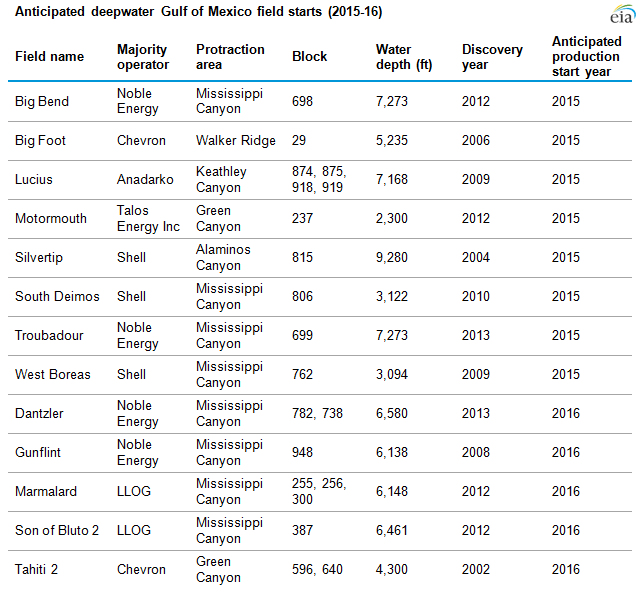
There are sound reasons to think that next year's graph may look quite different, starting with oil. The petroleum industry is still in turmoil from its turning point in late 2014, when OPEC declined to cut its output quota to restore the global oil market to balance. In North America and much of the world, drilling and investment in new projects are down sharply, and US oil production is retreating from the 44-year peak it reached in April. The subsequent decline would have been even more pronounced without the contribution of new deepwater platforms in the Gulf of Mexico that were planned long before oil prices fell.
Major turning points are best identified with the passage of time. With so many legitimate candidates it might seem a bit deflating to note, as the chart below reflects, that the growth pattern for US energy supplies in 2015 looks a lot like the one for 2014. Despite low prices, oil and gas output posted solid gains, at least through October, while wind and solar power contributed modestly, when compared on an energy-equivalent basis.

There are sound reasons to think that next year's graph may look quite different, starting with oil. The petroleum industry is still in turmoil from its turning point in late 2014, when OPEC declined to cut its output quota to restore the global oil market to balance. In North America and much of the world, drilling and investment in new projects are down sharply, and US oil production is retreating from the 44-year peak it reached in April. The subsequent decline would have been even more pronounced without the contribution of new deepwater platforms in the Gulf of Mexico that were planned long before oil prices fell.
However, anyone identifying 2015 as the start of a global shift away from oil, rather than another cyclical low point, must contend with some contrary statistics. Global oil demand appears to have increased by around 2%--equivalent to the output of Nigeria--in response to a 70% drop in oil prices. And despite a lot of media attention, electric vehicles--the leading contender to replace the internal-combustion cars that are the main users of refined oil--have yet to catch on with mainstream consumers.
Based on data from Hybridcars.com, US sales of battery-electric vehicles (EVs) grew slightly faster than the 6% pace of the entire US car market in 2015 but still accounted for less than 0.5% of all new cars. In fact, the combined US market share of hybrids, plug-in hybrids and battery EVs fell by 18%, compared to 2014, to below 3%. This is a respectable start for vehicle electrification, but it's not much different from the beachhead that hybrids alone occupied in 2009.
Although we might look back on this situation in a few years as a turning point, I believe that will depend on the condition of OPEC and the global oil industry, as well as the level of global oil consumption, when supply and demand come back into balance and today's high oil inventories are drawn down.
At the launch of API's latest State of American Energy report earlier this month I had the opportunity to ask Jack Gerard, the President and CEO of API, how he thought the current situation might change the oil and gas industry, and whether it would push it even farther towards shale development, including outside the US. His response focused on ensuring that policies will allow US producers to compete globally and build on the advantages of US resources, capital markets and rule of law to increase their share of the market.
As for US natural gas production, rising per-well productivity and growth in the Utica shale and Permian Basin offset less drilling in general and output declines in the Marcellus shale and elsewhere. The continued expansion of gas is remarkable, considering that natural gas futures prices (front month) averaged just $ 2.63 per million BTUs for the year and dipped below $2 in December. The LNG exports set to begin this month look very timely.
Renewable energy, mainly in the form of wind and solar power, continues to grow rapidly as its costs decline. US renewables got an unexpected boost in December when the US Congress extended the two main federal tax credits for wind, solar and other technologies, including retroactively reinstating the lapsed wind Production Tax Credit (PTC). Renewables should also benefit from the implementation of the EPA's Clean Power Plan, and from the effect of the Paris climate agreement on the investment climate for these technologies.
We may not know for years whether the Paris Agreement was truly a turning point for climate change, as many have suggested. Another prescriptive agreement with legally binding targets, along the lines of the Kyoto Protocol, was never in the cards. However, the Paris text is replete with tentative verbs, along the lines of, "requests, invites, recognizes, aims, takes note, encourages, welcomes, etc. " It remains up to the participating countries whether and how they fulfill their voluntary Intended Nationally Determined Contributions and financial commitments.
The Paris Agreement could turn out to be the necessary framework for firm steps by both developed and developing countries to reduce emissions and adapt to climatic changes that are already "baked in", or it might shortly be overtaken by other events, as previous climate change measures were in the aftermath of the 2008 financial crisis. The current financial problems of the world's largest emitter of greenhouse gases--arguably the most important signatory to the Paris Agreement--are not a positive signal.
With so many uncertainties in play, we should consider all of these potential turning points as signposts of changes that depend on other interconnected factors, if they are to lead to a future that breaks with the status quo. There are enough of them to make for a very interesting 2016, even if this wasn't also a US presidential election year.
A different version of this posting was previously published on the website of Pacific Energy Development Corporation.
Thursday, October 01, 2015
How Shale Reduced US Energy Risks from Hurricanes
- The Gulf of Mexico will be a key region for energy supplies for years to come, but shale development has boosted output elsewhere to such an extent that the US is much less vulnerable than a decade ago to shortages resulting from hurricanes.
Following hurricanes Katrina and Rita, which made landfall on the Gulf Coast within a few weeks of each other in 2005, I recall some lively discussions concerning the concentration of US energy assets in the region, and what that meant for US energy security. There was talk of new inland refineries, and even proposed legislation to promote them. With the exception of one small refinery in North Dakota, which came online earlier this year, most of that talk led nowhere. The synergies of the Gulf Coast refining and petrochemical complex were and still are overwhelming.
From the perspective of diversifying US crude oil and natural gas supplies, the situation looked equally daunting in 2005, excluding higher imports of both--an outcome that already seemed unavoidable. The country's main onshore oil fields, including the Alaska North Slope, were in decline. In 2004 their combined output averaged less than 4 million barrels per day for the first time since the 1940s. The deep waters of the Gulf of Mexico were where the majority of accessible, unexploited US oil and gas was expected to be found.
With hindsight it now seems clear that in 2005 the first large-scale application of hydraulic fracturing ("fracking") and horizontal drilling to shale in the Barnett gas field near Dallas, TX was pointing to an entirely different set of possibilities. The Barnett had just passed a major milestone: one billion cubic feet per day of production. However, other than visionary entrepreneurs like George Mitchell, few energy experts then foresaw how rapidly shale could scale up elsewhere.
Fast-forward to 2015, and the country has experienced a profound geographical diversification of its energy sources. As the following key chart from the EIA's analysis shows, since 2003 the offshore Gulf of Mexico's share of US production has fallen by 40% for crude oil and by nearly 80% for natural gas.

The divergence in those figures may seem surprising. "Tight" oil from deposits North Dakota, onshore Texas and the mountain West supplemented deepwater production that post-Deepwater Horizon has recovered to roughly the level of 2004, bringing total US oil output close to an all-time record earlier this year. Meanwhile, rising shale gas output in Arkansas, Louisiana, Ohio and Pennsylvania more than compensated for the steady, long-term decline of Gulf of Mexico gas production. The extent of the shift in US gas sources has even raised questions about the viability of the benchmark Henry Hub (Louisiana) trading point for the main gas-futures contract.
In fact, when we look beyond oil and gas to factor in the growth of renewable energy and the recent decline in coal consumption in the power sector, since 2004 the equivalent energy dependence of the US on the Gulf of Mexico--including imports--has fallen from 7% to roughly 4%, in terms of total energy consumption.
If oil prices had remained where they were a year ago, above $90 per barrel, there would be little doubt that this trend would continue. However, the latest short-term forecast from the EIA suggests that US onshore oil production will fall by about 6%, due to reduced shale drilling, while Gulf of Mexico production ticks up about the same percentage, as more projects that were begun under higher oil prices come onstream. This is generally consistent with the outlook of the International Energy Agency. By itself that could cause a small increase in Gulf of Mexico dependence.
As for gas, EIA projects that US onshore natural gas production will continue to grow, though at a slower rate than recently, while offshore gas continues its decline, reinforcing the shift away from the Gulf. The technology and techniques for developing onshore shale gas continue to improve, even with low natural gas prices, while the identified gas resources of the eastern Gulf of Mexico remain off-limits.
The relative importance of the large refining centers on the Gulf Coast may be evolving, too, for different reasons. US refined product exports have grown substantially since the financial crisis, with most of them sourced from the Gulf Coast. To the extent such shipments could be delayed in an emergency or swapped for product sourced abroad to be delivered to their original destinations, that effectively creates a buffer against storm-related disruptions in domestic deliveries.
The abundance of natural resources and the legacy of decades of infrastructure investment guarantee that the US Gulf Coast will remain a key region for US energy supplies. However, the technology for tapping resources elsewhere has greatly reduced the chances for a repeat of the events of 2005, when a pair of hurricanes set the stage for the highest natural gas prices in US history. Low oil prices might slow down further reductions in the relative energy contribution of the Gulf, but a significant reversal of this trend looks unlikely under either low or high oil prices.
In fact, when we look beyond oil and gas to factor in the growth of renewable energy and the recent decline in coal consumption in the power sector, since 2004 the equivalent energy dependence of the US on the Gulf of Mexico--including imports--has fallen from 7% to roughly 4%, in terms of total energy consumption.
If oil prices had remained where they were a year ago, above $90 per barrel, there would be little doubt that this trend would continue. However, the latest short-term forecast from the EIA suggests that US onshore oil production will fall by about 6%, due to reduced shale drilling, while Gulf of Mexico production ticks up about the same percentage, as more projects that were begun under higher oil prices come onstream. This is generally consistent with the outlook of the International Energy Agency. By itself that could cause a small increase in Gulf of Mexico dependence.
As for gas, EIA projects that US onshore natural gas production will continue to grow, though at a slower rate than recently, while offshore gas continues its decline, reinforcing the shift away from the Gulf. The technology and techniques for developing onshore shale gas continue to improve, even with low natural gas prices, while the identified gas resources of the eastern Gulf of Mexico remain off-limits.
The relative importance of the large refining centers on the Gulf Coast may be evolving, too, for different reasons. US refined product exports have grown substantially since the financial crisis, with most of them sourced from the Gulf Coast. To the extent such shipments could be delayed in an emergency or swapped for product sourced abroad to be delivered to their original destinations, that effectively creates a buffer against storm-related disruptions in domestic deliveries.
The abundance of natural resources and the legacy of decades of infrastructure investment guarantee that the US Gulf Coast will remain a key region for US energy supplies. However, the technology for tapping resources elsewhere has greatly reduced the chances for a repeat of the events of 2005, when a pair of hurricanes set the stage for the highest natural gas prices in US history. Low oil prices might slow down further reductions in the relative energy contribution of the Gulf, but a significant reversal of this trend looks unlikely under either low or high oil prices.
A different version of this posting was previously published on the website of Pacific Energy Development Corporation.
Thursday, April 02, 2015
How Will Low Oil Prices Affect Natural Gas?
- The growth of US natural gas output in recent years has been sustained partly by gas produced in conjunction with shale or "tight" oil.
- The slowdown in oil drilling in response to lower oil prices could also affect future natural gas production, and thus prices, especially in the US.

At first glance the answer ought to be a straightforward "no." As most people now know, US drillers figured out how to tap the country's vast shale gas resources economically. US gas production is at record levels, after rising steadily since 2006 and surpassing former top producer Russia around 2009. US natural gas inventories were severely depleted following last year's "Polar Vortex" winter, but output grew fast enough to keep the benchmark price of gas below $4 per million BTUs this winter, despite below-average temperatures east of the Mississippi.
However, in assessing gas supply under low oil prices we must factor in the industry's response to the natural gas price collapse in 2008. The prices of oil and gas both dropped precipitously during the financial crisis, but gas didn't recover to the same extent as oil. In 2007 the average spot price of natural gas on an energy equivalent basis was just over half that of West Texas Intermediate crude (WTI). By 2010 gas was worth only a third as much as oil, and by 2012 just 17%--the equivalent of $16 per barrel in a world of $100 oil. Drillers responded accordingly.
As the Energy Information Administration (EIA) chart below depicts, drilling for gas fell sharply from 2009-12, while "oil-directed drilling" rose just as sharply. In fact, these were mainly the same rigs, redeployed to pursue different targets--sometimes in the same shale basin--as gas grew cheaper.

For example, between 2009 and 2012 average gas production per rig--not per well--in the mainly gas-yielding Marcellus Shale more than tripled. From 2012 -14 it doubled again. Those gains reflect the combination of improvements in drilling efficiency (more wells or more feet drilled per month), improvements in hydraulic fracturing effectiveness, and companies targeting more productive well sites as knowledge of the basin's geology increased.
A key development following the gas price collapse was the growth of gas production from wells drilled in pursuit of shale oil. The best example of this is in the Eagle Ford Shale in Texas. While oil production there grew from virtually nothing to over 1.7 million bbl/day, the region's gas output nearly quadrupled, to 7.5 billion cubic feet (BCF) per day, or 10% of total US gas production.
Now we've entered a new chapter, due to a global oil surplus. As of the latest drilling rig count from Baker Hughes, oil-directed rigs employed in the US have fallen by around 45% since November 2014, and gas-directed rigs are down by a quarter. A few companies may have shifted from oil back to gas, but the overall rig trend is still down for both.
The net result is that the EIA expects oil production from the major US shale basins to remain essentially flat from March to April, while gas production should still grow by about 0.3%. How much farther would US shale oil and gas drilling have to contract before lower rig counts swamped productivity improvements for gas? Comparing those figures to the growth rates in previous months, perhaps not very much.
Of course the US represents only about a fifth of the global gas market. Elsewhere, especially in Europe and Asia, many gas sales contracts are pegged to oil prices, while supply is dominated not by flexible shale, but by large conventional gas fields and the trade in liquefied natural gas (LNG). So outside the US, lower oil prices may do more to stimulate gas demand than to shrink supply. Cheaper gas imports into China are apparently already having an impact on coal consumption.
That could create new opportunities for companies developing LNG facilities to export US gas, at the same time that the economics of such exports become more challenging. In markets like Asia, the effect of lower oil prices has cut the gap between landed LNG prices and US pipeline gas--and hence the motivation for exports--by more than half.
Even after oil's collapse, US natural gas at the Henry Hub has recently traded at about one-third of the price of WTI, per-BTU of energy. The contraction of drilling in response to low oil prices may tighten supplies and nudge the prices of both commodities higher, reminding us that gas isn't entirely immune to oil's influence. However, with US gas inventories ample, the market doesn't seem to anticipate either a spike in gas prices this summer, or a narrowing of gas's discount vs. oil any time soon.
A different version of this posting was previously published on the website of Pacific Energy Development Corporation
Monday, November 24, 2014
Energy and the New Congress: Beyond Keystone
- The Keystone XL pipeline is likely to get another opportunity for approval once the new Congress is sworn in next January.
- However, it will not be the most important part of a new Congressional energy agenda, and it might not even be the most urgent.
It's worth recalling that the Senators who just lost their seats were elected in the aftermath of the oil-price shock of 2007-8, amid great concern about increasing US dependence on imported oil and natural gas. They took office in 2009 with a President whose main energy policies focused on addressing global warming, with energy security inescapably linked to climate change. Largely as a result of the shale revolution, the new class of Senators will begin their jobs in an entirely different energy environment. That will have a bearing on both the priorities and approach of the new Congressional leadership.
The energy agenda for the two years of the 114th Congress will most likely include not just the status of KXL, but also restrictions on US crude oil exports, reform or repeal of the Renewable Fuel Standard (RFS), the extension of renewable energy tax credits for solar power (expiring at the end of 2016) and wind power (already expired), regulation of greenhouse gases by the Environmental Protection Agency under the Clean Air Act of 1990, expanded oil and gas drilling on federal lands and waters, and a stalled piece of energy efficiency legislation that might be the least controversial energy bill, on its merits, that either chamber has considered in years. Support for nuclear power and the disposition of nuclear waste could get another look, too.
Tax incentives for both renewable and conventional energy may also be swept up in efforts to reform the US corporate and individual tax systems, a high priority for some incoming committee chairmen. The least likely measures to be considered, however, are comprehensive energy legislation along the lines of the Energy Independence and Security Act of 2007 or climate legislation similar to the Waxman-Markey bill of 2009 that subsequently died in the Senate.
It is also possible that the 113th Congress could clear some of its backlog of energy measures before handing off to the new Congress in January. The dynamics of the lame duck session will be different from the pre-election period, and the outgoing leadership could be motivated to strike deals on measures such as the restoration of the wind power tax credit (PTC) within a larger package of expiring tax measures called the "extenders bill."
Aside from KXL, perhaps the most pressing energy matter for the new Congress is to address is the question of US oil exports, which are restricted under 1970s-era laws and regulations. The urgency of debating oil exports is twofold: One company has already indicated its intention to export condensate, which is treated as crude oil under current regulations, without government approval. And with oil prices having fallen by 20-25% since summer, oil exports and related shipping regulations could provide a crucial relief valve as US producers of light tight oil (LTO) from shale deposits seek to reduce their costs and find higher-priced markets. Senator Lisa Murkowski (R-AK) is slated to chair the Senate Energy & Natural Resources Committee, and this is one of her big issues.
However, the cooperation Sen. Murkowski will receive from the other party in getting export legislation to the Senate floor could depend on the result of December's runoff in Louisiana. If Mary Landrieu, current chair of Energy & Natural Resources, falls to Representative Bill Cassidy (R-LA), her replacement as ranking member for the minority on that committee is expected to be Maria Cantwell (D-WA). Senator Cantwell appears to be more skeptical about oil exports, as well as on other issues the oil and gas industry might hope would advance next year.
For that matter, while gaining approval of KXL and reining in the EPA are clearly part of the incoming Republican agenda for energy, other issues cut across party lines in ways that make their outcomes less easily predictable. For example, proponents of reforming or repealing the RFS may have as much difficulty getting traction in the 114th Congress as in the 113th. Geography, rather than party affiliation, seems like a better predictor of whether new Senators like Joni Ernst (R-IA) or Mike Rounds (R-SD) would support or oppose changing the rules for biofuels. That could apply to the wind tax credit, too. Even an oil export bill might similarly split both parties.
That brings us back to Keystone XL. The election result put both chambers of Congress on the same page on this issue for the first time and has apparently increased support for KXL to the crucial 60-vote threshold. That would be sufficient to obtain "cloture" and prevent a filibuster, though not to overturn a presidential veto.
Before Senator Landrieu's bill came up short last week, the President's real position on KXL began to emerge from the opacity he maintained through two elections. Nor does the fallout from his recent actions on other issues bode well for striking a deal with the new Congress on Keystone, short of it being attached to some essential piece of legislation like the budget or defense authorizations. Other parts of the likely Congressional energy agenda could fall into the same gap, and I'm less optimistic than I was after November 4th about opportunities for cooperation on energy between the White House and a unified Congress.
A different version of this posting was previously published on the website of Pacific Energy Development Corporation.
Subscribe to:
Posts (Atom)