Showing posts with label renewable energy. Show all posts

Thursday, July 20, 2017

Are Renewables Set to Displace Natural Gas?


  • Bloomberg's renewable energy affiliate forecasts that wind and solar power will make major inroads into the market share of natural gas within a decade. 
  • This might be a useful scenario to consider, but it is still likelier that coal, not gas, faces the biggest risk from the growth of renewables. 

A recent story on Bloomberg News, "What If Big Oil's Bet on Gas Is Wrong?", challenges the conventional wisdom that demand for natural gas will grow as it displaces coal and facilitates the growth of renewable energy sources like wind and solar power. Instead, the forecast highlighted in the article envisions gas's global share of electricity dropping from 23% to 16% by 2040 as renewables shoot past it. So much for gas as the "bridge to the future" if that proves accurate.

Several points in the story leave room for doubt. For starters, this projection from Bloomberg New Energy Finance (BNEF), the renewables-focused analytical arm of Bloomberg, would leave coal with a larger share of power generation than gas in 2040, when it has renewables reaching 50%. That might make sense in the European context on which their forecast seems to be based, but it flies against the US experience of coal losing 18 points of electricity market share since 2007 (from 48.5% to 30.4%), with two-thirds of that drop picked up by gas and one-third by expanding renewables. (See chart below.)

It's also worth noting that the US Energy Information Administration projected in February that natural gas would continue to gain market share, even in the absence of the EPA's Clean Power Plan, which is being withdrawn.


Natural gas prices have had a lot to do with the diverging outcomes experienced in Europe and the US, so far. As the shale boom ramped up, average US natural gas spot prices fell from nearly $9 per million BTUs (MMBTU) in 2008 to $3 or less since 2014.  Meanwhile, Europe remains tied to long-term pipeline supplies from Russia and LNG imports from North Africa and elsewhere. Wholesale gas price indexes in Europe reached $7-8 per MMBTU earlier this year.

But it's not clear that the factors that have kept gas expensive in Europe and protected coal, even as nuclear power was being phased out in Germany, will persist. The US now exports more liquefied natural gas (LNG) than it imports. US LNG exports to Europe may not push out much Russian gas, but along with expanding global LNG capacity they are forcing Gazprom, Russia's main gas producer and exporter, to become more competitive.

Then there's the issue of flexibility versus intermittency. Wind and solar power power are not flexible; without batteries or other storage they are at the mercy of daily, seasonal or random variation of sunlight and breezes, and in need of back-up from truly flexible sources. Large-scale hydroelectric capacity, which makes up 75% of today's global renewable generation and is capable of supplying either 24x7 "baseload" electricity or ramping up and down as needed, has provided much of the back-up for wind and solar in Europe, but is unlikely to grow rapidly in the future.

That means the bulk of the growth in renewables that BNEF sees from now to 2040 must come from extrapolating intermittent wind and solar power from their relatively modest combined 4.5% of the global electricity mix in 2015 to a share larger than coal still holds in the US. The costs of wind and solar technologies have fallen rapidly and are expected to continue to drop, while the integration of these sources into regional power grids at scales up to 20-30% has gone better than many expected. However, without cheap electricity storage on an unprecedented scale, their further market penetration seems likely to encounter increasing headwinds as their share increases.

BNEF may be relying on the same aggressive forecast of falling battery prices that underpinned its recent projection that electric vehicles (EVs) will account for more than half of all new cars by 2040. As the Financial Times noted this week, battery improvements depend on chemistry, not semiconductor electronics. Assuming their costs can continue to fall like those for solar cells looks questionable. Nor is cost--partly a function of temporary government incentives--the only aspect of performance that will determine how well EVs compete with steadily improving conventional cars and hybrids.

I also compared the BNEF gas forecast to the International Energy Agency's most recent World Energy Outlook, incorporating the national commitments in the Paris climate agreement. The IEA projected that renewables would reach 37% of global power generation by 2040, or roughly half the increase BNEF anticipates. The IEA also saw global gas demand growing by 50%, passing coal by 2040. That's a very different outcome than the one BNEF expects.

Despite my misgivings about its assumptions and conclusions, the BNEF forecast is a useful scenario for investors and energy companies to consider. With oil prices stuck in low gear and future oil demand highly uncertain, thanks to environmental regulation and electric and autonomous vehicle technologies, many large resource companies have increased their focus on natural gas. Some, like Shell and Total, invested to produce more gas than oil, predicated on gas's expected role as the lowest-emitting fossil fuel in a decarbonizing world. If that bet turned out to be wrong, many billions of dollars of asset value would be at risk.

However, it's hard to view that as the likeliest scenario. Consider a simple reality check: As renewable electricity generation grows to mainstream scale, it must displace something. Is that likelier to be relatively inflexible coal generation, with its high emissions of both greenhouse gases and local pollutants, or flexible, lower-emitting natural gas power generation that offers integration synergies with renewables? The US experience so far says that baseload facilities--coal and nuclear--are challenged much more by gas and renewables, than gas-fired power is by renewables plus coal.

The bottom line is that the world gets 80% of the energy we use from oil, gas and coal. Today's renewable energy technology isn't up to replacing all of these at the same time, without a much heavier lift from batteries than the latter seem capable of absent a real breakthrough. If the energy transition now underway is indeed being driven by emissions and cleaner air, then it's coal, not gas, that faces the biggest obstacles.

Tuesday, June 06, 2017

Withdrawal Exposes Weakness of the Paris Climate Agreement

When President Trump announced last week that the US would withdraw from the Paris Climate Agreement, he unleashed a flood of condemnation. Foreign leaders, US politicians, corporate executives, and environmental groups all roundly criticized the move. It also hasn't polled well.

As the initial reaction dies down, it's worth considering how this happened, what it means, and what might come next. The invaluable Axios news site has some noteworthy insights on the latter problem that I will get to shortly.

I am convinced it was a mistake to withdraw. In this I share the view of many current and former business leaders, including the Secretary of State, that the US was better off as a party to the deal and all the future negotiations it entails. Even if the goal was truly to renegotiate the agreement on more favorable terms, signaling withdrawal first seems counterproductive. However, I also see the consequences of our withdrawal in less catastrophic terms than most critics of the move.

As I noted not long after it was concluded, the Paris Agreement is by design much weaker than its predecessor, the Kyoto Protocol. Although the 2015 Paris deal was probably the strongest one that could have been negotiated at the time, it still represented a big compromise between developed and developing countries on who should reduce the bulk of future emissions and who should bear the responsibility for the consequences of past emissions. Its text is full of verbs like recognize, acknowledge, encourage, etc., and  the commitments it collected were essentially voluntary.

The agreement was also explicitly negotiated so as to maximize its chances of being enacted under the executive powers of the US president, without his having to refer the agreement to the US Senate for its concurrence. That implied it could be undone in the same way.

In other words, President Obama took a calculated risk that his successor(s) would choose to be bound by his Executive Order endorsing Paris. That was tantamount to a bet on his party winning the 2016 election, since most of the Republicans who had announced at the time were opposed to it, or the Clean Power Plan that was the linchpin of future US compliance with it.

Seeking Senate approval as a treaty would have been a much bigger lift--or required an even weaker agreement--but success would have provided significant political protection for the follow-on to the unratified Kyoto Protocol. Perhaps that explains why President Trump has chosen the much slower exit path--up to three years--provided within the Paris Agreement, rather than the quicker route of pulling out of the umbrella UN Framework Convention on Climate Change. The Convention was signed by President George H.W. Bush with the bipartisan advise and consent of the Senate in 1992.

Setting politics aside, it's also not obvious that US withdrawal from Paris will put our greenhouse gas emissions on a significantly different track than if we stayed in. Even the EPA's review and likely withdrawal of its previous Clean Power Plan, which underpinned the Obama administration's strategy for meeting the voluntary goal it submitted at Paris, may have only a minor impact on global emissions.

Federal climate policy has not been the main driver of recent emissions reductions in the US power sector. Cheap, abundant natural gas from shale and the rapid adoption of renewable energy under state "renewable portfolio standards", supported by federal tax credits that were extended again in 2015, have been the primary factors in overall US emissions falling by 11% since 2005. These trends look set to continue.

The bigger question is what happens globally with the US out of the Paris Agreement--assuming the administration does not reverse course again before it can issue the required formal notice to withdraw roughly 2 1/2 years from now

At least in the short term, I doubt much else will change. For the most part, the Nationally Determined Commitments delivered at Paris reflected what the signatories intended to do anyway. China's NDC is a perfect example. That country's ongoing air pollution crisis provides ample incentive to scale back on energy intensity and coal-fired power plants, which are the main source of its emissions. 

Increasing the role of renewable energy in its national energy mix perfectly suits China's ambitions in renewable energy technology. Exhibit A for that is a solar manufacturing sector that went from insignificance to more than 50% of the global supply of photovoltaic (PV) cells in under a decade, while China's domestic market accounted for 21% of global PV installations through 2015. 

The reactions to last week's announcement surely raised the stakes for other countries that might consider leaving. However, this action has also provided China and other high-emitting developing countries with an ironic mirror image of one of the main arguments on which the US government based its unwillingness to implement the Kyoto Protocol. 

What ought to matter more than any of the domestic and geopolitical maneuvering around the US exit is the actual impact on the global climate. Reporting on Axios, Amy Harder (formerly of the Wall St. Journal) portrayed this as a sort of emperor's clothes moment with a column entitled, "Climate change is here to stay, so deal with it." Monday's main Axios "stream" characterized her piece as a "truth bomb." 

As Harder put it, "The chances of reversing climate change are slim regardless of US involvement in the Paris agreement." That's consistent with recent assessments from the International Energy Agency and others. Citing the Bipartisan Policy Center and the UN, her column suggested a pivot to greater focus on adaptation, the hard and deeply unglamorous work of bolstering infrastructure and systems to withstand changes in the climate, including those that are already baked in. Attributing the source of changes in rainfall and sea level matters less than plugging the resulting physical gaps. That makes adaptation politically less toxic than cutting emissions, though still plenty challenging, fiscally. 

As I have been watching the fallout from last week's news, I keep coming back to comparisons to the Cold War that I made when the idea of pursuing climate policy through executive action was emerging in 2010. Like the Cold War, dealing with climate change requires a similarly enduring bipartisan coalition. Major policy swings every 4 or 8 years are just too costly and ineffective, due to the planning horizons involved.

NATO may be going through a difficult moment, but it is approaching its 70th year. After seeing its key weakness exposed, can anyone honestly look at the framework of the Paris Agreement and conclude that it is likely to last as long? Yet if climate change is as serious as many suggest, those are exactly the terms in which we should be thinking.

Friday, April 28, 2017

Pitting Wind and Solar Against Nuclear Power

  • With US electricity demand stalled, expanding wind and solar power is increasing the economic pressure on equally low-emission nuclear power.
  • New state incentives for nuclear plants are facing resistance from the beneficiaries of renewable energy subsidies, as both battle for market share.
It's an old adage that a growth market has room for all participants, including new entrants. The US electricity market is now experiencing the converse of this, with increasing competition for static demand leading to headlines like the one I saw earlier this week: "Lifeline for Nuclear Plants Is Threatening Wind and Solar Power."

The idea behind that headline is ironic, considering that for more than a decade renewables have depended on government mandates and incentives to drive their impressive expansion. Along with recently cheap natural gas, they have made conditions increasingly difficult for established generating technologies like coal and nuclear power. In the case of coal, that was an entirely foreseeable and even intentional outcome, but for nuclear power it has come as a mostly unintended consequence.

Much as the slowdown in gasoline demand brought on by the recession created a crisis for biofuel quotas, stagnant electricity demand has hastened and  intensified the inevitable fight for market share and the resulting shakeout in generating capacity. US electricity consumption has been essentially flat since the financial crisis of 2008-9, thanks to a weak economy and aggressive investment in energy efficiency. More generation serving the same demand means lower prices for all producers, and fewer annual hours of operation for the least competitive of them.

At the same time abundant, low-priced natural gas from soaring shale production has made gas-fired turbines both a direct competitor in the 24/7 "baseload" segment that coal and nuclear power formerly dominated, and the go-to backup source for integrating more renewables onto the grid.

The US is essentially swimming in energy, at least when it comes to resources that can be turned into electricity. The only rationale left for the substantial subsidies that wind and power still receive--over $3 billion budgeted for wind alone in 2017--is environmental: mainly concerns about climate change and the emissions of CO2 and other greenhouse gases linked to it.

That's the same reason why some states have become alarmed enough by the recent wave of nuclear power plant retirements to consider providing some form of financial support for existing facilities. Nuclear power isn't just the third-largest source of electricity in the US; it is by far our largest producer of zero-emission power: 3.5 times the output of wind in 2016 and 22 times solar. A large drop in nuclear power is simply not compatible with the desire to continue cutting US emissions. Environmental groups like EDF are reaching similar conclusions.

Nuclear's scale is even more of a factor when it comes to considering what could replace it. For example, it takes the output of about 2,000 wind turbines of 2 megawatts (MW) each--roughly half of the 8,203 MW of new US wind installations last year--to equal the annual energy production of a single typical nuclear reactor. An infographic I saw on Twitter makes that easier to visualize:


I can appreciate why utilities and others that are investing heavily in wind and solar power might be convinced that providing incentives to keep nuclear power plants from retiring prematurely is "the wrong policy." After all, we have collectively pushed them to invest in these specific technologies, because it has been easier to reach a consensus at the federal and state levels to provide incentives for renewables, rather than for all low-emission energy.

As long as we are promoting renewables in this way, though, we should recognize that nuclear power is no less worthy. The biggest benefit of renewables is their low emissions (including non-greenhouse air pollutants,) an attribute shared with nuclear power. Yet because of their much lower energy densities, requiring much bigger footprints for the same output, and their lower reliability, incorporating a lot more renewables into the energy mix requires additional investments in electricity grid modernization and energy storage, along with new tools like "demand response." Nuclear power is compact, available about 90% of the time, and it works just fine with the existing grid.

By experience and philosophy, I'm a big fan of markets, so I would normally be more sympathetic to the view expressed by the American Petroleum Institute that states shouldn't tip the scales in favor of nuclear power over gas and other alternatives. However, we don't have anything resembling a level playing field for electricity generation, even in states with deregulated electricity markets. The existing federal incentives for wind and solar power, together with state Renewable Portfolio Standards, are already tipping the scales strongly in their favor. These subsidies will remain in place until at least 2022, consistent with the most recent extension by Congress. Why do renewables merit such subsidies more than nuclear power?

Wind and solar power are key parts of the emerging low-emission energy mix, and we will want more as their costs continue to fall, but not at the expense of much larger low-emission energy sources that are already in place. Less nuclear power doesn't just mean more renewables. It also means more gas or coal-fired power. That's the experience of Germany's "Energiewende", or energy transition.

As long as that is the case, and without corresponding incentives for equally low-emission nuclear plants, as well as for fossil-fuel plants that capture and sequester their CO2, we will end up with an energy mix in the next few years that is less diverse, less reliable, and emits more CO2 than necessary. I wouldn't consider that progress.

Friday, March 17, 2017

Why Oil Forecasting Is So Difficult Now: Short-cycle vs. Long-cycle vs. "Peak Demand"

Oil experts are deeply divided in their views on the future of what is still the world's key commodity. This divergence was on display at last week's CERA Conference in Houston, which brought together industry executives, consultants, media, and government officials from around the world. Although I didn't attend in person, the organizers provided extensive streaming coverage of keynote talks and interviews with thought leaders.

From OPEC oil ministers and the head of the International Energy Agency, we heard that the world could be headed for another supply crunch within a few years, due to low investment following 2014's oil-price collapse. I've mentioned this concern before.

By contrast, the major oil companies seemed more cautious. Low oil prices caught many of them with big, expensive projects underway--too far along to stop but undermined by prices now far below the assumptions on which they were justified. Cash flow seems to be a higher priority than growth. "Peak demand", when global oil consumption stops growing and might begin shrinking, could also arrive within ten years or so, at least according to Shell's CEO, further disrupting markets.

Renewables were discussed frequently, but shale was arguably the star of the segments I watched. Big companies touted their shift toward shale assets that can be brought into production quickly, while independent E&P (exploration and production) companies highlighted both the upside and limitations of focusing on the core, or most productive, cost-effective portions of various shale regions.

With these large, and to some extent mutually contradictory trends in play, any kind of straight-line extrapolation from current or past conditions of price, supply, or demand seems sure to be swamped by uncertainties. Rather than putting my thumb on the scales for one view or another, my best service just now is improving our understanding of these risks and why they look so uncertain.

On the supply side, the relationship between short-cycle and long-cycle investments is especially interesting and a source of great uncertainty. Short-cycle supply, mainly from shale or "tight oil" wells that can be drilled and brought on-stream quickly and for only a few million dollars each--but that also tail off quickly--was the main factor in the drop from over $100 per barrel to less than $40 just a couple of years ago. It now provides many of the lowest-risk, most attractive opportunities available to the oil and gas industry. Yet the more short-cycle oil is developed, the longer the recovery of long-cycle investment is likely to be delayed, because shale is effectively putting a low ceiling on oil prices and will consume ongoing cash flow to sustain it.

Long-cycle oil, which still accounts for over 90% of global supply, is an entirely different domain. It consists mainly of large conventional oil fields that were developed years ago and continue to pump oil with relatively little continuing investment. It also includes new, big-ticket projects in places like the deep waters of the Gulf of Mexico and offshore Brazil, that add to growth but importantly offset the natural decline rates--often 4%-10% annually--that eat into the output of older oil fields every year.

Hundreds of billions of dollars of planned investment in long-cycle projects was deferred or canceled since 2014. Because such projects take years--sometimes decades--to develop from discovery to production, this investment drought implies a hole in future production. That shortfall hasn't appeared yet, because projects like BP's Thunder Horse expansion that were begun when oil was still over $100 are still periodically starting up. The impact of the long-cycle gap might also shrink or vanish entirely if enough short-cycle oil is developed in the meantime.

We might never notice this impending gap, if demand growth slowed sharply from its recent rate of more than 1 million barrels per day per year, or even started to fall. Not so long ago, few could imagine oil demand falling without hitting a wall on supply--so-called "Peak Oil"--but now it's almost harder to envision oil demand continuing to expand in light of competition from renewables, substitution from electric vehicles, and constraints imposed by climate policies intended to comply with the Paris Agreement.

The big uncertainties for these changes are time and scale. The Solar Energy Industries Association (SEIA) forecasts US solar power growing from 42 Gigawatts (GW) last year to nearly 120 GW by the end of 2022. However, that would leave solar generating just 4% of US electricity, even if electricity demand didn't grow at all in the interim. Nor does solar power compete with oil, except in the few remaining places--mainly in the Middle East--where lots of oil is burned to produced electricity, or when it powers electric cars.

With regard to EVs, Tesla's goal of producing 500,000 cars per year by the end of next year is impressively big. However, even if those Teslas replaced only conventional cars of average fuel economy, all of which were then scrapped--unlikely on both counts--they would reduce US gasoline demand by less than 0.2%. It would take more than six times as many EVs to offset last year's growth in US gasoline demand of 1.3%. Only as EV sales ramp up and conventional cars are retired in large numbers would they start to make a serious dent in oil demand. How long will it take to reach that point, and how much would a big jump in oil prices within the next few years nudge it along?

Until recently, most of the speculation that the transition away from oil and other fossil fuels could happen faster came from outside the industry. Lately, though, respected voices in the industry--or at least closer to it--have begun to raise the possibility that the shift to renewables and EVs might accelerate, affecting demand sooner than expected.

To be clear, I am still convinced that constraints on how fast capital stock turns over--vehicle fleets, HVAC, factory equipment, etc.--impose a speed limit on any large-scale transition like this. However, careful examination of the last 20 years of oil prices provides ample proof that smaller-scale shifts can have large impacts. From the Asian Economic Crisis of the late 1990s, to the massive price spike of 2006-8, followed by the financial crisis, the Arab Spring, and the shale boom, we can see that supply/demand imbalances of no more than about 2-3 million barrels per day--say 3-4% of production or consumption--were sufficient to drive oil prices as low as $10 and as high as $145 per barrel.

When we combine the big, new trends outlined above with normal uncertainties about the economy and then factor in the extreme sensitivity of oil markets to relatively modest surpluses and shortfalls, predicting the likely path for oil looks very daunting. The factors driving it may be changing, but accurate oil forecasting remains as challenging as ever. That same realization stimulated interest in scenario planning more than 40 years ago, focused on the insights available from considering multiple possible futures, rather than just one.


Thursday, January 12, 2017

US Energy Under Trump

  • President-Elect Trump and his appointees plan a major policy and regulatory shift for energy, focusing more on economic benefits and less on environmental impacts.
  • Obama-era regulations most at risk of roll-back are those justified mainly on climate concerns not shared by Mr. Trump and his team.
  • Emissions are still likely to fall in the next four years as shale and renewable energy output grow. 
Next week's presidential inauguration will trigger the biggest policy and regulatory shift for the US energy industry in at least ten years. That's how long it has been since energy policy was set by a Republican president and Congress. Donald Trump is a different kind of Republican, though, and his goal does not seem to be a return to scarcity and high energy prices. What should we expect, instead?

To gauge how sharply the energy polices of the incoming Trump administration will diverge from those of the last eight years, we need to understand what motivates both leaders. The Obama administration's approach was driven by a deep, shared conviction that climate change is the most important challenge the US--and world--faces. The cost of energy and its impact on the economy became secondary concerns, subordinated by the belief that the added cost of climate policies would be offset in whole or part by the benefits of the green investment they unleashed--remember "green jobs"?

We saw this in President Obama's first year in office. Amid a deep recession he worked with Congress to attempt to limit greenhouse gas emissions by means of an economy-wide cap-and-trade system, on which he had campaigned. The House of Representatives passed the Waxman-Markey bill (HR.2454), a veritable dog's breakfast of economic distortions. Yet despite a filibuster-proof majority in the Senate in 2009, Waxman-Markey and every subsequent cap-and-trade bill died there.

That failure set in motion the agenda that the Obama administration has pursued ever since, to achieve via regulations the emissions reductions it could not deliver through comprehensive climate legislation. Last year's publication of the EPA's final Clean Power Plan was a key component of an effort that seems set to continue until just before Inauguration Day.

The transformation of energy regulations under President Obama was dramatic enough that a transition to any Republican administration would be a big change. The transition now in prospect will be even more jarring. Mr. Trump's rhetoric and his choices for key administration positions point to a concerted effort to unravel as many of the Obama-era regulations affecting energy as possible. That isn't just based on philosophical differences over regulation and markets. For President-Elect Trump the economy and jobs are paramount, so the Obama energy regulations must look like an unjustifiable threat to the fossil fuel supplies that still meet 81% of the nation's energy needs.

Despite that, it is unlikely the new administration will go out of its way to target renewable energy or the tax credits that have driven its growth to date. Renewables are becoming increasingly popular with conservatives. However, because Mr. Trump sees climate change as, at best, a secondary issue that may not be amenable to human intervention, his administration's won't put renewables on a pedestal as the Obama administration has done.

The biggest challenge for renewable energy may come from tax reform intended to make US companies and factories more competitive globally and shrink the incentive for them to relocate to lower-tax countries. This appears to be a high priority for the new White House and Congress, and one on which they broadly agree. If corporate tax rates drop, the value of the tax credits renewables enjoy is likely to fall, too, making wind, solar and other such projects less attractive and less competitive.

It remains to be seen how many of the Obama energy regulations can be rolled back. The most recent regulations might be averted through legislation like the Midnight Rules Relief Act, or the REINS Act, both of which would update the Congressional Review Act, a rarely used 1990s law intended to limit what presidents could impose by last-minute executive actions. Other regulations may eventually stand or fall as the courts rule. The stakes are high, particularly for regulations affecting the production of oil and gas from shale by means of hydraulic fracturing and horizontal drilling.

Energy independence was a touchstone of Mr. Trump's candidacy. Despite his campaign's focus on coal, it is fracking, as hydraulic fracturing is more commonly known, that holds the key to achieving that goal in the foreseeable future. It has been the main driver of the growth in US energy production since 2010.

The latest long-term forecast from the US Energy Information Administration (EIA) puts energy independence within reach--in the sense of the US becoming a net exporter of energy--by 2026 or sooner. However, the recent flurry of regulations affecting such things as drilling on federal land, and putting large portions of US waters off-limits for offshore drilling would not have been part of that projection. As EIA Administrator Adam Sieminski remarked at a briefing on the forecast, "If you had policy that changed relative to hydraulic fracturing, it would make a big, big difference to everything that's in here."

That's a key point, because most past notions of energy independence assumed that energy prices would have to be very high to promote lots of efficiency and conservation and stimulate large amounts of expensive new supply. The shale revolution changed that.

However, the global context is also changing. OPEC is attempting to reassert its control over the oil market, with help from non-OPEC countries like Russia. Two years of low oil prices shrank global oil and gas investment budgets by around a trillion dollars, and the International Energy Agency has warned of coming oil price spikes as a result. Forestalling tighter US regulations on fracking and offshore drilling increases the chances that US supplies could grow by enough to balance shortfalls elsewhere and avert much higher prices at the gas pump.

Energy infrastructure is likely to be another focus of the new administration, because the economic and competitive benefits of abundant energy will be diluted if, for example, Marcellus and Utica shale gas or Bakken and Permian Basin shale oil have to be exported because domestic customers don't have access to them.

That suggests an early effort to reverse decisions by the current administration to block the construction of various pipelines, starting with the Keystone XL pipeline and more recently the Dakota Access Pipeline. That will force new confrontations with activists and environmental organizations that have raised their game to a new level in the last eight years.

Such opposition would likely intensify if the new administration sought to withdraw the US from the Paris climate agreement, which recently went into effect, or submitted it for review by the US Senate as a treaty. But it's not clear that a big change in direction would require leaving Paris.

The US commitments at Paris, like those of the other signatories, were voluntary and non-binding. For that matter, recent shifts in US energy consumption and especially electricity generation have put the US in a good position to meet its initial Paris goals with little or no additional effort, as noted by outgoing Energy Secretary Moniz. The Paris Agreement will only become a major point of contention if President Trump chooses to make it one.

In his list of the top energy stories of 2016, fellow blogger Robert Rapier rated the election of Donald Trump ahead of the OPEC deal and many other important events of the year, based on its likely impact on "every segment of the US energy industry." In retrospect that was equally true of Barack Obama's election in 2008. The shift we are about to experience on energy will be that much sharper, because President Obama and President-Elect Trump both set out to make big changes to the status quo for energy, in opposite directions. We shouldn't miss one important difference, however.

The course that Barack Obama's administration followed on energy was largely predictable from the start, because it was based on openly and deeply held beliefs about energy and the environment. Donald Trump's well-known preference for deals over dogma sets up the prospect of some big surprises, in addition to what we can already anticipate.

Thursday, November 03, 2016

Energy and the 2016 Presidential Election

In less than a week, the most controversial and acrimonious presidential election in living memory will be over. Energy has largely been a second-tier issue in this contest, although the divergence in the candidates' views on this vital subject is stark. Fortunately, the energy consequences--planned and unintended--of the last two US presidential elections hold some useful lessons for considering the proposed energy policies of this year's two front-runners.

As we look back, please recall that for most of the 2008 campaign the average US price for unleaded regular gasoline was over $3.00 per gallon. Much of that summer it was at or above $4.00. Four years later, from Labor Day to Election Day of 2012, regular gasoline averaged $3.76 per gallon. The comparable figure for the last two months of the 2016 campaign is just under $2.25.

In 2008 energy independence was a hot issue. Then-Senator Obama ran on a platform that targeted reducing US oil imports by over 3 million barrels per day, mainly through improved fuel efficiency. In his view US oil resources were effectively tapped out--remember "3% of reserves and 25% of consumption"? The main role he envisioned for the US oil and gas industry was as a source of increased tax revenue. His primary focus was on reducing greenhouse gas emissions through large federal investments in green energy technology. He would soon deliver on that promise with the $31 billion renewable energy package included in the federal stimulus of 2009.

When he was running for reelection in 2012, President Obama had kinder words for conventional energy, particularly the large expansion of US natural gas supply due to shale gas. He even took credit for "boosting US domestic production of oil". That point provoked an extended argument in the second presidential debate that year. Importantly, when the President emphasized renewable energy, energy efficiency and emissions, it was within a broader framework of "all of the above" energy.

At the same time, following the failure of comprehensive energy and climate legislation in his first term, his administration has pursued major new regulations aimed at achieving its energy and environmental goals. However, some of the most sweeping of these, including the Clean Power Plan, have gotten hung up in the courts, while others have yet to be fully implemented.

In retrospect President Obama was lucky. The shale energy revolution wasn't on his radar in 2008 and received little or no help from his administration, but it has increased US energy production by more than 17%, net of coal's losses, since he took office. It has made a major dent in US oil imports and CO2 emissions.  In the process, it saved consumers hundreds of billions of dollars on their energy bills, reduced the US trade imbalance, generated large numbers of new jobs when it mattered most, and provided the primary means for reducing US greenhouse gas emissions to their lowest level since before Bill Clinton ran for President.

Meanwhile, the renewable energy revolution on which his 2008 campaign pinned most of its hopes is still a work in progress. The cost of non-hydro renewables, mainly wind and solar power, has fallen dramatically and their deployment has grown impressively, expanding by a combined 135% from 2008 to 2014, or 15% per year. Wind and solar power are reshaping US electricity markets and changing the economics of baseload power plants, including nuclear plants. However, these sources still generate just 8% of US electricity and accounted for less than 3% of total US energy production in 2015.

What can we learn from the experience of the last two presidential terms? We are certainly in the midst of a long-term transition from a high-carbon energy economy to one using lower-carbon fuels and low- or effectively zero-carbon electricity. However, the numbers tell us that with regard to implementation, if not technology, we are closer to the beginning of that transition than to its end. The next President can double renewables, and that would still leave us reliant on conventional energy and nuclear power for three-quarters of our electricity and 90% of our total energy needs.

Going from 3% of energy from new renewables to the levels needed to meet the emissions targets that the US took on at Paris last year represents an enormous technical and financial challenge. It won't happen without a healthy economy, supported by a diverse and flexible energy mix anchored by domestic oil and natural gas from public and private lands and waters.

Although the Obama administration has added numerous regulations affecting energy, it stopped short of derailing the shale revolution. As a result, it has benefited greatly from the increased flexibility and energy security shale is providing. President Obama adapted his approach to energy and came around to recognizing the need for an energy mix that balances new, green energy with the best conventional energy sources. That's the lens through which we should view the energy proposals of this year's candidates.

There's no question that Secretary Clinton would promote the continued growth of renewable energy and the wider application of energy efficiency. If anything, she seems to be even more focused on climate change and clean energy than Barrack Obama was in 2008. However, her campaign website portrays oil and gas mainly in negative terms, with a focus on cutting their consumption, along with the industry's tax benefits. While explicitly recognizing the role that increased US natural gas production has played in reducing emissions, her policies would directly target the primary source of that growth.

Shale gas now accounts for half of all US natural gas production, but Secretary Clinton is on record supporting much stricter regulations on "fracking", the common shorthand for the technological processes involved in producing oil and gas from shale: "By the time we get through all of my conditions, I do not think there will be many places in America where fracking will continue to take place,” she said in a March debate with Senator Sanders.  

Reversing the recent growth of natural gas production from shale would lead to higher emissions during the next four to eight years. With less gas available, natural gas prices would rise, and the remaining coal-fired power plants would ramp back up to fill the gap, even as renewables continued to expand. That is happening in Germany today as that country turns away from nuclear power. In the US, without the contribution from natural gas and nuclear power plants, another of which just shut down permanently, our climate goals would be out of reach.

Recently, Secretary Clinton was also cited as wanting to expand the current administration's moratorium on coal development from public lands to encompass oil and gas. As shown in the chart below, based on data from the US Energy Information Administration, this production is already trending downward, overall. Imposing a moratorium on oil and gas development on public lands would accelerate that contraction, without new wells to offset the decline from mature fields.


If implemented as described, Secretary Clinton's policy toward shale energy would have an even more pronounced effect on US energy supplies than restricting development on federal land. With oil prices low, shale oil production has already fallen by 1.2 million barrels per day since output peaked in May 2015. The drop would have been much steeper had US producers not been able to focus their greatly reduced drilling activity on their most productive prospects.

US oil imports are increasing in tandem with falling shale oil production and rising demand. We still have 260 million cars, trucks and buses that require mainly petroleum-based fuels, while electric vehicles make up a tiny fraction of the US vehicle fleet. If shale oil drilling were further curtailed by new regulations, the shortfall would be made up from non-US sources and imports would grow even faster. The party that stands to gain the most from that is OPEC.

From what I have seen and read, Secretary Clinton's proposed energy policy would undermine the all-of-the-above energy mix necessary to maintain US economic growth and energy security as we transition to cleaner energy sources. It is disconnected from the lessons of the last eight years and should not be implemented in its present form.

There is no doubt that Donald Trump views the shale revolution and the resources it has unlocked very differently from Secretary Clinton. It has been harder to gauge where he stands on other aspects of energy. During the primaries, Mr. Trump's energy policy lacked much detail, as I noted at the time. He has since largely remedied that, though many of the points raised on the energy page of his campaign's website seem mainly intended to counter Secretary Clinton's positions.

Mr. Trump's energy vision and goals are posted on his website, and he has made several speeches on the subject, focused mainly on expanding US oil and gas production and making the US a dominant global player in the markets for these commodities. His main theme is sweeping deregulation and reform, including revoking the current administration's executive orders and regulations affecting infrastructure projects, resource development, and the role of coal in power generation.

He endorses an all-of-the-above approach, but there's still little mention of renewables, efficiency or nuclear power. In any case his support for renewables is not linked to man-made climate change, which he disputes. He is also on record opposing US adherence to the Paris Climate Agreement.

How do Mr. Trump's ideas on energy square with the lessons of the last eight years? It seems clear he would rather swim with, rather than against the tide of the shale revolution. It's less clear how much additional activity that would stimulate in the near term if oil and gas prices remain low, even if regulations could be cut as he proposes. As for renewable energy, there doesn't seem to be enough information to assess where it fits into his version of "all of the above".

It's important to keep in mind that energy is not an end in itself. Stepping back from the details, and at the risk of grossly oversimplifying some complex and thorny issues, the key difference I see between the two candidates in this area is that Mrs. Clinton's energy policies seem designed mainly to serve environmental goals, while Mr. Trump's energy policies seem aimed at mainly economic goals.

In that sense, the choice here looks as binary as on many other issues this year. Just don't interpret that conclusion or my analysis above as an endorsement of either candidate.

Tuesday, June 21, 2016

Another Step Backward for Nuclear and the Environment

I don't normally do breaking news, but today's announcement by PG&E and a coalition of environmental groups on retiring the Diablo Canyon nuclear power plant in California within 8-9 years merits immediate comment.

Given the enormous social and political challenges PG&E faced in undertaking the re-licensing of the facility when its current operating licenses expire in 2024 and 2025, this action is understandable, though regrettable. I lived in California when Diablo Canyon was planned and built. It was sufficiently controversial in the 1970s, and the environment has only become more contentious. Extending the operating licenses of nuclear power plants to 60 years has become typical elsewhere, but the utility's board must have concluded that it was a non-starter in today's California.

However, we should not be misled by press-release language about replacing "power produced by two nuclear reactors...with a cost-effective, greenhouse gas free portfolio of energy efficiency, renewables and energy storage." Under California's extremely aggressive renewable energy and storage targets, the alternative energy mentioned here was coming, anyway, but it was intended to replace higher-emitting sources like out-of-state coal and in-state natural gas generation. Until there is an overall surplus of zero-emission energy--when?--the energy mix is a zero sum game.

This agreement--perhaps the best deal possible under the circumstances--thus represents the net loss of 18 billion kilowatt-hours (kWh) per year of zero-emission electricity. That's equivalent to 9% of all utility-scale electricity generated in California last year. The state went through a similar event in 2013 with the permanent shutdown of the San Onofre Nuclear Generation Station between L.A. and San Diego. As I noted at the time:

How much emissions will increase following the shutdown depends on the type of generation that replaces these units. If it all came from renewable sources like wind and solar, emissions wouldn’t go up at all, but that’s impractical for several reasons. Start with the inherent intermittency of these renewables, and then compound the challenge by its scale. Even in sunny California, replacing the annual energy contribution of the SONGS units would require around 7,200 MW of solar generating capacity, equivalent to nearly 2 million 4-kilowatt rooftop photovoltaic (PV) arrays. That’s over and above the state’s ambitious “Million Solar Roofs” target, which was already factored into the state’s emission-reduction plans.

Grid managers from the state’s Independent System Operator indicated that in the near term much of the replacement power for SONGS will be generated from natural gas. Even if it matched the mix of 71% gas and 29% renewables added from June 2012 to April 2013, based on “net qualifying capacity”, each megawatt-hour (MWh) of replacement power would emit at least 560 lb. more CO2 than from SONGS. That’s an extra 4 million metric tons of CO2 per year, or 8% of California’s 2010 emissions from its electric power sector and almost 1% of total state emissions. If gas filled the entire gap, or if the natural gas capacity used was not all high-efficiency combined cycle plants, the figure would be closer to 6 million metric tons, equivalent to the annual emissions from about 1.5 million cars.


So far, the state's environmental data supports this conclusion. Although offset by larger imports of low-emission power from out-of-state, there was a noticeable uptick in greenhouse gas emissions from in-state generation from 2013 to 2014. (See Figure 8 in the 2016 California GHG Inventory.) 

California will get more renewables either way, but shutting down Diablo Canyon when it still has decades of useful life left represents a net loss to California consumers, PG&E shareholders, and to the global environment. 


Wednesday, April 20, 2016

Out of Reach Without Nuclear and Shale

  • US emissions reduction goals for 2025 could not be achieved without nuclear power and the fracking technology necessary to extract shale gas. 
  • Recent revisions by the EPA in its estimates of methane leaks from natural gas production and use do not negate the benefits of gas in reducing emissions.
In its lead editorial yesterday, the Washington Post took presidential candidate Bernie Sanders to task for his attacks on nuclear power and natural gas. The Post focused its critique on greenhouse gas emissions and the emissions trade-offs involved in substituting one form of energy for another. That speaks directly to one of the main reasons that Mr. Sanders' argument resonates with his supporters, but it ignores an even more basic problem. The energy contribution from shale and nuclear power is so large that if our goal is a reliable, low-emission energy mix that meets the future energy needs of the US economy, we simply cannot get there without them, at least not in any reasonable timeframe.

The pie chart below shows the current sources of US electricity in terms of the energy they generate, rather than their rated capacity. This is an important distinction, because the renewable electricity technologies that have been growing so rapidly--wind and solar--are variable and/or cyclical, generating only a fraction of their rated output over the course of any week, month, or year.


For example, replacing the output of a 2,000 megawatt (MW) nuclear power plant such as the Indian Point facility just north of New York City would require, not 2,000 MW of wind and solar power, but between 7,600 MW and 9,400 MW, based on the applicable capacity factors for such installations. Now scale that up to the whole country. With 99 nuclear reactors in operation, rated at a combined 98,700 MW, it would take at least 375,000 MW of new wind and solar power to displace them. As the Post's editorial points out, money spent replacing already zero-emission energy is money not spent replacing high-emitting sources.

At the rates at which wind and solar capacity were added last year, that build-out would require 24 years. That's in addition to the 36 years it would take to replace the current contribution of coal-fired power generation. It also ignores the fact that intermittent renewables require either expensive energy storage or fast-reacting backup generation to provide 24/7 reliability.

That brings us to natural gas, the main provider of back-up power for renewables, and the "fracking" (hydraulic fracturing) technology that accounts for half of US natural gas production. Fracking has transformed the US energy industry so dramatically that it is very hard to gauge the consequences of a national ban on it, even if such a policy could be enacted. Would natural gas production fall by a third to its level in 2005, when shale gas made up only around 5% of US supply, and would imports of LNG and pipeline gas from Canada ramp back up, correspondingly?

Or would production fall even farther? After all, one of the main factors behind the rapid growth of shale gas in the previous decade is that US conventional gas opportunities in places like the Gulf of Mexico were becoming scarcer and more expensive to develop than shale, which was higher-cost then than today. Either way, the constrained supply of affordable natural gas under a fracking ban would not support generating a third of US electricity from gas, vs. 20% in 2006. So we would either need even more renewables and storage--in addition to those displacing nuclear power--or, as Germany has found in pursuit of its phase-out of nuclear power, a substantial contribution from coal.

One of the primary reasons cited by Mr. Sanders and others for their opposition to shale gas, aside from overstated claims about water impacts, is the risk to the climate from associated methane leaks. Here he would seem to have some support from the US Environmental Protection Agency, which recently raised its estimates of methane leakage from natural gas systems.

Methane is a much more powerful greenhouse gas than carbon dioxide (CO2), so this is a source of serious concern. However, a detailed look at the updated EPA data does not support the contention of shale's critics that natural gas is ultimately as bad or worse for the climate than coal, a notion that has been strongly refuted by other studies.

The oil and gas industry has questioned the basis of the EPA's revisions, but for purposes of discussion let's assume that their new figures are more accurate than last year's EPA estimate, which showed US methane emissions from natural gas systems having fallen by 11% since 2005. On the new basis, the EPA estimates that in 2014 gas-related methane emissions were 20 million CO2-equivalent metric tons higher than their 2013 level on the old basis, for a year-on-year increase of more than 12%. This upward revision is nearly offset by the 15 million ton drop in methane emissions from coal mining since 2009, which was largely attributable to gas displacing coal in power generation.

In any case, the new data shows gas-related emissions essentially unchanged since 2005, despite the 44% increase in US natural gas production over that period. The key comparison is that the EPA's entire, updated estimate of methane emissions from natural gas in 2014, on a CO2-equivalent basis, is just 2.5% of total US greenhouse gas emission that year. In particular, it equates to less than half of the 360 million ton per year reduction in emissions from fossil fuel combustion in electric power generation since 2005--a reduction well over half of which the US Energy Information Administration attributed to the shift from gas to coal.

In other words, from the perspective of the greenhouse gas emissions of the entire US economy, our increased reliance on natural gas for power generation cannot be making matters worse, rather than better. That's a good thing, because as I've shown above, we simply can't install enough renewables, fast enough, to replace coal, nuclear power and shale gas at the same time.

What does all this tell us? Fundamentally, Mr. Sanders and others advocating that the US abandon both nuclear power and shale gas are mistaken or misinformed. We are many years away from being able to rely entirely on renewable energy sources and energy efficiency to run our economy. In the meantime, nuclear and shale are essential for the continuing decarbonization of US electricity, which is the linchpin of the plans behind the administration's pledge at last December's Paris Climate Conference to reduce US greenhouse gas emissions by 26-28% by 2025. That goal would be out of reach without them.

Thursday, April 14, 2016

Lessons from the Coal Bust

Yesterday's Chapter 11 filing by the largest US coal mining company is the latest in a series of coal bankruptcies. While factors such as regulations and poorly timed acquisitions have played a role, this trend reflects the parallel technology revolutions playing out across the energy sector. Here are a few key lessons from the ongoing coal bust:
  • There are many other ways to make electricity, and coal brings nothing unique to the party. In a growing number of markets it is no longer the cheapest form of generation, and it is certainly the one with the most environmental baggage, from source to combustion.
  • Coal-fired power generation is in competition with alternatives that are already producing at scale, like nuclear and natural gas generation, or growing rapidly from a smaller base, like renewables. It may not compete with all of these in every market, but few markets lack at least one of these challengers.
  • The costs of renewables and gas have fallen significantly in recent years, due to major technology gains. Coal has also benefited from some improvements in scale and end-use technology. Today's ultra supercritical coal plants are more efficient than coal plants of a generation ago, but they are more expensive to build, even without carbon capture (CCS). However, wind and solar power continue to grow cheaper and more efficient, while gas has benefited from resource-multiplying production technologies and advanced gas turbines that can exceed 60% efficiency and ramp up and down rapidly to accommodate the swings of intermittent renewables.
  • Despite all of these threats, coal is not on the verge of being forced out of power generation, even in developed countries where all the above factors are at work. Replacing its enormous contribution to primary energy supply and electricity generation will be a very heavy lift, particularly where another major energy source like nuclear power is being phased out. Germany is the prime example of that.
Consider what it would take to replace the remainder of coal in the US power sector. Last year coal generated 33% of US electricity, down from nearly 45% in 2010. Gas picked up 70% of the drop in coal's power output, but that still left coal's contribution at 1,356 Terawatt-hours (TWh) or about 6x the grid contribution of all US wind and solar power last year. (A Terawatt is a billion kilowatts.)

Displacing coal completely from US electricity would require doubling the 2015 output of US gas-fired power generation and a roughly 36% increase in US natural gas production. By comparison, the US nuclear power fleet would have to more than double. If coal were to be replaced entirely by renewables, which in practice probably means gas pushing coal out of baseload power and renewables reducing gas-fired peak generation, the hill looks steep.

Last year the US added 7.3 GW of new solar installations and 8.6 GW of new wind turbines. Assuming they were mostly sited in locations with reasonable solar or wind resources, their combined annual output should be around 35 TWh. At that pace it would take another 36 years to make up what coal now generates. It's true that net annual wind and solar additions continue to grow at double-digit rates, but keeping that up may get harder as the best sites become saturated and earlier wind turbines and PV arrays reach the end of their useful lives in the meantime.

In other words, driving coal from here to zero seems possible but very difficult, even with an all-of-the-above strategy in a market without demand growth. And if electricity demand continues to grow, as it is globally, or resumed growing in the US and other developed countries to enable a big shift to electric vehicles, the prospect of retiring coal entirely recedes into the future.


Wednesday, January 27, 2016

2015: A Turning Point for Energy?

  • 2015 was certainly an eventful year in energy, with plummeting oil prices and a widely anticipated global climate conference in December. It's less clear that it was a turning point. 
When I sifted through the major energy developments of 2015, I was surprised by the number of references I found to last year as a turning point, whether for the oil industry, the response to climate change, coal-fired electricity generation, or renewable energy. To this list I am tempted to add the decision to allow unrestricted exports of US crude oil for the first time in 40 years.

Major turning points are best identified with the passage of time. With so many legitimate candidates it might seem a bit deflating to note, as the chart below reflects, that the growth pattern for US energy supplies in 2015 looks a lot like the one for 2014. Despite low prices, oil and gas output posted solid gains, at least through October, while wind and solar power contributed modestly, when compared on an energy-equivalent basis.


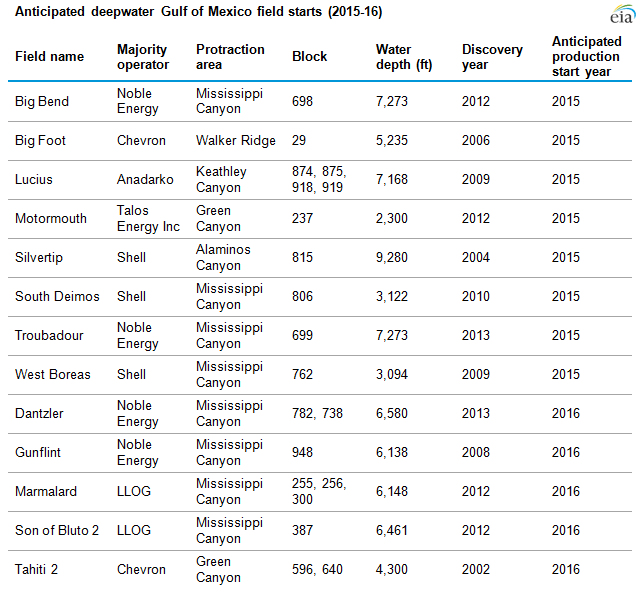
There are sound reasons to think that next year's graph may look quite different, starting with oil. The petroleum industry is still in turmoil from its turning point in late 2014, when OPEC declined to cut its output quota to restore the global oil market to balance. In North America and much of the world, drilling and investment in new projects are down sharply, and US oil production is retreating from the 44-year peak it reached in April. The subsequent decline would have been even more pronounced without the contribution of new deepwater platforms  in the Gulf of Mexico that were planned long before oil prices fell.

However, anyone identifying 2015 as the start of a global shift away from oil, rather than another cyclical low point, must contend with some contrary statistics. Global oil demand appears to have increased by around 2%--equivalent to the output of Nigeria--in response to a 70% drop in oil prices. And despite a lot of media attention, electric vehicles--the leading contender to replace the internal-combustion cars that are the main users of refined oil--have yet to catch on with mainstream consumers.

Based on data from Hybridcars.com, US sales of battery-electric vehicles (EVs) grew slightly faster than the 6% pace of the entire US car market in 2015 but still accounted for less than 0.5% of all new cars. In fact, the combined US market share of hybrids, plug-in hybrids and battery EVs fell by 18%, compared to 2014, to below 3%. This is a respectable start for vehicle electrification, but it's not much different from the beachhead that hybrids alone occupied in 2009.

Although we might look back on this situation in a few years as a turning point, I believe that will depend on the condition of OPEC and the global oil industry, as well as the level of global oil consumption, when supply and demand come back into balance and today's high oil inventories are drawn down.

At the launch of API's latest State of American Energy report earlier this month I had the opportunity to ask Jack Gerard, the President and CEO of API, how he thought the current situation might change the oil and gas industry, and whether it would push it even farther towards shale development, including outside the US. His response focused on ensuring that policies will allow US producers to compete globally and build on the advantages of US resources, capital markets and rule of law to increase their share of the market.

As for US natural gas production, rising per-well productivity and growth in the Utica shale and Permian Basin offset less drilling in general and output declines in the Marcellus shale and elsewhere.  The continued expansion of gas is remarkable, considering that natural gas futures prices (front month) averaged just $ 2.63 per million BTUs for the year and dipped below $2 in December. The LNG exports set to begin this month look very timely.

Renewable energy, mainly in the form of wind and solar power, continues to grow rapidly as its costs decline. US renewables got an unexpected boost in December when the US Congress extended the two main federal tax credits for wind, solar and other technologies, including retroactively reinstating the lapsed wind Production Tax Credit (PTC).  Renewables should also benefit from the implementation of the EPA's Clean Power Plan, and from the effect of the Paris climate agreement on the investment climate for these technologies.

We may not know for years whether the Paris Agreement was truly a turning point for climate change, as many have suggested. Another prescriptive agreement with legally binding targets, along the lines of the Kyoto Protocol, was never in the cards. However, the Paris text is replete with tentative verbs, along the lines of, "requests, invites, recognizes, aims, takes note, encourages, welcomes, etc. "  It remains up to the participating countries whether and how they fulfill their voluntary Intended Nationally Determined Contributions and financial commitments.

The Paris Agreement could turn out to be the necessary framework for firm steps by both developed and developing countries to reduce emissions and adapt to climatic changes that are already "baked in", or it might shortly be overtaken by other events, as previous climate change measures were in the aftermath of the 2008 financial crisis. The current financial problems of the world's largest emitter of greenhouse gases--arguably the most important signatory to the Paris Agreement--are not a positive signal.

With so many uncertainties in play, we should consider all of these potential turning points as signposts of changes that depend on other interconnected factors, if they are to lead to a future that breaks with the status quo. There are enough of them to make for a very interesting 2016, even if this wasn't also a US presidential election year.
 
A different version of this posting was previously published on the website of Pacific Energy Development Corporation.