Showing posts with label solar. Show all posts

Friday, April 28, 2017

Pitting Wind and Solar Against Nuclear Power

  • With US electricity demand stalled, expanding wind and solar power is increasing the economic pressure on equally low-emission nuclear power.
  • New state incentives for nuclear plants are facing resistance from the beneficiaries of renewable energy subsidies, as both battle for market share.
It's an old adage that a growth market has room for all participants, including new entrants. The US electricity market is now experiencing the converse of this, with increasing competition for static demand leading to headlines like the one I saw earlier this week: "Lifeline for Nuclear Plants Is Threatening Wind and Solar Power."

The idea behind that headline is ironic, considering that for more than a decade renewables have depended on government mandates and incentives to drive their impressive expansion. Along with recently cheap natural gas, they have made conditions increasingly difficult for established generating technologies like coal and nuclear power. In the case of coal, that was an entirely foreseeable and even intentional outcome, but for nuclear power it has come as a mostly unintended consequence.

Much as the slowdown in gasoline demand brought on by the recession created a crisis for biofuel quotas, stagnant electricity demand has hastened and  intensified the inevitable fight for market share and the resulting shakeout in generating capacity. US electricity consumption has been essentially flat since the financial crisis of 2008-9, thanks to a weak economy and aggressive investment in energy efficiency. More generation serving the same demand means lower prices for all producers, and fewer annual hours of operation for the least competitive of them.

At the same time abundant, low-priced natural gas from soaring shale production has made gas-fired turbines both a direct competitor in the 24/7 "baseload" segment that coal and nuclear power formerly dominated, and the go-to backup source for integrating more renewables onto the grid.

The US is essentially swimming in energy, at least when it comes to resources that can be turned into electricity. The only rationale left for the substantial subsidies that wind and power still receive--over $3 billion budgeted for wind alone in 2017--is environmental: mainly concerns about climate change and the emissions of CO2 and other greenhouse gases linked to it.

That's the same reason why some states have become alarmed enough by the recent wave of nuclear power plant retirements to consider providing some form of financial support for existing facilities. Nuclear power isn't just the third-largest source of electricity in the US; it is by far our largest producer of zero-emission power: 3.5 times the output of wind in 2016 and 22 times solar. A large drop in nuclear power is simply not compatible with the desire to continue cutting US emissions. Environmental groups like EDF are reaching similar conclusions.

Nuclear's scale is even more of a factor when it comes to considering what could replace it. For example, it takes the output of about 2,000 wind turbines of 2 megawatts (MW) each--roughly half of the 8,203 MW of new US wind installations last year--to equal the annual energy production of a single typical nuclear reactor. An infographic I saw on Twitter makes that easier to visualize:


I can appreciate why utilities and others that are investing heavily in wind and solar power might be convinced that providing incentives to keep nuclear power plants from retiring prematurely is "the wrong policy." After all, we have collectively pushed them to invest in these specific technologies, because it has been easier to reach a consensus at the federal and state levels to provide incentives for renewables, rather than for all low-emission energy.

As long as we are promoting renewables in this way, though, we should recognize that nuclear power is no less worthy. The biggest benefit of renewables is their low emissions (including non-greenhouse air pollutants,) an attribute shared with nuclear power. Yet because of their much lower energy densities, requiring much bigger footprints for the same output, and their lower reliability, incorporating a lot more renewables into the energy mix requires additional investments in electricity grid modernization and energy storage, along with new tools like "demand response." Nuclear power is compact, available about 90% of the time, and it works just fine with the existing grid.

By experience and philosophy, I'm a big fan of markets, so I would normally be more sympathetic to the view expressed by the American Petroleum Institute that states shouldn't tip the scales in favor of nuclear power over gas and other alternatives. However, we don't have anything resembling a level playing field for electricity generation, even in states with deregulated electricity markets. The existing federal incentives for wind and solar power, together with state Renewable Portfolio Standards, are already tipping the scales strongly in their favor. These subsidies will remain in place until at least 2022, consistent with the most recent extension by Congress. Why do renewables merit such subsidies more than nuclear power?

Wind and solar power are key parts of the emerging low-emission energy mix, and we will want more as their costs continue to fall, but not at the expense of much larger low-emission energy sources that are already in place. Less nuclear power doesn't just mean more renewables. It also means more gas or coal-fired power. That's the experience of Germany's "Energiewende", or energy transition.

As long as that is the case, and without corresponding incentives for equally low-emission nuclear plants, as well as for fossil-fuel plants that capture and sequester their CO2, we will end up with an energy mix in the next few years that is less diverse, less reliable, and emits more CO2 than necessary. I wouldn't consider that progress.

Thursday, November 03, 2016

Energy and the 2016 Presidential Election

In less than a week, the most controversial and acrimonious presidential election in living memory will be over. Energy has largely been a second-tier issue in this contest, although the divergence in the candidates' views on this vital subject is stark. Fortunately, the energy consequences--planned and unintended--of the last two US presidential elections hold some useful lessons for considering the proposed energy policies of this year's two front-runners.

As we look back, please recall that for most of the 2008 campaign the average US price for unleaded regular gasoline was over $3.00 per gallon. Much of that summer it was at or above $4.00. Four years later, from Labor Day to Election Day of 2012, regular gasoline averaged $3.76 per gallon. The comparable figure for the last two months of the 2016 campaign is just under $2.25.

In 2008 energy independence was a hot issue. Then-Senator Obama ran on a platform that targeted reducing US oil imports by over 3 million barrels per day, mainly through improved fuel efficiency. In his view US oil resources were effectively tapped out--remember "3% of reserves and 25% of consumption"? The main role he envisioned for the US oil and gas industry was as a source of increased tax revenue. His primary focus was on reducing greenhouse gas emissions through large federal investments in green energy technology. He would soon deliver on that promise with the $31 billion renewable energy package included in the federal stimulus of 2009.

When he was running for reelection in 2012, President Obama had kinder words for conventional energy, particularly the large expansion of US natural gas supply due to shale gas. He even took credit for "boosting US domestic production of oil". That point provoked an extended argument in the second presidential debate that year. Importantly, when the President emphasized renewable energy, energy efficiency and emissions, it was within a broader framework of "all of the above" energy.

At the same time, following the failure of comprehensive energy and climate legislation in his first term, his administration has pursued major new regulations aimed at achieving its energy and environmental goals. However, some of the most sweeping of these, including the Clean Power Plan, have gotten hung up in the courts, while others have yet to be fully implemented.

In retrospect President Obama was lucky. The shale energy revolution wasn't on his radar in 2008 and received little or no help from his administration, but it has increased US energy production by more than 17%, net of coal's losses, since he took office. It has made a major dent in US oil imports and CO2 emissions.  In the process, it saved consumers hundreds of billions of dollars on their energy bills, reduced the US trade imbalance, generated large numbers of new jobs when it mattered most, and provided the primary means for reducing US greenhouse gas emissions to their lowest level since before Bill Clinton ran for President.

Meanwhile, the renewable energy revolution on which his 2008 campaign pinned most of its hopes is still a work in progress. The cost of non-hydro renewables, mainly wind and solar power, has fallen dramatically and their deployment has grown impressively, expanding by a combined 135% from 2008 to 2014, or 15% per year. Wind and solar power are reshaping US electricity markets and changing the economics of baseload power plants, including nuclear plants. However, these sources still generate just 8% of US electricity and accounted for less than 3% of total US energy production in 2015.

What can we learn from the experience of the last two presidential terms? We are certainly in the midst of a long-term transition from a high-carbon energy economy to one using lower-carbon fuels and low- or effectively zero-carbon electricity. However, the numbers tell us that with regard to implementation, if not technology, we are closer to the beginning of that transition than to its end. The next President can double renewables, and that would still leave us reliant on conventional energy and nuclear power for three-quarters of our electricity and 90% of our total energy needs.

Going from 3% of energy from new renewables to the levels needed to meet the emissions targets that the US took on at Paris last year represents an enormous technical and financial challenge. It won't happen without a healthy economy, supported by a diverse and flexible energy mix anchored by domestic oil and natural gas from public and private lands and waters.

Although the Obama administration has added numerous regulations affecting energy, it stopped short of derailing the shale revolution. As a result, it has benefited greatly from the increased flexibility and energy security shale is providing. President Obama adapted his approach to energy and came around to recognizing the need for an energy mix that balances new, green energy with the best conventional energy sources. That's the lens through which we should view the energy proposals of this year's candidates.

There's no question that Secretary Clinton would promote the continued growth of renewable energy and the wider application of energy efficiency. If anything, she seems to be even more focused on climate change and clean energy than Barrack Obama was in 2008. However, her campaign website portrays oil and gas mainly in negative terms, with a focus on cutting their consumption, along with the industry's tax benefits. While explicitly recognizing the role that increased US natural gas production has played in reducing emissions, her policies would directly target the primary source of that growth.

Shale gas now accounts for half of all US natural gas production, but Secretary Clinton is on record supporting much stricter regulations on "fracking", the common shorthand for the technological processes involved in producing oil and gas from shale: "By the time we get through all of my conditions, I do not think there will be many places in America where fracking will continue to take place,” she said in a March debate with Senator Sanders.  

Reversing the recent growth of natural gas production from shale would lead to higher emissions during the next four to eight years. With less gas available, natural gas prices would rise, and the remaining coal-fired power plants would ramp back up to fill the gap, even as renewables continued to expand. That is happening in Germany today as that country turns away from nuclear power. In the US, without the contribution from natural gas and nuclear power plants, another of which just shut down permanently, our climate goals would be out of reach.

Recently, Secretary Clinton was also cited as wanting to expand the current administration's moratorium on coal development from public lands to encompass oil and gas. As shown in the chart below, based on data from the US Energy Information Administration, this production is already trending downward, overall. Imposing a moratorium on oil and gas development on public lands would accelerate that contraction, without new wells to offset the decline from mature fields.


If implemented as described, Secretary Clinton's policy toward shale energy would have an even more pronounced effect on US energy supplies than restricting development on federal land. With oil prices low, shale oil production has already fallen by 1.2 million barrels per day since output peaked in May 2015. The drop would have been much steeper had US producers not been able to focus their greatly reduced drilling activity on their most productive prospects.

US oil imports are increasing in tandem with falling shale oil production and rising demand. We still have 260 million cars, trucks and buses that require mainly petroleum-based fuels, while electric vehicles make up a tiny fraction of the US vehicle fleet. If shale oil drilling were further curtailed by new regulations, the shortfall would be made up from non-US sources and imports would grow even faster. The party that stands to gain the most from that is OPEC.

From what I have seen and read, Secretary Clinton's proposed energy policy would undermine the all-of-the-above energy mix necessary to maintain US economic growth and energy security as we transition to cleaner energy sources. It is disconnected from the lessons of the last eight years and should not be implemented in its present form.

There is no doubt that Donald Trump views the shale revolution and the resources it has unlocked very differently from Secretary Clinton. It has been harder to gauge where he stands on other aspects of energy. During the primaries, Mr. Trump's energy policy lacked much detail, as I noted at the time. He has since largely remedied that, though many of the points raised on the energy page of his campaign's website seem mainly intended to counter Secretary Clinton's positions.

Mr. Trump's energy vision and goals are posted on his website, and he has made several speeches on the subject, focused mainly on expanding US oil and gas production and making the US a dominant global player in the markets for these commodities. His main theme is sweeping deregulation and reform, including revoking the current administration's executive orders and regulations affecting infrastructure projects, resource development, and the role of coal in power generation.

He endorses an all-of-the-above approach, but there's still little mention of renewables, efficiency or nuclear power. In any case his support for renewables is not linked to man-made climate change, which he disputes. He is also on record opposing US adherence to the Paris Climate Agreement.

How do Mr. Trump's ideas on energy square with the lessons of the last eight years? It seems clear he would rather swim with, rather than against the tide of the shale revolution. It's less clear how much additional activity that would stimulate in the near term if oil and gas prices remain low, even if regulations could be cut as he proposes. As for renewable energy, there doesn't seem to be enough information to assess where it fits into his version of "all of the above".

It's important to keep in mind that energy is not an end in itself. Stepping back from the details, and at the risk of grossly oversimplifying some complex and thorny issues, the key difference I see between the two candidates in this area is that Mrs. Clinton's energy policies seem designed mainly to serve environmental goals, while Mr. Trump's energy policies seem aimed at mainly economic goals.

In that sense, the choice here looks as binary as on many other issues this year. Just don't interpret that conclusion or my analysis above as an endorsement of either candidate.

Thursday, April 14, 2016

Lessons from the Coal Bust

Yesterday's Chapter 11 filing by the largest US coal mining company is the latest in a series of coal bankruptcies. While factors such as regulations and poorly timed acquisitions have played a role, this trend reflects the parallel technology revolutions playing out across the energy sector. Here are a few key lessons from the ongoing coal bust:
  • There are many other ways to make electricity, and coal brings nothing unique to the party. In a growing number of markets it is no longer the cheapest form of generation, and it is certainly the one with the most environmental baggage, from source to combustion.
  • Coal-fired power generation is in competition with alternatives that are already producing at scale, like nuclear and natural gas generation, or growing rapidly from a smaller base, like renewables. It may not compete with all of these in every market, but few markets lack at least one of these challengers.
  • The costs of renewables and gas have fallen significantly in recent years, due to major technology gains. Coal has also benefited from some improvements in scale and end-use technology. Today's ultra supercritical coal plants are more efficient than coal plants of a generation ago, but they are more expensive to build, even without carbon capture (CCS). However, wind and solar power continue to grow cheaper and more efficient, while gas has benefited from resource-multiplying production technologies and advanced gas turbines that can exceed 60% efficiency and ramp up and down rapidly to accommodate the swings of intermittent renewables.
  • Despite all of these threats, coal is not on the verge of being forced out of power generation, even in developed countries where all the above factors are at work. Replacing its enormous contribution to primary energy supply and electricity generation will be a very heavy lift, particularly where another major energy source like nuclear power is being phased out. Germany is the prime example of that.
Consider what it would take to replace the remainder of coal in the US power sector. Last year coal generated 33% of US electricity, down from nearly 45% in 2010. Gas picked up 70% of the drop in coal's power output, but that still left coal's contribution at 1,356 Terawatt-hours (TWh) or about 6x the grid contribution of all US wind and solar power last year. (A Terawatt is a billion kilowatts.)

Displacing coal completely from US electricity would require doubling the 2015 output of US gas-fired power generation and a roughly 36% increase in US natural gas production. By comparison, the US nuclear power fleet would have to more than double. If coal were to be replaced entirely by renewables, which in practice probably means gas pushing coal out of baseload power and renewables reducing gas-fired peak generation, the hill looks steep.

Last year the US added 7.3 GW of new solar installations and 8.6 GW of new wind turbines. Assuming they were mostly sited in locations with reasonable solar or wind resources, their combined annual output should be around 35 TWh. At that pace it would take another 36 years to make up what coal now generates. It's true that net annual wind and solar additions continue to grow at double-digit rates, but keeping that up may get harder as the best sites become saturated and earlier wind turbines and PV arrays reach the end of their useful lives in the meantime.

In other words, driving coal from here to zero seems possible but very difficult, even with an all-of-the-above strategy in a market without demand growth. And if electricity demand continues to grow, as it is globally, or resumed growing in the US and other developed countries to enable a big shift to electric vehicles, the prospect of retiring coal entirely recedes into the future.


Wednesday, January 27, 2016

2015: A Turning Point for Energy?

  • 2015 was certainly an eventful year in energy, with plummeting oil prices and a widely anticipated global climate conference in December. It's less clear that it was a turning point. 
When I sifted through the major energy developments of 2015, I was surprised by the number of references I found to last year as a turning point, whether for the oil industry, the response to climate change, coal-fired electricity generation, or renewable energy. To this list I am tempted to add the decision to allow unrestricted exports of US crude oil for the first time in 40 years.

Major turning points are best identified with the passage of time. With so many legitimate candidates it might seem a bit deflating to note, as the chart below reflects, that the growth pattern for US energy supplies in 2015 looks a lot like the one for 2014. Despite low prices, oil and gas output posted solid gains, at least through October, while wind and solar power contributed modestly, when compared on an energy-equivalent basis.


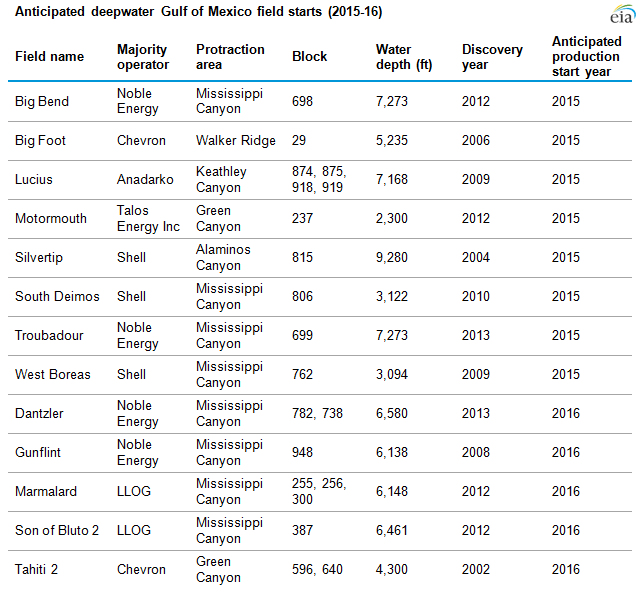
There are sound reasons to think that next year's graph may look quite different, starting with oil. The petroleum industry is still in turmoil from its turning point in late 2014, when OPEC declined to cut its output quota to restore the global oil market to balance. In North America and much of the world, drilling and investment in new projects are down sharply, and US oil production is retreating from the 44-year peak it reached in April. The subsequent decline would have been even more pronounced without the contribution of new deepwater platforms  in the Gulf of Mexico that were planned long before oil prices fell.

However, anyone identifying 2015 as the start of a global shift away from oil, rather than another cyclical low point, must contend with some contrary statistics. Global oil demand appears to have increased by around 2%--equivalent to the output of Nigeria--in response to a 70% drop in oil prices. And despite a lot of media attention, electric vehicles--the leading contender to replace the internal-combustion cars that are the main users of refined oil--have yet to catch on with mainstream consumers.

Based on data from Hybridcars.com, US sales of battery-electric vehicles (EVs) grew slightly faster than the 6% pace of the entire US car market in 2015 but still accounted for less than 0.5% of all new cars. In fact, the combined US market share of hybrids, plug-in hybrids and battery EVs fell by 18%, compared to 2014, to below 3%. This is a respectable start for vehicle electrification, but it's not much different from the beachhead that hybrids alone occupied in 2009.

Although we might look back on this situation in a few years as a turning point, I believe that will depend on the condition of OPEC and the global oil industry, as well as the level of global oil consumption, when supply and demand come back into balance and today's high oil inventories are drawn down.

At the launch of API's latest State of American Energy report earlier this month I had the opportunity to ask Jack Gerard, the President and CEO of API, how he thought the current situation might change the oil and gas industry, and whether it would push it even farther towards shale development, including outside the US. His response focused on ensuring that policies will allow US producers to compete globally and build on the advantages of US resources, capital markets and rule of law to increase their share of the market.

As for US natural gas production, rising per-well productivity and growth in the Utica shale and Permian Basin offset less drilling in general and output declines in the Marcellus shale and elsewhere.  The continued expansion of gas is remarkable, considering that natural gas futures prices (front month) averaged just $ 2.63 per million BTUs for the year and dipped below $2 in December. The LNG exports set to begin this month look very timely.

Renewable energy, mainly in the form of wind and solar power, continues to grow rapidly as its costs decline. US renewables got an unexpected boost in December when the US Congress extended the two main federal tax credits for wind, solar and other technologies, including retroactively reinstating the lapsed wind Production Tax Credit (PTC).  Renewables should also benefit from the implementation of the EPA's Clean Power Plan, and from the effect of the Paris climate agreement on the investment climate for these technologies.

We may not know for years whether the Paris Agreement was truly a turning point for climate change, as many have suggested. Another prescriptive agreement with legally binding targets, along the lines of the Kyoto Protocol, was never in the cards. However, the Paris text is replete with tentative verbs, along the lines of, "requests, invites, recognizes, aims, takes note, encourages, welcomes, etc. "  It remains up to the participating countries whether and how they fulfill their voluntary Intended Nationally Determined Contributions and financial commitments.

The Paris Agreement could turn out to be the necessary framework for firm steps by both developed and developing countries to reduce emissions and adapt to climatic changes that are already "baked in", or it might shortly be overtaken by other events, as previous climate change measures were in the aftermath of the 2008 financial crisis. The current financial problems of the world's largest emitter of greenhouse gases--arguably the most important signatory to the Paris Agreement--are not a positive signal.

With so many uncertainties in play, we should consider all of these potential turning points as signposts of changes that depend on other interconnected factors, if they are to lead to a future that breaks with the status quo. There are enough of them to make for a very interesting 2016, even if this wasn't also a US presidential election year.
 
A different version of this posting was previously published on the website of Pacific Energy Development Corporation.

Tuesday, July 07, 2015

Energy Storage and the Cost of Going Off-Grid

  • New energy storage offerings from Tesla and other manufacturers are widely expected to enhance the attractiveness of rooftop solar power and other renewables.
  • However, recent analysis from the Brattle Group shows that even with rapid cost reductions, grid-independence will remain beyond the reach of most consumers.
Last month's Annual Energy Conference of the US Energy Information Administration included speakers and panels on topics such as crude-by-rail, potential US oil exports, and the role of the Strategic Petroleum Reserve, all of which should be familiar to my readers here. However, the topic that really caught my interest this year was energy storage.

Storage has been in the news lately, particularly since the launch of Tesla's new home and commercial energy storage products. In fact, Tesla's Chief Technology Officer spoke on the first morning of the conference. Much of his talk (very large file) focused on Tesla's expectations for the cost of storage to decline sharply as electric vehicles (EVs) and non-vehicle battery applications grow. Whether battery costs can drop as quickly as those for solar photovoltaic (PV) cells or not, storage is likely to become a more important factor in energy markets in the years ahead.

One of the most interesting presentations I saw examined a provocative aspect of this question. Michael Kline of The Brattle Group, which consults extensively on electricity, took a detailed look at whether rooftop PV and home energy storage might become sufficiently attractive that a large number of consumers would employ the combination to enable them to disconnect from the power grid entirely.  That would be an extremely appealing idea for a lot of people. The author of a book I received from the publisher a few years ago referred to it as a movement.

Most people by now appear to understand that solar panels alone can't make a household independent of the grid. The daily and seasonal incidence of sunlight aligns imperfectly with the peaks and troughs of typical home electricity demand. This is why "net metering", under which PV owners sell excess power to their local utility--effectively using the grid as a free battery--has become contentious in some electricity markets.

In a true off-grid scenario, net metering would be unavailable. Onsite storage would thus be necessary to shift in time the kilowatt-hours of energy produced from a home PV array. However, a standalone PV + storage system must be sized to deliver enough instantaneous peak power to handle periodic high-load events like the startup of air conditioners and other devices. Another presenter on the same panel had a nifty chart demonstrating how wide those variations can be, with multiple spikes each day averaging above 12 kilowatts (kW)--several times the output of a typical rooftop PV array.

Brattle's off-grid model included PV and storage optimized to "meet load in every hour given a battery with 3 days of storage (at average load levels.)" Although that is still probably less than the peak load such a system would encounter, it is the equivalent of multiple Tesla "Powerwall" units and would only be practical with the kind of drastic cost reductions Mr. Kline assumed by 2025: PV at $1.50/W and storage at $100/kWh, installed. That equates to around a third of last year's average US residential PV installation and 1/7th the estimated installed cost of Tesla's offering on a retail basis.  

Mr. Kline framed this exercise as a "stress test", not just of the off-grid proposition but of the future of the electric power grid. If many millions of customers were to "cut the cord" for electricity as others have for wireline telephone service, even a "smart" power grid would become much less important and might shrink over time. That same logic should extend to the power generators supplying the grid. If most consumers went off-grid, the value of even the most flexible generation on the grid, which today is often provided by natural gas turbines, would fall, as would demand for the fuel on which they run.

In Brattle's assessment, despite the assumption of very cheap PV and storage, that prospect seems remote. For the three markets analyzed (California, Texas and Westchester County, NY) the levelized cost of energy (LCOE) for the off-grid configuration modeled was significantly more expensive than the EIA's projected cost of electricity in those markets in 2025. In fact, for consumers in California and Texas, as well as in all cases of the parallel commercial customer analysis Brattle performed, PV + storage would  be expected to cost a multiple of retail electricity prices.

As Mr. Kline explained, under more realistic assumptions the comparison was likely to be even worse for off-grid options. However, his conclusion that , "going off-grid...is unlikely to be the least expensive option for most consumers" does not mean that some consumers would not choose to do so, anyway. To them, a premium of 10-20 cents per kWh might seem like a small price to pay for personal energy independence. Yet at that price, it is hard to envision it would become a mass-market choice. 

Mr. Kline made a point of reminding his audience that Brattle's analysis did not mean that distributed energy  would  not be competitive in the future, or that it could not provide valuable services to customers and to the grid. Importantly, the figures he presented underlined the continued value of the power grid to customers, even in a future in which large quantities of PV and storage are deployed.  As he put it, "Distributed energy is a complement to the grid, not a substitute for it."

By extension, flexible generating assets like fast-reacting gas turbines should also continue to provide significant value, especially during those seasons when daily solar input is low, and in locations where average sun exposure is generally much weaker than in the US Southwest and other prime solar resource regions.  As appealing as the idea might be to some, storage seems unlikely to make either the grid or any class of generating technologies obsolete for the foreseeable future. As Bill Gates recently observed, that has implications for the cost of a wholesale shift to current renewables and away from fossil fuels.


A different version of this posting was previously published on the website of Pacific Energy Development Corporation.

Thursday, October 02, 2014

Calibrating Solar's Growth Potential

  • A new report from the International Energy Agency suggests the possibility of solar power becoming the world's largest electricity source by 2050.
  • It is noteworthy that IEA thinks this could happen, but the growth rates required, let alone the policies necessary to support them, will be challenging to sustain.
In the wake of last month's UN Climate Summit in New York City, Monday's report from the International Energy Agency (IEA) on "How solar energy could be the largest source of electricity by mid-century" ought to be welcome news. At the same time, it conflicts with perceptions that some countries are already farther along than that. So IEA's indication of the feasibility of generating 26% of global electricity from solar energy by 2050 either looks quite ambitious or quite conservative, depending on your current perspective.

For me it always comes down to the numbers, without which it's impossible to grasp systems on the scale and complexity of global energy. IEA's high-solar roadmap--it's not a forecast--includes significant contributions from both solar photovoltaic power (PV) and solar thermal electricity (STE)--often referred to as concentrating solar power, or CSP--with the former making up 16% of global electricity at mid-century and the latter around 10%. As the detailed report from IEA indicates, achieving the headline result would require global installed PV capacity to grow 35-fold between 2013 and 2050, equivalent to an average of 124 Gigawatts (GW) per year of additions, peaking at "200 GW/yr between 2025 and 2040." That's a 6x increase in installations over last year.

To put that in a US electricity generation perspective, IEA projects that the US would have to hit one million GW-hours per year from PV--roughly what we currently get from natural gas power plants--by around 2035 to meet its share of the anticipated global solar buildup. US solar installations are on a record-setting pace of nearly 7 GW this year, but matching natural gas would require 120x growth in solar generation, or a sustained compound average growth rate over 25% for the next 20-plus years. That's not impossible, as recent PV growth has been even higher, but it won't be easy to continue indefinitely, especially without further improvements in the technology, and in energy storage.

The solar thermal portion of IEA's technology roadmap looks like a much tougher challenge. STE has been losing ground to PV lately, as the costs of the latter have fallen much faster than the former, for reasons that aren't hard to understand. Making PV modules cheaper and more efficient is analogous to improving computer chip manufacturing, while making STE cheaper and more efficient is more similar to manufacturing cheaper, more efficient cars or appliances.

One of the main reasons IEA appears to have concluded that STE could suddenly start competing with PV again is its inherent thermal energy storage capability, which enables STE to supply electricity after the sun has set. While I wouldn't discount that, it looked like a bigger benefit a few years ago, before electricity storage technology started to improve. Storage of all types is still expensive, which helps explain why fast-reacting natural gas power plants offer important synergies for integrating intermittent renewables like wind and solar power. However, it looks like a reasonable bet today that batteries and other non-mechanical energy storage technologies will improve faster than thermal storage in the decades ahead.

The upshot of all this is that getting to 16% of global electricity from PV by 2050 is a stretch, and the 10% contribution from STE looks like even more than a stretch. So how does that square with recent reports that Germany--hardly a sun-worshipper's paradise--got "half its energy from solar" for a few weeks this summer? A recent post on The Energy Collective does a better job of clarifying the significance of that than I could, providing links to German government data indicating that solar's average contribution in 2013 was just 4.5% of electricity--hence less than half that in terms of total energy consumption. The author extrapolates that at current rates of annual installations, it would take Germany nearly a century to get to 50% of its electricity from the sun.

Much can happen in 35 years that we wouldn't anticipate today. For now, solar PV looks like the energy technology to beat, in terms of low lifecycle greenhouse gas emissions and long-run cost trends. But whether it reaches the levels of market penetration the IEA's report suggests are possible, or tops out at less than 5% of global electricity supply, as their baseline scenario assumes, it must function within an energy mix that includes other technologies, such as fossil fuels, nuclear power and non-solar renewables. And that's true whether or not electric vehicles take off in a big way, which would significantly increase electricity demand and make the IEA's high-end solar targets even more difficult to reach.

Wednesday, August 27, 2014

Threats and Opportunities of Distributed Power Generation

  • Rooftop solar panels aren't the only distributed generation technology that could challenge existing utility business models as it grows.
  • Some power companies see DG as an opportunity and are entering this segment in ways that could prove challenging to their start-up competitors.
Two recent news stories highlighted different ways that utilities and large generating companies are beginning to respond to the emergence of distributed generation (DG) as more than back-up power. Arizona Public Service (APS) is launching its version of potentially the most challenging type of DG for utilities, rooftop solar. Meanwhile, Exelon Corp. announced an investment partnership with a provider of gas-powered fuel cells. The success of such ventures and the evolution of DG will have implications for electrical grid stability and our future energy mix, including the role of flexible, large-scale gas-fired generation.

APS is seeking regulatory approval for a program that might be characterized as free rooftop solar. In effect, they would lease approved homeowners' rooftops for $30 per month, in order to host a total of 20 MW of solar panels that would be owned and controlled by APS. The idea has generated some controversy, partly due to the utility's rocky relationship with the solar industry over issues like "net metering". 

The plan would enable homeowners who might not otherwise qualify for solar leasing from third parties to have solar installed on their homes, although they would apparently still receive their electricity through the meter from the grid, rather than mainly from the rooftop installation. That's a very different model from most DG approaches, though under current market conditions the net benefit to consumers reportedly would match or exceed that from solar leasing.

Exelon's announcement seems aimed at a different segment of the market, and based on a very different technology. The company would finance the installation of 21 MW of Bloom Energy's fuel cell generators at businesses in several states, including California. Bloom made quite a splash when it introduced its "energy servers", including a popular segment on "60 Minutes" in 2010.

Bloom's devices, which come in models producing either 100 kW or 200 kW, are built around solid oxide fuel cells.  At that scale they are too large for individual homes but suitable for many businesses. And because they are modular, they can be combined to meet the energy needs of larger offices or commercial facilities such as data centers. Unlike the fuel cells being deployed in limited numbers of automobiles, they do not require a source of hydrogen gas. Instead they run directly on natural gas from which hydrogen is extracted ("auto-reformed") inside the box.

In that respect, despite their novel technology, Bloom's servers are much closer than rooftop solar to traditional distributed energy, in which a customer owns or leases a small generator to which it supplies fuel. The advantages of Bloom's model are that its servers are designed for highly efficient 24x7 operation, without the expensive energy storage necessary to turn solar into 24x7 power, and with much lower greenhouse gas emissions and local pollution than a diesel generator.

In order to qualify as true zero-emission energy, these installations would need to be connected to a source of biogas, e.g., landfill gas, which effectively creates a closed emissions loop or recycles emissions that would have occurred elsewhere.  Even running on ordinary natural gas, the stated emissions of Bloom's energy servers are roughly a third less than the average emissions for US grid electricity, or 20% lower than the average for other natural gas generation. However, their emissions are over 10% higher than the 2012 average for California's grid.

I find it interesting that Exelon, the largest nuclear power operator in the US and owner of a full array of utility-scale gas, coal, hydro, wind and solar power, would make a high-profile investment in a technology that could ultimately slash the demand for its large central power plants. The company has invested in utility-scale solar and wind power, and as the press release indicated, is already involved in "onsite solar, emergency generation and cogeneration" via its Constellation subsidiary. In fact, it has apparently already achieved its goal of eliminating the equivalent of its 2001 carbon footprint.  However, the press release hints that something else might have attracted them to this deal.

Consider all the changes in store for the power grid. Baseload coal power is declining due to the combination of economic forces and strong emissions regulations such as the EPA's Clean Power Plan. Even some nuclear power plants, which have been the workhorses of the fleet for the last several decades, are facing premature retirement for non-operational reasons. At the same time, grid operators must integrate steadily growing proportions of intermittent renewable energy (wind and solar), along with increasingly sophisticated tools like demand response and energy storage. If any of this goes wrong, electric reliability will likely suffer.

From that perspective, Exelon's small--for them--step into DG also looks like a bet on the future value of reliability--"non-intermittent...reliable, resilient and distributed power." That's a bet even an old oil trader can understand: Uncertainty creates volatility, and volatility creates opportunities. I will be very interested to see how this turns out. 

A different version of this posting was previously published on the website of Pacific Energy Development Corporation.

Friday, March 28, 2014

How Can US Natural Gas Reduce Europe's Dependence on Russia?

  • The EU's dependence on Russian natural gas is directly linked to its own gas production, which has fallen faster than EU member countries' demand for gas.
  • While US LNG exports aren't an immediate remedy, due to permitting and construction time lags, the prospect of their availability is already affecting the gas market.
Russia's annexation of Ukraine's Crimean Peninsula has drawn new attention to Europe's reliance on energy supplies from Russia, particularly for natural gas. Lacking the means to force Russia's president to back down, US politicians and leading newspapers have latched onto the idea of exporting shale gas to reduce the EU's vulnerability to an accidental or intentional disruption of these supplies.  The efficacy of this strategy depends on more than the logistics and timing of US liquefied natural gas (LNG) projects.

The European Union is expected to import 15.5 billion cubic feet (BCF) per day of natural gas from Russia this year, roughly half of which would normally be transported by pipelines passing through Ukraine. Worries about the security of these supplies in the current crisis are compounded by Europe's increasing reliance on gas imports from all sources.

While EU gas consumption, based on the union's 28 current member countries, has been essentially flat over the last decade, its production has declined by more than a third, as shown in the chart below. As of the end of 2012, EU self-sufficiency in gas stood at just 35%. The widening of the gap between EU gas demand and production bears a close resemblance to the situation in which the US found itself with regard to crude oil prior to the shale revolution, and it is the main source of Europe's vulnerability in natural gas.

After Russia, the EU's main gas suppliers are Norway and Algeria, primarily by pipeline, followed by LNG sourced from Qatar, Nigeria and other countries.  Russia's leading role in supplying Europe's gas is consistent with its status as the world's second-largest gas producer and largest gas exporter, its proximity to the EU, and its pipeline network developed over multiple decades. Europe's gas supply mix includes ample political risk, but none of the EU's other suppliers are geopolitical rivals like Russia.

The EU has three main options for reducing its dependence on gas imports from Russia. It could shrink natural gas consumption, which is already happening to a modest degree as pricey gas-fired power generation is being squeezed out between subsidized wind and solar power and cheaper coal power, in a mirror image of US trends of the last several years.  This seems inconsistent with the EU's long-term emission goals and its need for gas to back up intermittent renewable electricity generation, so the further scope for this option appears limited, at least for the next decade.

EU countries could also attempt to revive domestic gas production. Europe's conventional gas fields may be in decline, other than in non-EU Norway, but its shale gas potential was estimated at 470 trillion cubic feet (TCF) in the US Energy Information Administration's global shale assessment last year. That's about 40% bigger than Europe's reserves and technically recoverable resources of conventional gas. Uncertainties on this estimate are still large, but it's in the same ballpark with the Marcellus shale in the eastern US, which currently produces over 14 BCF/day.

Unfortunately, initial efforts in Poland's shale have been disappointing, while Germany, France, and other countries have imposed explicit or implicit moratoria on shale gas development. Unless these policies are reversed in the aftermath of the Ukraine crisis, the EU will be unable to grow its way out of its dependence on Russia.

That leaves import diversification as the likeliest path for weaning Europe off Russian gas. This process is underway incrementally, hastened by previous Russian gas brinksmanship. Interest in US gas is understandable on many levels, not least because even after increasing production by around 17 BCF/day since 2006, US shale resources are expected to add another 13 BCF/day by 2020.

Energy experts have been quick to point out that the first US LNG exports won't be available for at least several years, and that companies, rather than governments, are the main parties involved in gas contracts. Customers in Europe will have to compete for US and other LNG supplies with customers elsewhere, especially in Asia, where China's gas demand is growing and Japan's post-Fukushima nuclear shutdowns have dramatically increased LNG imports.

These constraints are real. However, they ignore the ways in which changing the market's expectations about future LNG supplies--and potentially prices--could affect the calculations of Europe's gas buyers today and limit the political leverage that Russia's dominant gas export position conveys. Anecdotal reports suggest that US LNG is already a factor in contract renegotiations in Eastern Europe. As Amy Myers Jaffe of UC Davis and formerly the Baker Institute tweeted a few weeks ago, "it isn't about physical LNG cargo to Europe; it is about US exports promoting market liberalization (and) greater liquidity." 

 A decision by the US government to streamline the permitting and development of LNG facilities wouldn't enable US exports to displace Russian gas in Europe this year or next, but it would put Russia on notice that in the future it must compete in a market in which gas customers in Europe and elsewhere will have much greater choice. That would certainly complicate President Putin's plans.
 
A different version of this posting was previously published on the website of Pacific Energy Development Corporation.

Thursday, February 27, 2014

Can Solar Fill the Hydropower Gap During California’s Drought?

  • Although the scale of California's conventional hydropower remains much larger than that of solar power, solar's rapid growth provides a meaningful contribution to the grid.
  • Solar power can work nearly anywhere, but installing it where it's actually sunny much of the time pays big dividends.

After reading a San Jose Mercury article with the unwieldy title, “Drought threatens California’s hydroelectricity supply, but solar makes up the gap” I was intrigued enough to do a little fact-checking on state-level  electricity statistics. The article quoted the head of the California Energy Commission, who implied that solar power additions were sufficient to make up for any shortfall in hydro, historically one of the state’s biggest energy sources. My initial skepticism about that claim turned out to be largely unfounded.

Solar has been growing rapidly, especially in California, but even with nearly 3,000 MW of photovoltaic (PV) and solar thermal generation in place, it’s still well short of the scale of California’s 10,000 MW of hydropower dams, especially when you consider that the latter aren’t constrained to operate only in daylight hours. However, I also know better than to respond to a claim like this without checking the data on how much energy these installations actually deliver.

My first look at the Energy Information Administration’s annual generation data seemed to confirm my suspicions. In 2012 California’s hydropower facilities produced 26.8 million megawatt-hours (MWh), while grid-connected solar generated just 1.4 million MWh. However, when I looked at more recent monthly data, the mismatch was much smaller, due to solar’s strong growth in the Golden State. For example, in September 2013 California solar power generated 435 MWh, or nearly 24% of hydro’s 1.8 million MWh.

The potential drought benefits of solar stand out even more sharply when we compare the growth in solar generation to the change in output from hydro. Last year solar electricity in the state increased by 2.4 million MWh, compared to 2012, while hydropower fell by 2.3 million MWh. That added solar power won’t provide grid operators the same flexibility as the lost hydropower, because of its cyclical nature, but it is clearly now growing at a rate and scale that makes it a serious contributor.

I’d be remiss if I didn’t point out that solar in California is still nowhere near the scale of the state’s biggest electricity source, natural gas generation, which in 2013 produced over 100 million MWh, or 57% of the state’s non-imported electricity supply. Gas is also filling much of the roughly 18 million MWh shortfall left by the early retirement of Southern California Edison’s San Onofre Nuclear Generating Station last summer, and if the state’s drought worsens, gas will be the main backup for further declines in hydropower.

Yet solar’s growing contribution to the state’s energy mix provides a clear demonstration that while generous state and federal policies can make installing PV economically attractive nearly anywhere, it’s abundant sunshine like California’s that makes it a useful energy source, especially when drought conditions reduce the output of other, water-dependent energy supplies.

A different version of this posting was previously published on Energy Trends Insider.

Thursday, June 13, 2013

"All of the Above" Must Be Weighted by Common Sense

  • "All of the Above" is just a cliché if not tempered by an appreciation of the strengths and weaknesses of different energy sources, and a standard basis of comparison.
  • Renewable energy is gaining market share, but fossil fuels--especially oil and gas--will play crucial roles in the energy mix for decades.

Last month, Real Clear Politics and API hosted an energy summit in Washington, DC entitled, “Fueling America’s Future”. It was intended to provide a quick overview of most of the key technologies and issues associated with an all-of-the-above energy strategy for the United States. Going through the highlights of the webcast gives me an opportunity to summarize my point of view for new readers of this blog. I’d sum that up as “All of the Above”, with asterisks for the proportions and situations that make sense.

This slogan, at least in the manner in which it has been espoused by politicians in both parties, has attracted fair criticism for being overly bland and safe. I suspect that critique reflects a general sense that our energy mix has always been composed of all of the above, or at least all of the technologies that were sufficiently proven and economic to contribute at scale at any point in time. However, as both our technology options and choice criteria expand, our understanding of the evolving energy mix is hampered by metrics and assumptions that are overdue to be revisited.

The summit’s first panel examined the technologies of the mix, in a “lightning-round” format of five minutes apiece. The panel covered oil, natural gas, coal, nuclear and renewables, led by wind power.

The interim CEO of the main US wind energy trade association, AWEA, cited his industry’s progress in reducing the technology’s cost, increasing the domestic content in its US value chain from 25% to 67%, and expanding its market penetration. Mr. Gramlich was also surprisingly forthright about wind power’s continued dependence on federal subsidies, a point to which I’ll return in future posts.

He began with a statistic indicating that wind power was #1 in new US electric generation capacity last year. This is more than just a talking point, but it calls for some refinement if we’re to see an accurate picture of the changing US electricity mix. When most generating facilities operated within a narrow band of expected utilization, say 60%-80% of the time, comparing their nameplate capacities like this was satisfactory. Exceptions such as “peaking” gas turbines that only operate a few dozen or hundred hours a year were never the recipients of targeted government incentives.

Now, however, our energy mix includes technologies with effective utilization rates, or “capacity factors”, ranging from as low as 10% for solar photovoltaic (PV) installations in cloudy northern locations, to roughly 90% for nuclear power. Wind comes in around 20-35%, depending on site and turbine size. In terms of their likely annual power generation, new natural gas facilities actually led new wind farms by roughly 2:1 last year.

Given the enormous and largely unanticipated natural gas renaissance in the US, that shouldn’t surprise anyone. In my first blog post over nine years ago I posed a series of questions, including whether we were on the verge of an energy technology breakthrough. I had in mind something involving renewable or nuclear energy, energy storage, or vehicle technology. The shale gas revolution was already starting to emerge from obscurity, but I, along with most other energy experts at the time, remained oblivious to it.

The new head of the American Natural Gas Alliance described gas as clean, abundant and affordable. At least the last two points should be uncontroversial by now, backed up by market prices and resource assessments. We tend to think of gas as a bridge fuel to a lower emission future, but I think we’ll increasingly hear it called a “foundation fuel,” as Mr. Durbin did.

The spokesman from the Solar Energy Industries Association accurately referred to solar as our fastest growing energy source, though he didn’t explain how it would grow from 0.1% of US generation last year to more than 1% by next year. He alluded to a plausible inflection point based on policy and innovation, but his enthusiasm that solar was expanding rapidly outside California and the Southwest ought to worry us.

Until PV prices fall much lower than they have, a surge of installations in places like Vermont and Wisconsin means that taxpayers and ratepayers are paying more than they should to make that happen. And the global competition and “survival of the fittest” he touted has mainly resulted, not from capitalism, but from dueling government incentives for solar, especially in Europe and Asia. I’m much more positive about solar than the above might suggest, but like other renewables, it will cost less and achieve more for us in locations with high-quality resources.

The discussion on oil was more globally focused, based on BP’s forecasts and annual Statistical Review. Contrary to the widespread view of oil’s continued dominance, it has been losing market share over the last 40 years — including the last 13 years in a row — and stands at its lowest market share in the US since at least World War II.  The representative from BP linked this performance to oil’s concentration in transportation fuel, where it has been squeezed out by efficiency, low economic growth (and to some extent biofuels, which got short shrift in the session). At the same time, the growth of North American production, another dividend of the shale revolution, puts increasing pressure on OPEC. I’ll come back to this dynamic in future posts.

Wind and solar aren’t the only, or even the biggest, renewables, despite the attention they receive. I was glad to see hydropower–often the forgotten renewable–represented on the panel, though I was disappointed by the absence of geothermal power. Both are more geographically constrained, yet have features that wind and solar could only wish for.  Hydro generated nearly 7% of US electricity last year from just 3% of US dams, with significant potential for growth through retrofitting unpowered dams. The Executive Director of the National Hydropower Association quoted Senator Ron Wyden (D-OR), the new chairman of the Senate Energy and Natural Resources Committee, as saying, “Hydro is back.” That could prompt some interesting discussions.

I’m glad I wasn’t there representing coal, which must surely be the least loved energy source today. It continues to grow globally, with US coal exports playing a role, but the domestic US story is a “decline narrative” as the VP of the National Mining Association described it. He managed to find a note of optimism in the more efficient coal power fleet that will remain after 68,000 MW of old capacity retires by 2020, under pressure from various regulations and competition from natural gas. Unfortunately, efficiency alone isn’t sufficient. From my perspective, carbon capture and sequestration (CCS) is the key to reconciling coal’s convenience and low energy cost with its high emissions. CCS wasn’t mentioned by name, but was only alluded to as “technology that does not exist.” That dismisses it too lightly, as I’ll explain when time permits.

The head of government affairs for the Nuclear Energy Institute spoke last in the lightning round on technology. (The subsequent panel on energy issues is worth your time, too.) He emphasized nuclear’s anchor role in the US electricity mix, with 12% of US generating capacity contributing around 20% of the electricity supply at a cost of 2¢ per kilowatt-hour (kWh). Yet despite five new reactors under construction and a wave of license extensions, post-Fukushima the center of the nuclear industry is shifting to places like China and India. 66 reactors are under construction outside the US, mainly in the developing world, because that’s where demand is growing.

I’ve worked in various aspects of energy for more than 30 years, and for much of that time our energy mix and the forces that drive it have been in a state of flux. With that in mind, my recipe for “all of the above”  starts with what we have now, recognizes the inertia of existing fleets and infrastructure, and evolves as costs shift and our emphasis on environmental consequences grows.

Wind and especially solar will grow, but will add the most value when used with, rather than against the grain of their limitations. Nor will energy storage turn them into reliable, baseload energy sources like nuclear and coal, at least until it is much cheaper. The US natural gas opportunity looks transformative in a way that renewables don’t, yet, with value well beyond power generation. Coal will linger, but without effective CCS will remain vulnerable from many angles. Meanwhile, oil remains the indispensable fuel for transportation, which is the cornerstone of our global economy. Yet its indispensability will erode in increments each year, as EVs eventually grow from novelty to significance and new biofuels start to emulate oil’s trump cards of convenience and energy density. It’s a great time to be talking about energy, as it has been for the last nine years.

A slightly different version of this posting was previously published on Energy Trends Insider.

Thursday, October 25, 2012

Solyndra's Second Chapter

The details of the reorganization plan approved Monday by the judge hearing the Solyndra bankruptcy case reminded me of the admonition of one of my mentors always to beware of unintended consequences.  I'm sure the Department of Energy officials who recommended the federal loan guarantee for Solyndra in March of 2009 envisioned that the solar start-up would succeed.  As a worst-case outcome, they probably anticipated the loss of the entire $535 million direct federal loan ultimately provided by the Treasury. However, in a remarkable turn of events, the actual extent of the downside for taxpayers has now expanded to nearly $900 million, due to a quirk in the tax code and a subsequent DOE decision in 2011.

This odd sequence of events starts in early 2011 when two venture investors agreed to infuse another $75 million into the already failing Solyndra.  In order to facilitate this injection--presumably in hopes of protecting the government's substantial investment in the firm--the DOE agreed to allow the investors' loan to take precedence over the government's if Solyndra went bankrupt. Perhaps they thought that even in that case, they'd still recover most of the government's investment, because Solyndra had a sexy technology and a big new factory in Fremont, CA that could be sold to a competitor for close to full value.  They apparently didn't appreciate that Solyndra's high-cost technology had already been bypassed by falling polysilicon prices, and that the factory and its custom equipment wouldn't be of much interest to other solar producers, who were in the process of creating a huge global overhang of solar manufacturing capacity.  The Solyndra plant will now apparently be sold to a hard-drive maker for just $90 million.

In the meantime, Solyndra was piling up substantial losses running its plant and selling solar modules below cost, in order to compete with conventional solar panels that had become much cheaper. By the time Solyndra entered Chapter 11 bankruptcy, its cumulative losses apparently totaled $975 million.  To put that in perspective, the combined after tax profits of First Solar, the largest US solar producer, for the three years in which the DOE's loan to Solyndra was outstanding, were $1,265 million.

What makes Solyndra's losses relevant is that, contrary to intuition, they didn't disappear in bankruptcy.  Instead, via the investors' plan for emerging from bankruptcy, they became an asset.  And because the DOE ceded the first place in line to private investors, it is those investors who will control those "net operating losses" retained by Solyndra's reorganized parent company, 360 Degree Solar Holdings, Inc. That company apparently kept none of Solyndra's hardware, but when it acquires other companies--in any line of business--it will be able to offset future federal tax liabilities estimated by Bloomberg at $341 million.  Meanwhile, the federal government is likely to recover just 5 cents on the dollar on its "secured loan."  The Solyndra loan is a gift that keeps on giving. 

Hindsight is 20/20, but it seems pretty clear that the folks at DOE were outsmarted by private investors who had a much clearer picture of the stakes for which they were negotiating.  As we were reminded last week, Solyndra wasn't the only investment they made that went bad.  Let's hope that the others don't include similarly unpleasant surprises.  Meanwhile, I wish the IRS and Alameda County the best of luck in appealing the bankruptcy judge's ruling.