Showing posts with label oil prices. Show all posts

Thursday, January 04, 2018

Iran and Oil Prices in 2018

The turn of the year brought the usual year-end analyses of energy events, along with predictions and issues to watch in the year to come. I tend to focus on tallies of risks and large uncertainties. There's no shortage of those this year, and the current unrest in Iran moves the risks associated with that country higher up the list, at least for now.

The implications of instability in Iran extend well beyond oil prices, but let's focus there for now. The sources of instability include both the internal economic and political concerns apparently behind the protests, as well as US-Iran relations and the fate of the Iran nuclear deal and related sanctions.

As former Energy Department official Joe McMonigle noted, a decision by President Trump to allow US sanctions on Iranian oil exports to go back into effect could remove up to one million barrels per day of crude oil from the global market. He sees the protests making the reinstatement of sanctions likelier. Whether that would lead directly to much higher oil prices is harder to gauge.

A little history is in order. Sanctions on Iran, including those covering the receipt of Iranian oil exports, were one of the main tools that brought its government to the nuclear negotiating table. For a roughly three-year span beginning in late 2011, international sanctions reduced Iran's oil exports by more than one million barrels per day, at a cumulative cost exceeding $100 billion based on oil prices at the time. The effectiveness of those sanctions was also enhanced by the rapid growth of US oil production from shale. 

Starting in 2011, expanding US "tight oil" production from shale began to reduce US oil imports and eased the market pressures that had driven oil back over $100 per barrel as the world recovered from the financial crisis and recession of 2008-9. In the process, shale made it possible for tough oil sanctions to be imposed on Iran and sustained without creating a global oil price shock.

Instead, oil prices actually declined over the period of tightest sanctions. By 2014 US oil output had grown by more than Iran's entire, pre-sanctions exports and cut US oil imports so much that OPEC effectively lost control of oil prices. Seeking to drive shale producers out of the market, OPEC's leadership switched tactics and attempted to flood the market, driving the price of oil briefly below $30. That cut even further into Iran's already-reduced oil revenues and put the country's leadership in an untenable position, forcing them to negotiate limits on their nuclear program. 

If Iran's oil exports were to drop again this year, for whatever reason, the impact on oil prices would depend on the extent to which the factors that allowed us to absorb such a curtailment just a few years ago have changed. One measure of that is that after several years of painfully low prices--at least for producers--the price of the Brent crude global oil benchmark is now well over $60. Yesterday it flirted with $68/barrel, a three-year high. 

That recovery is the result of a roughly 18-month slowdown in US oil production in 2015-16, an agreement between OPEC and key non-OPEC producers like Russia to cut output by around 1.2 million barrels per day, and production problems in places as diverse as Venezuela and the North Sea.

These events have largely put the oil market back into balance and worked off much of the excess oil inventories that had accumulated since 2014. Commercial US crude oil inventories, which are among the most transparently reported in the world, have fallen 100 million barrels since their peak last spring. However, they remain about 100 million barrels above their typical pre-2014 levels. 

Viewed from that perspective, a reduction in supply from any source might be exptected to send prices higher. However, although global oil demand is still growing, we should realize that today's tighter oil market is largely the result of voluntary restraint, rather than shortages. Potential production increases from the rest of OPEC, Russia and the US could more than compensate for another big drop in Iran's oil exports.

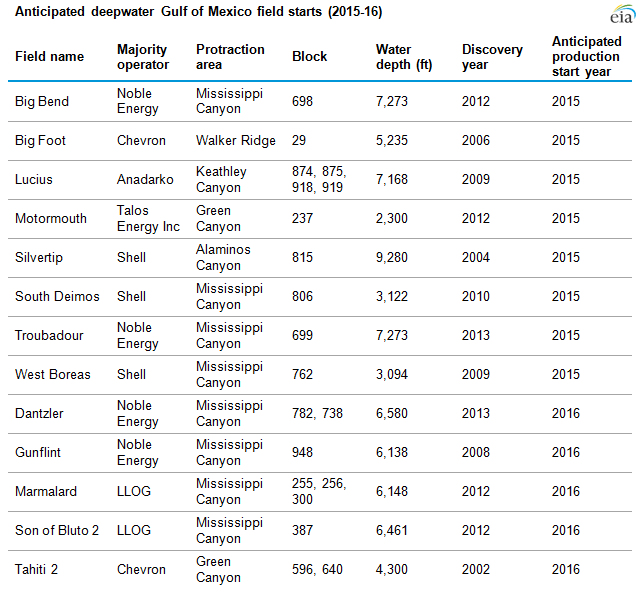
In particular, US shale output has been climbing again for the last year, boosted by rising prices and the amazing productivity of the venerable Permian Basin of Texas. Meanwhile, production from the deepwater Gulf of Mexico is also increasing as projects begun when oil was still over $100 reach completion. In its latest forecast the US Energy Information Administration projected that US crude production will reach an all-time high averaging 10 million barrels per day this year. Despite that, US shale producers still have thousands of "drilled-but-uncompleted" wells, or DUCs, waiting in the wings. 

So, short of instability in Iran morphing into a regional conflict involving Saudi Arabia and the other Gulf producers, oil prices might drift higher but would be unlikely to spike anywhere near $100. And that's without factoring in the scenario suggested by the Financial Times' Nick Butler, who proposes that the Iranian government might choose to break the OPEC/Russia deal and increase their oil exports, in order to boost their economy and mollify the protesters, thereby shoring up the regime. 

The last point brings us back from a narrow focus on oil prices to larger geopolitical uncertainties. As a noted Iran expert at the Council on Foreign Relations recently observed, Iran's religious government faces challenges similar to those that led to the collapse of the Soviet Union.

It's far from clear that 2018 will be Iran's 1989, or that President Rouhani is capable of becoming his country's Mikhail Gorbachev. Yet surely the 2015 nuclear agreement was a bet by the US and its "P5+1" partners that Iran would be a very different nation by the time its main provisions start to expire in the next decade. The whole world would win if that prediction came true.

On that note I'd like to wish my readers a happy start to the New Year. My top resolution is to post here more frequently and more regularly than in 2017. 

Friday, September 22, 2017

Could China's EVs Lead to Peak Oil Demand?

  • China's decision on whether and when to ban cars burning gasoline and diesel could alter our view of how far we are from a peak in global oil demand.
  • Even though the likely date of such a peak is highly uncertain, the idea of an impending peak could significantly affect investments and other decisions.
A few months ago the British government made headlines when it announced it would ban new gasoline and diesel cars, starting in 2040. That move, which apparently excludes hybrid cars, is further fallout from the 2015 Dieselgate emissions-cheating scandal.

Now it appears that China is preparing to issue a similar ban. With around 30% of global new-vehicle sales, China could upend the plans and economics of the world's fuel and automobile industries. However, it is less obvious that this would lead directly to the arrival of "peak demand" for oil, an idea that has largely displaced earlier thoughts of Peak Oil related to supply.

Some background is in order, because the two concepts are easy to confuse. Peak Oil, which gained considerable traction with investors and the public in the 2000s, was based on the undoubted fact that the quantity of oil in the earth's crust is finite, at least on a human time-scale. Its proponents argued that we were nearing a geological limit on oil production, and that quite soon oil companies and OPEC nations wouldn't be able to sustain their current production, let alone continue adding to it every year.

The presumption that such a peak was imminent has been pretty clearly refuted by the shale revolution, the first stages of which had already begun when Peak Oil was still fashionable. In fact, humanity has only extracted a small percentage of the world's oil resources. We continue to find both additional resources and new ways to extract more from previously identified resources. Global proved oil reserves--a measure of how much can be produced economically with current technology--have more than doubled since 1980, while production (and consumption) grew by 34%.

For that matter, many of the shale plays that today produce a total of more than 4 million barrels per day had been known for decades. Petroleum engineers just didn't see how to produce oil from them in commercial volumes and at a cost that could compete with other sources like oil fields in deep water.

The first mention I heard of "peak demand" was at an IHS investment conference in 2009, when supply-focused Peak Oil was still king. At the time, it was a novel idea, since only a year earlier, oil prices crested just short of $150 per barrel on the back of surging demand and, to some extent the expectation of Peak Oil, and were only tamed by the unfolding global financial crisis.

Peak demand proposes that consumption of petroleum and its products will reach its maximum extent within a few decades, and thereafter plateau or fall. Crucially, it doesn't depend on a single theory, but on a combination of factors that are easily observable, though still uncertain in their future progression: meaningful improvements in fuel economy, even for large vehicles; policies and regulations to decarbonize the global energy system in response to climate change; an apparent decoupling of GDP and energy consumption; and the rise of partially and fully electrified vehicles.

That brings us back to the implications of a ban on internal combustion engine (ICE) cars in China. Considering that China has accounted for roughly a third of the increase in global oil consumption since 2014, this has to be reckoned as one of the larger uncertainties about future oil demand. Even if we're only talking about the equivalent of a couple of million barrels per day of lost demand growth by 2030, OPEC's ongoing struggle to balance a market that has been oversupplied by less than that amount puts the potential impact for oil investment and economics into sharp relief.

China has every incentive to take this step. Its urban air pollution is on a scale that cities like London and L.A. haven't experienced since the 1950s or 1960s. The country's 2015 pledge to limit greenhouse gas emissions was a centerpiece, and arguably the sine qua non, of the Paris climate agreement. If that weren't enough, the country's dependence on oil imports is exploding in much the same way as the US's did in the early-to-mid 2000s.

Perhaps I'm cynical to think that the last point weighs most heavily on China's policy-makers, just as US energy debates hinged on energy security concerns until quite recently. China's oil demand continues to grow, with over 20 million new cars and trucks reaching its roads each year, and the vast majority of them still needing gasoline or diesel fuel. Meanwhile, its oil production is going sideways, at best, as its mature oil fields decline.

Moreover, despite the country's large unconventional oil resource potential there does not seem to be a shale light at the end of their tunnel, because most of the conditions that supported the shale revolution here don't apply within China's state-dominated system. What it does have is plenty of electricity, and multiple ways to generate a lot more.

Let's concede that China's grid electricity, on which most of those EVs would be running, is among the highest in the world in emissions of both CO2 and local air pollutants. Switching China's new cars from gasoline and diesel to electricity won't constitute a big environmental win, initially or perhaps ever. Even under the relatively generous assumptions used in a recent analysis on Bloomberg, it will take the average EV in China 7 years to repay its extra lifecycle carbon debt, unless the country's electricity mix becomes much greener.

That seems realistic but almost beside the point, if China's main aim is to shore up its worsening energy security. Nor should we ignore the industrial-policy angle in such a move. China set out to dominate the global solar equipment market and can claim success, at least based on sales. If EVs catch on as many expect, the ultimate global market for them would be a sizable multiple of last year's $116 billion figure for global solar investment, only part of which relates to solar cell and module manufacturing, where China leads.

So let's assume 100% EVs is a given in China from some point in the next two decades. Does that spell the end of global oil demand growth in roughly the same timeframe? A number of recent forecasts, including those from Shell and Statoil, reached that conclusion even before the news about China's future car market.

It's not hard to envision this point of view solidifying into conventional wisdom, with interesting implications. Among other things, it could result in further cuts to investment in oil exploration and production that various experts including the International Energy Agency already worry could lead to another big oil price spike--well before EVs take off in a big way. It could also reduce R&D and investment in improvements to the conventional cars that will account for the large majority of car fleets and new car sales for some time to come, with adverse consequences for emissions.

When I consider these forecasts I'm struck by how early we are in this particular transition. Global EV sales are still only around 1% of global car sales, and petroleum products account for all but a small sliver of the global transportation energy market. As fellow energy blogger Robert Rapier recently noted on Forbes, "China is a long way from reining in its oil consumption growth."

Meanwhile, the nascent competition between petroleum liquids and electricity in transportation will occur against the backdrop of a much more complex reshuffling of the entire global energy mix. The current stage of that larger transition involves the rejection of coal and its replacement by natural gas and intermittent renewable energy: wind and solar electricity.

An excellent article by John Kemp in Reuters last week placed the shift away from coal in the context of a long sequence of historical energy transitions. As he noted, "Each step in the grand energy transition has seen the dominant fuel replaced by one that is more convenient and useful." Although there are other, compelling rationales for a move in the direction of electric vehicles backed by wind and solar power, it is extremely difficult to see that combination today in the terms Mr. Kemp used.

Pairing EVs with vehicle autonomy might create a product that is indeed more convenient and useful than current ICE cars with their effectively unlimited range and short refueling times. Perhaps it will require packaging self-driving EVs into mobility-on-demand services to beat that standard. It remains to be seen whether such a package would be technically or commercially viable, since even Tesla's "Autopilot" feature is still a far cry from such level 4 or 5 autonomy.

And even if EVs win the battle for car consumers with sustained help from governments, electricity is still an energy carrier, not an energy source. Renewables may go a long way toward replacing coal in the next two decades, but dispensing with both coal's 28% contribution to global primary energy consumption and oil's 33% in such a short interval looks like a massive stretch. Before the transition to EVs is complete, we may see at least some of them running on electricity generated by gas turbines burning petroleum distillates such as kerosene. (The environmental impacts of such a linkage would be significantly lower than running a fleet of EVs on coal.)

So while China's likely ban on internal combustion engine cars certainly looks like a key step on the path to peak oil demand, it could just as easily force oil producers to find new markets. That happened over a century ago, when a much smaller oil industry saw kerosene lose out to electric lighting and was farsighted or lucky enough to shift its focus to fueling Mr. Ford's new automobiles.

Peak demand for oil definitely lies somewhere in our future, regardless of China's future vehicle choices.  However, as a long-time practitioner of scenario planning, my faith in precise forecasts extrapolated from current facts and trends is limited. Whether we are close to peak demand or, as with a global peak in oil supply, continue to push it farther off, will remain subject to uncertainties that won't be resolved for some time. Our best indication of either peak--demand or supply--will come when we have passed it. However, the idea of an impending peak has shown great potential to affect markets and decisions in the meantime.

Friday, March 17, 2017

Why Oil Forecasting Is So Difficult Now: Short-cycle vs. Long-cycle vs. "Peak Demand"

Oil experts are deeply divided in their views on the future of what is still the world's key commodity. This divergence was on display at last week's CERA Conference in Houston, which brought together industry executives, consultants, media, and government officials from around the world. Although I didn't attend in person, the organizers provided extensive streaming coverage of keynote talks and interviews with thought leaders.

From OPEC oil ministers and the head of the International Energy Agency, we heard that the world could be headed for another supply crunch within a few years, due to low investment following 2014's oil-price collapse. I've mentioned this concern before.

By contrast, the major oil companies seemed more cautious. Low oil prices caught many of them with big, expensive projects underway--too far along to stop but undermined by prices now far below the assumptions on which they were justified. Cash flow seems to be a higher priority than growth. "Peak demand", when global oil consumption stops growing and might begin shrinking, could also arrive within ten years or so, at least according to Shell's CEO, further disrupting markets.

Renewables were discussed frequently, but shale was arguably the star of the segments I watched. Big companies touted their shift toward shale assets that can be brought into production quickly, while independent E&P (exploration and production) companies highlighted both the upside and limitations of focusing on the core, or most productive, cost-effective portions of various shale regions.

With these large, and to some extent mutually contradictory trends in play, any kind of straight-line extrapolation from current or past conditions of price, supply, or demand seems sure to be swamped by uncertainties. Rather than putting my thumb on the scales for one view or another, my best service just now is improving our understanding of these risks and why they look so uncertain.

On the supply side, the relationship between short-cycle and long-cycle investments is especially interesting and a source of great uncertainty. Short-cycle supply, mainly from shale or "tight oil" wells that can be drilled and brought on-stream quickly and for only a few million dollars each--but that also tail off quickly--was the main factor in the drop from over $100 per barrel to less than $40 just a couple of years ago. It now provides many of the lowest-risk, most attractive opportunities available to the oil and gas industry. Yet the more short-cycle oil is developed, the longer the recovery of long-cycle investment is likely to be delayed, because shale is effectively putting a low ceiling on oil prices and will consume ongoing cash flow to sustain it.

Long-cycle oil, which still accounts for over 90% of global supply, is an entirely different domain. It consists mainly of large conventional oil fields that were developed years ago and continue to pump oil with relatively little continuing investment. It also includes new, big-ticket projects in places like the deep waters of the Gulf of Mexico and offshore Brazil, that add to growth but importantly offset the natural decline rates--often 4%-10% annually--that eat into the output of older oil fields every year.

Hundreds of billions of dollars of planned investment in long-cycle projects was deferred or canceled since 2014. Because such projects take years--sometimes decades--to develop from discovery to production, this investment drought implies a hole in future production. That shortfall hasn't appeared yet, because projects like BP's Thunder Horse expansion that were begun when oil was still over $100 are still periodically starting up. The impact of the long-cycle gap might also shrink or vanish entirely if enough short-cycle oil is developed in the meantime.

We might never notice this impending gap, if demand growth slowed sharply from its recent rate of more than 1 million barrels per day per year, or even started to fall. Not so long ago, few could imagine oil demand falling without hitting a wall on supply--so-called "Peak Oil"--but now it's almost harder to envision oil demand continuing to expand in light of competition from renewables, substitution from electric vehicles, and constraints imposed by climate policies intended to comply with the Paris Agreement.

The big uncertainties for these changes are time and scale. The Solar Energy Industries Association (SEIA) forecasts US solar power growing from 42 Gigawatts (GW) last year to nearly 120 GW by the end of 2022. However, that would leave solar generating just 4% of US electricity, even if electricity demand didn't grow at all in the interim. Nor does solar power compete with oil, except in the few remaining places--mainly in the Middle East--where lots of oil is burned to produced electricity, or when it powers electric cars.

With regard to EVs, Tesla's goal of producing 500,000 cars per year by the end of next year is impressively big. However, even if those Teslas replaced only conventional cars of average fuel economy, all of which were then scrapped--unlikely on both counts--they would reduce US gasoline demand by less than 0.2%. It would take more than six times as many EVs to offset last year's growth in US gasoline demand of 1.3%. Only as EV sales ramp up and conventional cars are retired in large numbers would they start to make a serious dent in oil demand. How long will it take to reach that point, and how much would a big jump in oil prices within the next few years nudge it along?

Until recently, most of the speculation that the transition away from oil and other fossil fuels could happen faster came from outside the industry. Lately, though, respected voices in the industry--or at least closer to it--have begun to raise the possibility that the shift to renewables and EVs might accelerate, affecting demand sooner than expected.

To be clear, I am still convinced that constraints on how fast capital stock turns over--vehicle fleets, HVAC, factory equipment, etc.--impose a speed limit on any large-scale transition like this. However, careful examination of the last 20 years of oil prices provides ample proof that smaller-scale shifts can have large impacts. From the Asian Economic Crisis of the late 1990s, to the massive price spike of 2006-8, followed by the financial crisis, the Arab Spring, and the shale boom, we can see that supply/demand imbalances of no more than about 2-3 million barrels per day--say 3-4% of production or consumption--were sufficient to drive oil prices as low as $10 and as high as $145 per barrel.

When we combine the big, new trends outlined above with normal uncertainties about the economy and then factor in the extreme sensitivity of oil markets to relatively modest surpluses and shortfalls, predicting the likely path for oil looks very daunting. The factors driving it may be changing, but accurate oil forecasting remains as challenging as ever. That same realization stimulated interest in scenario planning more than 40 years ago, focused on the insights available from considering multiple possible futures, rather than just one.


Thursday, December 01, 2016

Some Thoughts on the OPEC Deal

From one perspective, the agreement struck by OPEC's members in Vienna yesterday marks the cartel's return to the business of managing the oil market, after a two-year experiment with the free market. Viewed another way, however, it represents what Bloomberg's Liam Denning termed a "capitulation of sorts"--an admission of defeat in the price war that OPEC effectively declared in late 2014. Yet while more than a few bottles of champagne were likely consumed around the US oil patch last night, this doesn't necessarily mean a return to the way things were just a few years ago, when oil prices seemed to cycle between high and higher.

We should look carefully to assess the real results of OPEC's attempt to squeeze higher-cost producers out of the market. On that criterion it was successful: hundreds of billions of dollars in oil exploration and production projects have been canceled or deferred, mainly by Western oil companies and other non-OPEC producers. If this was the 1990s, and oil still lacked viable competition, especially in transportation, and if demand could be relied on to continue growing steadily, the strategy OPEC has just ended would have set up many years of strong and rising prices for its members.

Yet OPEC miscalculated in at least two ways. First, as many experts have noted, it correctly identified US shale producers as the new marginal suppliers to the market but failed to anticipate how quickly these companies could respond to a dramatic price cut. Having squeezed their vendors and spread best drilling practices at warp speed, shale producers are now positioned to resume growing both output and profits as oil prices trend north of $50 per barrel--undermining the effect of OPEC's cuts as they go.

Its other miscalculation was in the capacity of the cartel's members--even some of the strongest--to endure the austerity that protracted low prices would bring. Although many of these countries have among the world's lowest-cost oil reserves to find and produce, it turned out that their effective cost structures, including transfers to their national budgets, were really no lower than those of the Western oil majors that have also struggled for the last two years.

A great deal of attention will now be focused on how OPEC implements its output cuts, and whether its non-OPEC partners like Russia live up to their end of the bargain. The history of OPEC deals suggests that is only prudent. However, a new factor is at work here that adds extra uncertainty to the outcome, even if OPEC miraculously achieved 100% compliance.

OPEC's formula for sustaining comfortably high (for them) oil prices has always relied on an economic paradox: They restrain their own, low-cost production and shift the marginal source of supply--the last barrel that sets the price--to make room for non-OPEC producers with much higher costs. That allows OPEC's members to collect outsize returns on their own production, what economists call "rent".

This time, though, at least until the looming gap in supply created by all that foregone investment in deepwater platforms and oil sands facilities starts to bite, the cost of the marginal barrel from shale won't be that much higher than OPEC's marginal cost. And all of this will be playing out in the context of historically high inventories. If that's not a recipe for volatility, I don't know what is.

Tuesday, October 11, 2016

Is the US Really Energy Independent?

Toward the end of Sunday night's presidential debate I was startled to hear Secretary Clinton reply to an audience question by stating, "We are now for the first time ever energy-independent." If the price of oil were $100, rather than $50, that might have constituted a "Free Poland" moment, recalling President Ford's famous gaffe in a 1976 debate.

This point is likely to get lost in the dueling fact-checking of both candidates' numerous claims, but while the overall US energy deficit has fallen from about a quarter of total consumption (net of exports) in 2008 to just 11% in 2015, we still import 8 million barrels per day of oil from other countries. That includes over 3 million barrels per day from OPEC, a figure that has been growing again as US oil and gas drilling slowed following the collapse of oil prices in late 2104.

Oil has always been at the heart of our notions of energy security and energy independence, because it is our most geopolitically sensitive energy source and the one for which it is hardest to devise large-scale substitutes. So although the US is certainly in a better overall position than it has been in decades, with progress on multiple aspects of energy, it is not yet energy independent, especially where it counts the most.

Moreover, the policies that Mrs. Clinton has proposed would, at least initially, be likely to expand that gap by imposing additional restrictions on hydraulic fracturing, or "fracking." Mr. Trump, for his part, seemed to devote much of his response to Mr. Bone's debate question  talking about coal, which while still a significant player in electricity production has become largely irrelevant to the topic of energy independence, because its use is being displaced by other domestic energy sources, mainly natural gas and renewables like wind and solar power.


In fact, of the various contributors to the energy independence gains the US has made from 2008-15 (shown in blue in the above chart) the largest depend on fracking. Oil still makes up most of our remaining energy deficit, after help from a million barrels per day of ethanol--50% of the energy content of which comes from domestic natural gas. Electric vehicles also help, but the roughly 400,000 on the road in the US today displace the equivalent of only about 12,000 barrels per day of oil products, too small to be visible on the scale of this graph. As a result, continued fracking of shale and tight oil resources must be the linchpin of any realistic strategy to close the remaining US energy deficit within the next decade or so.

I understand that Secretary Clinton's proposed energy policies put a higher priority on addressing climate change. However, she raised the issue of energy independence in the second debate, even though her proposals are unlikely to deliver it in the foreseeable future--or preserve our present, hard-won reduced dependence on foreign energy sources. Anyone who doubts that this is a pocketbook issue should recall where oil and gasoline prices were just three years ago, before US shale added over 4 million barrels per day to global oil supplies.

Thursday, September 29, 2016

OPEC Agrees to Agree

  • Yesterday's reported OPEC deal left many details unresolved, so oil prices remain under $50, at least for now.
  • Time has given OPEC greater leverage to make effective production cuts, and ample incentive to do so. Will that be enough to close the deal come November?
Yesterday's news that OPEC's members have agreed on the outlines of a deal to reduce output is a fine reason to end my long, unplanned hiatus between blog posts. This morning's news commentary seems focused mainly on the difficulties OPEC faces in sorting out the details by its next official meeting at the end of November. Fair enough, but we shouldn't miss the fact that what came out of the informal meeting in Algiers is qualitatively different from anything OPEC has announced since their meeting in October 2014, which pushed the oil price collapse into high gear.

It's worth taking a moment to review how we got to this point. After oil prices recovered from their last big dive during the financial crisis of 2008-9, the global oil market--best represented during this period by the price of UK Brent crude--settled into a range of roughly $70-90 per barrel. The events of the "Arab Spring" in 2011, including the revolution in Libya, pushed prices well over $100, where they remained until fall 2014.

By early 2010 US shale, or more accurately "tight oil", production was beginning to ramp up. Total US crude oil output (excluding gas liquids) had fallen steadily from 9 million barrels per day (MBD) in 1985 to a plateau around 5 MBD in the mid-to-late 2000s. Most experts thought we would be lucky if it stayed that high in the long term. So the 4 MBD of production from tight oil that came onstream by late 2014, pushing total US production back to 9 MBD, was largely unexpected.

The market impact of the first couple of million barrels per day from US shale was muted by events in the Middle East. In addition to the ongoing instability from the Arab Spring, tighter sanctions on Iran had taken another million-plus barrels per day out of exports. Prices remained high, providing a strong incentive for more tight oil drilling, which from 2013 to 2015 yielded the biggest increase in the history of US oil production.

In thinking about what OPEC might achieve with the modest cuts they are apparently discussing, it's crucial to understand that while US tight oil at its peak in 2015 was no more than 5% of the global oil market, it had a massive effect on prices, because the price of oil is set by the last barrels in or out of the market. Inventories matter, too, but less from the standpoint of their absolute levels, than how fast they are growing or shrinking.

Simply put, the unanticipated growth of US shale swamped the market but is now an established part of supply. In late 2014 OPEC's members likely concluded that, given the upward path shale was then on, they couldn't cut their output by enough to keep prices high without simply making more room for shale, so they were better off keeping things uncomfortable for the competition by standing pat. In fact, they doubled down on that by increasing output after October 2014, mainly from Saudi Arabia and other Persian Gulf producers.

Two years of low oil prices have changed the landscape in ways that I doubt OPEC's members expected. US shale contracted but didn't die. If anything, the efficiencies that shale producers found have made many of them competitive at current prices and big beneficiaries of any future price increase. The latest rig counts from Baker Hughes show a small but steady increase in drilling activity over the last several months. However, what has collapsed with little indication of revival is investment in large-scale, non-shale oil projects from non-OPEC countries.

According to analysis from Wood Mackenzie, global oil investment--actual and planned--is down by over $1 trillion for the period 2015-20. Because of the development time lag for big oil projects, that means that a potentially serious supply gap is being created a few years down the road. Remember that non-OPEC, non-shale production makes up over half of global oil output. French oil company Total has estimated the potential shortfall at 5-10 MBD by 2020, or 5-10% of global supply.

This outcome is a mixed bag for OPEC. To whatever extent its decision to increase, rather than cut output in late 2014 was a "war on shale", that has failed at the cost of many hundreds of billions of dollars of foregone revenue. The collateral damage to the global industry, particularly in places like the North Sea, has been dramatic, even if it won't become obvious until the pipeline of projects started in the $100 years dries up sometime soon. OPEC will surely be blamed for any future price spike, but the likelihood that any cut they make now would be back-filled by non-OPEC production is much less than it was in 2014 or '15.

OPEC faces a conundrum. The market remains over-supplied in the near term, and inventories are at historic levels. Failing to reach agreement in November would not greatly hamper US shale. However, it would prolong their own pain and continue to enlarge the potential supply gap and price spike that is being stored up for an uncertain future that now also includes electric vehicles and possible carbon taxes, the incentive for both of which will expand significantly if oil prices spike again.

What's a cartel to do? We will see much speculation about that during the next two months. My guess is that the need to shore up the national budgets of OPEC's member countries, which are going deeper into debt by the day, along with a desire to avoid a price spike that would merely hasten the transition to non-hyrocarbon energy, will lead to an agreement in November to make at least cosmetic cuts in production. Stay tuned.


Thursday, May 26, 2016

On Track for a Golden Age of Gas?

  • The global energy industry must overcome significant new challenges if natural gas development is to achieve the vision of a Golden Age of Gas.
  • Low energy prices and reduced investment are only half the battle as regulations complexify and organized opposition grows. 

Five years ago the International Energy Agency (IEA) issued a report entitled, "Are We Entering a Golden Age of Gas?" Gas development was booming, from both conventional resources and US shale deposits, and gas was widely seen as a vital tool for reducing greenhouse gas emissions. Much has happened since then, including a collapse in global oil prices, the signing of a new climate agreement in Paris, and a broadening of the anti-fossil-fuel focus of climate activists. If we're still on the path to a golden age of gas, the ride will be bumpy.

This is probably most evident across the pond, where Nick Butler, the Financial Times' respected energy analyst, observed this week, "Unless something changes radically, Europe has passed the point of peak gas consumption." He cited Germany's ongoing "Energiewende" (energy transition) which in order to maximize wind and solar and minimize nuclear power, ends up squeezing gas out between renewables and much higher-emitting coal.

Earlier this month France's Energy Minister announced she was pursuing a ban on imports of US shale gas--effectively any gas from the US--since France already bans domestic fracking. That strikes me as a textbook example of having to keep making bad decisions to be consistent with the first one, but it's their sovereign choice.

As the IEA defined it at the time, this Golden Age would entail faster growth in gas demand in every major sector, compared to the agency's main "New Policies" scenario in its then-current annual World Energy Outlook (WEO). They anticipated compound average growth of 1.8% per year, much faster than oil or coal, with gas consumption ending up 13% higher than the WEO's projection for 2035. That's like adding an extra Russia or Middle East to world gas demand within 20 years.

One gauge of whether that still seems realistic can be found in the US Energy Information Administration's (EIA) just-released 2016 International Energy Outlook. The EIA's long-term forecast actually has gas consumption growing slightly faster than IEA's Golden Age track in the developed countries of the OECD between now and 2035, but with a slower ramp-up to essentially the same end-point in the non-OECD countries.

Of course one forecast can't really validate another, so let's consider how some of the big uncertainties that the IEA identified in the 2011 report have shifted, starting with energy pricing. After oil's recent rebound, oil and gas have fallen by around half their 2011 US prices. That makes investments in oil and gas exploration and production considerably less attractive. Nearly $400 billion of projects have been canceled or deferred, globally, setting up slower growth in production from both gas fields and oil fields with associated gas in the near-to-medium term. This deceleration is evident in EIA's latest monthly Drilling Productivity Report for US shale.

With the contract price of liquefied natural gas (LNG) often tied to oil prices or competing with pipeline gas that has also fallen in price, large gas infrastructure projects like LNG plants look less attractive, too. We've already seen cancellations of new facilities in Australia and Canada. Fewer LNG export facilities are likely to be built in the US than previously planned. All this means less new gas reaching markets where it can be used.

Cheaper oil also reduces the attractiveness of gas as a transportation fuel. Although increasingly popular as a cleaner fuel for buses, natural gas hasn't made much headway in US passenger cars. However, this application has been growing in places like Italy and Iran, for different reasons.

Viewed in isolation, these price-related responses seem likelier to delay, rather than derail the expectations the IEA set out in 2011. The bigger challenges come from a set of issues the IEA identified a year later, in a follow-up report called "Golden Rules for a Golden Age of Gas." As Dr. Birol, now the Executive Director of IEA, indicated then, these boil down to the industry's "social license to operate."

Transparency, water consumption, emissions including methane leaks--all on IEA's list--are some of the key issues over which companies, regulators, NGOs and activists are sparring today. The UK is a prime example. Conventional energy production is declining rapidly and a large shale gas potential has been identified by the British Geological Survey, but every attempt to drill exploratory wells has encountered strong opposition.

A new factor the IEA did not anticipate is the emergence of political movements focused on fossil fuel divestiture and a "keep it in the ground" mantra. These may be based on unrealistic expectations of how quickly the world can transition to a zero-emission economy, but they illustrate the scale of a stakeholder engagement challenge the global oil and gas industry has so far failed to meet adequately. 

Just as social media are transforming politics, they are also altering the balance of power between organizations and their critics. The gaps that must be bridged if new gas development is to remain broadly acceptable to the public are growing in ways that will demand new approaches and new strategies to address. 

Considering the shifts in the global energy mix that will be necessary to reduce global emissions in line with the goals of last year's Paris Agreement, gas ought to have a future every bit as bright as the Golden Age the IEA described five years ago. Achieving that now likely depends less on the price of energy and the scale of available resource than on convincing regulators and the public that the trade-offs involved in obtaining its benefits are still reasonable.


Thursday, February 25, 2016

OPEC's War on US Producers

The comments of Saudi Arabia's oil minister at the annual CERAWeek conference in Houston this week provided some sobering insights into the strategy that the Kingdom, along with other members of OPEC, has been pursuing for the last year and a half. Perhaps the ongoing oil price collapse is not just the result of market forces, but of a conscious decision to attempt to force certain non-OPEC producers out of the market.

Notwithstanding Mr. Al-Naimi's assertion that, "We have not declared war on shale or on production from any given country or company," the actions taken by Saudi Arabia and OPEC in late 2014 and subsequently have had that effect. When he talks about expensive oil, the producers of which must "find a way to lower their costs, borrow cash or liquidate," it's fairly obvious what he is referring to: non-OPEC oil, especially US shale production, as well as conventional production in places like the North Sea, which now faces extinction. If these statements and the actions that go with them had been made in another industry, such as steel, semiconductors or cars, they would likely be labeled as anti-competitive and predatory.

We tend to think of the OPEC cartel as a group of producers that periodically cuts back output to push up the price of oil. As I've explained previously, that reputation was largely established in a few episodes in which OPEC was able to create consensus among its diverse member countries to reduce output quotas and have them adhere to the cuts, more or less.

However, cartels and monopolies have another mode of operation: flooding the market with cheap product to drive out competitors. It may be only coincidental, but shortly after OPEC concluded in November 2014 that it was abandoning its long-established strategy of cutting production to support prices, Saudi Arabia appears to have increased its output by roughly 1 million barrels per day, as shown in a recent chart in the Financial Times. This added to a glut that has rendered a large fraction of non-OPEC oil production uneconomic, as evidenced by the fourth-quarter losses reported by many publicly traded oil companies.

That matters not just to the shareholders--of which I am one--and employees of these companies, but to the global economy and anyone who uses energy, anywhere. OPEC cannot produce more than around 37% of the oil the world uses every day. The proportion that non-OPEC producers can supply will start shrinking within a few years, as natural decline rates take hold and the effects of the $380 billion in cuts to future exploration and production projects that these companies have been forced to make propagate through the system.

Cutting through the jargon, that means that because oil companies can't invest enough today, future oil production will be less than required, and prices cannot be sustained at today's low level indefinitely without a corresponding collapse in demand. Nor could biofuels and electric vehicles, which made up 0.7% of US new-car sales last year, ramp up quickly enough to fill the looming gap.

Consider what's at stake, in terms of the financial, employment and energy security gains the US has made since 2007, when shale energy was just emerging. That year, the US trade deficit in goods and services stood at over $700 billion. Energy accounted for 40% of it (see chart below), the result of relentless growth in US oil imports since the mid-1980s. Rising US petroleum consumption and falling production added to the pressure on oil markets in the early 2000s as China's growth surged. By the time oil prices spiked to nearly $150 per barrel in 2008, oil and imported petroleum products made up almost two-thirds of the US trade deficit.


Today, oil's share of a somewhat smaller trade imbalance is just over 10%. Since 2008 the US bill for net oil imports--after subtracting exports of refined products and, more recently, crude oil--has been cut by $300 billion per year. That measures only the direct displacement of millions of barrels per day of imported oil by US shale, or "tight oil" and the downward pressure on global petroleum prices exerted by that displacement. It misses the trade benefit from improved US competitiveness due to cheaper energy inputs, especially natural gas.

Compared with 2007, higher US natural gas production, a portion of which is linked to oil production, is saving American businesses and consumers around $100 billion per year, despite consumption increasing by about 20%--in the process replacing  more than a fifth of coal-fired power generation and reducing CO2 emissions. $25 billion of those savings come from lower natural gas imports, which were also on an upward trend before shale hit its stride.
 
The employment impact of the shale revolution has also been significant, particularly in the crucial period following the financial crisis and recession. From 2007 to the end of 2012, US oil and gas employment grew by 162,000 jobs, ignoring the "multiplier effect." The latter impact is evident at the state level, where US states with active shale development appear to have lost fewer jobs and added more than a million new jobs from 2008-14, while "non-shale" states struggled to get back to pre-recession employment. That effect was also visible at the county level in states like Pennsylvania, where counties with drilling gained more jobs than those without, and Ohio, where "shale counties" reduced unemployment at a faster pace than the average for the state, or the US as a whole.
 
If the shale revolution had never gotten off the ground, US oil production would be almost 5 million barrels per day lower today, and these improvements in our trade deficit and unemployment would not have happened. The price of oil would assuredly not be in the low $30s, but much likelier at $100 or more, extending the situation that prevailed from 2011's "Arab Spring" until late 2014. If OPEC succeeds in bankrupting a large part of the US shale industry, we might not revert to the energy situation of the mid-2000s overnight, but some of the most positive trends of the last few years would turn sharply negative.
 
Now, in fairness, I'm not suggesting that this situation can be explained as simply as the kind of old-fashioned price war that used to crop up periodically between gas stations on opposite corners of an intersection. The motivations of the key players are too opaque, and cause-and-effect certainly includes geopolitical considerations in the Middle East, along with the ripple effects of the shale technology revolution. It might even be possible, as some suggest, that OPEC has simply lost control of the oil market amidst increased complexity.  
 
However, to the extent that the "decimation" of the US oil and gas exploration and production sector now underway is the result of a deliberate strategy by OPEC or some of its members, that is not something that the US should treat with indifference.

This is an issue that should be receiving much more attention at the highest levels of government. The reasons it hasn't may include consumers' understandable enjoyment of the lowest gasoline prices in a decade, along with the belief in some quarters that oil is "yesterday's energy." We will eventually learn whether these views were shortsighted or premature.

Friday, February 05, 2016

An Ill-conceived Tax Idea

Yesterday we learned that President Obama's final budget proposal includes a plan to raise money for transportation projects and other uses by imposing a per-barrel tax on US oil companies. Here are a few quick thoughts on this ill-conceived idea:
  • As I understand it, the tax would be imposed on oil companies, exempting only those volumes exported from the US. The US oil industry is currently in its deepest slump since at least the 1980s. Having broken OPEC's control of prices and delivered massive savings to US consumers and businesses, it is now enduring OPEC's response: a global price war that has driven the price of oil below replacement cost levels. This is evidenced by the recent full-year losses posted by the "upstream" oil-production units of even the largest oil companies: ExxonMobil, Chevron, Shell, BP and ConocoPhillips, particularly in their US operations. The President has wanted to tax oil companies since his first day in office, but his timing here would only exacerbate these losses, putting what had been one of the healthiest parts of the US labor market under even more pressure.
  • This tax would also increase OPEC's market leverage, providing a double hit on the cost of fuel for American consumers: We would pay more immediately, when the tax was imposed and companies passed on as much of it as they could, and then even more later when OPEC raised prices as competing US production became uneconomical.
  • Focusing the tax on the raw material, crude oil, rather than on the products that actually go into transportation, as the current gasoline and diesel taxes do, is guaranteed to produce distortions and unintended consequences. For starters, exempting exports--a sop to global competitiveness?--would give producers a perverse incentive to send US oil overseas instead of refining it in the US. It would also shift consumption toward more expensive fuels like corn ethanol, which provides no net emissions benefits but has been shown to affect global food prices.
  • Singling out oil, which is not the highest-emitting fossil fuel and for which we still lack scalable alternatives, will put all parts of the US economy that rely on oil as an input at a competitive disadvantage, globally, and undermine what had become a significant US edge in global markets. Petrochemicals, in particular, would be adversely affected. The President's staff is well aware that the distribution of lifecycle emissions from oil, and the structure of the industry and markets, make policies focused on consumption far more effective than those aimed at production. This is why his administration's first act in implementing the expanded interpretation of the Clean Air Act to greenhouse gases was to tighten vehicle fuel economy standards. Taxing the upstream industry does nothing for global emissions but makes US producers less competitive, ensuring a return to rising oil imports and deteriorating energy security.
As widely reported, the Congress will not enact a budget containing this provision. It is hard to gauge whether this proposal represents a serious attempt to inject new thinking into the debate on funding transportation upgrades, or is simply one last shot across the bow of the administration's least favorite industry before leaving office in 349 days. It's not unusual for the wheels to come off as a presidency winds down, and this particularly flaky and futile idea might just be an indicator of that.

Disclosure: My portfolio includes investments in one or more of the companies mentioned above.

Wednesday, January 27, 2016

2015: A Turning Point for Energy?

  • 2015 was certainly an eventful year in energy, with plummeting oil prices and a widely anticipated global climate conference in December. It's less clear that it was a turning point. 
When I sifted through the major energy developments of 2015, I was surprised by the number of references I found to last year as a turning point, whether for the oil industry, the response to climate change, coal-fired electricity generation, or renewable energy. To this list I am tempted to add the decision to allow unrestricted exports of US crude oil for the first time in 40 years.

Major turning points are best identified with the passage of time. With so many legitimate candidates it might seem a bit deflating to note, as the chart below reflects, that the growth pattern for US energy supplies in 2015 looks a lot like the one for 2014. Despite low prices, oil and gas output posted solid gains, at least through October, while wind and solar power contributed modestly, when compared on an energy-equivalent basis.


There are sound reasons to think that next year's graph may look quite different, starting with oil. The petroleum industry is still in turmoil from its turning point in late 2014, when OPEC declined to cut its output quota to restore the global oil market to balance. In North America and much of the world, drilling and investment in new projects are down sharply, and US oil production is retreating from the 44-year peak it reached in April. The subsequent decline would have been even more pronounced without the contribution of new deepwater platforms  in the Gulf of Mexico that were planned long before oil prices fell.

However, anyone identifying 2015 as the start of a global shift away from oil, rather than another cyclical low point, must contend with some contrary statistics. Global oil demand appears to have increased by around 2%--equivalent to the output of Nigeria--in response to a 70% drop in oil prices. And despite a lot of media attention, electric vehicles--the leading contender to replace the internal-combustion cars that are the main users of refined oil--have yet to catch on with mainstream consumers.

Based on data from Hybridcars.com, US sales of battery-electric vehicles (EVs) grew slightly faster than the 6% pace of the entire US car market in 2015 but still accounted for less than 0.5% of all new cars. In fact, the combined US market share of hybrids, plug-in hybrids and battery EVs fell by 18%, compared to 2014, to below 3%. This is a respectable start for vehicle electrification, but it's not much different from the beachhead that hybrids alone occupied in 2009.

Although we might look back on this situation in a few years as a turning point, I believe that will depend on the condition of OPEC and the global oil industry, as well as the level of global oil consumption, when supply and demand come back into balance and today's high oil inventories are drawn down.

At the launch of API's latest State of American Energy report earlier this month I had the opportunity to ask Jack Gerard, the President and CEO of API, how he thought the current situation might change the oil and gas industry, and whether it would push it even farther towards shale development, including outside the US. His response focused on ensuring that policies will allow US producers to compete globally and build on the advantages of US resources, capital markets and rule of law to increase their share of the market.

As for US natural gas production, rising per-well productivity and growth in the Utica shale and Permian Basin offset less drilling in general and output declines in the Marcellus shale and elsewhere.  The continued expansion of gas is remarkable, considering that natural gas futures prices (front month) averaged just $ 2.63 per million BTUs for the year and dipped below $2 in December. The LNG exports set to begin this month look very timely.

Renewable energy, mainly in the form of wind and solar power, continues to grow rapidly as its costs decline. US renewables got an unexpected boost in December when the US Congress extended the two main federal tax credits for wind, solar and other technologies, including retroactively reinstating the lapsed wind Production Tax Credit (PTC).  Renewables should also benefit from the implementation of the EPA's Clean Power Plan, and from the effect of the Paris climate agreement on the investment climate for these technologies.

We may not know for years whether the Paris Agreement was truly a turning point for climate change, as many have suggested. Another prescriptive agreement with legally binding targets, along the lines of the Kyoto Protocol, was never in the cards. However, the Paris text is replete with tentative verbs, along the lines of, "requests, invites, recognizes, aims, takes note, encourages, welcomes, etc. "  It remains up to the participating countries whether and how they fulfill their voluntary Intended Nationally Determined Contributions and financial commitments.

The Paris Agreement could turn out to be the necessary framework for firm steps by both developed and developing countries to reduce emissions and adapt to climatic changes that are already "baked in", or it might shortly be overtaken by other events, as previous climate change measures were in the aftermath of the 2008 financial crisis. The current financial problems of the world's largest emitter of greenhouse gases--arguably the most important signatory to the Paris Agreement--are not a positive signal.

With so many uncertainties in play, we should consider all of these potential turning points as signposts of changes that depend on other interconnected factors, if they are to lead to a future that breaks with the status quo. There are enough of them to make for a very interesting 2016, even if this wasn't also a US presidential election year.
 
A different version of this posting was previously published on the website of Pacific Energy Development Corporation.

Monday, January 11, 2016

Cheapest Gasoline Ever?

Last week the Energy Information Administration  (EIA) reported that the $2.43 per gallon average US retail price for regular gasoline in 2015 was the lowest since 2009. A quick look at the EIA's handy page for comparing nominal and real fuel prices over time shows that last year's average, when adjusted for inflation, was actually the cheapest since 2004. A recent article suggested that current prices are lower than those in the mid-1960s, in the heyday of the American love affair with driving. I've lost the link, but that factoid checks out, too. However, even this understates the bargain currently on offer at the gas pump.

The price of gasoline is still one of the most visible prices in the US, prominently displayed on gas station signage and roadside billboards across the country. However, it only captures one aspect of how much motorists really pay, just as measuring fuel economy in miles per gallon misses the economic impact of driving. A few years ago I ran across a metric that combines these factors into a simple gauge of driving cost: miles per dollar, or mp$.

The chart below incorporates EIA data on inflation-adjusted fuel cost and data from the National Highway Transportation Safety Agency (NHTSA) on actual fleet corporate average fuel economy (CAFE) performance for each model year of passenger cars--not SUVs or light trucks--to display average mp$ for the last four decades.


Taking last week's average price of $2.03 for unleaded regular and using 36.4 mpg for the 2013 model year (the latest on NHTSA's site), today's fuel cost of driving is cheaper than at any time since 1978--and maybe ever. The 18 miles per dollar I calculated just beats the previous peak of mp$ in the late 1990s, when fuel economy was around 28 mpg and gas prices averaged barely over $1, due to the effects of the Asian Economic Crisis. By comparison, the $0.31 per gallon that motorists paid in 1965 was downright expensive, after adjusting for inflation and factoring in the low-to-mid-teens fuel economy of cars of the day.

Miles per dollar is also handy for comparing driving cost on gasoline to the cost of operating vehicles that use other fuels or electricity. When I first looked at miles per dollar in 2008, electric vehicles were significantly cheaper, per mile driven, than cars running on gasoline or diesel, even hybrid cars like the Prius. That gap still exists, but it has narrowed. At an US average residential electricity price of $0.126/kilowatt-hour last year, a Nissan Leaf or Chevrolet Volt would get around 26 mp$. However, in New England and other parts of the country with significantly higher-than-average electricity prices, the miles of driving that an EV can deliver per dollar of energy used could be less than that for gasoline in some locations.

A few caveats are in order. Based on data from the Transportation Research Institute at the University of Michigan, new-car fuel economy has slipped 0.8 mpg since oil prices started falling in the summer of 2014. And in any case, new cars are typically more efficient than the entire US car fleet, which includes older vehicles and substantial numbers of SUVs and light trucks. The Consumer Price Index is also an imperfect tool for comparing prices over long periods of time, because the Bureau of Labor Statistics periodically changes the components of the "basket" of goods and services that go into calculating the CPI.

None of those issues seems big enough to alter the basic conclusion that the gasoline cost of driving is exceptionally, perhaps historically cheap at the moment. If oil prices stay "lower for longer", as some experts expect,  changing the make-up--and thus the emissions--of the US car fleet is likely to be an uphill battle.


Tuesday, December 29, 2015

Has OPEC Lost Control of the Price of Oil?

  • The shale revolution effectively sidelined OPEC's control over global oil prices, but the consequences of a year of low prices are shifting power back to the cartel.
In the aftermath of another inconclusive meeting of the Organization of Petroleum Exporting Countries, oil prices have been testing their lows from the 2008-9 financial crisis,  For all the attention and speculation devoted to OPEC-watching whenever they meet, the question we should be asking about OPEC is whether the current situation shares enough of the elements that defined those periods in the past when the cartel's actual market control lived up to its reputation.

That reputation was established during the twin oil crises of the 1970s. US oil production peaked in late 1970, and to the extent there was then a global oil market, the key influence in setting its supply--and thus prices--passed from the Texas Railroad Commission to OPEC, which had been around since 1960.  From 1972 to 1980, the nominal price of a barrel of oil imported from the Persian Gulf increased roughly ten-fold, with disastrous effects on the global economy.

Just a few years later, however, oil prices collapsed.  OPEC's control was undermined by new non-OPEC production from places like the North Sea and Alaskan North Slope and a remarkable 10% contraction in global oil demand. The turning point came in 1985. Saudi Arabia, which had successively cut its output from 10 million barrels per day (MBD) in 1981 to just 3.6 MBD, introduced  "netback pricing" as a way to protect and recover market share.

That move helped set up nearly 20 years of moderate oil prices, during which OPEC's most successful intervention came in response to the Asian Economic Crisis of the late 1990s, when together with Mexico, Norway, Oman and Russia, it sharply curtailed production to pull the oil market out of a tailspin.

The proponents of today's "lower for longer" view of oil prices may see compelling parallels in the circumstances of the mid-1980s, compared to today's. Production from new sources, mainly US "tight oil" from shale, has created another global oil surplus. In the 1980s nuclear power and coal were pushing oil out of its established role in power generation. Now, renewables and electricity are beginning to erode oil's share of transportation energy, while the slowdown of China's economic growth and concerns about CO2 emissions raise doubts about the future growth of oil demand.

However, these similarities break down on some fundamental points. First, the production profile of shale wells is radically different from that of large, conventional onshore oil fields or offshore platforms. Once drilled, the latter produce at substantial rates for decades, while tight oil wells may deliver two-thirds of their lifetime output in just the first three years of operation. Sustaining shale production requires continuous drilling. In fact, new non-shale projects similar to the ones that underpinned oil-price stability from 1986-2003 make up the bulk of the $200 billion of industry investment that has reportedly been cancelled in response to the current price slump.

Another major difference relates to spare capacity. During most of the 1980s and '90s, OPEC maintained significant spare oil production capacity, much of it in Saudi Arabia. That wasn't necessarily by choice, but it was what enabled OPEC to absorb the loss of around 3.5 MBD from Kuwait and Iraq in 1990-91 while continuing to meet the needs of a growing global market. The virtual disappearance of that spare capacity was a key trigger of the oil price spike of 2004-8. (See chart below.)  A little-discussed consequence of OPEC's current strategy to maintain, and in the case of Saudi Arabia to increase output has been a decline in OPEC's effective spare capacity, to just over 2 MBD, compared to 3.5 MBD in the spring of 2014.

As a result, global spare oil production capacity is essentially shifting from Saudi Arabia, which historically was willing to tap it to alleviate market disruptions, to Iran, Iraq and US shale. The responsiveness of all of these is subject to large uncertainties. Iran's production capacity has atrophied under sanctions, and it isn't clear how quickly it can ramp back up once sanctions are fully lifted. Iraq's capacity and output have increased rapidly, but key portions are threatened by ISIS.

Meanwhile, US tight oil production is falling, although numerous wells have been drilled but not completed, presumably enabling them to be brought online quickly, later--perhaps mimicking spare capacity. How that would work in practice remains to be seen. One uncertainty that was recently resolved was whether such oil could be exported from the US. As part of its recent budget compromise, Congress voted to lift the 1970s-vintage oil export restrictions. Even with US oil exports as a potential stabilizing factor, a world of lower or more uncertain spare capacity is likely be a world of higher and more volatile oil prices.

Oil prices were largely unshackled from OPEC's influence last year, after Saudi Arabia engineered a new OPEC strategy aimed at maximizing market share. However, with oil demand continuing to grow and millions of barrels per day of future non-OPEC production having been canceled--and unlikely to be reinstated any time soon--and with OPEC's spare capacity approaching its low levels of the mid-2000s, the potential price leverage of a cut in OPEC's output quota is arguably greater than it has been in some time.
 
In 2016 we will see whether OPEC finally pulls that trigger, or instead chooses to remain on a "lower for longer" path that raises big questions about the long-term aims of its biggest producers.
 
A different version of this posting was previously published on the website of Pacific Energy Development Corporation