Showing posts with label bakken. Show all posts

Monday, April 23, 2018

Donald Trump vs. OPEC

As of last week's price report from the US Energy Information Administration, the average US pump price of regular gasoline has gone up by $0.19 per gallon since the first week of March. That reflects normal seasonal factors but is mainly due to a jump in international crude oil prices of around $8 per barrel in the same period. President Trump's accusation that OPEC is responsible for rising fuel costs shouldn't have surprised anyone:


Last Friday's tweet prompted a quick retort from Saudi Oil Minister al-Falih: "there is no such thing as an artificial price." It doesn't require a deep study of OPEC or economics to conclude that, however phrased, Mr. Trump's remark was closer to the truth than his chosen foil's reply on this issue.

The more interesting question is whether OPEC's very intentional efforts in conjunction with Russia to tighten oil markets are actually harmful to US interests at this point. Could our instinctive reaction to rising oil prices be based on outdated thinking from the long era of perceived scarcity that began with the oil crises of the 1970s and ended, more or less, with this decade's US shale boom?

Let's recall that less than four years ago oil prices fell below $100 per barrel as the rapidly growing output of US shale, or "tight oil" production from wells in North Dakota and South and West Texas created a global oil surplus and rising oil inventories. Oil prices went into free fall around the end of 2014--eventually bottoming out below $30 per barrel--after Saudi Arabia and the rest of OPEC abandoned their output quotas and opened up the taps.

That response to the shale wave began the only period in at least four decades when the oil market could truly be characterized as free, when all producers essentially pumped as much oil as they desired. Some referred to it as OPEC's "war on shale."

However, those conditions proved to be just as hard on OPEC as on US shale producers, and by the end of 2016 OPEC blinked. The output agreement between OPEC's members and a group of non-OPEC producing countries led by Russia has been in place over a year, and it has taken this long to dry up the excess inventories that had accumulated in 2015-16. OPEC's quota compliance--historically mediocre at best--was aided significantly by geopolitical factors affecting several producers, notably the ongoing implosion of Venezuela's economy and the oil industry on which it depends.

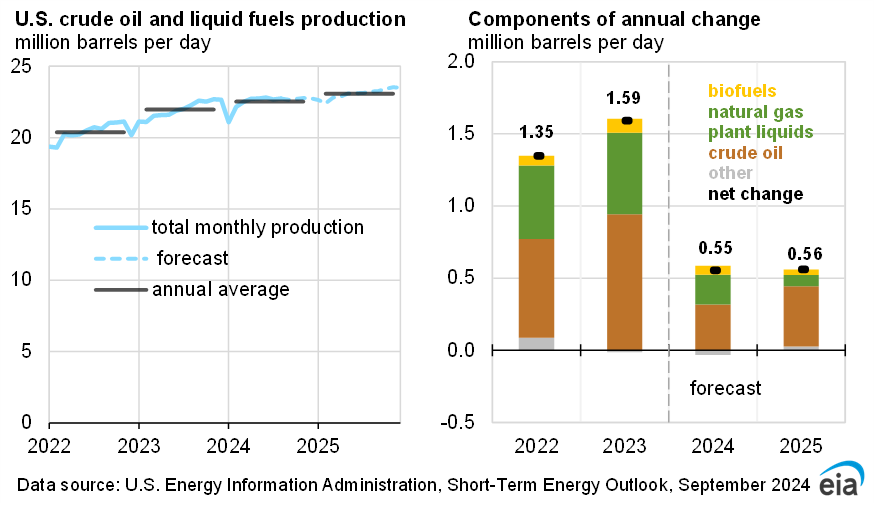
Given all this, it's fair to say that OPEC has engineered today's higher oil prices, while its leading members contemplate even higher prices. It's much less obvious that this is bad for the US, which now has a vibrant and diverse energy sector and is finally approaching the energy independence that politicians have touted since the late 1970s.

Prior to the shift in the focus of the shale revolution from natural gas to oil, the US was still a substantial net importer of petroleum and its products. In 2010, we imported over 9 million barrels per day more than we exported. That was around half of our total petroleum supply. Today, these figures are under 4 million barrels per day and 20%, respectively.

That means that when the price of oil rises, this is no longer followed by enormous outflows of dollars leaving the US to enrich Middle East and other producers. Something like 80 cents of every dollar increase in the price of oil stays in the US, and in the short run the effect may be even more beneficial as investment in US production steps up in response.

In other words, when oil prices go up and gasoline and diesel prices follow, the main effect on the US economy is to shift money from one portion of the economy to another, rather than the whole economy springing a large leak. What makes that shift challenging is that consumers come out on the short end, while oil exploration and production companies, and to some extent oil refiners, gain.

A useful way to gauge the impact on consumers is to compare one year's prices to the previous year's. When oil prices were falling a few years ago, year-on-year drops of as much as $1.00 per gallon for gasoline (2014-15) put up to $100 billion a year back into the pockets of consumers. That provided a timely stimulus for an economy still recovering from the financial crisis of the previous decade.

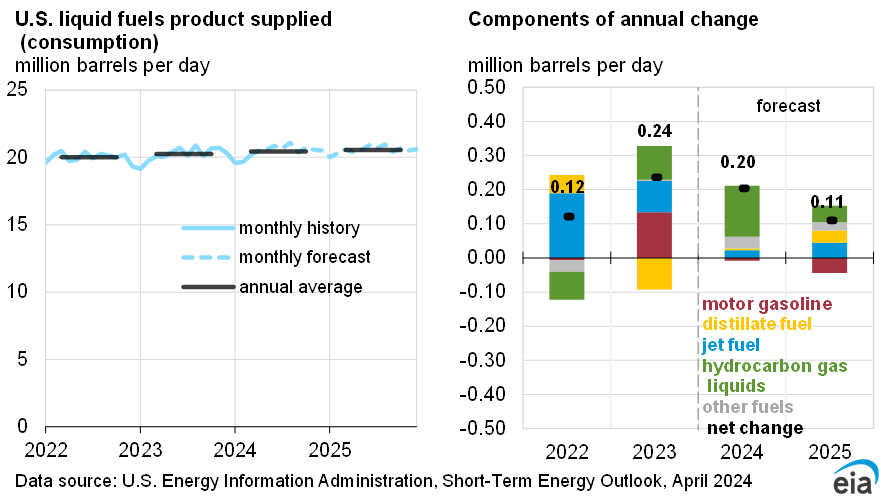
As oil prices started to recover last year, these comparisons turned negative. Currently, the average regular gasoline price is $0.31/gal. higher than last year at this time. If gas prices were to stay that much higher than last year's for the rest of 2018, it would impose a drag of about $45 billion on consumer spending. $2.75/gal. is the highest US average unleaded regular price for April since 2014. Although gas is still nearly $1.00/gal. cheaper than it was then, memories tend to be short.

We may be living in a new era of energy abundance, but I am skeptical that our political instincts have caught up with these altered circumstances. The price of gasoline is still arguably the most visible price in America. When it goes up week after week, consumers notice, even in an economy running at essentially "full employment" and growing at 3% per year.

Most of those consumers are potential voters, and this is another election year with much at stake. In that light, I would not expect President Trump to abandon his attack on "artificial prices" for oil, even if it's arguable that the US economy as a whole may not be worse off with oil over $70 instead of below $60 per barrel.


Thursday, November 06, 2014

Will Falling Prices Shift Oil Industry's Focus to Cost Reduction?

  • Lower oil prices may have less impact on US oil production from shale than competitors in Saudi Arabia and elsewhere appear to assume.
  • The cost of  producing tight oil is not static, and US producers have various options for cost reduction, including optimizing their logistics. The newly elected Congress can help.
Oil prices have dropped by more than 20% since July, based on futures contracts for UK Brent crude. Some expect prices to rebound relatively quickly, apparently including at least one large oil services company. However, indications that the official policy of Saudi Arabia may have shifted away from its customary role of "swing producer" raise the possibility of an extended period of lower prices. This is new territory for the relatively young US shale industry.

From the end of 2010 to the first half of this year, as the rapid development of light tight oil (LTO) from shale deposits was adding more than 2.9 million barrels per day (bpd) to US output, the benchmark price of West Texas Intermediate crude oil (WTI) averaged $96/bbl. The global oil price, represented by UK Brent, averaged $110/bbl for the same period. Having now fallen to the $80s, if prices were to stay here or lower for long, we should expect to learn a great deal about the actual cost structure of new and existing LTO production in the Bakken, Eagle Ford, Permian Basin and other shale plays.

Based on my experience of several oil-price declines from the inside during my time at Texaco, Inc., I'm skeptical that many LTO producers would be inclined to trim output from currently producing wells, other than as a last resort. From late 1997 to the end of '98, WTI prices fell by almost half, from around $20/bbl to under $11--equivalent to roughly $15 today.  Prices for heavier grades of oil fell to single digits. After months of that, revenues from some oil fields no longer covered variable costs, and upstream management took the decision to shut in high-cost production. Once prices revived, they discovered that some of that capacity had been lost essentially permanently.

I suspect there would be even greater uncertainty and hesitation today about shutting in producing shale wells for any significant period, especially in light of the limited experience with such wells. The bigger question is whether the drilling of new wells would slow or stop, resulting in a gradual slide in output as existing wells decline.

Then and presumably now, however, the first option in a situation like this is generally to cut costs, rather than output. I saw this in the mid-1980s, when oil prices fell by nearly 60% and took more than a decade to recover fully, then again in the late '90s, and during periodic, smaller market corrections. Suppliers were squeezed, big projects deferred, and employees saw travel, raises and benefits curtailed. Similar actions now could make a difference in keeping new shale drilling going.

Even for relatively efficient operators, it can be surprising how much expense can be reduced without affecting near-term productivity, and many of those savings would persist if prices recovered. LTO producers might ultimately become more profitable after weathering a period of weak prices.

A heightened focus on costs would also likely extend beyond producing company budgets and supplier agreements. One of the biggest non-production costs for LTO is transportation, whether paid directly by the producer or deducted by the purchaser from the market price.  Because of its rapid growth and the constraints of existing infrastructure, a high proportion of LTO output must currently be shipped by rail--up to one million bpd in the second quarter of 2014.

Rail offers flexibility and can reach many destinations, but it is expensive.  For example, if it costs over $10/bbl to ship Bakken crude to the Gulf Coast by rail, that means that with WTI at $78/bbl the producer might realize less than $70/bbl at the wellhead.  Pipelines are often cheaper to use, though not in all cases. The current tariff on the existing Keystone Pipeline for taking oil from the Canadian border to Cushing, OK, the storage hub for WTI, works out to around $4/bbl. If oil prices stayed low for a while, that might increase interest in the proposed Bakken Marketlink Project. It would connect the Bakken shale operations to the Keystone XL pipeline, the prospects for which look decidedly better after the outcome of Tuesday's mid-term election.

Another aspect of transportation costs that could come under a different kind of pressure relates to federal restrictions on shipping oil and petroleum products by vessel between US ports. Under the "Jones Act", only US-flagged, -owned and -crewed ships can perform such deliveries, even though the rates for such shipments are normally significantly higher than on foreign-flag tankers in comparable service. This is a significant factor in current petroleum trade patterns, in which refined products from Gulf Coast refineries are often shipped halfway around the world, while blenders and marketers on the east and west coasts must import gasoline and other products from outside North America.

And as long as US crude oil exports are prohibited, with a few exceptions, the combination of the Jones Act and the export ban effectively keep LTO bottled up on the Gulf Coast--depressing its price--or force it onto rail. Amending the Jones Act to exempt LTO, or the issuance of a waiver to that effect from the Executive Branch, could increase producers' margins while expanding the supply options for US refineries on the other coasts. I wouldn't be surprised to see this taken up by the new Congress early next year.

 Based on the current behavior of oil markets, the global impact of the US shale oil boom has been greater than many expected and seems very much in the national interest of the US--and of US consumers--to keep it going. It remains to be seen whether measures such as new pipeline infrastructure and reform of shipping regulations, together with more traditional forms of expense reduction, could boost producers' returns on LTO sufficiently to sustain drilling at roughly current rates while oil prices are weak. 

Even if both drilling and tight oil production slowed for a while, this price correction won't spell the end of the shale boom. As the Heard on the Street column in the Wall Street Journal put it recently, "Once someone has cracked it, it can't be unlearned. Barring a prolonged period of very low prices, the US oil industry isn't about to disintegrate." Rather than an existential crisis, the current weakness in oil markets looks like a test of adaptability for this new but important energy sector.

A different version of this posting was previously published on the website of Pacific Energy Development Corporation.

Wednesday, October 15, 2014

The Impact of the Global "Sweet" Crude Bulge

  • The recent slide in global oil prices has been compounded by the pressure that rising US shale oil production is putting on the price of sweet crude benchmarks like Brent.
  • OPEC's producers may suffer as much as those in the US, while consumers benefit from significantly lower fuel prices than last year.
When the US went to war in Iraq in 2003, the price of oil embarked on a trend that took it from around $30 per barrel to nearly $150 before collapsing in the recession in 2008. This time, as a new US-led coalition takes on ISIS with a bombing campaign in Iraq and Syria, the price of oil is falling, down 20% in the last two months. It's not just that global economic growth has weakened recently, or that soaring shale oil output in the US has averted another oil crisis. Oil's current downturn also reflects the fact that new production from the Bakken, Eagle Ford and other shale deposits is particularly well-suited to undermine oil's global benchmark prices, for Brent and West Texas Intermediate, both of which are made up of light sweet crude oil streams.

The numbers for US shale, or "light tight oil" (LTO) as it's often called, are impressive, especially to those accustomed to watching the gradual ebb and flow of different oil sources over long periods. In the 12 months ending in June 2014, US oil production grew by 1.3 million barrels per day (MBD), not far short of Libya's pre-revolution exports. Since January 2011, the US added 3 MBD, or about what the UK produced at its peak in 1999. In fact, since 2010 incremental US LTO production has exceeded the net decline of the entire North Sea (Denmark, Norway and UK) by around 2 MBD, contributing to a significant expansion of Atlantic Basin light sweet crude supply.

The New York Mercantile Exchange defines light sweet crude as having sulfur content below 0.42% and an API gravity between 37 and 42 degrees. That's less dense than light olive oil. The specification for Brent is similar. Much of the LTO produced from US shale formations fits those specifications, and what doesn't is typically even lighter and lower in sulfur.

The current "contango" in Brent pricing, in which contracts for later delivery sell for more than those for delivery in the next month or two, is another sign of a market that is physically over-supplied: more oil than refineries want to process, with the excess going into storage. However we also see indications that the historical premium assigned to lighter, sweeter crude versus heavier, higher-sulfur crude is under pressure.

One example of this is the gap or "differential" between Louisiana Light Sweet, which wasn't caught up in the delivery problems that plagued West Texas Intermediate for the last several years, and Mars blend, a sour crude mix from platforms in the Gulf of Mexico. From 2007-13 LLS averaged around $4.50 per barrel higher than Mars, while for the first half of this year it was only $2.75 higher and today stands at around $3.40 over Mars.

And while OPEC's reported Reference Basket price has been falling in tandem with Brent, its discount to Brent had also narrowed by about $1 per barrel, prior to the price plunge of the last couple of weeks, compared with the average for 2007-13. Considering that OPEC's basket includes light sweet crudes from Algeria, Libya and Nigeria that sell into some of the same Atlantic Basin markets as Brent, that looks significant.

By itself a narrowing of the sweet/sour "spread" of only a dollar or so per barrel isn't earth-shattering. However, because the surge of US oil production is effectively focused on the oil market segment represented by the price of Brent, it compounds the pressure on OPEC, many of whose members link the price of their output to Brent. This might help explain why the response of OPEC's leading producer, Saudi Arabia, has been to cut prices rather than output, in an apparent effort to maintain market share rather than price level.

The Saudis know better than anyone how that movie could end. The Kingdom's1986 decision to implement "netback pricing", linking the price of its oil to the value of its customers' refined petroleum products, helped precipitate a price collapse so deep that it took oil prices 18 years to reach $30/bbl again, by which time the dollar had lost a third of its value.

Whether aimed at US shale producers or as a reminder to the rest of OPEC, which appears to be unprepared to make the output cuts necessary to defend higher oil prices, the Saudi action increases the chances that oil prices will over-correct to the downside, rather than rebounding quickly. If so, the impact of the sweet crude bulge in the Atlantic Basin--only a little more than 3% of global oil supplies--could play a disproportionate role in prolonging the pain producers will experience until oil markets eventually reach a new equilibrium.

In the meantime, US consumers are benefiting from gasoline prices that are already $0.15 per gallon lower than this week last year. Today's wholesale gasoline futures price for November equates to an average retail price well below $3.00 per gallon, after factoring in fuel taxes and dealer margins, compared to last year's average retail price for November of $3.24. After factoring in lower diesel and heating oil prices, the fall in oil prices could put an extra $10 billion in shoppers' pockets for this year's holiday season.

A substantially different version of this post was previously published on the website of Pacific Energy Development Corporation

Tuesday, July 29, 2014

Bakken Shale Gas Flaring Highlights Global Problem

  • High rates of natural gas flaring in the Bakken shale formation are symptomatic of infrastructure limitations that prevent this gas from reaching a market.
  • Although various technical options could reduce flaring from high-output well sites, none matches the benefits of developing large-scale outlets for the gas.
The Wall St. Journal recently reported on the high rate at which excess natural gas from wells in North Dakota's Bakken shale formation is burned off, or "flared."  The Journal cited state data indicating 10.3 billion cubic feet (BCF) of gas were flared there during April 2014. That represented 30% of total gas production in the state for the month.

North Dakota's governor attributed the high volume of gas flared in his state to the great speed at which the Bakken shale has been developed, outpacing gas recovery efforts. Oil output ramped up from 200,000 barrels per day five years ago to just over a million today, in a region lacking the dense oil and gas infrastructure of Texas and other states with a legacy of high production.

Nor is this situation unique to the Bakken. The World Bank has estimated that around 14 BCF of gas is flared every day, globally. Such flaring is a problem for more than governments and other mineral-rights owners that worry about missing potential royalties.  Aside from our natural aversion to waste, flaring natural gas has environmental consequences.

The tight oil produced from the Bakken shale is quite low in sulfur, and so is most of the associated gas, but some of it contains relatively high percentages of hydrogen sulfide (H2S). When that gas is flared, rather than processed, the resulting SOx emissions can affect local or even regional air quality.

Gas flaring also contributes to the greenhouse gas emissions implicated in global warming, although it must be noted that flaring is 28-84 times less climate-altering, pound for pound, than venting the same quantity of methane to the atmosphere.  When annualized, and assuming complete combustion of the gas, North Dakota's recent level of flaring equates to around 6.7 million metric tons of CO2 emissions, or nearly a fifth of total estimated US CO2 emissions from natural gas systems in 2012. That means this one source accounts for around 0.1% of total US greenhouse gas emissions, or somewhat less than US ammonia production.

Why would anyone flare gas in the first place? As the Journal pointed out, the oil produced from Bakken wells is worth significantly more than the gas, although the energy-equivalent price ratio favors oil by more like 4:1 than the 20:1 cited in the article. Still, the economics of Bakken drilling are mainly driven by oil that can be sold at the lease and delivered by pipeline or rail, and not by the associated gas, particularly after tallying the cost of capturing and processing it, and then hoping capacity will be available to deliver it to a market that in the case of the Bakken might be hundreds or thousands of miles away. The characteristics of shale wells, with their steep decline curves, raise this hurdle even higher: Shale gas infrastructure at the well must pay for itself quickly, before output tails off.

There is no shortage of technical options for putting this gas to use, instead of flaring it. An industry conference in Bismarck, ND this spring featured an excellent presentation on this subject from the Energy & Environmental Research Center (EERC) of the University of North Dakota. Among the options listed by the presenter were onsite removal of gas liquids (NGLs), using gas to displace diesel fuel in drilling operations, and compressing it for use by local trucking or delivery to fleet fueling locations. However,  contrary to the intuition of the rancher interviewed by the Journal, none of these options would reduce high-volume flaring by more than a fraction, despite investment costs in the tens or hundreds of thousands of dollars per site.

Even in the case of the most technically interesting option, small-scale gas-to-liquids conversion to produce synthetic diesel or high-quality synthetic crude, EERC estimated this would divert only 8% of the output from a multi-well site flaring 300 million cubic feet per day, while requiring an investment of $250 million. And to make this option yet more challenging to implement, of the 200-plus such locations EERC identified in the state, fewer than two dozen flared consistently at that level over a six-month period. The problem moves around as older wells tail off and new ones are drilled.

Significantly reducing or eliminating natural gas flaring ultimately requires a large-scale market for the hydrocarbons being burned off. That's as true in North Dakota as in Nigeria. While various technical options could incrementally reduce gas flaring from Bakken wells, the highest-impact solutions would be those that promote market creation. That would include fast-tracking long-distance gas pipeline projects or building gas-fired power plants nearby. Absent large new customers for Bakken gas, additional regulations on flaring will either be ineffective or impede the region's strategically important oil output.

A different version of this posting was previously published on the website of Pacific Energy Development Corporation.

Wednesday, March 19, 2014

Making Oil-by-Rail Safer

  • A series of rail accidents involving trains carrying crude oil has focused attention on safety procedures and even the tank cars used in this service.
  • Another concern is the variable characteristics of the "light tight oil "now shipped by rail in large quantities. That isn't the result of "fracking", but of the oil's inherent chemistry.   
The growth of North American oil production from unconventional sources has resulted in a dramatic expansion in the volume of crude oil shipped by rail. Unfortunately, as crude oil rail traffic has increased, so have rail accidents involving crude oil, including the tragic explosion and fire in Lac-Megantic, Quebec last July. That event and subsequent accidents have focused railroads, regulators and shippers on the need to improve the safety of oil-by-rail as quickly as possible.

In the immediate aftermath of Lac-Megantic, the Federal Railroad Administration issued an emergency order on procedures railroads must follow when transporting flammable and other hazardous materials. And on February 21, 2014 railroads reached a voluntary agreement with the US Department of Transportation (DOT) on additional steps, including reduced speed limits for oil trains passing through cities, increased track inspection, and upgraded response plans. These steps have the highest priority, because crude oil loaded in tank cars doesn't cause rail accidents. Every incident I've seen reported in the last year began with a derailment or similar event.

At the same time, the packaging and characteristics of the oil can affect the severity of an accident.  Investigators have focused on two specific issues in this regard, starting with the structural integrity of the tank cars carrying the oil. The vast majority of tank cars in this service are designated as DOT-111--essentially unpressurized and normally non-insulated cylinders on wheels. These cars routinely carry a variety of cargoes aside from crude oil, including gasoline and other petroleum products, ethanol, caustic soda, sulfuric acid, hydrogen peroxide, and other chemicals and petrochemicals.

Their basic design goes back decades, and even the older DOT-111s incorporate learnings from earlier accidents. A growing proportion of the US fleet of around 37,000 DOT-111 tank cars in oil service consists of post-2011, upgraded cars that have been strengthened to resist punctures, but the majority is still made up of older, unreinforced models. The Pipeline and Hazardous Materials Safety Administration (PHMSA) is studying whether to make upgrades mandatory, but some railroads and shippers aren't waiting. Last month Burlington Northern Santa Fe Railway, owned by Warren Buffet's Berkshire Hathaway, announced it would buy up to 5,000 new, more accident-resistant tank cars.

Another issue that has received much attention since Lac-Megantic concerns the flammability of the light crude from shale formations like North Dakota's Bakken crude, which accounts for over 700,000 barrels per day of US crude-by-rail. The Wall Street Journal published the results of its own investigation, reporting that Bakken crude had a higher vapor pressure--a  measure of volatility and an indicator of flammability--than many other common crude oil types.

The Journal apparently based its findings on crude oil assay test data assembled by the Capline Pipeline.  Although a Reid Vapor Pressure of over 8 pounds per square inch (psi) for Bakken crude is higher than for typical US crudes, it's not unusual for oil as light as this. That's especially true where, due to lack of field infrastructure, only the co-produced natural gas is separated out, leaving all liquids in the crude oil stream.

What makes this situation unfamiliar in the US is that domestic production of oil as light as Bakken had nearly disappeared before the techniques of precision horizontal drilling and hydraulic fracturing were applied to the Bakken shale and similar "source rock" deposits. (Note: High vapor pressures are characteristic of the naturally-occurring mix of hydrocarbons in very light crudes, rather than a result of the "fracking" process.) Nor is the reported vapor pressure for Bakken or Eagle Ford crude higher than that of gasoline, a product that is federally certified for transportation in the same DOT-111 tank cars that carry crude oil.

The variability of the vapor pressure data that the Journal's reporters identified for Bakken crude may result from another unfamiliar feature of such "light tight oil". Crude produced from conventional reservoirs, which are much more porous than the Bakken shale, tends to be relatively homogeneous. However, because the Bakken and other shales are so much less porous, limiting diffusion within the source rock reservoir, the composition of their liquids can vary much more between wells.

In any case, vapor pressure isn't the preferred measure of fuel flammability. Actual rail cargo classifications are based on flash point and initial boiling point. These routine quality tests aren't included in Capline's publicly available data. PHMSA initiated "Operation Classification" to ensure that manifests and tank car placards for crude oil shipments accurately reflect the potential hazards of each cargo, based on such measurements. The agency has determined that it hasn't always been done consistently, and DOT issued another emergency order requiring shippers to test oil for proper classification.

As mentioned in an oil-by-rail webinar yesterday, hosted by Argus Media, assigning the proper classification to oil shipments may seem like a bureaucratic concern--it doesn't necessarily affect the tank car type chosen to transport the crude--but it can have a significant impact on operational factors such as routing and the notification of first responders along the route.

There's no quick and simple way to make the transportation of crude oil by rail as safe as hauling a dry bulk cargo like grain. Tank car fleets can't be replaced overnight, not just because of the cost involved, but due to limited manufacturing capacity. However, in the meantime significant improvements can be achieved through a combination of government attention and sustained industry initiatives. Since the new crude streams traveling by rail play a key role in increasing North America's energy security, this is in the interest of everyone involved--producers, shippers, railroads, and not least the communities through which this oil travels.

A different version of this posting was previously published on the website of Pacific Energy Development Corporation.
 

Tuesday, March 11, 2014

Will Shale Oil Growth Lead to New US Refineries?

  • The revival of US oil production is spurring new investments in refineries, including the restart or new construction of small refineries near these resources.
  • How well such investments perform will depend on both the longevity of shale oil production and policies concerning its export.
An article on the revival of some mothballed US oil refineries and the possible construction of new ones provided yet another indication of industry confidence that record growth in oil production from US shale deposits isn't just a temporary phenomenon.  Refineries--even small ones--aren't usually quick-return investments. Restarting one or building a new one requires a positive view of future feedstock availability, product demand and other uncertainties.

The number of US refineries has fallen steadily, from 301 in 1982 to 143 last year. Because this mainly involved the retirement of smaller, less efficient facilities, while larger refineries "de-bottlenecked" or expanded, US refinery capacity actually grew over this period. It's generally cheaper to expand an existing facility, leveraging its infrastructure and experienced staff, than building a "grassroots" facility.

The hurdles facing new refinery construction in the US have been compounded by environmental regulations covering permits, emissions and product specifications. The time when a new entrant could simply distill light crude oil, sprinkle in some tetraethyl lead and other additives, and sell a full slate of refined products is long gone. New refineries in North Dakota, Texas and Utah are apparently focused on producing diesel fuel from the shale, or "tight" oil in the Bakken, Eagle Ford, and Uinta shales, respectively, and selling the rest of their output to other refiners or petrochemical plants as feedstocks .

With diesel demand in the producing areas booming, thanks to the needs of drilling rigs and the trucks that haul water, sand and equipment, as well as oil from leases not connected to pipeline gathering systems, this opportunity could last as long as the drilling-intensive shale development does. In other words, the demand aspiring refiners see appears to be linked directly to their source of supply.

Meanwhile larger plants, such as several of  Valero's Texas refineries, are in various stages of investments to enable them to process more light oil, reversing a multi-decade trend of investment to handle increasingly heavy and sour (high-sulfur) imported crudes. As with the smaller refineries, this shift requires high confidence in the long-term availability and favorable pricing of these high-quality domestic crude oil types.

The reasonableness of that assumption depends on the longevity of tight oil production. Large conventional inland oil fields typically reach peak output within a few years and then decline gradually, with long plateaus. Whether shale deposits, with their distinct geology, will follow the same pattern remains to be seen. Despite a few projections suggesting that tight oil output of the major shale basins could soon peak and decline rapidly, most mainstream forecasts suggest a long life for these resources, particularly as the technology to develop them continues to improve

For example, in its latest Annual Energy Outlook, the US Energy Information Administration (EIA) anticipates US tight oil production reaching 4.8 million barrels per day (MBD) by 2021, before gradually declining back to levels near today's in 2040. By contrast BP's just-released Energy Outlook 2035 sees comparable growth over the next few years but little subsequent decline, with tight oil at 4.5 MBD in 2035. Meanwhile, ICF International recently issued its Detailed Production Report, projecting shale/tight oil production in the US and Canada to reach 6.3 MBD by 2035, including 1.3 MBD from the tight oil zones of the Permian Basin of Texas.

The other big uncertainty concerning the availability of light tight oil for new or expanded US refineries depends on federal export policy, which I addressed in a recent post. This issue is highly controversial. A quick reversal of existing rules would be surprising, though as the New York Times noted, possible compromises under existing law could facilitate an expansion of crude oil exports beyond current shipments to Canada. While unlikely to dry up domestic availability of tight oil, such measures could shrink the current discounts for these crudes, compared to internationally traded light crudes like UK Brent. That seems less of a risk for small, simple, inland refineries than for larger facilities, especially those near coastal ports.

This isn't the first time investors have considered the need for new US refineries. There was similar interest after hurricanes Katrina and Rita slashed Gulf Coast refinery output for several weeks in 2005, though it ultimately led nowhere. If today's circumstances prove more supportive, it will be because the US hasn't experienced anything comparable to the shale revolution since the 1920s and '30s, when rapid oil production growth was accompanied by a wave of refinery construction, though in a very different business and regulatory climate. If that parallel holds, consumers stand to benefit from the resulting increase in competition.

A different version of this posting was previously published on the website of Pacific Energy Development Corporation.

Tuesday, January 28, 2014

The Pros and Cons of Exporting US Crude Oil

  • Calls for an end to the effective ban on exporting most crude oil produced in the US are based on a growing imbalance in domestic crude quality.
  • At least recently, the ban has likely benefited refiners more than consumers. Assessing the impact of its repeal on energy security requires further study. 
Senator Lisa Murkowski (R-AK), the ranking member of the Senate Energy & Natural Resources Committee, issued a white paper earlier this month calling for an end to the current ban on US crude oil exports. Her characterization of existing regulations in this area as "antiquated" is spot on; the policy is a legacy of the 1970s Arab Oil Embargo. However, not everyone sees it the same way, either in Congress or the energy industry.

This isn't just a matter of politics, or of self-interest on the part of those benefiting from the current rules. Questions of economics and energy security must also be considered. The main reason these restrictions are still in place is that for much of the last three decades US oil production was declining. The main challenges for the US oil industry were slowing that decline while ensuring that US refineries were equipped to receive and process the increasingly heavy and "sour" (high sulfur) crudes available in the global market. The shale revolution has sharply reversed these trends in just a few years.

No one would suggest that the US has more oil than it needs. Despite the recent revival of production, the US still imported around 48% of its net crude oil requirements last year. Even when production reaches its previous high of 9.6 million barrels per day (MBD) as the Energy Information Agency now projects to occur by 2017, the country is still expected to import a net 38% of refinery inputs, or 25% of total liquid fuel supply. The US is a long way from becoming a net oil exporter.

The driving force behind the current interest in exporting US crude oil is quality, not quantity, coupled with logistics. If the shale deposits of North Dakota and Texas yielded oil of similar quality to what most US refineries have been configured to process optimally, exports would be unnecessary; US refiners would be willing to pay as much for the new production as any non-US buyer might. Instead, the new production is mainly what Senator Murkowski's report refers to as "LTO"--light tight oil. It's too good for the hardware in many US refineries to handle in large quantities, and for most that can process it, its better yield of transportation fuels doesn't justify as large a price premium as for international refineries with less complex equipment.

As a result, and with exports to most non-US destinations other than Canada or a few special exceptions effectively barred, US producers of LTO must discount it to sell it to domestic refiners. Based on recent oil prices and market differentials, producers might be able to earn as much as $5-10 per barrel more by exporting it. Meanwhile the refiners currently processing this oil are enjoying something of a buyer's market and are able to expand their margins. The export issue thus pits shale oil producers and large, integrated companies (those with both production and refining) such as ExxonMobil against independent refiners like Valero.

Producers are justified in claiming that these regulations penalize them and threaten their growth as available domestic refining capacity for LTO becomes saturated. Additional production is forced to compete mainly with other LTO production, rather than with imports and OPEC.

I believe producers are also largely correct that claims that crude exports would raise US refined product prices are mistaken. The US markets for gasoline, diesel fuel, jet fuel and other refined petroleum products have long been linked to global markets, with prices especially near the coasts generally moving in sync with global product prices, plus or minus freight costs. I participated in that trade myself in the 1980s and '90s. What's at stake here isn't so much pump prices for consumers as US refinery margins and utilization rates.

Petroleum product exports have become a major factor in US refining profitability, and refiners are reportedly investing and reconfiguring to enhance their export capabilities. This provides a hedge against tepid domestic demand. Nationally, refined products have become the largest US export sector and contributed to shrinking the US trade deficit to its lowest level in four years.  If prices for light tight oil rose to world levels US refineries might be unable to sustain their current export pace. It's up to policymakers to assess whether that risk is merely of concern to the shareholders of refining companies or a potential threat to US GDP and employment.

The quest to capture the "value added"--the difference between the value of manufactured products and raw materials--from petroleum production is not new. It helped motivate the creation of the integrated US oil companies more than a century ago and impelled national oil companies such as Saudi Aramco, Kuwait Petroleum Company, and Venezuela's PdVSA to purchase or buy into refineries in Europe, North America and Asia in the 1980s and '90s.

On the whole, OPEC's producers probably would have been better off investing in T-bills or the stock market, because the return on capital employed in refining has frequently averaged at or below the cost of capital over the last several decades. It's no accident most of the major oil companies have reduced their exposure to this sector. When today's US refiners argue that it is in the national interest to preserve the advantage that discounted LTO gives them they are swimming against the tide of oil industry history.

The energy security case for crude exports looks harder to make. An excellent article from the Associated Press quoted Michael Levi of the Council on Foreign Relations as saying, "It runs against the conventional wisdom about what oil security means. Something seems upside-down when we say energy security means producing oil and sending it somewhere else."  The argument hinges on whether allowing US crude exports would simultaneously promote more production and increase the pressure on global oil prices. That makes sense to me as a former crude oil and refined products trader, but it will be a harder sell to Senators, Members of Congress, and their constituencies back home.

The politics of exports may be easing somewhat, though, as a Senate vacancy in Montana could lead to a new Chair at Energy & Natural Resources who would be a natural partner for Senator Murkowski on this issue. (That shift may incidentally be part of a strategy to help Democrats retain control of the Senate.) Will that be enough to overcome election-year inertia and the populist arguments arrayed against it?

As for logistics, the administration could ease the pressure on producers without opening the export floodgates by exempting the oil output from the Bakken, Eagle Ford and other shale deposits from the Jones Act requirement to use only US-flag tankers between US ports. That could open up new domestic markets for today's light tight oil, while allowing Congress the time necessary to debate the complex and thorny export question.

Senator Murkowski wasn't alone in calling for an end to the oil export ban. In his annual State of American Energy speech presented the day as the Senator's remarks, Jack Gerard, CEO of the American Petroleum Institute, noted, "We should consider and review quickly the role of crude exports along with LNG exports and finished products exports, because of the advantages it creates for this country and job creation and in our balance of payments." In a similar address on Wednesday, the head of the US Chamber of Commerce stated, "I want to lift the ban. It's not going to happen overnight, but it's going to happen."  I'd wager he at least has the timing right.

A different version of this posting was previously published on the website of Pacific Energy Development Corporation.

Thursday, October 03, 2013

As US Oil Production Revives, New Vulnerabilities Appear

  • The expansion of US oil production is centered in a handful of states, and in particular two whose gains more than offset declines in two former production leaders.
  • For various reasons the West Coast has missed out on this revival, straining infrastructure and creating new vulnerabilities that should be addressed.
On the front page of today's Wall St. Journal I see that "US Rises To No. 1 Energy Producer." This news builds on a number of recent headlines such as, "US oil production reaches highest level in 24 years." Stories like these aren't as attention-grabbing as they were when this streak began more than a year ago, once shale oil production ramped up dramatically.  What occurred to me this time, however, was how different the current distribution of US oil output is than it was in the late 1980s.

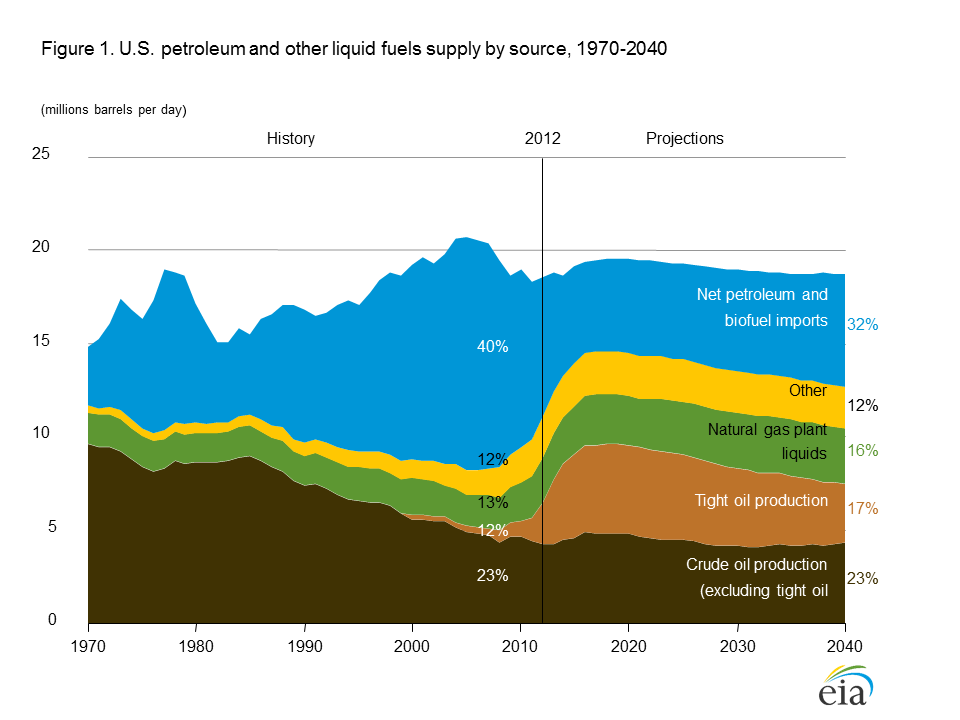
A handful of states still account for the lion's share of US oil production. Then and now, Texas tops the list, exceeding its 1989 output by 37%. At nearly 2.6 million barrels per day (MBD) in the most recent reported month --140% above at its low point in 2007--its share of US oil production had grown to around 35% by June. However, beneath Texas  the list of top oil states has been jumbled in ways few would have anticipated two decades ago.

Alaska, California and Louisiana, the second-, third- and fourth-ranked producers in 1989, then supplied 41% of total US crude oil output. After decades of decline, the same three states now contribute just 17%, excluding production from the federal waters off Louisiana's coast.

Meanwhile, thanks to the development of the Bakken shale, North Dakota has jumped from the number  6 spot just five years ago to number two, eclipsing Alaska early in 2012.  Traditional mid-tier producers like Colorado, Oklahoma and New Mexico are also contributing to the overall US oil revival. This surge of highly productive drilling in roughly the middle third of the country, on top of a million-plus barrels per day from the Gulf of Mexico --mainly from deepwater rigs--has scrambled existing oil transportation arrangements. 
When onshore production in Texas and the rest of the mid-Continent shrank in the 1990s and 2000s, the region's pipeline network gradually evolved into the country's principal oil-import conduit. The growth of production in the federal waters of the Gulf of Mexico, which had reached 1.6 MBD at the time of the Deepwater Horizon accident in 2010 but subsequently declined to about 1.2 MBD, meshed well with that model.

Today's big challenge goes against that grain: moving the growing surplus of oil in the upper plains states to markets on the West, Gulf and East Coasts, increasingly by rail. Much of the turbulence we've seen in the US oil market  in the last two years reflects the delays inherent in realigning and expanding that network to accommodate newly abundant domestic supplies.

Yet on the other side of the Rockies, the picture looks very different. When I was trading crude oil for Texaco's west coast refining system in the late 1980s, balancing the crude oil surplus on the Pacific coast required shipping multiple tankers a month of Alaskan North Slope oil to the Gulf, where production was shrinking, and prompted the construction of a new pipeline to send surplus oil to east Texas over land. After two decades of decline from mature fields, along with moratoria on tapping new offshore fields, imports now make up roughly half of west coast refinery supply, even though regional petroleum demand is essentially back to 1989 levels. It remains unclear whether and when California will allow producers to tap the state's potentially game-changing oil resources in the Monterey shale deposit.

Barring further change, the regional nature of these shifts means that the energy security benefits accompanying the revival of US oil production are a party to which the West Coast has not been invited, or has perhaps declined the invitation. That's significant, because it leaves residents of California, Oregon, Nevada and Washington much more exposed to any disruptions in global oil trade, since the existing US Strategic Petroleum Reserve was never intended to provide coverage west of the Rockies. In this light, the appetite of west coast refiners for trainloads of Bakken and Eagle Ford crude looks strategic, rather than just a temporary response to market conditions.

A different version of this posting was previously published on the website of Pacific Energy Development Corporation.

Wednesday, September 04, 2013

Do Crude Oil Shipments Make Rail Less Safe?

  • The movement of crude oil by rail is expanding rapidly but still represents a small fraction of the hazardous goods transported by rail in North America.
  • The devastation caused by an oil train accident in Lac-Megantic, Quebec should galvanize railroads, shippers and regulators to improve rail safety for all hazardous freight. However, it does not justify banning oil-by-rail.
It’s been nearly two months since a train loaded with crude oil from North Dakota derailed and exploded in the Canadian town of Lac-Megantic, Quebec, killing an estimated 47 residents. In the interval since the accident, the relevant authorities have focused on ascertaining the cause of the accident and determining how best to improve rail safety. However, there has also been another, less-customary conversation about whether oil in general, and the specific oil on this train, might be too dangerous to transport by rail at all. That conversation would benefit from some context that appears to be absent.

Both conversations began with a tragedy in a place I recognized immediately. Ten years ago my wife and I passed through Lac-Megantic and drove along the Chaudière river that originates there, on its way to the St. Lawrence. It’s an area of natural beauty and historical significance. The images of destruction and of oil spilled in the river were gut-wrenching.

The investigation is still underway, but it seems significant that the Federal Railroad Administration (FRA) of the US Department of Transportation has already issued an Emergency Order banning the practice of leaving such trains unattended, pending the development of better procedures for securing them safely. Canadian authorities are reviewing their regulations and enforcement, as well as revisiting questions about the specific type of tank car in which the oil was carried. The Wall St. Journal reported that the FRA is also  looking into the testing and classification of crude oil shipments, to ensure that the tank cars used to transport different crude oils are suited to the task. Meanwhile, the rail operator involved in the accident has filed for bankruptcy on both sides of the border.

The second conversation, apparently based on a belief that it is possible to cease our use of petroleum entirely if we only have the will, is occurring in a fact vacuum. Understanding why that particular batch of crude oil was on that specific track on that day requires unpacking a nested set of factors that starts with the fact that oil still accounts for 33% of total global energy consumption, but more importantly supplies 93% of transportation energy. Numerous forecasts, including the latest from the US Department of Energy, anticipate no reduction in global oil use through 2040. Although we’ve displaced much of the oil formerly used to generate electricity and have greatly improved vehicle fuel efficiency, our most successful alternative transportation fuel, ethanol--no stranger to rail accidents--accounted for just 3% of US liquid fuel use last year, when adjusted for its lower energy content.

Although global oil movements are dominated by pipelines, tankers and barges, rail remains an important mode because of its flexibility. It’s also usually cheaper and more efficient than trucking for all but short distances--and safer, too, despite accidents like this one. Although the rapid recent growth of crude-oil-by-rail and its role in the Keystone XL pipeline debate have attracted significant attention, last year’s 234,000 tank-car loads of crude made up less than half of total US petroleum rail shipments and were dwarfed by over 1.5 million tank-car loads of chemicals hauled by rail in 2012.

Crude oil, especially light crudes like those produced from the Bakken and Eagle Ford shales, is flammable, and thus constitutes hazardous cargo. However, railroads routinely carry a wide variety of flammable and otherwise hazardous materials, including propane, gasoline, benzene, ethanol, chlorine gas, sulfuric acid and a range of other chemicals. Safety is not  determined by the cargo--if it was, none of these substances would be on trains--but by the combination of the equipment used to carry it, the rules and processes that dictate how to handle it, and the people who operate these systems. It’s no coincidence that these are the areas on which the investigations and preliminary regulatory responses have focused.

Then there are the market and logistical circumstances that resulted in a St. John, New Brunswick refinery that supplies both Canadian and US consumers and normally processes oil imported by tanker, acquiring oil produced in North Dakota and shipped halfway across the continent by rail. North American oil production is expanding rapidly, with significant economic and energy security benefits. Much of this new oil is found in places not adequately served by the large network of existing pipelines. That situation may eventually be rectified, but in the meantime the mismatch between growing landlocked oil supplies and limited pipeline outlets for them has created an opportunity for rail operators reeling from the much larger shale-gas-induced decline in coal shipments. Serving that need keeps people and trains employed. And that, ultimately, is why a train carrying Bakken crude was on a track in Lac-Megantic this July.

I can scarcely imagine what the survivors of the Lac-Megantic disaster and the families of the victims have been going through for the last two months. Their lives will never be the same. But whatever the cause of the accident is determined to have been--human error, mechanical failure, aging infrastructure or something else--it was not caused by the oil in those tank cars.

In the aftermath of an accident like this, the best thing we can do is to determine why it happened and apply those lessons to make rail transport of all hazardous cargoes safer.  Attempting to use the tragedy to advance a social cause such as “ending our reliance on oil” might be alluring to some, but the communities through which such freight travels in the course of keeping our economy running will benefit much more from the former course of action.

A different version of this posting was previously published on Energy Trends Insider. 

Wednesday, August 21, 2013

Will the Keystone XL Decision Be Based on Incorrect Assumptions?

  • Some of the facts about the Keystone XL pipeline project that President Obama cited in an interview last month turned out to be wrong. That's significant, if he is the ultimate decision-maker on this question.
  • Whatever his assessment of the pros and cons of the project, the politics of Keystone are trumping the facts, indicating the decision is likely to be deferred as long as possible. 
When President Obama commented on the merits of the Keystone XL pipeline project in an interview in the New York Times last month, the Washington Post suggested that his remarks “give opponents reason for hope.” Although he confirmed that the White House’s main objective criterion for making this decision was still the pipeline’s greenhouse gas impact, the President also speculated about the project’s job-creation potential and the ultimate destination of the crude oil it would carry. This appeared to endorse arguments raised by opponents of the project. These issues deserve more than the dismissive treatment they received in the interview.

With regard to the number of direct construction jobs that the northern leg of the Keystone XL Pipeline (KXL) might create, I don’t know whether the right number is the 2,000 the President cited or the tens of thousands estimated in an earlier State Department study. However, fact checking by both PolitiFact and AP concluded he was wrong.

In any case, this administration lacks credibility on counting such jobs. Consider the White House's metric of “jobs created or saved” for assessing the impact of the 2009 stimulus, or the routine touting of projects with “green jobs” potential, not just in terms of their direct employment gains, but also their indirect job creation estimated via generous multiplier effects. Either indirect jobs are always relevant, in which case KXL would create far more jobs across the economy than the President seems willing to admit, or they also aren’t relevant to justifying clean energy and other, more favored infrastructure projects.

The more interesting issue Mr. Obama brought up relates to the disposition of the oil-sands crude that the KXL would ultimately carry from Alberta to the Gulf Coast. For starters, this isn’t relevant for whatever volume of North Dakota production the pipeline might also carry, since current rules prohibit its export to anywhere except Canada. Of the pipeline’s planned capacity of 830,000 barrels per day, some would be used to ship US crude to US destinations, some would carry Canadian  oil destined for US refineries in the mid-continent, while an unspecified remainder would arrive at the Gulf Coast.  However large the latter figure might be, it’s doubtful that much of it would ever leave these shores. To understand why, you need to consider the quantity of US oil imports of similar quality currently coming into the Gulf.

Overall, Gulf Coast crude oil imports have fallen by around a third since 2007, but they still amount to around 4 million barrels per day – 5x the total capacity of the KXL. Unsurprisingly, much of the crude imported into the Gulf is either sour or heavy, since the refineries in the region have invested billions of dollars in the hardware required to process such crudes, which are typically cheaper than lighter, sweeter grades. A quick glance at the countries of origin of the import mix confirms this, with suppliers such as Mexico, Saudi Arabia, Venezuela, and Iraq dominating recent imports. Imports from Algeria, Angola, and Nigeria have been slashed by surging production of light, sweet crude in Texas and other states.

In the interview, President Obama said, “So what we also know is, is that that oil is going to be piped down to the Gulf to be sold on the world oil markets, so it does not bring down gas prices here in the United States.” For him to be right about that, we must believe that the current importers of around 2.7 million barrels per day of generally similar crude from South America and the Middle East would ignore the arrival in their market of new supplies from Canada and continue to buy from existing suppliers, and that those other suppliers would be able to continue to charge the same prices as before, despite significant new competition. Although I wouldn’t argue that oil sands crude would never be exported from the Gulf, imagining that most of it would simply sail right by the closest and largest global refining center equipped to handle this type of crude oil reflects a remarkably superficial view of how oil markets actually work.

The Keystone XL decision process clearly encompasses both factual and political considerations.  On the facts alone and the criteria set by the administration, the pipeline would eventually have to be approved, since even in the worst realistic case its impact on global greenhouse gases would be minimal--on the order of 0.4% of global emissions--while it offers clear benefits including reliability of supply. The protracted delays in approving this project provide all the evidence needed to confirm that political considerations outweigh the facts. Deciding now in favor of either side offers limited political benefits but carries huge risks; continuing to leave the issue in suspense has paid dividends at little apparent political cost.

A different version of this posting was previously published on Energy Trends Insider. 

Friday, June 07, 2013

Could US Oil Trends Alter How Oil Prices Are Set?

  • Oil prices weren't always set by a transparent global market. Current pricing mechanisms emerged from much less transparent precursors.
  • Resurgent US production, combined with restrictions on US oil exports, could disconnect the US from the global oil market, with unexpected results.
If you follow energy closely, you've likely lost count of the number of times you've heard an economist, executive or government official explain that oil prices are set by the global market, and not by oil companies or the US government.  Although somewhat over-simplified, this statement has been valid for roughly 30 years.  However, it hasn't always been the case. Current trends in US production, together with existing regulations, make me wonder if it will remain accurate in the future, as the US inches closer to what is commonly referred to as energy independence. 

The market-based system of oil prices, with its transparency and easy trading among regions, didn't appear overnight.  Until the early 1970s, Texas played a role similar to Saudi Arabia's current swing producer role within OPEC.  By limiting the output of the state's oil wells, the Texas Railroad Commission effectively determined the global price of oil--to the extent there was one--until Texas had no spare capacity left.  That set the stage for OPEC, a succession of oil crises, and the US oil price controls that were imposed in the 1970s in an attempt to help manage inflation. There was also no single, representative oil price.  Instead, prices were set by producers' contract terms and the discounts large refiners could negotiate, or by federal regulations.  The current system emerged from a series of developments in the 1980s.

When US oil price controls ended in 1981, oil futures trading was just getting underway on the New York Mercantile Exchange.  The heating oil contract was launched in 1980, followed by the West Texas Intermediate (WTI) crude oil contract in 1983. This combined large-scale oil trading with an unprecedented level of transparency.   It was also significant that the US, the world's biggest oil consumer, had become a major oil importer after domestic production peaked in 1970.  Because refineries on the coasts competed for oil supplies with refiners on other continents, the price of WTI couldn't get too far out of line with imported crudes without creating arbitrage opportunities for traders.  And any part of the US connected by pipeline to the Gulf Coast was effectively linked to oil prices in Europe, the Middle East and Asia.

After OPEC miscalculated the response to the very high prices its members were demanding in that period--reaching $100 per barrel in today's dollars--global oil demand shrank by nearly 10% from 1979 to 1983, while non-OPEC production grew by more than 12%.  Prices soon collapsed, and OPEC's dominance of oil markets faded for most of the next two decades, during which the futures exchanges and trading relationships of the modern oil market took hold. 

What could shake the current system of oil prices?  It has already withstood recessions, wars in the Middle East, the collapse of the Soviet Union, and the explosive growth of Asia, with China alone adding oil demand comparable to that of the EU's five largest economies.  However, since the current system is based on the free flow of oil between regions, anything that impedes that flow could undermine the way oil is currently priced.

Setting aside conflict scenarios, consider the potential impact of sustained growth in US production, combined with flat or declining demand and no change in the current prohibition on most US crude oil exports.  The gyrating differential between WTI and UK Brent crude, reflecting rising production in the mid-continent and serious logistical bottlenecks, provides a glimpse of what this could be like.  With much of the new US production coming in the form of oils lighter than those for which most Gulf Coast refineries have been optimized, keeping rising US crude output bottled up here could result in US crude prices diverging even farther  from global prices, while forcing US refineries to operate less efficiently and import and export more refined products.  With oil imports drastically reduced and oil exports still banned, US oil prices might be influenced more by the global market for refined products, with its different dynamics and players, than by the global crude oil market .

In some respects, that sounds a lot like what many politicians and "energy hawks" have been seeking for years: a US no longer subject to foreign oil producers' price demands.  Yet this same scenario could yield all sorts of unintended consequences, including a less competitive US refining industry and higher or at least more volatile prices for gasoline, diesel and jet fuel.  And just as we've seen with cheap natural gas, cheaper oil could undermine the economics of the unconventional oil and gas production that makes it possible in the first place. 

US oil export policy merits a thorough reevaluation, and soon, because the regional impacts of a continued no-export stance could become pronounced, even if the US never reached overall oil self-sufficiency. Such a review should include related regulations, such as the Jones Act restrictions on shipping. With crude oil exports to Canada -- virtually the only allowed export destination for our newly abundant crude types--already rising rapidly, some Canadian refineries may be positioned to supply US east coast fuel markets more cheaply than refineries in New Jersey.  That certainly qualifies as an unintended consequence.

A slightly different version of this posting was previously published on the website of Pacific Energy Development Corporation.