Showing posts with label iran. Show all posts

Thursday, January 04, 2018

Iran and Oil Prices in 2018

The turn of the year brought the usual year-end analyses of energy events, along with predictions and issues to watch in the year to come. I tend to focus on tallies of risks and large uncertainties. There's no shortage of those this year, and the current unrest in Iran moves the risks associated with that country higher up the list, at least for now.

The implications of instability in Iran extend well beyond oil prices, but let's focus there for now. The sources of instability include both the internal economic and political concerns apparently behind the protests, as well as US-Iran relations and the fate of the Iran nuclear deal and related sanctions.

As former Energy Department official Joe McMonigle noted, a decision by President Trump to allow US sanctions on Iranian oil exports to go back into effect could remove up to one million barrels per day of crude oil from the global market. He sees the protests making the reinstatement of sanctions likelier. Whether that would lead directly to much higher oil prices is harder to gauge.

A little history is in order. Sanctions on Iran, including those covering the receipt of Iranian oil exports, were one of the main tools that brought its government to the nuclear negotiating table. For a roughly three-year span beginning in late 2011, international sanctions reduced Iran's oil exports by more than one million barrels per day, at a cumulative cost exceeding $100 billion based on oil prices at the time. The effectiveness of those sanctions was also enhanced by the rapid growth of US oil production from shale. 

Starting in 2011, expanding US "tight oil" production from shale began to reduce US oil imports and eased the market pressures that had driven oil back over $100 per barrel as the world recovered from the financial crisis and recession of 2008-9. In the process, shale made it possible for tough oil sanctions to be imposed on Iran and sustained without creating a global oil price shock.

Instead, oil prices actually declined over the period of tightest sanctions. By 2014 US oil output had grown by more than Iran's entire, pre-sanctions exports and cut US oil imports so much that OPEC effectively lost control of oil prices. Seeking to drive shale producers out of the market, OPEC's leadership switched tactics and attempted to flood the market, driving the price of oil briefly below $30. That cut even further into Iran's already-reduced oil revenues and put the country's leadership in an untenable position, forcing them to negotiate limits on their nuclear program. 

If Iran's oil exports were to drop again this year, for whatever reason, the impact on oil prices would depend on the extent to which the factors that allowed us to absorb such a curtailment just a few years ago have changed. One measure of that is that after several years of painfully low prices--at least for producers--the price of the Brent crude global oil benchmark is now well over $60. Yesterday it flirted with $68/barrel, a three-year high. 

That recovery is the result of a roughly 18-month slowdown in US oil production in 2015-16, an agreement between OPEC and key non-OPEC producers like Russia to cut output by around 1.2 million barrels per day, and production problems in places as diverse as Venezuela and the North Sea.

These events have largely put the oil market back into balance and worked off much of the excess oil inventories that had accumulated since 2014. Commercial US crude oil inventories, which are among the most transparently reported in the world, have fallen 100 million barrels since their peak last spring. However, they remain about 100 million barrels above their typical pre-2014 levels. 

Viewed from that perspective, a reduction in supply from any source might be exptected to send prices higher. However, although global oil demand is still growing, we should realize that today's tighter oil market is largely the result of voluntary restraint, rather than shortages. Potential production increases from the rest of OPEC, Russia and the US could more than compensate for another big drop in Iran's oil exports.

In particular, US shale output has been climbing again for the last year, boosted by rising prices and the amazing productivity of the venerable Permian Basin of Texas. Meanwhile, production from the deepwater Gulf of Mexico is also increasing as projects begun when oil was still over $100 reach completion. In its latest forecast the US Energy Information Administration projected that US crude production will reach an all-time high averaging 10 million barrels per day this year. Despite that, US shale producers still have thousands of "drilled-but-uncompleted" wells, or DUCs, waiting in the wings. 

So, short of instability in Iran morphing into a regional conflict involving Saudi Arabia and the other Gulf producers, oil prices might drift higher but would be unlikely to spike anywhere near $100. And that's without factoring in the scenario suggested by the Financial Times' Nick Butler, who proposes that the Iranian government might choose to break the OPEC/Russia deal and increase their oil exports, in order to boost their economy and mollify the protesters, thereby shoring up the regime. 

The last point brings us back from a narrow focus on oil prices to larger geopolitical uncertainties. As a noted Iran expert at the Council on Foreign Relations recently observed, Iran's religious government faces challenges similar to those that led to the collapse of the Soviet Union.

It's far from clear that 2018 will be Iran's 1989, or that President Rouhani is capable of becoming his country's Mikhail Gorbachev. Yet surely the 2015 nuclear agreement was a bet by the US and its "P5+1" partners that Iran would be a very different nation by the time its main provisions start to expire in the next decade. The whole world would win if that prediction came true.

On that note I'd like to wish my readers a happy start to the New Year. My top resolution is to post here more frequently and more regularly than in 2017. 

Tuesday, December 29, 2015

Has OPEC Lost Control of the Price of Oil?

  • The shale revolution effectively sidelined OPEC's control over global oil prices, but the consequences of a year of low prices are shifting power back to the cartel.
In the aftermath of another inconclusive meeting of the Organization of Petroleum Exporting Countries, oil prices have been testing their lows from the 2008-9 financial crisis,  For all the attention and speculation devoted to OPEC-watching whenever they meet, the question we should be asking about OPEC is whether the current situation shares enough of the elements that defined those periods in the past when the cartel's actual market control lived up to its reputation.

That reputation was established during the twin oil crises of the 1970s. US oil production peaked in late 1970, and to the extent there was then a global oil market, the key influence in setting its supply--and thus prices--passed from the Texas Railroad Commission to OPEC, which had been around since 1960.  From 1972 to 1980, the nominal price of a barrel of oil imported from the Persian Gulf increased roughly ten-fold, with disastrous effects on the global economy.

Just a few years later, however, oil prices collapsed.  OPEC's control was undermined by new non-OPEC production from places like the North Sea and Alaskan North Slope and a remarkable 10% contraction in global oil demand. The turning point came in 1985. Saudi Arabia, which had successively cut its output from 10 million barrels per day (MBD) in 1981 to just 3.6 MBD, introduced  "netback pricing" as a way to protect and recover market share.

That move helped set up nearly 20 years of moderate oil prices, during which OPEC's most successful intervention came in response to the Asian Economic Crisis of the late 1990s, when together with Mexico, Norway, Oman and Russia, it sharply curtailed production to pull the oil market out of a tailspin.

The proponents of today's "lower for longer" view of oil prices may see compelling parallels in the circumstances of the mid-1980s, compared to today's. Production from new sources, mainly US "tight oil" from shale, has created another global oil surplus. In the 1980s nuclear power and coal were pushing oil out of its established role in power generation. Now, renewables and electricity are beginning to erode oil's share of transportation energy, while the slowdown of China's economic growth and concerns about CO2 emissions raise doubts about the future growth of oil demand.

However, these similarities break down on some fundamental points. First, the production profile of shale wells is radically different from that of large, conventional onshore oil fields or offshore platforms. Once drilled, the latter produce at substantial rates for decades, while tight oil wells may deliver two-thirds of their lifetime output in just the first three years of operation. Sustaining shale production requires continuous drilling. In fact, new non-shale projects similar to the ones that underpinned oil-price stability from 1986-2003 make up the bulk of the $200 billion of industry investment that has reportedly been cancelled in response to the current price slump.

Another major difference relates to spare capacity. During most of the 1980s and '90s, OPEC maintained significant spare oil production capacity, much of it in Saudi Arabia. That wasn't necessarily by choice, but it was what enabled OPEC to absorb the loss of around 3.5 MBD from Kuwait and Iraq in 1990-91 while continuing to meet the needs of a growing global market. The virtual disappearance of that spare capacity was a key trigger of the oil price spike of 2004-8. (See chart below.)  A little-discussed consequence of OPEC's current strategy to maintain, and in the case of Saudi Arabia to increase output has been a decline in OPEC's effective spare capacity, to just over 2 MBD, compared to 3.5 MBD in the spring of 2014.

As a result, global spare oil production capacity is essentially shifting from Saudi Arabia, which historically was willing to tap it to alleviate market disruptions, to Iran, Iraq and US shale. The responsiveness of all of these is subject to large uncertainties. Iran's production capacity has atrophied under sanctions, and it isn't clear how quickly it can ramp back up once sanctions are fully lifted. Iraq's capacity and output have increased rapidly, but key portions are threatened by ISIS.

Meanwhile, US tight oil production is falling, although numerous wells have been drilled but not completed, presumably enabling them to be brought online quickly, later--perhaps mimicking spare capacity. How that would work in practice remains to be seen. One uncertainty that was recently resolved was whether such oil could be exported from the US. As part of its recent budget compromise, Congress voted to lift the 1970s-vintage oil export restrictions. Even with US oil exports as a potential stabilizing factor, a world of lower or more uncertain spare capacity is likely be a world of higher and more volatile oil prices.

Oil prices were largely unshackled from OPEC's influence last year, after Saudi Arabia engineered a new OPEC strategy aimed at maximizing market share. However, with oil demand continuing to grow and millions of barrels per day of future non-OPEC production having been canceled--and unlikely to be reinstated any time soon--and with OPEC's spare capacity approaching its low levels of the mid-2000s, the potential price leverage of a cut in OPEC's output quota is arguably greater than it has been in some time.
 
In 2016 we will see whether OPEC finally pulls that trigger, or instead chooses to remain on a "lower for longer" path that raises big questions about the long-term aims of its biggest producers.
 
A different version of this posting was previously published on the website of Pacific Energy Development Corporation

Wednesday, August 12, 2015

The Return of Iran's Oil

  • If approved by all parties the negotiated nuclear agreement with Iraq could affect energy markets both directly and indirectly.
  • By adding to the current global oil glut, it would make big oil projects elsewhere riskier, while undermining outdated restrictions on US oil exports.
The signing of a nuclear agreement between Iran and the five permanent members of the UN Security Council plus Germany represents more than a geopolitical milestone. In the context of today's lower oil prices it puts additional pressure on near-term prices, but perhaps more importantly creates the potential for significant shifts within the oil industry. Iran's expanded exports--once the conditions of the deal are met--will arrive in a market quite different from the one that prevailed when they were restricted in early 2012.

These differences include an OPEC that is now engaged in a contest for global market share, rather than one focused on maintaining oil prices at around $100 per barrel. This is the cartel's response to the rapid growth of non-OPEC production, mainly from US shale, or "tight oil" formations. Based on data from the International Energy Agency, non-OPEC production has increased by 5 million barrels per day (bpd) since 2012, while global demand has grown by just 3 million bpd.  The return of anywhere from 600,000 to 1 million bpd of Iranian exports would expand a global oil surplus and intensify competition.

 Iran's oil traders may find that placing additional volumes with refiners will not be as easy as it would have been just a few years ago. As the Wall Street Journal noted, the likeliest home for most of this incremental supply is in Asia, where competition between Saudi, Iraqi and Russian barrels is already keen. China and India have been the largest purchasers of Iranian oil during the sanctions (see chart below) but Iran is not the only producer seeking to expand its output of similar crude oil.  

 
Oil prices have two main dimensions, only one of which is widely understood outside the industry. Media reports focus on the absolute price level, particularly for benchmark grades such as Brent and West Texas Intermediate (WTI). However, differentials--the gaps in price for oils of different quality, or of similar quality in different regions--are nearly as important for producers and often more so for refiners.

Iranian oil is mainly sour (high in sulfur) and so competes principally with other sour grades, including those from Saudi Arabia, which is already at record output, and Iraq, where production is approaching 4 million bpd, compared with just under 3 million in 2012. OPEC's other big producers seem no more inclined to cut output to make room for extra Iranian oil than they were to accommodate surging US tight oil. Meanwhile, refineries in Europe, where sanctions on Iranian oil had the largest impact, are also "spoiled for choice" with various crude streams displaced from US refineries by the shale revolution.

If Iran's restored exports keep oil prices lower for longer, they are also likely to widen the "sweet/sour spread", or premium for light sweet crudes like those produced in the Bakken and Eagle Ford shales, over sour crudes like Saudi medium or Iranian heavy. That would lend greater urgency to calls for an end to 1970s-vintage restrictions on exporting US crude oil, because it would expand the potential economic opportunity for US exports.

As a result of opening the taps in Iran, we could also see deeper shifts in the structure of the global oil industry. OPEC's current production policy may be targeted at US shale, but shale producers have proven themselves much more adaptable than expected to prices in the $50-60 range. The same cannot necessarily be said for new conventional oil projects with price tags in the hundreds of millions to billions of dollars. 

Barring another shift as dramatic as the one that rippled through oil markets last fall, we may have witnessed the end of an era in which low-cost producers in OPEC held back production to drive up prices and, in the process, made room for much higher-cost production elsewhere. Iran appears poised to go beyond its pre-sanctions exports by inviting international investment in new developments that would be profitable at current prices.  If Iran's terms are attractive, the losers won't be shale producers that operate at dramatically lower scales of investment and risk per well, but big projects in places like the North Sea, which has already seen a wave of project cancellations. The recent lackluster Mexican bid round might be another signpost.

Could we end up in a few years with a global oil industry in which prices would be determined mainly by a new balance between a resurgent OPEC and US shale producers? That would be a very different world than we have experienced recently, and probably one with more price volatility.

Of course before any of this could happen, the nuclear agreement with Iran would have to go into effect and be widely seen to be holding. For anyone who recalls the periodic inspection crises with Iraq in the late 1990s, that can't be a foregone conclusion, even if the agreement survives review by a US Congress that asserted its right to scrutinize the deal's provisions and includes some surprising skeptics.
 
A different version of this posting was previously published on the website of Pacific Energy Development Corporation

Friday, April 10, 2015

An Energy Perspective on the Iran Nuclear Framework

  • With enormous natural gas reserves and renewables potential, Iran has little need for nuclear power, and even less for uranium enrichment.
  • If Iran's sacrifices in pursuit of its nuclear program cannot be explained by a gap in its energy mix, what will motivate its leaders to abide by the current nuclear deal?
The coverage of the recently agreed international nuclear framework for Iran's nuclear program has missed an important aspect of the story. Nearly all of the reporting and analysis I have read considered the deal from a security and geopolitical perspective, without examining the merits of civilian nuclear power within Iran's domestic energy mix. That goes to the heart of Iran's motivation for future adherence to the terms of the detailed agreement that must shortly follow the broad framework negotiated in Switzerland.

This line of analysis dates back to an article I wrote for Geopolitics of Energy, published by the Canadian Energy Research Institute exactly 10 years ago, in April 2005, and subsequently reprinted in my blog. Other than some outdated figures on energy consumption, reserves and cost, it has held up pretty well, particularly in terms of its main proposition:

"Iran makes an unusual candidate for civilian nuclear power, compared to other countries with nuclear power. Most of these fall into either of two categories: those that lack other energy resources to support their economies, such as France, Japan and South Korea, and resource-rich countries that developed nuclear power as a consequence of their pursuit of nuclear weapons, including the US, former USSR, UK, and arguably China. Blessed as it is with hydrocarbon reserves, Iran does not fall into the former category, and it claims not to fall into the latter. Does it represent a unique case?"

In the years since I wrote that, we've seen a growing interest in nuclear energy elsewhere in the Middle East, including a reported memorandum of understanding between Saudi Arabia and Korea for constructing civilian power reactors in the Kingdom. Such projects in energy-rich Gulf States beg the same questions as in Iran, although the "displacement of oil for export" rationale holds up better for Saudi Arabia and the UAE than for Iran under the current circumstances.

As in 2005, the key to understanding the fit of nuclear power within Iran's energy mix is natural gas. In the most recent country analysis by the US Energy Information Administration (EIA) Iran's domestic energy consumption has grown by roughly two-thirds since the 2003 data on which I based my 2005 article. The EIA data indicate that around 75% of that growth has been fueled by gas. That's not surprising, since Iran now claims 18% of the world's proved reserves of natural gas, having leapfrogged Russia for the top spot a few years ago. At current production rates, Iran has over 200 years of proved gas reserves, compared to about 14 years for the US. (Higher US estimates are based on the less-restrictive category of resources, not reserves.)

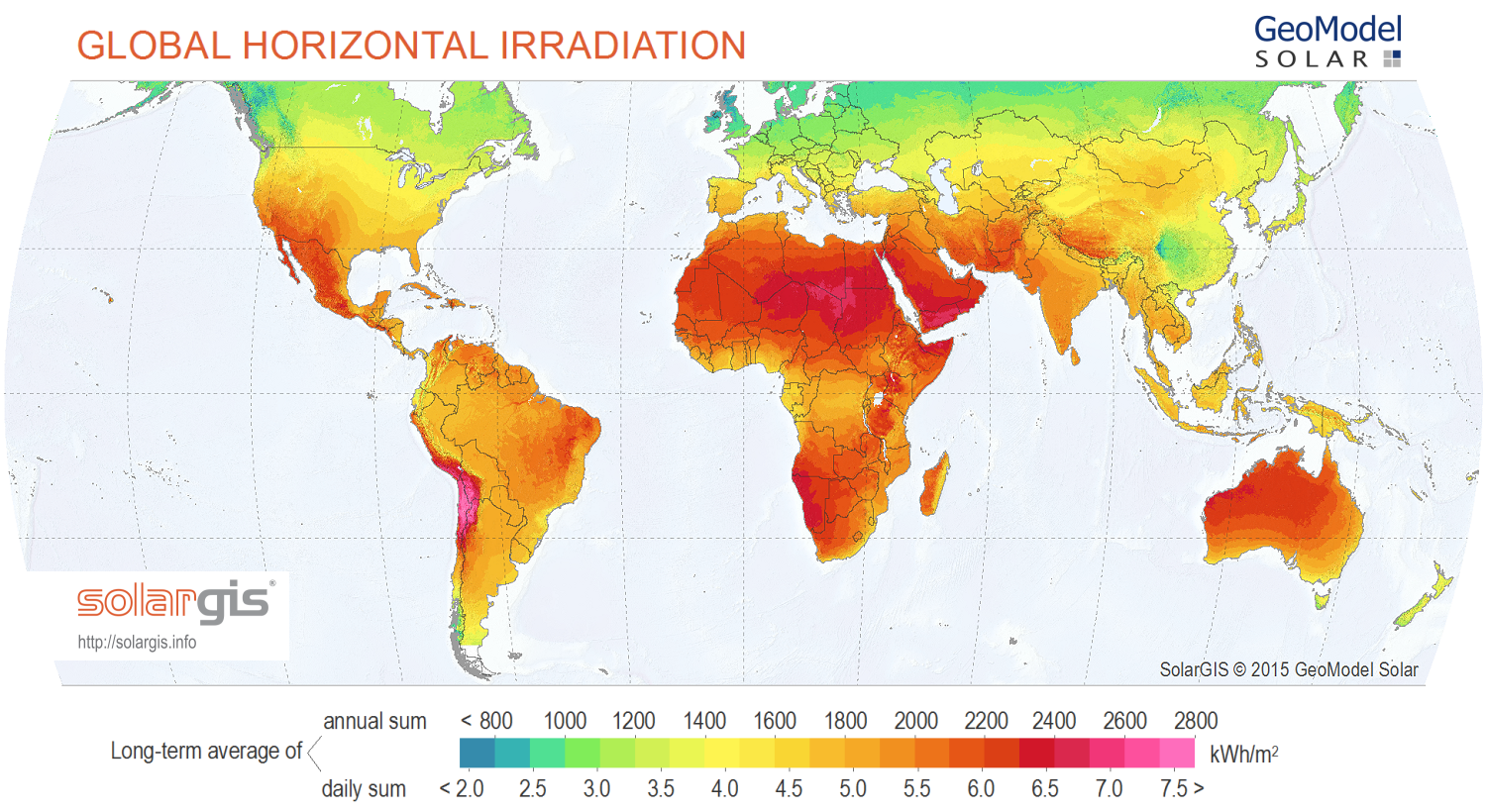
Moreover, since 2005 the cost of building nuclear power plants has increased, in some cases significantly, while the cost of natural gas-fired combined cycle turbine power plants has generally declined, thanks to substantial efficiency improvements. For that matter, the cost of alternatives like solar power, which Iran's geography favors, has declined even more in the interim.

A decade after I first examined this question, it is still hard to find a compelling energy rationale for Iran to pursue civilian nuclear power with the persistence it has demonstrated. Developing more of its abundant natural gas would be more cost-effective, perhaps in combination with solar power, which presents natural synergies with gas relating to solar's intermittency. These options would not have triggered the kind of economic constraints to which Iran's choices have led.

Nor does the other rationale to which I alluded above withstand scrutiny in this case, involving the application of domestic nuclear power to free up for export oil and gas that would otherwise be consumed to generate electricity. The implied cost of Iranian gas displaced from power generation would likely be higher than the cost of new gas development, especially when the costs of the full nuclear fuel cycle that is the crux of international concerns are included. If anything, Iran's pursuit of nuclear energy in the last decade has functioned as a reverse fuel displacement mechanism, resulting in costly reductions in oil exports due to international sanctions.

As for the benefits of nuclear energy in cutting greenhouse gas emissions, Iran did not include nuclear power in the list of mitigation measures it presented at the UN climate summit in Durban in 2011, nor did it commit to specific emissions reductions at the Cancun Climate Conference in 2012.

On balance, Iran's objective need for civilian nuclear power scarcely justifies the sacrifices it has endured, or the lengths to which it has gone to secure its nuclear program. Over the last 10 years, buying time through engagement and negotiations led to an opportunity for the "P5 +1" countries to impose the tough sanctions that brought Iran to the point of the current deal, once rising US shale oil production effectively defused Iran's "oil weapon." However, if the current agreement merely buys more time, it risks squandering the best chance to bell this cat. We cannot count on having more slack in energy markets 10 years hence than we do today.

Viewed from an energy perspective, the primary purpose of Iran's nuclear program seems unlikely to be an expanded energy supply, rather than a weapons capability. In that context, the concerns about this deal recently expressed by two former US Secretaries of State who negotiated Cold War arms control agreements with the Soviet Union should be sobering. They deserve serious consideration by both the White House and a Congress that seeks its own opportunity to weigh in.

Thursday, March 05, 2015

IEA Sees Fundamental Shifts in the Current Oil Price Drop

  • The IEA's latest medium-term oil forecast is a useful update to the thinking behind its current long-term outlook, which predated much of the current price drop.
  • They expect shale output to be relatively resilient and rely on Iraq's capacity to expand output in spite of significant security risks.
When the International Energy Agency issued its most recent long-term energy forecast last November 12th, Brent crude oil traded just above $80 per barrel. At that point it had fallen only half as far as it would by January 2015, compared to its June 2014 high of $115. As a result, the IEA's assessment of the price drop in its 2015 World Energy Outlook was incomplete, to say the least. The agency's Medium-Term Oil Market Report, issued in February, provides a necessary update and some interesting insights about how--and how far--they envision the oil market recovering.

Anyone expecting the IEA to provide a detailed oil-price forecast for the next five years will be disappointed. The current report reproduces recent oil futures price curves and generally endorses the consensus that prices won't rise as high as the level from which they have just fallen, at least by the end of the decade. At the same time, in the Executive Summary they remind their audience, "The futures market's record as price forecaster is of course notoriously mixed."  Six months ago West Texas Intermediate Crude for delivery in April 2015 was selling for around $90/bbl; yesterday it closed under $52. So much for the predictive power of futures markets, as most participants are aware.

The report's analysis of the factors influencing the oil supply and demand balance over the next five years is more useful. First and foremost, it recognizes that the factors contributing to this price correction bear little resemblance to the price drops of 1998 and 2008, and share only a few common threads with the big correction of 1986, chiefly involving OPEC's behavior. The biggest differences relate to the nature of the North American shale sector, which drove strong non-OPEC supply growth for the last several years, and the economic and policy factors--slowing growth in China, subsidy phaseouts, and currency depreciation-- likely to dampen the global demand response to cheaper oil.

With regard to shale, the IEA suggests that the current pressures on the US oil industry will prove temporary. They apparently expect the growth of unconventional production from both shale and oil sands to slow but remain the largest source of non-OPEC supply increases through 2020, outstripping increases in OPEC's capacity and offsetting declines elsewhere. Those declines include a 500,000 bbl/day drop in Russian production, mainly due to the effect of sanctions over Russia's involvement in Ukraine.

The agency even suggests that North American shale could emerge from this experience stronger, because of its inherent resiliency. The same factors that should see shale output slow sooner than that from big conventional projects taking years to develop would allow it to ramp up faster, once the current global oil surplus has been consumed. Meanwhile, with larger projects delayed or canceled, conventional production would take longer to return to net growth above normal decline rates. 

That could become the factor that dispels the current skepticism concerning shale oil opportunities outside North America, as apparently exemplified in BP's latest long-term outlook. Companies looking for growth opportunities in a few years might regard developing the shale resources of China, Argentina and Russia--assuming sanctions on the latter end--as lower-cost, lower-risk investments than some deepwater or other big-ticket projects.

As for OPEC, its production growth through 2020 seems to come down to a single country. The report assesses the current situation in Iraq and concludes that despite the threat from the Islamic State and the country's ongoing internal frictions, output should continue to grow by another million bbl/day or so. That strikes me as optimistic, particularly considering the proximity of ISIS forces to Kirkuk, which formerly accounted for around 10% of Iraqi production. Postwar development has focused on the big fields in southern Iraq, which have so far proved to be beyond the reach of ISIS, but a further deterioration of security in the Kurdish north could jeopardize future expansion plans.

The wild card on the supply side is Iran, which under international sanctions has seen its oil exports cut by roughly half. The Medium-Term Oil Market Report explicitly assumes that sanctions will continue. However, if current nuclear talks reached an agreement, sales could ramp up by a million bbl/day over the next year, if buyers could be found. That would alter the IEA's supply/demand calculations substantially.

And that leads us to demand, which at this point is still a key uncertainty. I concur with the report's general assessment that the world has changed since previous oil price drops and rebounds in ways that make a sharp rise in oil use less likely. US demand is up, but as I described in a recent post large groups of consumers around the world have seen little or no relief at the gas pump that might stimulate more consumption.

When I wrote about the IEA's World Energy Outlook last December, I focused on its themes of stress and the potential for a false sense of security. In the short time since then the oil and gas industry has experienced a large dose of stress, but I've seen few signs of complacency on the part of consumers beyond a recovery in the US sales of SUVs and light trucks. That may change if low oil prices persist for a few years.

A different version of this posting was previously published on the website of Pacific Energy Development Corporation

Wednesday, July 09, 2014

ISIS Threatens Iraq's Oil Upside

  • Even if its threat to Iraq's oil exports can be contained, the newly asserted "Islamic State of Iraq and Syria" has altered the political risk of projects there.
  • That could hamper future production that was expected to be a major factor in meeting growing oil demand later this decade.
Last month's blitzkrieg advance of Al Qaeda spinoff ISIS in northwestern Iraq rattled global oil markets and politicians. Oil prices have risen by only a few dollars, reflecting the remoteness of the current threat from Iraq's main producing region and validating OPEC's recent characterization of the global oil market as "adequately supplied." Yet even as the rebel offensive appears to stall, the escalation of risk in Iraq and its neighbors could affect geopolitics, oil supplies and fuel prices for the rest of the decade.

Iraq currently exports around 2.7 million barrels per day (MBD) of oil, or 7% of global oil exports. It is effectively the number two producer in OPEC. Having recovered beyond pre-war levels, Iraq's oil industry has been growing, while Iran's exports are constrained by international sanctions and Libya's output has become highly erratic following that country's revolution.

In the International Energy Agency's latest Medium-Term Oil Market Report Iraq accounts for 60% of OPEC's incremental production capacity through 2019 (see chart below) and nearly a fifth of all new barrels expected to come to market in that period. This is a more conservative view of Iraq's growth potential than in previous scenarios, but it still leaves Iraqi oil, together with " tight oil" in the US and elsewhere, as the bright spots of the IEA's supply forecast.

Picture
Following ISIS's capture of Mosul in northern Iraq, the Heard on the Street column in the Wall St. Journal painted a stark picture of how the destabilization of Iraq could limit investment in the country's oil industry, truncating its expansion. That would increase longer-term oil price volatility and make investments elsewhere more attractive, not just in North American tight oil but also in energy efficiency and alternatives to oil.

Warning signs seem ample. The "Islamic State in Iraq and Syria" might never capture Baghdad or directly threaten the giant oil fields of southern Iraq that are reviving with help from international firms like BP, ExxonMobil and Shell. However, ISIS's actions in the territory they now control, and the fears they incite across a much larger swath of Iraq, are sparking renewed sectarian violence and prompting foreign companies to evacuate personnel. This undermines the IEA's medium-term forecast, which despite being "laden with downside risk" will apparently not be revised in light of recent events. It also raises the potential for jumps in nearer-term oil and petroleum product prices.

It is noteworthy that oil prices haven't gone up significantly, as they did when Libya's revolution began. From February 15 to April 15, 2011 the price of UK Brent Crude jumped 22%.  Iraq's troubles added about 5% to the Brent price, some of which has already dissipated. However, average US gasoline prices are $0.21 per gallon ahead of their level for the same week last year, in part because tensions in Iraq and elsewhere have forestalled the typical post-Memorial Day price drop.

The market's relatively muted response could change abruptly if the Iraqi military suffered further setbacks at the hands of ISIS and its allies, or if ISIS turned its attention to the oil infrastructure of central and southern Iraq. They attacked the country's largest refinery at Baiji, north of Baghdad, and I have seen conflicting reports of its current status.

As several analysts have noted, anything that threatened the country's oil exports, most of which pass through the Gulf port of Basra, could send oil prices substantially higher. That's because other supply outages have reduced usable spare production capacity elsewhere--oil that isn't now being produced but could ramp up quickly--to less than 4 MBD, a narrower margin than in several years. Even if lost Iraqi output were made up by Saudi Arabia and the UAE, the further contraction of spare capacity would drastically increase price volatility and boost oil prices from today's level, until Iraq's exports--or Iran's--were restored.

Nor would booming domestic oil and gas-liquids production, which is surely helping to hold down global oil prices, insulate US consumers from increases at the gas pump. The oil that US refineries process and the products they sell are still priced based on the global market. If Brent crude spikes, so will US gasoline and diesel. That would have less impact on the US economy than in the past, when imports made up a much higher share of supply, but shifting money from the pockets of consumers to those of oil company shareholders is rarely popular.

An Iraq-driven oil price spike would affect politics and geopolitics, too. An unstable Iraq makes it more difficult to maintain the sanctions pressure on Iran, particularly if the US and Iran ended up coordinating their responses  in Iraq. It's even harder to envision a consensus on keeping  more than 1 MBD of Iran's oil bottled up if oil prices returned to $150/bbl.

That could also complicate the debate over exporting US crude oil, already a tough sell for politicians who came up during the era of energy scarcity. As a practical matter, if exports began while prices were rising sharply for other reasons, convincing US voters that the two factors were unrelated would be challenging. A full-blown oil crisis in Iraq or the wider Middle East would likely result in the idea being tabled for an extended period.

It's tempting to view the success of ISIS in seizing territory on both sides of the Iraq/Syria border as a temporary outgrowth of Syria's civil war. If that were the case, the situation might revert to the status quo ante, once the Iraqi army--with some outside help--mopped up ISIS.

Even if this genie could be rebottled, however, the aftermath of the Iraq War and the "Arab Spring" revolutions is exerting  great stresses on the post-World War I regional order, overlaid on 13 centuries of animosity between Sunnis and Shi'ites.  An accident of history and geology has made this area home to much of the world's undeveloped conventional onshore oil reserves. Can its stability be restored with a few deft military and diplomatic moves, or might that require a complete rethinking of boundaries and nations, as recently suggested by the foreign affairs columnist of the Washington Post?

A different version of this posting was previously published on the website of Pacific Energy Development Corporation.

Monday, January 06, 2014

Energy 2013: More Shifts Ahead?

  • 2013 was an eventful year for energy, though perhaps with fewer earth-shaking implications for the future than in other recent years.
  • Several developments concerning global oil production, when taken together, improved the odds of lower oil prices in the next several years.
Year-in-review posts have become standard fare for energy blogs; I've written my share in the past. However, while 2013 hardly lacked for interesting energy-related news and events to populate a top-ten list, most fell short of the potential to affect energy markets strongly for years to come.

For example, it is newsworthy that another year has passed without an indication of whether the White House will approve or reject the cross-border permit for the Keystone XL pipeline project. Yet the consequences of that decision are becoming less significant, at least in the reported view of Bakken shale pioneer Harold Hamm. That's due in large measure to the dramatic increase in the transportation of oil by rail, which should be on anyone's top-ten list. Nor is it clear that the EPA's proposal to scale back the Renewable Fuel Standard's (RFS) corn ethanol quota for 2014 will affect more than this year's fuel market, unlike pending Congressional legislation to reform the RFS.  California's adoption of an energy storage mandate for utilities is another notable event, but its long-term impact is contingent on the development of cost-effective storage technology and business models to enable much greater integration of renewable energy on the grid.

Instead of extending that list, I'd like to focus on three stories in which I see significant, related implications for oil markets. The first involves the temporary international agreement concerning Iran's pursuit of nuclear technology. Although relaxation of the sanctions limiting Iranian oil exports depends on a highly uncertain final agreement governing uranium enrichment, the  Arak reactor's plutonium potential, and a more intrusive inspections regime, the interim deal signals that around a million barrels per day of Iran's oil--and eventually more--could be back on the market in less than two years.

If that happens, it won't be because the Iranian government's repeated assurances of its aversion to nuclear weapons have suddenly become credible, but because most of the permanent members of the UN Security Council plus Germany--the "P5 + 1" negotiating with Iran--are tiring of the protracted confrontation and understandably have no appetite to address this in the same way that the collapsing UN sanctions regime for Iraq was resolved in 2003.

Next consider the stunning reversal of the Mexican government's 75-year-old nationalization of oil and gas. As a result of the reforms just enacted by their congress and ratified by a majority of Mexico's states, the state oil company Pemex will be run along more commercial lines, and foreign firms will be allowed to partner with Pemex in developing the country's large untapped hydrocarbon resources. If the terms prove attractive for international energy firms, the result will move North America even closer to net energy independence. Meanwhile the Transboundary Hydrocarbon Agreement between the US and Mexico that was just passed by the US Congress will simplify energy development that straddles the border.

Mexico's potential could be even more significant for oil markets than an unconstrained Iran. The former's production has declined by 24% since 2004--a loss of 900,000 bbl/day-- mainly due to limited reinvestment. Foreign investment can help to restore that output, but the upside potential is much bigger. Pemex has barely scratched the surface of its deepwater resources in the Gulf. Its proven and contingent reserves are estimated at 45 billion barrels, while US estimates put Mexico's shale oil, or "tight oil" resources at 13 billion barrels, slightly more than the country's proved conventional reserves. (Shale gas could exceed 500 trillion cubic feet.)

Mexico's oil output has grown dramatically before. In the decade following the Arab Oil Embargo of 1973 production increased from 500,000 bbl/day to around 3 million. A similar performance seems possible again from a higher starting point, but it's unlikely to happen overnight. As Dan Yergen pointed out in a recent Wall St. Journal op-ed, "exploration and development could take another five to 10 years" beyond the first bid rounds.

And that brings us to Saudi Arabia's options for dealing with a shifting market that will include projected US crude oil output of 9.6 million bbl/day by 2016, the recovery and growth of Iraqi production, possible exports from Canada to Asia, Mexico's potential, and the eventual return of full Iranian exports. Whether or not this wave of new or restored production will be sufficient to replace production declines elsewhere, it must undermine OPEC's control of pricing in this decade. In that light, it's hard to ignore reported indications that Saudi Arabia might abandon its role of swing producer, particularly when it comes to unilateral output cuts to balance new non-OPEC supplies.

Haven't we seen this movie before? After a dozen years of high prices and tight markets OPEC steadily lost market share in the 1980s as new fields in Alaska, Mexico and the North Sea came online. That trend culminated in Saudi Arabia's 1986 "netback pricing" decision, linking the price of its oil to the value of its customers' refined petroleum products. Following the price collapse that policy helped precipitate,  oil prices took 18 years to reach $30/bbl again, by which time the dollar had lost a third of its value.

I doubt we're in for anything that dramatic. Back then, most demand growth came from the developed countries of the OECD, rather than from the expanding middle classes of developing Asia and the Middle East itself. Moreover, today's new production has higher costs--up to $70-80 per barrel--ruling out a return to $20 oil. With many serious geopolitical risks still in play, an oil-price price correction or extended soft market seems likelier than another price collapse. In the meantime, if we're seeking $20 oil, we already have it in the form of US shale gas that averaged the equivalent of $21.64/bbl last year. And that's the early, odds-on favorite for the energy story of the decade.

A different version of this posting was previously published on the website of Pacific Energy Development Corporation.

Wednesday, March 20, 2013

Natural Gas Vehicles Already Big in Italy, Iran

The sudden abundance of natural gas in the US triggered a startling divergence of crude oil and natural gas prices that, in turn, has energized the advocates of using more gas in transportation. Yet despite the availability of wholesale natural gas at less than $0.60 per gasoline gallon equivalent (GGE), and with retail compressed natural gas (CNG) prices under $2.00/GGE in many locations, natural gas accounted for less than 3% of US transportation energy consumption in 2011--most of it attributable to pipeline compressors. The picture is very different in countries like Italy and Pakistan, where CNG has a significant market share in motor fuels. As the US looks ahead to greater reliance on secure domestic gas for road transport, it's worth considering why other countries have such a big head start.

The obstacles to greater market penetration by natural gas in transportation are well known. CNG and LNG (liquefied natural gas) require new infrastructure. Many more retail gas facilities would be needed to assure motorists of convenient access at service stations. CNG takes a separate dispenser and compressor on the forecourt, while LNG requires both a new pump and insulated storage. Where pipeline gas is unavailable, such as in parts of the northeast, additional investments in the local "gas grid" may also be necessary.

Vehicle conversion costs represent another significant barrier. Engine modifications and crash-resistant fuel tanks add significant costs for both new vehicles and retrofits. Even with gas priced well below gasoline or diesel fuel, the payback for these costs can be lengthy. That's one reason that gas has made greater strides in bus, truck and delivery fleets in the US than for personal cars, since the more intensive use of such vehicles substantially shortens the resulting payout periods. Countries with high gas-vehicle penetration typically have government policies and incentives in place to promote the use of gas by mitigating these obstacles.

Italy leads the EU in CNG vehicle adoption, with more than 11% of new passenger cars equipped for natural gas last year. That compares to 0.01% for the US in 2012, where only one CNG model, a Honda, was sold. The Italian government promotes natural gas use in vehicles both directly and indirectly. The country provides a subsidy of €700 ($945) to purchasers of CNG automobiles, while manufacturers like Fiat offer discounts to expand their market for CNG cars. Incentives were even larger a few years ago. The government also makes retail petroleum products extraordinarily expensive with high taxes. So even though Italy is a large net importer of natural gas, CNG is much cheaper than gasoline or diesel at the pump.

Fuel availability may also have something to do with the disparity in adoption rates. Despite having an 83% smaller overall vehicle population , Italy has over 40% more CNG or "Autogas" refueling stations than the entire US, at around 900. This is due in part to state-level incentives, with 50-70% of the cost of a new CNG filling station reimbursed by regions such as Liguria, Lombardy, and Piemonte.

In terms of market penetration, Pakistan, which appears to be self-sufficient in gas, leads the world in natural gas vehicles, at 80%. That translates into over 2 million CNG vehicles, the result of a determined effort on the part of the government to reduce imports of petroleum by shifting to domestic fuels, with gas as its best option. This is a common theme in the non-oil-exporting developing world, where oil imports impose a large drag on national trade balances. CNG use in Iran is even higher than in Pakistan, as an unintended consequence of protracted international sanctions.

For the US, where oil production is increasing and oil imports declining, a shift to natural gas for transportation is likely to remain an opportunity, rather than a matter of necessity. The "NATGAS Act", a bill proposing incentives for CNG and LNG along the lines of the Italian model has languished in the US Congress for several years. It remains to be seen whether this will become a higher priority in the new Congress, which has shown early signs of interest in breaking the recent logjam on energy legislation.

In the meantime, adoption of natural gas vehicles in the US will proceed based on market forces, supported by a small advantage in the way CNG cars are counted in manufacturers' fleets under the stringent federal fuel economy regulations issued last summer. That could lead to natural gas fueling 3% of US vehicles --mostly trucks--by 2020, based on the analysis of a partner at McKinsey & Co. Much like the case for energy efficiency investments, the available savings indicate a much larger potential, but funds for CNG/LNG transport must compete with other priorities.

A slightly different version of this posting was previously published on the website of Pacific Energy Development Corporation.

Thursday, December 06, 2012

IEA Expects Global Energy Focus to Shift Eastward

Last month the International Energy Agency (IEA) released its annual long-term forecast, the World Energy Outlook (WEO). Its projection that US oil output would exceed that of Saudi Arabia within five years was featured in numerous headlines, although some of the report's other findings look equally consequential. That includes the continued strong growth of energy demand in China, India and other Asian countries, and the linkages between that growth and a dramatic expansion of Iraqi oil production. The agency also set a cautionary tone concerning the increase in global greenhouse gas emissions accompanying all this growth.

In the IEA's primary "New Policies" scenario, the US overtakes Saudi Arabia in oil production by 2017, adding 4 million barrels per day (MBD) of unconventional output, mainly from shale (tight oil) deposits such as the Bakken in North Dakota. US oil imports decline significantly, due in roughly equal measure to higher production and the implementation of strict vehicle fuel economy regulations. As a consequence, the need for imports from the Middle East approaches zero within 10 years. When this change is combined with the growth in oil demand in Asia, where China alone accounts for half the forecasted global growth in oil consumption in this period, the IEA envisions Asia becoming the recipient of 90% of Middle East oil exports by 2035.

The detailed assumptions behind the IEA's conclusions weren't provided in the public release. These include crucial questions such as the assumed status of US rules barring most crude oil exports. As noted in a Reuters op-ed at the time, maximizing the potential of US unconventional resources may depend on allowing higher quality unconventional oil to seek global markets, while continuing to import oil from Latin America and the Middle East into Gulf Coast refineries geared to these heavier, higher-sulfur feedstocks. The op-ed's author also reminded us that the natural gas liquids included in the headline comparison with Saudi production are useful but quite different from crude oil, yielding little gasoline and diesel fuel.

The expected growth of energy demand in China remains extraordinary, even with the country's economic growth slowing from the levels seen a few years ago. To put this in context, when Dr. Fatih Birol, Chief Economist of the IEA, presented the new WEO to the media in London on November 12th, he suggested that China's electricity demand would grow by the equivalent of "one US and one Japan of today" by 2035. Much of that additional electricity generation is projected to come from renewables, nuclear power and domestic gas. Nevertheless, and in spite of significant increases in China's unconventional gas production, the IEA forecasts that import dependence will grow from about 15% for gas and 50% for oil today, to 40% for gas and over 80% for oil by 2035. That increase in imports would equate to additional hundreds of millions of dollars per year of outflows for energy.

In the view of the IEA, much of the extra oil demanded in Asia will be supplied by Iraq, which they project will increase its output from around 3 MBD today to 6.1 MBD in 2020 and 8.3 MBD in 2035, in the process becoming the world's second-largest oil exporter, after Russia. Since the reserves to support that growth have already been identified, with much lower production costs than many other basins, the uncertainties involved are mainly political and structural. Resolution of the current standoff with Iran over its nuclear program would provide even more Middle East oil for Asian markets.

As in its earlier "Golden Age of Gas" scenario, the IEA expects large increases in global natural gas consumption. Unconventional sources, mainly in the US, China and Australia, would contribute around half the additional production required to meet expanded demand. However, at the launch presentation in London Dr. Birol also stressed that unconventional oil and gas are still at an early stage, with significant uncertainties about the eventual magnitude of their resources. This seemed to be a particular issue for the agency's post-2020 forecast of oil production in the US and gas production in China.

Despite the rigorous analysis and level of detail involved in producing the IEA's World Energy Outlook, long-term energy forecasting should always be taken with a grain of salt. Yet whether or not the highlighted trends mature precisely in line with these projections, the shifts that the IEA identified are significant and already becoming evident in current data for energy production, consumption and trade. Even if North America failed to become a net oil exporter--which many equate with energy independence--by 2030, the movement of the center of gravity of global energy trade towards Asia is essentially pre-determined: baked in by differences in economic growth rates and resource opportunities. The economic, geopolitical and environmental consequences of that shift are just starting to take shape.

A slightly different version of this posting was previously published on the website of Pacific Energy Development Corporation.

Wednesday, June 13, 2012

The Summer Oil Slump

Instead of US consumers facing $5 gasoline this summer, as some analysts had predicted, we now find prices slipping well below $4 per gallon as oil prices respond to weakening demand, a stronger dollar, and steady supply growth.  Yet as welcome as this is, it's largely the result of a mountain of bad news: Not only does financial turmoil threaten the very existence of the European Monetary Union and its currency, the Euro, but economic growth in the large emerging economies is also slowing, at least partly in response to the weakness in the developed countries that constitute their primary export markets.  The engine of global growth for the next year or two just isn't obvious.  That's the backdrop for this week's OPEC meeting in Vienna.

Before we become too enthusiastic about the prospect of a period of cheaper oil, we should first put "cheap" in context.  Even ignoring West Texas Intermediate (WTI), the doldrums of which I've discussed at length, the world's most representative current crude oil price, for UK Brent, has fallen consistently below $100 per barrel for the first time since the beginning of the Arab Spring in 2011.  Yet even if it fell another $10/bbl, to about where WTI is currently trading, it would still exceed its annual average for every year save 2008 and 2011.  So while oil might be less of a drag on the economy at $90/bbl than at $120, that's still short of the kind of drop that would be necessary for it to provide a substantial positive stimulus, particularly when much of the drop reflects buyers around the world tightening their belts. 

The US is in a somewhat better position, thanks to surging production of "tight oil" in North Dakota and onshore Texas. This has more than made up for the inevitable slide in output from the deepwater Gulf of Mexico, two years after Deepwater Horizon and the ensuing drilling moratorium. With much of the new production trapped on the wrong side of some temporary pipeline bottlenecks, parts of the country are benefiting from oil prices that are $10-15/bbl below world prices, although short-term gains are a poor reason to perpetuate those bottlenecks, rather than resolving them and allowing North American production to reach its full potential.

Then there's the issue of speculation, which some politicians blamed for the recent spike in oil prices.  To whatever extent that was true--and I remain skeptical that the impact was nearly as large as claimed--we could be about to see what happens when the dominant direction of speculation flips from "long" to "short"--bullish to bearish--as noted in today's Wall St. Journal.  Since the main effect of speculation is to increase volatility, we could see oil prices temporarily drop even further than today's weak fundamentals would suggest they should.

All of this will be on the minds of the OPEC ministers meeting in Vienna Thursday, along with the usual dynamics between OPEC's price doves and hawks.  The pressures on the latter have intensified as Iran copes with tighter sanctions on its exports and Venezuela's ailing caudillo faces a serious election challenge.  OPEC meetings are rarely as dramatic as last June's session, but the global context ensures a keenly interested audience for this one.  Given the impact of gas prices on US voters, both presidential campaigns should be watching events in Vienna as closely as any traders.  $3.00 per gallon by November isn't beyond the realm of possibility.  It would only require a sustained dip below $80/bbl.

Thursday, March 08, 2012

Is There A Better Way to Use Strategic Petroleum Reserve Oil Now?

With US gas prices rising rapidly to record levels for this time of year, it was inevitable that some politicians would start calling for a portion of the oil in the Strategic Petroleum Reserve (SPR) to be released in hopes of moderating high oil prices, which are mainly responsible for the current gas price spike. A narrow majority of Americans apparently agrees. This is a profoundly bad idea, for reasons of both actual US energy security and the uneven effectiveness of past releases. However, rather than railing against this proposal, it occurred to me that there might just be a better way, an alternative that could send the signals that those concerned about commodity speculation wish to send, but without draining oil that we would miss in an actual supply crisis. What if instead of instructing the Secretary of Energy to sell a certain quantity of oil from the SPR, the President told him to sell an equivalent volume of call options on SPR oil, on the condition that they that could only be executed in an actual emergency?

The SPR was established in the 1970s, and as I've noted on several occasions it's overdue for a major redesign to reflect the ways in which both the world and US energy consumption patterns and infrastructure have changed in the interim. However, this is clearly not the appropriate time for such an undertaking, with the very real prospect of a major disruption in the Middle East that might require the largest-ever SPR release to address.

The past history of SPR releases is well-documented. The two releases most relevant to the current situation include last year's release of 30 million barrels in coordination with other member countries of the International Energy Agency, to compensate for reduced exports from Libya resulting from the revolution that overturned Col. Gaddafi's regime. Although one could argue about the appropriateness of that response in the absence of a meaningful disruption in oil deliveries to the US, its outcome is now clear. The market impact of the release was small and quickly dissipated in the noise of market volatility. That stands in marked contrast to the SPR release announced at the start of hostilities in the Gulf War in 1991. Following the announcement of a 34 million barrel SPR sale, only half of which was ultimately delivered, oil prices fell by 33% literally overnight. I will never forget that, because I was trading petroleum products in London for Texaco at the time and the sudden shift in prices was stressful, to say the least. The lesson I take from these and other examples is that SPR releases are much more effective in an actual emergency than when they are perceived as merely attempts to manipulate the market.

But let's give those calling for a release now the benefit of the doubt that $125 oil and the resulting near-$4 gas prices might be at least partly the result of speculation--all the while recognizing that for every speculative buyer there must be a seller taking the opposite view of prices. If the Department of Energy were to sell options on SPR oil, instead of the oil itself, it could accomplish several useful things in this scenario. First, it would send a stronger signal to the market than the will-he-or-won't-he cloud that customarily hangs over such releases, conveying that the US is serious about covering a shortfall that might result from the manifestation of the various risks that have driven up oil prices by about 13% since the beginning of the year, notably focused on tensions with Iran. It would also generate a bit of revenue for the Treasury, in the amount of the option premiums collected. More importantly, it could significantly shorten the normal delay between the decision to hold an SPR sale and its actual execution, by identifying, pre-qualifying and contracting with specific buyers ahead of actual need. Hastening the flow of SPR oil in a crisis by a week or two could be very helpful. And the best feature from my perspective is that the whole time the oil would stay right where it should remain until it's really needed, in the SPR caverns on the Gulf Coast.

A number of crucial details would have to be worked out, including the careful specification of the precise circumstances under which the options could be triggered, how long they would remain active before expiring, who would be eligible to purchase them, and for what purposes. In order to be of value to buyers, the triggering event(s) would have to be objectively observable and not under the seller's control. Perhaps a specified reduction in exports through the Strait of Hormuz, or the outbreak of hostilities between Iran and Israel or the US would be the most suitable choices, since it is presumably such risks that have taken oil prices to their current level.

I don't know whether selling SPR options would be permissible under current statutes. If not, it might be hard to get a change like this through a deadlocked Congress, even though the idea of selling options rather than physical oil ahead of an actual emergency straddles the concerns of both parties. I'm also sure there would be unintended consequences, as well as a lot of finger-pointing after the fact if some trader or refiner made a fortune on one of these transactions. Still, it seems worth exploring as an alternative that might be useful, not just when we're facing high prices and a potential crisis but under more routine circumstances.

Thursday, March 01, 2012

What Would It Take for Gas to Hit $5 per Gallon?

After returning from a business trip to California, I don't find media speculation concerning the possibility of $5 gasoline later this year quite as far-fetched as I might have last week. Perhaps seeing $4.299 per gallon posted for unleaded regular on many street corners there, compared to $3.699 or so here, gave me a touch of "availability bias" even if I also understand that gasoline taxes in the Golden State are a full 29¢ per gallon higher than in Virginia, and that environmental regulations there make it very much more difficult for refineries to produce fuel that meets California's specifications. Without dwelling on regional differences that could make $5 gas likelier in some places than others, I thought it might be worth spending a moment considering what it would take to reach that level on a national average.

In a situation such as the current one, as I described a few weeks ago, it comes down to crude oil prices. Calculating the oil price implied by $5 gasoline requires backing out the other key components of the pump prices we observe. Start with federal and state taxes, which according to API averaged 48.8¢/gal. in January. (That's only a snapshot, because many states include sales taxes that change in proportion to the overall price level.) You also have to subtract the retailer/distributor margin, which is typically around 15¢/gal. That leaves $4.36/gal., or roughly $183 per bbl, for pre-tax wholesale gasoline. But we still have to account for refining margin, or more accurately the spread between wholesale gasoline and crude oil, since a true refining margin would include the influence of a range of other products and byproducts like diesel, jet fuel, lubricants and petroleum coke. In 2010, before the Cushing crude bottleneck depressed West Texas Intermediate prices to the extraordinary degree we've seen in the last year, the average difference between gasoline and light crude futures on the New York Mercantile Exchange was $9.67/bbl. Knock that off the above calculated wholesale price and we get an implied price for light sweet crude of just under $175/bbl.

As of today, Louisiana Light Sweet and UK Brent, the best current indicators for this kind of crude, stood at $127 and $126, respectively, while poor old WTI languished at $109. So based on the above calculation, $5 gasoline would require world oil prices to rise by about $50/bbl--or more if you back-calculate from last week's average US gas price of $3.72/gal. Short of the saber-rattling in the Persian Gulf turning into a shooting war, it's hard to see that happening without the kind of economic conditions that took oil close to $150/bbl in 2008. That experience also suggests that if we reached $5/gal., the event might be short-lived as the shock waves it would cause undermined the economy and thus the fundamentals of oil prices.

Unlike Tom Kloza of Oil Price Information Service, I will not don a clown suit if the average US price of gasoline reaches $5 this year. However, I would be very surprised, barring the outbreak of hostilities between Iran and the US or Iran and Israel, a global or self-imposed boycott of Iranian oil exports, or a sudden, unexpected problem in another major producing country. Whether that makes predictions of $5 gas "hyperbole", as Mr. Kloza apparently suggested, or merely the result of failures to do the math, I leave for you to decide.