When it first came to light that an obscure provision of the 2007 Energy Bill would bar imports of synthetic oil that entailed higher emissions than conventional domestic crude, and that this might apply to purchases by the Defense Department of fuels sourced from Canadian oil sands, one might naturally have assumed that this was an unintended consequence of the law, as Canada's ambassador to the US has suggested. It now appears this consequence was quite intentional. In light of our concerns about energy security, this looks like an unfortunate case of "friendly fire" against our largest trading partner and our largest oil supplier. While the theory behind this facet of climate change regulation is sound, its application in this case is unwarranted and unwise.
As I noted last week, Canada has a growing problem with the greenhouse gas emissions from oil sands production. I've been concerned about this since the 1990s and have written about it here, going back at least to 2005. The Canadian government has finally recognized this problem and taken strong steps to address it, within the context of their own commitments under the Kyoto Protocol--which they have ratified but we have not--and a recent, stricter national goal. Oil sands emissions can be brought in line through a combination of efficiency and sequestration technology, though this will take time. In the meantime, the extra emissions can be offset either through the official Kyoto Clean Development Mechanism (CDM), or with offsets bought on the Chicago Climate Exchange or the new NYMEX Green Exchange.
This is not to say that the oil sands emissions are not a serious concern, or the tip of the iceberg in terms of the "outsourced carbon" in which we share responsibility, as importers and ultimate consumers. However, the logic behind this provision of the Energy Bill deals with two specific aspects of climate change policy, neither of which applies to Canada's oil sands. First, it is intended to prevent emitters from going offshore to avoid emissions regulations. In this case, the incentive results more from the cumulative effect of decades of federal and state restrictions on drilling for the same lower-emissions domestic oil against which we are comparing Canadian syncrude, thus pushing energy companies to look north of the border, where the oil sands comprise a world-class resource. At the same time, this sort of measure is designed to impose external pressure on countries that are not addressing their emissions, with China as the most frequently-cited example. Canada does not fall into that category. They are tackling this problem head on, and they have the motivation and technical and financial wherewithal to manage their own emissions without prodding from us. Frankly, we are lucky that we have not been on the receiving end of such restrictions by EU countries that have been reducing emissions with almost religious fervor. This situation conjures up the unpleasant image of the US government, which has led the world in foot-dragging on climate change, going after Canada with the zeal of a brand-new ex-smoker who sees someone else light up.
As to the practical consequences of restricting our use of Canadian syncrude, this would harm US industry and consumers at least as much as Canadians, without materially reducing the emissions associated with a product that could be exported to eager customers in Asia. To understand why, look at the market and infrastructure for Canadian crude imports into in the US. The syncrude is blended into the main Canadian export stream coming down the Enbridge Pipeline system into Chicago, and ultimately into the US Mid-Continent. This system provides the primary crude supply for many Midwestern oil refineries. If the DOD is barred from buying fuels containing oil sands components, then any refinery selling to the military would have to certify that it either runs no Canadian crude oil, or that it can segregate its output from other crude oil sources. That's not impossible, but with most refineries operating at much higher rates than their present tankage was built to accommodate, that would be awkward and expensive. The net result would be to reduce the number of refineries willing to bid for DOD business and drive up the price the military--and thus taxpayers--pays for fuel. It would also reduce US imports of Canadian crude and force us to buy more from other, less secure suppliers. That's hardly in sync with our concern about relying on Middle East oil.
Sooner or later, we'll all be paying more for energy, in order to deal with climate change. Some will see no problem with starting here, forcing the government to walk the same talk it wants the rest of us to follow. From my perspective, though, in the absence of any comprehensive US policy on greenhouse gases--the 2007 Energy Bill doesn't qualify as either comprehensive or policy--this seems like a particularly counter-productive and hostile way to begin enforcing new and untested standards. I hope the experts who are crafting the cap and trade legislation that will likely be enacted in the next year or two are paying very close attention to this negative example.
Energy Outlook will observe tomorrow's market holiday for Good Friday.
Thursday, March 20, 2008

Wednesday, March 19, 2008
Crisis Management
I wanted to offer a few more thoughts after yesterday's lengthy posting about the nature of the energy crisis in which we find ourselves. Where before we thought we faced two very tough challenges, between energy and climate change, it's now clear we have three mammoth problems to overcome. Energy and climate must now be addressed in the context of a financial crisis, the full extent of which we don't yet understand, as we saw over the weekend. The only good news is that they're not entirely independent of each other. Efforts expended on one front can help with the other two, and finally identifying our energy concerns as a crisis might inject some urgency and move us past the current emphasis on "energy independence."
I'm sure some of my readers are surprised it's taken me three days to mention Bear Stearns. I have no idea what its bailout/fire sale means for the firm's energy group, which includes at least one family friend, and probably a few former colleagues. I can only wish them well. As Robert Samuelson noted in his Washington Post column yesterday, this financial crisis is different from any recent one, because of the enormous uncertainties involved in the interconnections between companies such as Bear, other investment banks (foreign and domestic), and the rest of the financial system. If the financial crisis triggers a major contraction across the entire US economy--an outcome that is hardly predetermined, no matter how much the media talks up this risk--it could dry up capital for urgent energy projects, even if expanding green energy becomes an economic recovery initiative. Nor do I see how the economy could fail to affect our response to climate change, at least with regard to any measures that would result in a net increase in energy costs or taxes on consumers. Rich countries tackle big environmental problems; countries that feel poor have other priorities. Will images of melting glaciers alter that calculus?
The conjunction of these daunting problems provides further incentives to shed our outdated ideas of energy independence. Someone recently sent me a copy of "Gusher of Lies: The Dangerous Delusion of 'Energy Independence.'" I plan to read it and review it here soon, but I didn't need it to tell me that we have no more hope of solving our energy problems autonomously than we do of managing climate change or restoring our financial system in isolation. Despite clarifications by the advocates of energy independence, including folks whom I respect, such as Tom Friedman and James Woolsey, that of course they don't mean actual energy independence but merely reduced dependence, words do matter. This is the wrong drum to beat in the current global economy, unless we all want to end up a lot poorer, overall.
Diversification, rather than elusive notions of independence, played a crucial part in getting us out of the last energy crisis, and it remains the killer strategy. Now it must encompass both geography and a much broader menu of energy choices. That includes many things we can do here in the US, by way of expanding renewable and conventional energy, improving vehicle efficiency, and bridging electricity from a variety of sources into vehicles. But if Brazil can make ethanol at a lower cost than we can, with fewer energy inputs and less environmental impact, are we really better off continuing to boost corn ethanol output that has already tripled since 2002, competes with food supplies, and might actually increase global greenhouse gas emissions? Crisis management across three dimensions will require tough decisions and ruthless prioritization. So far, we haven't even found the right way to begin this conversation.
I'm sure some of my readers are surprised it's taken me three days to mention Bear Stearns. I have no idea what its bailout/fire sale means for the firm's energy group, which includes at least one family friend, and probably a few former colleagues. I can only wish them well. As Robert Samuelson noted in his Washington Post column yesterday, this financial crisis is different from any recent one, because of the enormous uncertainties involved in the interconnections between companies such as Bear, other investment banks (foreign and domestic), and the rest of the financial system. If the financial crisis triggers a major contraction across the entire US economy--an outcome that is hardly predetermined, no matter how much the media talks up this risk--it could dry up capital for urgent energy projects, even if expanding green energy becomes an economic recovery initiative. Nor do I see how the economy could fail to affect our response to climate change, at least with regard to any measures that would result in a net increase in energy costs or taxes on consumers. Rich countries tackle big environmental problems; countries that feel poor have other priorities. Will images of melting glaciers alter that calculus?
The conjunction of these daunting problems provides further incentives to shed our outdated ideas of energy independence. Someone recently sent me a copy of "Gusher of Lies: The Dangerous Delusion of 'Energy Independence.'" I plan to read it and review it here soon, but I didn't need it to tell me that we have no more hope of solving our energy problems autonomously than we do of managing climate change or restoring our financial system in isolation. Despite clarifications by the advocates of energy independence, including folks whom I respect, such as Tom Friedman and James Woolsey, that of course they don't mean actual energy independence but merely reduced dependence, words do matter. This is the wrong drum to beat in the current global economy, unless we all want to end up a lot poorer, overall.
Diversification, rather than elusive notions of independence, played a crucial part in getting us out of the last energy crisis, and it remains the killer strategy. Now it must encompass both geography and a much broader menu of energy choices. That includes many things we can do here in the US, by way of expanding renewable and conventional energy, improving vehicle efficiency, and bridging electricity from a variety of sources into vehicles. But if Brazil can make ethanol at a lower cost than we can, with fewer energy inputs and less environmental impact, are we really better off continuing to boost corn ethanol output that has already tripled since 2002, competes with food supplies, and might actually increase global greenhouse gas emissions? Crisis management across three dimensions will require tough decisions and ruthless prioritization. So far, we haven't even found the right way to begin this conversation.
Tuesday, March 18, 2008
A Complex Energy Crisis
A year ago, it was possible to debate both sides of the question, "Are we in an energy crisis?" with roughly equal vigor. There were plenty of signs for either side of the argument to cite, from the extremely tight level of global spare oil capacity to the relative indifference of US consumers to $3.00 per gallon gasoline. I think it would be a lot harder to find takers for the negative proposition, today. Much has changed, most importantly the economic context of such a crisis, and the key question is shifting from one of its existence to causation. That's more than an abstract point, because it has a great deal to say about how we might extract ourselves from this situation, with significant implications for the alternative energy sector, as well.
This is certainly not our fathers' energy crisis. The world was much simpler in the 1970s, and the step-change nature of the Arab Oil Embargo and the Iranian Revolution left our parents with little doubt that they were in a crisis. And even though it was really an oil crisis, oil's use was so pervasive across transportation and electricity that the distinction didn't matter much. Thanks to extensive fuel switching in the power sector, the impact of today's oil-driven crisis has been more narrowly confined to transportation, at least in the US. However, that doesn't mean this crisis is simpler than that of the 1970s, either in cause or solution.
A brief Internet search will turn up a variety of theories about today's oil crisis and its causes. These include the fundamentals of oil supply and demand, the interaction between the policies of the Federal Reserve, foreign exchange rates and the price of oil, and the perception or reality of Peak Oil. All of these seem to be contributing to the problem, either as direct cause-and-effect or in the way they shape the behavior of market participants. I'm particularly intrigued by the influence of the Peak Oil meme, which has spent the last few years evolving from an esoteric argument among geoscientists to a mainstream concern with some of the characteristics of the Y2K problem. So how do these disparate pieces fit together?
If we start with fundamentals, then the crisis that has been brewing is distinctly of the "boiling frog" variety, featuring a bit of drama but mostly driven by the steady growth of the large developing countries, especially the "BRICs", and the rise of resource nationalism with the resulting chronic under-investment in oil production capacity. As I argued the other day, however, the fundamentals looked just as tight a few years ago, with notably less impact on an economy that was growing strongly--even if some of that growth turned out to be a bubble. I think we must conclude that fundamentals alone haven't gotten us to this point.
Now stir in the impact of the declining dollar, the policies that contribute to its decline, and the kind of reinforcing-loop system this creates with oil prices, in which a weaker dollar drives up oil prices, which weaken the economy further, weakening the dollar more, and so on--amplified by speculation in oil as an inflation hedge and portfolio shift. This dynamic includes elements of a bubble, and it could be burst by a variety of events, including a recovery by the dollar or margin calls on speculators, requiring them to liquidate their commodity holdings to cover losses elsewhere. Every bubble has its own logic, and in addition to the weak dollar and resurgent inflation, the surge in oil prices beyond the level justified by fundamentals alone appears to be influenced by the perception that we are at or near a permanent peak in global oil output.
If there's one name that's become synonymous with Peak Oil in recent years, it is that of Matt Simmons, a renowned oil investment banker and author. Mr. Simmons's latest presentation on the risks of an oil peak makes a compelling argument that the decline of mature oil fields has equaled the rate at which we can bring on new production, globally, and that in the near future the former will overwhelm the latter. Although smart, well-informed industry experts differ on this, what matters in the near term is not whether it is an accurate description of reality, but if enough market participants accept it to convince them that $110 oil could look very cheap in a year or two. A futures market that is trading at or over $100/bbl all the way out to 2016 lends some credence to that view.
We'll eventually find out whether global oil production has truly peaked at 85 million barrels per day (MBD), as some analysts believe. The International Energy Agency sees supply increasing to 87 MBD in 2008, including the increasingly important contribution of biofuels. That growth is consistent with the view of the US Energy Information Agency, though in neither case will we know for certain until after the fact, when we see how many new projects actually started up, and factor in the actual decline of existing fields. The perception of a peak at 85 MBD might be hard to shake off until at least next year, while every inventory drop in the interim will tend to validate it. So if this is a peak-driven bubble, it could have some time to continue inflating, unless the fallout from the credit crisis pops it first. Of course, if the adherents of Peak Oil are right, then our problems have just begun.
To complicate matters further, the evolution of this energy crisis can't be separated from unrelated economic factors, which will affect our resilience to high energy prices and the resources available for investment in alternatives, or from the steps we take to address climate change. Biofuels are already having a modest impact on oil demand, and renewable electricity frees up natural gas for transportation uses. Fuel economy, energy efficiency, and old-fashioned conservation all have important roles to play, as well.
What does this mean for consumers? Is $4.00 gasoline now a certainty, along with continued inflation in any good with an energy component, including food? While that remains a strong risk, there might be some safety valves, too, though the implications for how they might kick in aren't necessarily pleasant. Demand growth has been the one constant in the last four years of this developing crisis, and slowing demand would have to take some of the steam out of it. US petroleum consumption has been flat for four years and seems likely actually to fall this year. China is experiencing inflation and a drop in its exports, and if these trends continue, its oil import growth could slow, too. The fact that June gasoline futures are currently trading at only $3/barrel over June crude oil, when that same futures differential was $10/bbl last March--ultimately averaging $25/bbl once June '07 arrived--says something about the market's view of summer demand relative to crude oil's present buoyancy.
Today's energy crisis provides a similar impression of inevitability and permanence as the 1970s' crisis. The last time around, that turned out to be unjustified, as prices collapsed within a decade of its onset. Such an outcome looks as improbable today as it did in 1981. While I don't expect that bit of history to repeat, I can't rule it out, either. But even if this tide ultimately recedes, there's no long-term return to cheap fossil energy at the consumer level, because of climate change. We're going to be using energy more efficiently in the future, and it will be coming from a much more diverse array of sources, thanks in part to the current oil crisis.
This is certainly not our fathers' energy crisis. The world was much simpler in the 1970s, and the step-change nature of the Arab Oil Embargo and the Iranian Revolution left our parents with little doubt that they were in a crisis. And even though it was really an oil crisis, oil's use was so pervasive across transportation and electricity that the distinction didn't matter much. Thanks to extensive fuel switching in the power sector, the impact of today's oil-driven crisis has been more narrowly confined to transportation, at least in the US. However, that doesn't mean this crisis is simpler than that of the 1970s, either in cause or solution.
A brief Internet search will turn up a variety of theories about today's oil crisis and its causes. These include the fundamentals of oil supply and demand, the interaction between the policies of the Federal Reserve, foreign exchange rates and the price of oil, and the perception or reality of Peak Oil. All of these seem to be contributing to the problem, either as direct cause-and-effect or in the way they shape the behavior of market participants. I'm particularly intrigued by the influence of the Peak Oil meme, which has spent the last few years evolving from an esoteric argument among geoscientists to a mainstream concern with some of the characteristics of the Y2K problem. So how do these disparate pieces fit together?
If we start with fundamentals, then the crisis that has been brewing is distinctly of the "boiling frog" variety, featuring a bit of drama but mostly driven by the steady growth of the large developing countries, especially the "BRICs", and the rise of resource nationalism with the resulting chronic under-investment in oil production capacity. As I argued the other day, however, the fundamentals looked just as tight a few years ago, with notably less impact on an economy that was growing strongly--even if some of that growth turned out to be a bubble. I think we must conclude that fundamentals alone haven't gotten us to this point.
Now stir in the impact of the declining dollar, the policies that contribute to its decline, and the kind of reinforcing-loop system this creates with oil prices, in which a weaker dollar drives up oil prices, which weaken the economy further, weakening the dollar more, and so on--amplified by speculation in oil as an inflation hedge and portfolio shift. This dynamic includes elements of a bubble, and it could be burst by a variety of events, including a recovery by the dollar or margin calls on speculators, requiring them to liquidate their commodity holdings to cover losses elsewhere. Every bubble has its own logic, and in addition to the weak dollar and resurgent inflation, the surge in oil prices beyond the level justified by fundamentals alone appears to be influenced by the perception that we are at or near a permanent peak in global oil output.
If there's one name that's become synonymous with Peak Oil in recent years, it is that of Matt Simmons, a renowned oil investment banker and author. Mr. Simmons's latest presentation on the risks of an oil peak makes a compelling argument that the decline of mature oil fields has equaled the rate at which we can bring on new production, globally, and that in the near future the former will overwhelm the latter. Although smart, well-informed industry experts differ on this, what matters in the near term is not whether it is an accurate description of reality, but if enough market participants accept it to convince them that $110 oil could look very cheap in a year or two. A futures market that is trading at or over $100/bbl all the way out to 2016 lends some credence to that view.
We'll eventually find out whether global oil production has truly peaked at 85 million barrels per day (MBD), as some analysts believe. The International Energy Agency sees supply increasing to 87 MBD in 2008, including the increasingly important contribution of biofuels. That growth is consistent with the view of the US Energy Information Agency, though in neither case will we know for certain until after the fact, when we see how many new projects actually started up, and factor in the actual decline of existing fields. The perception of a peak at 85 MBD might be hard to shake off until at least next year, while every inventory drop in the interim will tend to validate it. So if this is a peak-driven bubble, it could have some time to continue inflating, unless the fallout from the credit crisis pops it first. Of course, if the adherents of Peak Oil are right, then our problems have just begun.
To complicate matters further, the evolution of this energy crisis can't be separated from unrelated economic factors, which will affect our resilience to high energy prices and the resources available for investment in alternatives, or from the steps we take to address climate change. Biofuels are already having a modest impact on oil demand, and renewable electricity frees up natural gas for transportation uses. Fuel economy, energy efficiency, and old-fashioned conservation all have important roles to play, as well.
What does this mean for consumers? Is $4.00 gasoline now a certainty, along with continued inflation in any good with an energy component, including food? While that remains a strong risk, there might be some safety valves, too, though the implications for how they might kick in aren't necessarily pleasant. Demand growth has been the one constant in the last four years of this developing crisis, and slowing demand would have to take some of the steam out of it. US petroleum consumption has been flat for four years and seems likely actually to fall this year. China is experiencing inflation and a drop in its exports, and if these trends continue, its oil import growth could slow, too. The fact that June gasoline futures are currently trading at only $3/barrel over June crude oil, when that same futures differential was $10/bbl last March--ultimately averaging $25/bbl once June '07 arrived--says something about the market's view of summer demand relative to crude oil's present buoyancy.
Today's energy crisis provides a similar impression of inevitability and permanence as the 1970s' crisis. The last time around, that turned out to be unjustified, as prices collapsed within a decade of its onset. Such an outcome looks as improbable today as it did in 1981. While I don't expect that bit of history to repeat, I can't rule it out, either. But even if this tide ultimately recedes, there's no long-term return to cheap fossil energy at the consumer level, because of climate change. We're going to be using energy more efficiently in the future, and it will be coming from a much more diverse array of sources, thanks in part to the current oil crisis.
Monday, March 17, 2008
The Road Not Taken
This week marks the fifth anniversary of the start of the Iraq War. With the outcome of November's US presidential election hinging at least in part on the judgment to go to war in 2003, and in light of the release of a new book by a Nobel-winning economist assessing the cost of the war, it seems appropriate to spend a moment reflecting on the road not taken, at least in terms of its energy aspects. Although we will never know what would have ultimately happened, had the US decided not to invade Iraq, we can make some educated guesses about the level of oil prices in such a world. Just as the war itself cannot properly be characterized as a war for oil--though it has certainly been about oil--today's oil price of $110 per barrel reflects the results of that decision, though it has not been directly caused by it.
In gauging the impact of the Iraq War on oil prices, we need to evaluate two broad areas: the relative importance of Iraqi under-production, compared to all the other factors that have contributed to oil's dramatic rise from the mid-$20s per barrel, and the nature of Iraq's status quo ante, with regard to oil. Let's start with the latter, since after five years of war, most commentators have forgotten about the way that Saddam Hussein's behavior regularly roiled the market.
In the aftermath of the 1991 Gulf War and leading up to our invasion in 2003, Iraq was under UN sanctions that inhibited its oil trade, among other things. Foreign firms could not enter into new development deals with the Iraqi government, and the country's oil exports were capped and managed under the Oil for Food Program, which was later revealed to have been rife with corruption and used by Saddam as an ATM to fund his pet projects. Between 1992 and 2003, Iraq suspended its oil exports several times--most recently in 2002--and threatened to do so on many other occasions, temporarily driving oil prices higher. If the war had never happened and the sanctions regime remained in place today, the combination of UN restrictions and Saddam's pattern of using oil exports as a geopolitical tool would be contributing to market instability, not lower prices.
I would argue that the likelier scenario was not a continuation of the pre-war status quo, but the gradual disintegration of the sanctions regime--a process already apparent in 2002--as oil companies from Security Council countries such as France and Russia pressed for commercial access to Iraq's enormous untapped oil reserves. Still, it takes time to bring new oil fields on line, even when exploration risk is very low and geology quite favorable, as it is in Iraq. Had sanctions collapsed entirely in 2004 or 2005, we still would not have any contribution from such projects at this point, and Iraq's exports would be about what they averaged between 1999 (when the dollar-cap on Oil for Food exports was eliminated) and 2002: 1.9 million barrels per day (bpd.) It's also likely, however, that these exports would have been interrupted by Iraqi politics and periodic military confrontations with the US, such as Operation Desert Fox in late 1998. In other words, other than the cumulative loss of perhaps a billion barrels of oil exports from 2003-2006, Iraq's current exports absent the Iraq War would probably be about the same as they are today.
Nor has the Iraq War been the only factor applying pressure on oil prices since 2003. You've heard the litany many times: the growth of Asia and especially China, turmoil in Nigeria, resource nationalism, tensions with Iran, Hurricane Katrina, and so on. Is there any reason to think these wouldn't have been just as significant--except for the risk of conflict with Iran --had the Iraq War never occurred? If anything, global economic growth, and oil consumption with it, might have been even higher, if the US hadn't embarked on a major war financed largely by foreign debt. The largest direct contribution of the Iraq War to oil prices probably occurred in 2003-2004, when Iraq's curtailed output helped drive OPEC's spare capacity below 1 million bpd, and sent prices soaring past $50/bbl for the first time. That impact has largely abated, as Iraq's oil exports have gradually been restored.
On balance, then, the effect of the Iraq War on current oil prices has been largely indirect. I believe it is attributable more to mismanagement of the war, and particularly to our choices about how to finance it, than with the 2003 decision to invade. The alternative scenario is less a function of how much oil Iraq might now be producing than of the relative health of a US economy that was only engaged in one foreign war, not two. Spending hundreds of billions of dollars on a war, without raising taxes to support it, has expanded our fiscal and external financing deficits, weakening the US dollar and feeding speculation in commodities--a lesson we should have learned from the Vietnam War. Had the dollar maintained its 2003 pre-war level against the Euro of about $1.08, oil might today be closer to $75/bbl than $110.
In gauging the impact of the Iraq War on oil prices, we need to evaluate two broad areas: the relative importance of Iraqi under-production, compared to all the other factors that have contributed to oil's dramatic rise from the mid-$20s per barrel, and the nature of Iraq's status quo ante, with regard to oil. Let's start with the latter, since after five years of war, most commentators have forgotten about the way that Saddam Hussein's behavior regularly roiled the market.
In the aftermath of the 1991 Gulf War and leading up to our invasion in 2003, Iraq was under UN sanctions that inhibited its oil trade, among other things. Foreign firms could not enter into new development deals with the Iraqi government, and the country's oil exports were capped and managed under the Oil for Food Program, which was later revealed to have been rife with corruption and used by Saddam as an ATM to fund his pet projects. Between 1992 and 2003, Iraq suspended its oil exports several times--most recently in 2002--and threatened to do so on many other occasions, temporarily driving oil prices higher. If the war had never happened and the sanctions regime remained in place today, the combination of UN restrictions and Saddam's pattern of using oil exports as a geopolitical tool would be contributing to market instability, not lower prices.
I would argue that the likelier scenario was not a continuation of the pre-war status quo, but the gradual disintegration of the sanctions regime--a process already apparent in 2002--as oil companies from Security Council countries such as France and Russia pressed for commercial access to Iraq's enormous untapped oil reserves. Still, it takes time to bring new oil fields on line, even when exploration risk is very low and geology quite favorable, as it is in Iraq. Had sanctions collapsed entirely in 2004 or 2005, we still would not have any contribution from such projects at this point, and Iraq's exports would be about what they averaged between 1999 (when the dollar-cap on Oil for Food exports was eliminated) and 2002: 1.9 million barrels per day (bpd.) It's also likely, however, that these exports would have been interrupted by Iraqi politics and periodic military confrontations with the US, such as Operation Desert Fox in late 1998. In other words, other than the cumulative loss of perhaps a billion barrels of oil exports from 2003-2006, Iraq's current exports absent the Iraq War would probably be about the same as they are today.
Nor has the Iraq War been the only factor applying pressure on oil prices since 2003. You've heard the litany many times: the growth of Asia and especially China, turmoil in Nigeria, resource nationalism, tensions with Iran, Hurricane Katrina, and so on. Is there any reason to think these wouldn't have been just as significant--except for the risk of conflict with Iran --had the Iraq War never occurred? If anything, global economic growth, and oil consumption with it, might have been even higher, if the US hadn't embarked on a major war financed largely by foreign debt. The largest direct contribution of the Iraq War to oil prices probably occurred in 2003-2004, when Iraq's curtailed output helped drive OPEC's spare capacity below 1 million bpd, and sent prices soaring past $50/bbl for the first time. That impact has largely abated, as Iraq's oil exports have gradually been restored.
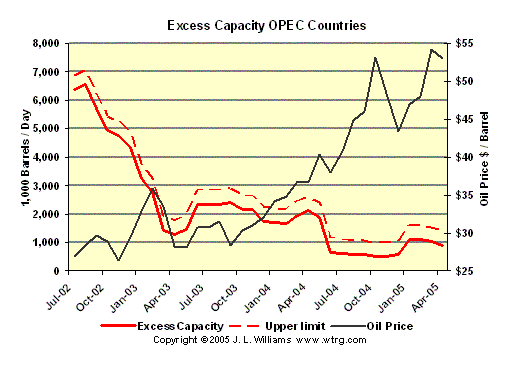
On balance, then, the effect of the Iraq War on current oil prices has been largely indirect. I believe it is attributable more to mismanagement of the war, and particularly to our choices about how to finance it, than with the 2003 decision to invade. The alternative scenario is less a function of how much oil Iraq might now be producing than of the relative health of a US economy that was only engaged in one foreign war, not two. Spending hundreds of billions of dollars on a war, without raising taxes to support it, has expanded our fiscal and external financing deficits, weakening the US dollar and feeding speculation in commodities--a lesson we should have learned from the Vietnam War. Had the dollar maintained its 2003 pre-war level against the Euro of about $1.08, oil might today be closer to $75/bbl than $110.
Friday, March 14, 2008
Climate Policy Guidebook
Now that the debate in the US has largely moved beyond the existence of climate change and on to its potential solutions, there's a great need for educational tools to help the public understand the pros and cons of a complex array of competing policy options. One of my readers kindly sent me a copy of a recently-published book entitled, "Climate Solutions: A Citizen's Guide", by Peter Barnes. This short book is a laudable and highly readable effort in that direction. I wish I could recommend it more enthusiastically, and not just because he ultimately endorses a policy of emissions cap & trade with dividends, which is close to my own preference.
Although I didn't approach Mr. Barnes's book expecting to agree with everything in it, I was pleasantly surprised by how much of it meshes with the realistic and market-oriented response to climate change that I have promoted in this blog for the last four years. Most of the points on which I would differ with him are either not very consequential, or can be attributed to the differences in our backgrounds: entrepreneurial vs. corporate, journalistic vs. technical. For example, his anti-corporate bias extends to the point of seeing the support of oil or power companies for a proposal as a valid argument against it. Populism may be in vogue, but its appearance here undermines the rigor of his analysis. Similarly, his dismissal of nuclear power seems based on outdated arguments about waste management and safety, though I doubt it will change any minds. These concerns aren't trivial, but by themselves they wouldn't prevent me from recommending "Climate Solutions" to colleagues or friends. However, before I handed anyone a copy of this book, I'd want to clarify two key points:
First, the case for a carbon tax is much stronger than the straw man that Mr. Barnes sets up and knocks over. In particular, I don't believe that enacting cap & trade legislation would require any less political heroism than a carbon tax, because their net effect in raising the prices of energy and other goods with embedded emissions would be very similar--a fact sure to emerge in any serious Congressional debate on either measure. For that matter, the argument for cap & trade is also stronger than the one laid out here, when you include its key advantage in discovering the market-clearing price for carbon over time, and its ability to drive reductions to their most efficient--and lowest-cost--providers. Readers relying on this book to arm them for cocktail party debates, rather than using it as a helpful introduction to the subject, will see their conviction for cap & trade crumple the first time they encounter a well-informed supporter of a carbon tax.
The other weakness of the book results from Mr. Barnes's ambivalence about emissions offsets. The environmental effect of greenhouse gas emissions is equivalent without regard to source or location, and that concept is essential for a cost-effective global strategy for reducing them--the only kind of strategy we can buy enough of to get the job done. Few would dispute that offsets require better standards and a globally-trusted certification process. Nevertheless, treating the US as a closed system for purposes of emissions reductions would cut us off from an enormous pool of remedial and preventative emissions reductions in developing countries. That would have the dual effect of forcing us down the more expensive path of premature asset turnover and brute-force industrial-scale reductions, and cutting off an important channel for the flow of capital and technology to the developing world. Equity must be a key element of any global effort to address this global problem, but I don't accept the sins-of-our-fathers rationale for our shouldering most of the cost. I also doubt most Americans would regard per-capita emissions parity with China as an appropriate goal, without recognizing the differences in per capita GDP and productivity.
Mr. Barnes has a good journalist's knack for making complex topics understandable without over-simplification. If there was ever a subject in dire need of that skill, it is climate policy. "Climate Solutions" provides a good layman's introduction to some very complex issues, though it might have been more effective and useful, had he focused on providing a balanced overview of all the options, without leading the reader so directly to his preference for cap & trade. With the caveats described above, Mr. Barnes's book is worth a look. It can be purchased from the publisher or on Amazon, and a brief excerpt is available here.
Although I didn't approach Mr. Barnes's book expecting to agree with everything in it, I was pleasantly surprised by how much of it meshes with the realistic and market-oriented response to climate change that I have promoted in this blog for the last four years. Most of the points on which I would differ with him are either not very consequential, or can be attributed to the differences in our backgrounds: entrepreneurial vs. corporate, journalistic vs. technical. For example, his anti-corporate bias extends to the point of seeing the support of oil or power companies for a proposal as a valid argument against it. Populism may be in vogue, but its appearance here undermines the rigor of his analysis. Similarly, his dismissal of nuclear power seems based on outdated arguments about waste management and safety, though I doubt it will change any minds. These concerns aren't trivial, but by themselves they wouldn't prevent me from recommending "Climate Solutions" to colleagues or friends. However, before I handed anyone a copy of this book, I'd want to clarify two key points:
First, the case for a carbon tax is much stronger than the straw man that Mr. Barnes sets up and knocks over. In particular, I don't believe that enacting cap & trade legislation would require any less political heroism than a carbon tax, because their net effect in raising the prices of energy and other goods with embedded emissions would be very similar--a fact sure to emerge in any serious Congressional debate on either measure. For that matter, the argument for cap & trade is also stronger than the one laid out here, when you include its key advantage in discovering the market-clearing price for carbon over time, and its ability to drive reductions to their most efficient--and lowest-cost--providers. Readers relying on this book to arm them for cocktail party debates, rather than using it as a helpful introduction to the subject, will see their conviction for cap & trade crumple the first time they encounter a well-informed supporter of a carbon tax.
The other weakness of the book results from Mr. Barnes's ambivalence about emissions offsets. The environmental effect of greenhouse gas emissions is equivalent without regard to source or location, and that concept is essential for a cost-effective global strategy for reducing them--the only kind of strategy we can buy enough of to get the job done. Few would dispute that offsets require better standards and a globally-trusted certification process. Nevertheless, treating the US as a closed system for purposes of emissions reductions would cut us off from an enormous pool of remedial and preventative emissions reductions in developing countries. That would have the dual effect of forcing us down the more expensive path of premature asset turnover and brute-force industrial-scale reductions, and cutting off an important channel for the flow of capital and technology to the developing world. Equity must be a key element of any global effort to address this global problem, but I don't accept the sins-of-our-fathers rationale for our shouldering most of the cost. I also doubt most Americans would regard per-capita emissions parity with China as an appropriate goal, without recognizing the differences in per capita GDP and productivity.
Mr. Barnes has a good journalist's knack for making complex topics understandable without over-simplification. If there was ever a subject in dire need of that skill, it is climate policy. "Climate Solutions" provides a good layman's introduction to some very complex issues, though it might have been more effective and useful, had he focused on providing a balanced overview of all the options, without leading the reader so directly to his preference for cap & trade. With the caveats described above, Mr. Barnes's book is worth a look. It can be purchased from the publisher or on Amazon, and a brief excerpt is available here.
Thursday, March 13, 2008
The Diesel Blues
Except for truckers and the few Americans who own diesel automobiles, most of us pay little attention to the price of diesel fuel at the pump. Anyone who needed to buy heating oil this winter has noticed, however. Because the latter comes from the same part of the barrel as diesel and often differs only in the color of dye added to differentiate it from on-road fuels, heating oil has gotten caught up in the same factors that have driven diesel prices to record heights. This year the combination of normal seasonal patterns, long-term global demand trends, and a 25% spike in oil prices since early December have pushed these "middle distillates" to the brink of $4.00 per gallon.
While the average price of retail gasoline across the US is $0.66/gallon higher than the same week last year, diesel fuel has gone up by $1.13. The dramatic increase in the diesel price bears some of the blame for the recent spike in food-price inflation, compounding the impact of ethanol demand on corn prices. Residential heating oil has followed a similar pattern, currently selling at an average of $1.18/gal. more than a year ago. The question I hear frequently is why a fuel that seems easier to make than gasoline and historically sold at a discount to it should suddenly cost so much more, nearly 60 cents more, right now. The answer requires dispelling a myth and taking one of the biggest global fuel trends into account, bigger even than the rise of biofuels, at least for now.
Start with the notion that diesel is cheaper to make than gasoline. That was once true, when its production was mostly a matter of distilling out the middle fraction of light, sweet crude oils--hence "middle distillates"--and putting them in a tank for distribution. Much has changed since then, including big shifts in average refinery crude slates toward heavier, higher-sulfur crude oils and the promulgation of environmental regulations progressively restricting the sulfur content of diesel sold for on-road use. When I worked at Texaco's Los Angeles Plant (now owned by Tesoro) in the late 1970s, the diesel fuel we produced was permitted to contain up to 0.5% sulfur. After successive reductions, the implementation of the 15 parts per million diesel sulfur specification that went into effect in 2006 has removed 99.7% of the sulfur in diesel fuel, at an exponentially-increasing cost per ton removed, the closer the standard got to zero. As a result of these shifts, big parts of the diesel pool are now refined as intensively as much of the gasoline pool.
Global trends also strongly affect the price we pay for diesel and heating oil. At 20%, compared to gasoline's 45%, diesel's share of total US petroleum consumption is much lower than elsewhere. Globally, diesel outsells gasoline, 27% versus 25%, and its lead looks set to increase. Diesel consumption is closely aligned with economic growth, so the development of Asia has boosted diesel demand much more than gasoline demand, so far. In Europe the higher efficiency of diesel automobiles is a key element of the EU's greenhouse gas reduction strategy, and diesel models outsell their petrol competitors. Because most of Europe's oil refineries were built to yield a similar product slate to ours, this shift has produced a growing surplus of gasoline--a big source of our gasoline imports--and a distillate deficit that the EU's expanding biodiesel production can't begin to close. So when the US imports diesel and heating oil to meet seasonal demand, we are competing directly with Europe and Asia.
The global diesel demand trends and higher production costs described above aren't temporary factors, either, and they ride along on top of the steady rise we've seen in crude oil costs. There's no reason to expect that diesel will revert to being cheaper than regular gasoline, or selling at parity with it as it did in the late 1990s. If anything, the average premium over unleaded regular of about 13 cents per gallon that we've experienced since 2006 is likely to expand further. That's bad news for food prices, and it could make the introduction of new diesel cars here a tougher sell, although on a miles-per-dollar basis, diesel still looks cheaper than gas.
While the average price of retail gasoline across the US is $0.66/gallon higher than the same week last year, diesel fuel has gone up by $1.13. The dramatic increase in the diesel price bears some of the blame for the recent spike in food-price inflation, compounding the impact of ethanol demand on corn prices. Residential heating oil has followed a similar pattern, currently selling at an average of $1.18/gal. more than a year ago. The question I hear frequently is why a fuel that seems easier to make than gasoline and historically sold at a discount to it should suddenly cost so much more, nearly 60 cents more, right now. The answer requires dispelling a myth and taking one of the biggest global fuel trends into account, bigger even than the rise of biofuels, at least for now.
Start with the notion that diesel is cheaper to make than gasoline. That was once true, when its production was mostly a matter of distilling out the middle fraction of light, sweet crude oils--hence "middle distillates"--and putting them in a tank for distribution. Much has changed since then, including big shifts in average refinery crude slates toward heavier, higher-sulfur crude oils and the promulgation of environmental regulations progressively restricting the sulfur content of diesel sold for on-road use. When I worked at Texaco's Los Angeles Plant (now owned by Tesoro) in the late 1970s, the diesel fuel we produced was permitted to contain up to 0.5% sulfur. After successive reductions, the implementation of the 15 parts per million diesel sulfur specification that went into effect in 2006 has removed 99.7% of the sulfur in diesel fuel, at an exponentially-increasing cost per ton removed, the closer the standard got to zero. As a result of these shifts, big parts of the diesel pool are now refined as intensively as much of the gasoline pool.
Global trends also strongly affect the price we pay for diesel and heating oil. At 20%, compared to gasoline's 45%, diesel's share of total US petroleum consumption is much lower than elsewhere. Globally, diesel outsells gasoline, 27% versus 25%, and its lead looks set to increase. Diesel consumption is closely aligned with economic growth, so the development of Asia has boosted diesel demand much more than gasoline demand, so far. In Europe the higher efficiency of diesel automobiles is a key element of the EU's greenhouse gas reduction strategy, and diesel models outsell their petrol competitors. Because most of Europe's oil refineries were built to yield a similar product slate to ours, this shift has produced a growing surplus of gasoline--a big source of our gasoline imports--and a distillate deficit that the EU's expanding biodiesel production can't begin to close. So when the US imports diesel and heating oil to meet seasonal demand, we are competing directly with Europe and Asia.
The global diesel demand trends and higher production costs described above aren't temporary factors, either, and they ride along on top of the steady rise we've seen in crude oil costs. There's no reason to expect that diesel will revert to being cheaper than regular gasoline, or selling at parity with it as it did in the late 1990s. If anything, the average premium over unleaded regular of about 13 cents per gallon that we've experienced since 2006 is likely to expand further. That's bad news for food prices, and it could make the introduction of new diesel cars here a tougher sell, although on a miles-per-dollar basis, diesel still looks cheaper than gas.
Wednesday, March 12, 2008
Bursting Bubbles
The possibility of an oil price bubble has been discussed since at least 2005, when oil was trading in the $50s and $60s per barrel. At the time, it wasn't hard to justify that level and dismiss the notion of a bubble, based on the fundamentals of supply and demand. Lately the term has resurfaced, and I'm not at all sure that the arguments against it outweigh the evidence of large-scale speculation, including the apparent divergence between oil futures prices and the price of oil equities. To whatever extent oil futures and options appear to be an attractive hedge against resurgent inflation, a speculative bubble in oil would reinforce inflation and economic weakness, until events converge to burst the bubble, causing further disarray.
It's usually hard to discern a speculative bubble until after it has popped. In retrospect, the housing bubble seems blindingly obvious, now, along with the 1990s Dot-Com bubble. But why is it any likelier that today's roaring oil prices are evidence of such a bubble, when they clearly were not, a few years and $50 per barrel ago? After all, the US economy may be slowing, and US oil consumption with it, but global consumption is still growing, thanks to booming demand in China, India and the Middle East. Global oil demand has risen by 2.4 million barrels per day (MBD) since 2005, and suppliers have struggled to keep pace. The International Energy Agency recently estimated that OPEC has only about 2.4 MBD of spare capacity in reserve, barely another year's growth. Add the ongoing instability in Nigeria and the Middle East, sprinkle in a dash of Chavez, and you have the recipe for a tight oil market. The problem with this logic is that a very similar recipe added up to much lower prices in recent years.
In the absence of speculative pressures, oil prices are generally determined by a few main factors, though evaluating them is far from simple. Inventories and spare capacity are widely regarded as the key differentiators between a strong oil market and a weak one. Commercial oil inventories in the OECD countries are certainly on the low side, though still within their five-year historical range, except in Asia. Although US oil inventories fell unexpectedly last week and are about 6% below their level of a year ago, they are still smack in the middle of their historical range, based on data from the Energy Information Agency (see their chart below) and have generally been rising since the start of the year. On balance, this picture doesn't look more bullish than in March 2005, when oil was $55/bbl.
 Now consider oil equities. Since last December 31, the front-month crude oil contract on the New York Mercantile Exchange has risen by 13%, while the Amex Oil Index (XOI), a composite of 13 large international oil companies, including ExxonMobil, Shell, BP, Chevron and ConocoPhillips, has declined by 9%--only 1% less than the drop experienced by the entire S&P 500 index. While it's true that these oil companies are exposed to rising costs and slumping US sales, it's hard to fathom that they wouldn't see any net benefit in their cash flows from a $10 spike in oil prices, relative to the broader market. Part of the explanation may lie in the fact that speculators don't need oil equities for exposure to the commodity; they can get that directly on the NYMEX and via the over-the-counter swaps market. The NYMEX/AMEX disconnect might not constitute proof of a bubble, but it's consistent with one.
It's usually hard to discern a speculative bubble until after it has popped. In retrospect, the housing bubble seems blindingly obvious, now, along with the 1990s Dot-Com bubble. But why is it any likelier that today's roaring oil prices are evidence of such a bubble, when they clearly were not, a few years and $50 per barrel ago? After all, the US economy may be slowing, and US oil consumption with it, but global consumption is still growing, thanks to booming demand in China, India and the Middle East. Global oil demand has risen by 2.4 million barrels per day (MBD) since 2005, and suppliers have struggled to keep pace. The International Energy Agency recently estimated that OPEC has only about 2.4 MBD of spare capacity in reserve, barely another year's growth. Add the ongoing instability in Nigeria and the Middle East, sprinkle in a dash of Chavez, and you have the recipe for a tight oil market. The problem with this logic is that a very similar recipe added up to much lower prices in recent years.
In the absence of speculative pressures, oil prices are generally determined by a few main factors, though evaluating them is far from simple. Inventories and spare capacity are widely regarded as the key differentiators between a strong oil market and a weak one. Commercial oil inventories in the OECD countries are certainly on the low side, though still within their five-year historical range, except in Asia. Although US oil inventories fell unexpectedly last week and are about 6% below their level of a year ago, they are still smack in the middle of their historical range, based on data from the Energy Information Agency (see their chart below) and have generally been rising since the start of the year. On balance, this picture doesn't look more bullish than in March 2005, when oil was $55/bbl.
Now consider oil equities. Since last December 31, the front-month crude oil contract on the New York Mercantile Exchange has risen by 13%, while the Amex Oil Index (XOI), a composite of 13 large international oil companies, including ExxonMobil, Shell, BP, Chevron and ConocoPhillips, has declined by 9%--only 1% less than the drop experienced by the entire S&P 500 index. While it's true that these oil companies are exposed to rising costs and slumping US sales, it's hard to fathom that they wouldn't see any net benefit in their cash flows from a $10 spike in oil prices, relative to the broader market. Part of the explanation may lie in the fact that speculators don't need oil equities for exposure to the commodity; they can get that directly on the NYMEX and via the over-the-counter swaps market. The NYMEX/AMEX disconnect might not constitute proof of a bubble, but it's consistent with one.Finally, we have the behavior of OPEC. It's certainly convenient for them to blame speculators for the current high prices, which earn them record revenues while producing nearly flat out. And they do bear a good deal of responsibility for higher prices, not because they've been squeezing the taps, lately--far from it--but because as the holders of 69% of the world's proved oil reserves, they've failed to invest in enough new capacity to ensure the market is well-supplied. However, despite strong elements of self-interest in their recent decision to maintain current production levels, the cartel seems to be on the defensive, rather than in the driver's seat. Perhaps they smell a bubble, too.
If the current oil market does incorporate a speculative bubble, it's worth recalling that many of the brokers and hedge-fund traders involved are too young to remember the collapse of previous commodity bubbles, such as the Silver Thursday demise of the Hunt brothers' scheme--also spurred by fears of inflation--to corner that market. And few would have experienced the sudden collapse of oil prices when Operation Desert Shield became Desert Storm on January 17, 1991. I traded petroleum products for Texaco in London at the time, and I can assure you that the last thing anyone expected was for the price of West Texas Intermediate to drop by one-third overnight, once the bombing started. Any speculator thinking he had ample time to unravel positions when the market turned got a very rude shock, indeed. As conservative as my company's trading rules and my own approach were, I lost several million dollars on a single cargo of jet fuel.
Time will tell whether $108 oil is the result of a bubble or fully justified by fundamental factors. If it turns out to be the former, the damage could be considerable. Because of the tremendous leverage of oil futures on the physical oil market, each dollar per barrel of speculative froth adds 2.4 cents to every gallon of gas and $4.4 billion per year to the US petroleum import tab, sending ripples throughout the economy. In aggregate this outstrips the speculative gains available to investors on the NYMEX and feeds the vicious cycle of dollar weakness and inflation. While that argument won't--and perhaps shouldn't--deter a single oil speculator, a careful review of the outcomes of past bubbles just might.
Disclosure: My portfolio includes at least one of the components of the Amex Oil Index.
Tuesday, March 11, 2008
Limiting CO2 from Oil Sands
For a decade Canada's expanding oil sands production has been on a collision course with the country's commitment to reduce greenhouse gas emissions under the Kyoto Protocol. The Canadian government is now addressing this issue with tough new regulations that would require oil sands projects starting up after 2011 to capture and sequester their emissions. The rule would also apply to other new industrial sources of emissions, including coal-fired power plants. In combination with the new royalty rates that went into effect last year, this restriction alters the economics of future oil sands extraction and has implications for all other carbon-intensive industry in North America.
Because of the extra energy used in oil sands production, including the heat required to liberate the hydrocarbons from the sands in which they are bound and intensive processing of the resulting heavy bitumen into synthetic crude oil, these projects emit much higher levels of greenhouse gases than conventional oil projects with comparable output--at least three times more, according to some studies. Under the Kyoto Protocol, Canada committed to reducing its emissions to 6% below 1990 levels by 2012. Instead, and partly due to the dramatic growth of the oil sands industry in Alberta, Canadian emissions had increased by 25% over 1990's by the end of 2005. Absent tough new measures, the country would likely also miss its new target of a 20% reduction by 2020 imposed last year.
At an estimated average CO2 intensity of 250 lb. per barrel of oil sands production, carbon sequestration and storage (CCS) could add up to $4.50/bbl to syncrude costs, assuming a cost for CCS of $40/metric ton CO2. Although $4.50/bbl might not seem extraordinary in a world of $100+ oil, it's a significant increment on top of production costs that were already near the top of the range for the oil supplied to market. Depending on how one views the role of oil sands in the global market, the long-term consequence could be constrained oil sands production, higher oil prices, or both.
I don't think the consequences end there. A new US administration takes office next January, and it seems likely to bring a more aggressive approach to reducing our emissions. It wouldn't be surprising for a new EPA Administrator to see this Canadian rule as something that could be implemented quickly here, while Congress wrestled with the much more complex challenge of cap & trade legislation. Industry might even welcome clear guidelines about carbon sequestration as a way to reduce their uncertainty, and to enable a new generation of coal plants--incorporating CCS from day one--to compete with natural gas and other generation alternatives. In this context, Canada's regulation of emissions from oil sands isn't just a signpost for the oil market, but for the entire North American energy and industrial sector.
Because of the extra energy used in oil sands production, including the heat required to liberate the hydrocarbons from the sands in which they are bound and intensive processing of the resulting heavy bitumen into synthetic crude oil, these projects emit much higher levels of greenhouse gases than conventional oil projects with comparable output--at least three times more, according to some studies. Under the Kyoto Protocol, Canada committed to reducing its emissions to 6% below 1990 levels by 2012. Instead, and partly due to the dramatic growth of the oil sands industry in Alberta, Canadian emissions had increased by 25% over 1990's by the end of 2005. Absent tough new measures, the country would likely also miss its new target of a 20% reduction by 2020 imposed last year.

At an estimated average CO2 intensity of 250 lb. per barrel of oil sands production, carbon sequestration and storage (CCS) could add up to $4.50/bbl to syncrude costs, assuming a cost for CCS of $40/metric ton CO2. Although $4.50/bbl might not seem extraordinary in a world of $100+ oil, it's a significant increment on top of production costs that were already near the top of the range for the oil supplied to market. Depending on how one views the role of oil sands in the global market, the long-term consequence could be constrained oil sands production, higher oil prices, or both.
I don't think the consequences end there. A new US administration takes office next January, and it seems likely to bring a more aggressive approach to reducing our emissions. It wouldn't be surprising for a new EPA Administrator to see this Canadian rule as something that could be implemented quickly here, while Congress wrestled with the much more complex challenge of cap & trade legislation. Industry might even welcome clear guidelines about carbon sequestration as a way to reduce their uncertainty, and to enable a new generation of coal plants--incorporating CCS from day one--to compete with natural gas and other generation alternatives. In this context, Canada's regulation of emissions from oil sands isn't just a signpost for the oil market, but for the entire North American energy and industrial sector.
Monday, March 10, 2008
The Path to Zero
An article in today’s Washington Post reported on new scientific research suggesting that emissions of greenhouse gases must be reduced to zero by mid-century, in order to prevent global warming that could persist for hundreds of years, perhaps eventually producing average temperatures higher than for millions of years. As the climate debate focuses increasingly on policy, the impact of such findings on efforts to craft practical frameworks for reducing US and global emissions becomes as important as the scientific result itself. The implication of the need for truly radical change contained in this latest report might either galvanize action on capping our emissions, or convince us that none of the current pathways for reducing emissions is truly worth pursuing.
The goalpost for stabilizing the climate has been moving for some time. A few years ago, moderating emissions to stabilize the atmospheric CO2 concentration at about twice its pre-industrial 280 parts per million (ppm) was widely regarded as adequate to the task. Further modeling suggested that 550 ppm wouldn’t do the trick, but that 450 ppm might. Then we heard from NASA’s James Hansen that we need to shoot for 350 ppm, a level we unfortunately exceeded in the late 1980s. Now Matthews and Caldeira’s paper in Geophysical Research Letters indicates that if we wish to avoid continued, dramatic climate change over the very long haul, our real goal must be zero net emissions, with as rapid a return as possible to pre-industrial levels. It’s enough to make you throw up your hands in futility.
I don’t think you need to be an economist or a climate skeptic to appreciate just how sweeping the changes in our entire global economy would have to be, in order to achieve zero emissions worldwide by mid-century. Of the current US cap-and-trade proposals, neither the bill now before the Congress nor the proposals of any presidential candidate would get us close to that. Even if the EU and US cut emissions by 80%, the toughest target now on the table, global emissions will continue to grow for at least several more decades and would probably still be above 50% of current levels in 2050.
What does zero emissions mean in practical terms? Well, among other things it doesn’t mean “zero emission vehicles” that merely shift the point of emissions from the tailpipe to the smokestack. And while it’s possible to imagine getting a large part of the way toward a 70% or 80% emissions reduction through greatly-improved efficiency and conservation, we simply can’t conserve our way to zero. Instead, it implies the elimination of essentially all combustion of fuels, other than in facilities that capture and sequester all the CO2 they produce, or of biofuels that absorb in cultivation as much CO2 as they emit when processed and burned. Otherwise, we’re talking about an entirely electrical world, with power generated exclusively by wind, solar, geothermal, hydro, and nuclear sources. Those sources currently meet only 14% of the world's energy needs. For those of us grounded in the realities of fleet, capital stock and infrastructure turnover, the cost associated with changes on such a scale makes adaptation to a warmer world seem like the more attractive option.
As overwhelming as all this seems, however, I see two positive nuggets embedded in this report. One is the timescale for reductions and the other is the notion of zero net emissions. Fifty years is a long enough interval in which to develop entirely new technologies from fundamental scientific discoveries, fine tune them, and roll them out on a massive scale. If we can at least stop making the problem bigger in the meantime, the actual means of reducing our emissions to zero might emerge from an unexpected quarter within the next decade, or from a novel application of some existing technology. And with enough cheap, clean energy at our disposal—perhaps from space solar power—we could even reduce our net emissions below zero, by extracting CO2 from the air and storing it in geological formations or as carbonate rock.
At this point, I believe we ought to be cautious about this new finding. Even ignoring the possibility that the authors’ modeling results won’t hold up, pushing a complete zero-emission agenda now, before we’ve even begun reducing global emissions, seems premature. Combine the implications of zero emissions with the new debate about “global cooling”, and we could have the recipe for another decade of policy gridlock. In the meantime, however, we should be pondering what this research suggests about the proper balance between incremental change and transformation, where the latter is a realistic option. That might seem like a highly esoteric topic in the current economic climate, but in the years ahead climate policy and the economy will likely be increasingly inter-connected.
The goalpost for stabilizing the climate has been moving for some time. A few years ago, moderating emissions to stabilize the atmospheric CO2 concentration at about twice its pre-industrial 280 parts per million (ppm) was widely regarded as adequate to the task. Further modeling suggested that 550 ppm wouldn’t do the trick, but that 450 ppm might. Then we heard from NASA’s James Hansen that we need to shoot for 350 ppm, a level we unfortunately exceeded in the late 1980s. Now Matthews and Caldeira’s paper in Geophysical Research Letters indicates that if we wish to avoid continued, dramatic climate change over the very long haul, our real goal must be zero net emissions, with as rapid a return as possible to pre-industrial levels. It’s enough to make you throw up your hands in futility.
I don’t think you need to be an economist or a climate skeptic to appreciate just how sweeping the changes in our entire global economy would have to be, in order to achieve zero emissions worldwide by mid-century. Of the current US cap-and-trade proposals, neither the bill now before the Congress nor the proposals of any presidential candidate would get us close to that. Even if the EU and US cut emissions by 80%, the toughest target now on the table, global emissions will continue to grow for at least several more decades and would probably still be above 50% of current levels in 2050.
What does zero emissions mean in practical terms? Well, among other things it doesn’t mean “zero emission vehicles” that merely shift the point of emissions from the tailpipe to the smokestack. And while it’s possible to imagine getting a large part of the way toward a 70% or 80% emissions reduction through greatly-improved efficiency and conservation, we simply can’t conserve our way to zero. Instead, it implies the elimination of essentially all combustion of fuels, other than in facilities that capture and sequester all the CO2 they produce, or of biofuels that absorb in cultivation as much CO2 as they emit when processed and burned. Otherwise, we’re talking about an entirely electrical world, with power generated exclusively by wind, solar, geothermal, hydro, and nuclear sources. Those sources currently meet only 14% of the world's energy needs. For those of us grounded in the realities of fleet, capital stock and infrastructure turnover, the cost associated with changes on such a scale makes adaptation to a warmer world seem like the more attractive option.
As overwhelming as all this seems, however, I see two positive nuggets embedded in this report. One is the timescale for reductions and the other is the notion of zero net emissions. Fifty years is a long enough interval in which to develop entirely new technologies from fundamental scientific discoveries, fine tune them, and roll them out on a massive scale. If we can at least stop making the problem bigger in the meantime, the actual means of reducing our emissions to zero might emerge from an unexpected quarter within the next decade, or from a novel application of some existing technology. And with enough cheap, clean energy at our disposal—perhaps from space solar power—we could even reduce our net emissions below zero, by extracting CO2 from the air and storing it in geological formations or as carbonate rock.
At this point, I believe we ought to be cautious about this new finding. Even ignoring the possibility that the authors’ modeling results won’t hold up, pushing a complete zero-emission agenda now, before we’ve even begun reducing global emissions, seems premature. Combine the implications of zero emissions with the new debate about “global cooling”, and we could have the recipe for another decade of policy gridlock. In the meantime, however, we should be pondering what this research suggests about the proper balance between incremental change and transformation, where the latter is a realistic option. That might seem like a highly esoteric topic in the current economic climate, but in the years ahead climate policy and the economy will likely be increasingly inter-connected.
Friday, March 07, 2008
Weak Dollar Fallout
Wednesday evening I was interviewed by a news radio station in Kingston, Jamaica. Unfortunately, it took place by telephone, rather than on location. Most of the host's questions concerned the likely course of oil prices, and she was particularly interested in the role played by the depreciation of the US dollar. Today's Washington Post includes a helpful set of graphs charting oil's rise over the last year in US and Canadian dollars, Sterling, Euros and Yen. Compared to the currencies of our major trading partners, the dollar's weakness explains about a third of the one-year change in what we pay for oil. Even if market fundamentals drive oil prices somewhat lower over the next year, as seems likely, the US and countries with currencies linked to ours might not get much relief, if the dollar continues its slide.
The article accompanying today's graphs mentions the usual factors spurring on oil prices: geopolitics, OPEC, and the weak dollar. The influx of portfolio investment into oil markets--a.k.a. "speculation"--is directly related to the decline in equity markets, and to inflationary expectations caused by spikes in consumer and producer prices and the general consensus that the Federal Reserve will focus on lubricating the economy, rather than fighting inflation. So investors seek stable value and positive returns in commodities, and the prophecy becomes self-fulfilling, for now, worsening the trade and fiscal imbalances contributing to a weak dollar. As bad as that cycle is for Americans coping with rising food prices, resetting adjustable-rate mortgages, and high fuel prices, it is disastrous for small developing countries.
Since January 2007, oil prices have gone up by about $40 per barrel, adding roughly $14 billion to our monthly oil import bill--$170 billion on an annualized basis. As painful as that has been for our $14 trillion economy, imagine what it has done to countries such as Jamaica, with a $13 billion GDP that relies on imported oil for most of its energy needs, and with a currency that has actually declined slightly against the US dollar. A $1 billion increase in their oil import tab isn't just an extra burden; it's a crisis.
The primary focus of the Jamaican radio discussion in which I participated was on the estimated oil price that should go into their national budget. Given their reliance on imported oil, that figure will largely determine how much is left over for all other consumption and investment, public and private. Guess too low, and programs and projects will be slashed later, or more money borrowed. Guess too high, and necessary programs get cut now, causing hardships and squandering political capital. $80 per barrel might look right based on the fundamentals, but can they afford to bet that the dollar won't drop another 10%, or that Venezuela--their main oil supplier--won't finally follow through on one of its unpredictable leader's threats? Many other resource-poor countries are in a similar bind, with a lot less control over the outcome than we have.
The article accompanying today's graphs mentions the usual factors spurring on oil prices: geopolitics, OPEC, and the weak dollar. The influx of portfolio investment into oil markets--a.k.a. "speculation"--is directly related to the decline in equity markets, and to inflationary expectations caused by spikes in consumer and producer prices and the general consensus that the Federal Reserve will focus on lubricating the economy, rather than fighting inflation. So investors seek stable value and positive returns in commodities, and the prophecy becomes self-fulfilling, for now, worsening the trade and fiscal imbalances contributing to a weak dollar. As bad as that cycle is for Americans coping with rising food prices, resetting adjustable-rate mortgages, and high fuel prices, it is disastrous for small developing countries.
Since January 2007, oil prices have gone up by about $40 per barrel, adding roughly $14 billion to our monthly oil import bill--$170 billion on an annualized basis. As painful as that has been for our $14 trillion economy, imagine what it has done to countries such as Jamaica, with a $13 billion GDP that relies on imported oil for most of its energy needs, and with a currency that has actually declined slightly against the US dollar. A $1 billion increase in their oil import tab isn't just an extra burden; it's a crisis.
The primary focus of the Jamaican radio discussion in which I participated was on the estimated oil price that should go into their national budget. Given their reliance on imported oil, that figure will largely determine how much is left over for all other consumption and investment, public and private. Guess too low, and programs and projects will be slashed later, or more money borrowed. Guess too high, and necessary programs get cut now, causing hardships and squandering political capital. $80 per barrel might look right based on the fundamentals, but can they afford to bet that the dollar won't drop another 10%, or that Venezuela--their main oil supplier--won't finally follow through on one of its unpredictable leader's threats? Many other resource-poor countries are in a similar bind, with a lot less control over the outcome than we have.
Thursday, March 06, 2008
When Electrons Beat Molecules
Yesterday I nearly missed a very significant piece of news--a signpost of the future, if you will--because it was buried in the B section of the Wall Street Journal. In an article entitled, "GM, Toyota Doubtful on Fuel Cells' Mass Use" the reporters cited comments at the Geneva Auto Show by executives of these two companies, suggesting that battery technology was improving faster than fuel cell technology and that the mass-marketing of the latter might be delayed for years. In light of the substantial investments that both companies have made in both technologies, these remarks reflect an important shift in the battle for future transportation energy market share between electrons and molecules. Better batteries would not just delay fuel cell vehicles; they might trump them altogether.
For over a century, the competition for powering automobiles has pitted the onboard conversion of chemical energy into kinetic energy against externally-generated electricity from a variety of sources that could be stored onboard and used on demand. Although the latter pathway generally consumes less total energy and results in fewer emissions, the "molecules" side has consistently won this tug-of-war, for two reasons. First, it mirrors our sources of primary energy, for which fossil fuels still contribute 85% of the total. More importantly, even after throwing away most of that chemical energy in the form of waste heat from inefficient internal combustion engines, these fuels still delivered a multiple of the amount of energy that could be stored in a battery pack of comparable size and weight. However, both of these considerations are now changing.
For decades researchers have worked to develop batteries that could store as much useful energy as chemical fuels and be recharged as quickly as a gasoline tank can be filled, performing this charge/discharge cycle a few thousand times without degrading noticeably. Fuel cells were seen as a clever way to finesse the lack of such a battery, by combining the energy storage densities of chemical fuels with a very efficient way to make electricity onboard. Hybrids and plug-in hybrids (PHEVs) represent another attempt to gain electrical efficiencies in spite of the deficiencies of existing batteries. The suggestion by GM's Mr. Lutz that lithium-ion batteries might soon give battery cars a 300-mile all-electric range calls into question not only the necessity of fuel cells, but of hybrids of all types and even the conventionally-powered car. Could electrons finally be poised to win the war, after a century of losing all the battles?
At the same time, the advent of modest but rapidly-growing quantities of electricity from cyclical or intermittent renewable sources not only begins to shift the fuel vs. electricity balance of our primary energy sources, but it also provides incentives for creating the means of storing renewable electricity when it is excess to the needs of the normal grid load or fluctuating strongly, a situation that has already caused isolated problems of grid instability. As the advocates of vehicle-to-grid (V2G) technology point out, electric vehicles could provide the key to making wind and solar power practical on a large scale.
But while an entirely-electric vehicle with a truly high-performance battery would have clear engineering advantages over cars with internal combustion engines or fuel cells, we can't ignore the influence of infrastructure and consumer habits in determining the rate at which such a substitution might take place. Even if the US electrical grid has enough idle overnight capacity to recharge a couple of hundred million vehicles, as a 2006 study indicated, it's not clear that it has the fuel supply to spin all those gas and steam turbines (see yesterday's posting on natural gas.), unless we convert our oil refineries to make a lot more kerosene and a lot less gasoline. And while Mr. Agassi's Project Better Place might have an ideal solution for drivers who need to recharge in a few minutes, rather than overnight, his concept must still be proven, and I would love to see how his business model manages the large battery inventory it seems to require.
A few months ago I had the opportunity to drive one of GM's new limited-production fuel cell SUVs, which recently got a boost from Richard Branson's Virgin Group. I was impressed that they had managed to make a fuel cell vehicle seem so normal. But while conventional cars and hybrids have the inertia of infrastructure and consumer expectations behind them, the same can't be said for automotive fuel cells, which because of their cost, complexity and supply-chain hurdles might simply be shoved aside by greatly-improved batteries. Developments in the next year or two could determine the outcome of a very long competition.
For over a century, the competition for powering automobiles has pitted the onboard conversion of chemical energy into kinetic energy against externally-generated electricity from a variety of sources that could be stored onboard and used on demand. Although the latter pathway generally consumes less total energy and results in fewer emissions, the "molecules" side has consistently won this tug-of-war, for two reasons. First, it mirrors our sources of primary energy, for which fossil fuels still contribute 85% of the total. More importantly, even after throwing away most of that chemical energy in the form of waste heat from inefficient internal combustion engines, these fuels still delivered a multiple of the amount of energy that could be stored in a battery pack of comparable size and weight. However, both of these considerations are now changing.
For decades researchers have worked to develop batteries that could store as much useful energy as chemical fuels and be recharged as quickly as a gasoline tank can be filled, performing this charge/discharge cycle a few thousand times without degrading noticeably. Fuel cells were seen as a clever way to finesse the lack of such a battery, by combining the energy storage densities of chemical fuels with a very efficient way to make electricity onboard. Hybrids and plug-in hybrids (PHEVs) represent another attempt to gain electrical efficiencies in spite of the deficiencies of existing batteries. The suggestion by GM's Mr. Lutz that lithium-ion batteries might soon give battery cars a 300-mile all-electric range calls into question not only the necessity of fuel cells, but of hybrids of all types and even the conventionally-powered car. Could electrons finally be poised to win the war, after a century of losing all the battles?
At the same time, the advent of modest but rapidly-growing quantities of electricity from cyclical or intermittent renewable sources not only begins to shift the fuel vs. electricity balance of our primary energy sources, but it also provides incentives for creating the means of storing renewable electricity when it is excess to the needs of the normal grid load or fluctuating strongly, a situation that has already caused isolated problems of grid instability. As the advocates of vehicle-to-grid (V2G) technology point out, electric vehicles could provide the key to making wind and solar power practical on a large scale.
But while an entirely-electric vehicle with a truly high-performance battery would have clear engineering advantages over cars with internal combustion engines or fuel cells, we can't ignore the influence of infrastructure and consumer habits in determining the rate at which such a substitution might take place. Even if the US electrical grid has enough idle overnight capacity to recharge a couple of hundred million vehicles, as a 2006 study indicated, it's not clear that it has the fuel supply to spin all those gas and steam turbines (see yesterday's posting on natural gas.), unless we convert our oil refineries to make a lot more kerosene and a lot less gasoline. And while Mr. Agassi's Project Better Place might have an ideal solution for drivers who need to recharge in a few minutes, rather than overnight, his concept must still be proven, and I would love to see how his business model manages the large battery inventory it seems to require.
A few months ago I had the opportunity to drive one of GM's new limited-production fuel cell SUVs, which recently got a boost from Richard Branson's Virgin Group. I was impressed that they had managed to make a fuel cell vehicle seem so normal. But while conventional cars and hybrids have the inertia of infrastructure and consumer expectations behind them, the same can't be said for automotive fuel cells, which because of their cost, complexity and supply-chain hurdles might simply be shoved aside by greatly-improved batteries. Developments in the next year or two could determine the outcome of a very long competition.
Wednesday, March 05, 2008
The Future of Gas
Not many years ago, natural gas was widely regarded as the fuel of the future. Its use was growing at a much faster rate than for oil, and it offered important environmental benefits in terms of both greenhouse gas emissions and local pollution, relative to its main competitors, coal and oil. At least in the US, however, these perceptions were altered by a period of unexpectedly tight supplies and high prices, and the rapid growth of even greener energy sources, such as wind and solar power. A new campaign by gas producers aims to restore the fuel's luster, and at least from the standpoint of the facts they cite, this ought to be an easier sell than a similar campaign by the nation's coal industry. The larger question is whether gas supplies would be adequate to displace a meaningful proportion of other energy sources, as part of the solution to both energy insecurity and climate change.
The full-page ad that caught my attention appeared in this morning's Washington Post, with the headline, "We're Not Running Out of Natural Gas." It went on to cite recent large increases in North America's gas resource potential, based at least in part on the gas industry's success at exploiting gas from non-conventional formations such as shale and deep coal beds. In fact, unconventional gas now accounts for over a third of US gas production. As recently as 2000, estimates of proved and potential US gas resources equated to about 58 years of production at current rates, so the reported jump to 82 years is impressive. More significantly, US proved gas reserves have increased by 26% over the same period, while global reserves grew by 20%. So here's another resource for which the US consumes a fifth of the world's supply while holding only 3% of total reserves, yet it looks entirely sustainable for decades. It's less clear how much more it could increase, when the fastest-growing segment of US gas supply is LNG imports.
There are at least four pathways by which natural gas could displace petroleum products for transportation energy: as compressed or liquefied natural gas for modified internal combustion engines, via chemical conversion to liquid fuels such as methanol or diesel, via conversion to hydrogen for fuel cells or modified ICEs, or as electricity generated from gas for plug-in hybrids and electric vehicles. All offer consumers environmental, efficiency and operating cost improvements, though with up-front costs that may not be fully recovered by those benefits, as in the case of today's CNG car models. Producing enough vehicle fuel from gas to replace 10% of current gasoline consumption might require another 1.8 trillion cubic feet (TCF) per year, increasing US gas demand by 8%.
Gas could also be used to displace existing coal-fired power generation. Without fanfare, gas-fired electricity surpassed the contribution of nuclear power in 2006, despite the latter's steady and impressive improvements in on-line availability. Gas now accounts for 20% of US electricity supply, compared to 49% for coal. In the process, gas-fired power plants make up 30% of total US gas demand, up from just 22% in 2000. That expansion was achieved by squeezing out a large quantity of industrial demand. At that rate, replacing 10% of coal-fired power would require another 1.7 TCF/year of gas, adding 7% to total demand--or at the expense of other uses.
So in order for gas to make even modest inroads into oil's share of the transportation market and coal's share of electricity, without crowding out industrial and commercial users, US natural gas consumption would need to grow by about 15%, over and above the anticipated growth in traditional gas demand segments, while also providing most of the energy consumed by rapidly-expanding ethanol production. The reserves data and resource estimates confirm that there's enough gas. The real challenge, however, is whether it could be supplied without disrupting the price relationship between oil and gas--a 50% discount on equivalent energy, based on current futures contracts--that makes the prospect attractive in the first place, or without making gas less competitive with renewable energy sources, including wind turbines and solar thermal power. That would be a great question for the American Clean Skies Foundation to tackle.
The full-page ad that caught my attention appeared in this morning's Washington Post, with the headline, "We're Not Running Out of Natural Gas." It went on to cite recent large increases in North America's gas resource potential, based at least in part on the gas industry's success at exploiting gas from non-conventional formations such as shale and deep coal beds. In fact, unconventional gas now accounts for over a third of US gas production. As recently as 2000, estimates of proved and potential US gas resources equated to about 58 years of production at current rates, so the reported jump to 82 years is impressive. More significantly, US proved gas reserves have increased by 26% over the same period, while global reserves grew by 20%. So here's another resource for which the US consumes a fifth of the world's supply while holding only 3% of total reserves, yet it looks entirely sustainable for decades. It's less clear how much more it could increase, when the fastest-growing segment of US gas supply is LNG imports.
There are at least four pathways by which natural gas could displace petroleum products for transportation energy: as compressed or liquefied natural gas for modified internal combustion engines, via chemical conversion to liquid fuels such as methanol or diesel, via conversion to hydrogen for fuel cells or modified ICEs, or as electricity generated from gas for plug-in hybrids and electric vehicles. All offer consumers environmental, efficiency and operating cost improvements, though with up-front costs that may not be fully recovered by those benefits, as in the case of today's CNG car models. Producing enough vehicle fuel from gas to replace 10% of current gasoline consumption might require another 1.8 trillion cubic feet (TCF) per year, increasing US gas demand by 8%.
Gas could also be used to displace existing coal-fired power generation. Without fanfare, gas-fired electricity surpassed the contribution of nuclear power in 2006, despite the latter's steady and impressive improvements in on-line availability. Gas now accounts for 20% of US electricity supply, compared to 49% for coal. In the process, gas-fired power plants make up 30% of total US gas demand, up from just 22% in 2000. That expansion was achieved by squeezing out a large quantity of industrial demand. At that rate, replacing 10% of coal-fired power would require another 1.7 TCF/year of gas, adding 7% to total demand--or at the expense of other uses.
So in order for gas to make even modest inroads into oil's share of the transportation market and coal's share of electricity, without crowding out industrial and commercial users, US natural gas consumption would need to grow by about 15%, over and above the anticipated growth in traditional gas demand segments, while also providing most of the energy consumed by rapidly-expanding ethanol production. The reserves data and resource estimates confirm that there's enough gas. The real challenge, however, is whether it could be supplied without disrupting the price relationship between oil and gas--a 50% discount on equivalent energy, based on current futures contracts--that makes the prospect attractive in the first place, or without making gas less competitive with renewable energy sources, including wind turbines and solar thermal power. That would be a great question for the American Clean Skies Foundation to tackle.
Tuesday, March 04, 2008
A Stall Point for Oil?
It's been a long time since the oil markets offered much good news, particularly on the supply side. Since the end of 2002, a litany of strikes, war, social unrest, sanctions, and other factors have contributed to oil's volatile climb from the mid-$20s to yesterday's settlement at $102.45 per barrel. Now we are treated to the possibility of armed conflict between three South American nations that between them account for about 5% of global oil production and exports. With demand in Asia compounding these pressures, it's ironic that the best news the market might get for a while should come in the form of consumption data for the world's largest oil importer, reflecting the price elasticity of demand and the impact of higher biofuels output.
The Energy Information Agency's figures for petroleum supply and demand in December 2007 are coming in, now, and the resulting annual totals represent milestones in several categories. Importantly, they show that as a result of the combination of higher oil and refined product prices and a slowing economy, and after factoring in the contribution of biofuels under the previous Renewable Fuel Standard, the growth of US oil consumption seems to have reached a stall point. And while in the past I might have been tempted to add, "for now," it isn't easy to envision the circumstances under which that growth would return to previous levels, even in a recovering economy.
With the addition of December's 9.25 million barrels per day (bpd) of finished gasoline supplied to the US market, our 2007 average consumption of 9.29 million bpd was only 0.4% higher than 2006. And when the larger quantity of ethanol blended into gasoline last year is factored in, the quantity of petroleum-based gasoline supplied actually declined by about 0.6%. In addition, total crude oil and petroleum product consumption in 2007 was essentially unchanged versus 2006, at 20.7 million bpd, before factoring in the 96,000 bpd year-on-year increase in ethanol use. Our net imports of crude oil and petroleum products were down, as well.
With our total oil demand essentially flat for four years, the US may have reached its petroleum high-water mark, from which consumption will gradually decline. Even if the benefit of more efficient vehicles is partially offset by a growing population and continued increases in annual miles driven, alternative fuels have finally reached a scale at which they are beginning to erode oil's market share in transportation, where it has been unchallenged for a century. Of course, halting US oil demand growth doesn't eliminate our 12 million bpd of net crude oil and refined product imports.
Skeptics would be right to remind us that we've been here before, and it didn't last. Between 1978 and 1983, total US oil consumption fell by almost 20%, before resuming its steady growth and breaking the old record in 1998. However, much has changed since then. Better technology and the urgency of addressing climate change have altered the energy landscape so much that it's even possible to extrapolate from static US oil demand to a future peak in global oil demand, a twist on the notion of Peak Oil that has nothing to do with the ongoing debate about how many barrels we can coax out of the earth. Reaching that point will require much hard work, including ensuring that when our economy recovers from its current woes, it is more energy efficient and makes better use of all the domestic energy sources at our disposal.

The Energy Information Agency's figures for petroleum supply and demand in December 2007 are coming in, now, and the resulting annual totals represent milestones in several categories. Importantly, they show that as a result of the combination of higher oil and refined product prices and a slowing economy, and after factoring in the contribution of biofuels under the previous Renewable Fuel Standard, the growth of US oil consumption seems to have reached a stall point. And while in the past I might have been tempted to add, "for now," it isn't easy to envision the circumstances under which that growth would return to previous levels, even in a recovering economy.
With the addition of December's 9.25 million barrels per day (bpd) of finished gasoline supplied to the US market, our 2007 average consumption of 9.29 million bpd was only 0.4% higher than 2006. And when the larger quantity of ethanol blended into gasoline last year is factored in, the quantity of petroleum-based gasoline supplied actually declined by about 0.6%. In addition, total crude oil and petroleum product consumption in 2007 was essentially unchanged versus 2006, at 20.7 million bpd, before factoring in the 96,000 bpd year-on-year increase in ethanol use. Our net imports of crude oil and petroleum products were down, as well.
With our total oil demand essentially flat for four years, the US may have reached its petroleum high-water mark, from which consumption will gradually decline. Even if the benefit of more efficient vehicles is partially offset by a growing population and continued increases in annual miles driven, alternative fuels have finally reached a scale at which they are beginning to erode oil's market share in transportation, where it has been unchallenged for a century. Of course, halting US oil demand growth doesn't eliminate our 12 million bpd of net crude oil and refined product imports.
Skeptics would be right to remind us that we've been here before, and it didn't last. Between 1978 and 1983, total US oil consumption fell by almost 20%, before resuming its steady growth and breaking the old record in 1998. However, much has changed since then. Better technology and the urgency of addressing climate change have altered the energy landscape so much that it's even possible to extrapolate from static US oil demand to a future peak in global oil demand, a twist on the notion of Peak Oil that has nothing to do with the ongoing debate about how many barrels we can coax out of the earth. Reaching that point will require much hard work, including ensuring that when our economy recovers from its current woes, it is more energy efficient and makes better use of all the domestic energy sources at our disposal.
Monday, March 03, 2008
Misleading Statistics
In its editorial on the pending energy tax bill, today's New York Times repeats a frequently-heard, but dangerously misleading pair of statistics concerning US oil consumption and proved reserves. The Times says, "a country that consumes one-fifth of the world’s oil but has only 3 percent of its reserves cannot possibly drill its way to energy independence." Ignoring the feasibility or desirability of attaining energy independence by any means presently available to us, the implication is that remaining US oil resources are inconsequential, and it is high time we discarded them in favor of renewable energy. Yet if we compare the potential energy contribution of even a modest increase in domestic oil production to what we hope to gain from biofuels in the next decade, the better answer is that we need both and can't afford to ignore the contribution of either.
The basic data the Times cites are, if anything, conservative. In 2006, the US consumed 20.7 million barrels per day (bpd) out of global production of 84.6 million bpd, or 24.5% of the total, while producing 8.3 million bpd, or 9.9%. US proved oil reserves stood at about 2.5% of global reserves of 1.2 trillion barrels. However, it is equally true that the US has produced a cumulative 200 billion barrels of oil from proved reserves that never exceeded 40 billion barrels. If reserves told us everything about future production, the US would have run out of oil decades ago. The US government estimates that in addition to our present reserves of 20 billion barrels, we have another 85 billion barrels of untapped offshore oil resources, including those in regions that are off-limits to drilling. US oil production peaked in 1970 and has been declining ever since, but that doesn't mean that we can't reverse that slide for a decade or so.
Even if only a fraction of those untapped resources were ultimately converted to reserves, which would require both access and an assessment that the oil could be produced at current prices and with existing technology, a net 10% increase in US oil production ought to be entirely achievable. That would add 700,000 bpd, or the equivalent of 15.3 billion gallons per year of ethanol, matching the entire ultimate conventional biofuel mandate under the new Renewable Fuel Standard for 2015 and beyond. And in energy return terms, a 10% increase in oil output would contribute more than three times as many net BTUs to the US economy as all that corn ethanol, after subtracting their respective energy inputs. Higher domestic oil production would also buy us valuable time for our vehicle fleet to turn over to more efficient cars, and for the technology of producing biofuels from cellulose to supplant our resource-intensive and environmentally-questionable conversion of foodstuffs to fuel. This isn't a question of "drilling our way to energy independence," but of bringing all our resources to bear at once on the problem of energy security.
However one regards the US oil industry and its current profitability, a fact-, rather than emotion-based analysis of our energy situation ought to convince us that oil and gas still have at least as much to contribute to our energy security over the next decade as any alternative energy technology now at our disposal. We urgently need a practical and realistic strategy for managing the long-term transition from oil and gas to more sustainable, environmentally-benign energy sources that cannot yet carry the burden of providing our economy with all the energy it needs, even after employing every conservation tactic available to us. Turning our backs on billions of barrels of untapped resources, based on superficial sound-bites about consumption and reserves, will make that transition a lot more arduous and expensive than it needs to be.
The basic data the Times cites are, if anything, conservative. In 2006, the US consumed 20.7 million barrels per day (bpd) out of global production of 84.6 million bpd, or 24.5% of the total, while producing 8.3 million bpd, or 9.9%. US proved oil reserves stood at about 2.5% of global reserves of 1.2 trillion barrels. However, it is equally true that the US has produced a cumulative 200 billion barrels of oil from proved reserves that never exceeded 40 billion barrels. If reserves told us everything about future production, the US would have run out of oil decades ago. The US government estimates that in addition to our present reserves of 20 billion barrels, we have another 85 billion barrels of untapped offshore oil resources, including those in regions that are off-limits to drilling. US oil production peaked in 1970 and has been declining ever since, but that doesn't mean that we can't reverse that slide for a decade or so.

Even if only a fraction of those untapped resources were ultimately converted to reserves, which would require both access and an assessment that the oil could be produced at current prices and with existing technology, a net 10% increase in US oil production ought to be entirely achievable. That would add 700,000 bpd, or the equivalent of 15.3 billion gallons per year of ethanol, matching the entire ultimate conventional biofuel mandate under the new Renewable Fuel Standard for 2015 and beyond. And in energy return terms, a 10% increase in oil output would contribute more than three times as many net BTUs to the US economy as all that corn ethanol, after subtracting their respective energy inputs. Higher domestic oil production would also buy us valuable time for our vehicle fleet to turn over to more efficient cars, and for the technology of producing biofuels from cellulose to supplant our resource-intensive and environmentally-questionable conversion of foodstuffs to fuel. This isn't a question of "drilling our way to energy independence," but of bringing all our resources to bear at once on the problem of energy security.
However one regards the US oil industry and its current profitability, a fact-, rather than emotion-based analysis of our energy situation ought to convince us that oil and gas still have at least as much to contribute to our energy security over the next decade as any alternative energy technology now at our disposal. We urgently need a practical and realistic strategy for managing the long-term transition from oil and gas to more sustainable, environmentally-benign energy sources that cannot yet carry the burden of providing our economy with all the energy it needs, even after employing every conservation tactic available to us. Turning our backs on billions of barrels of untapped resources, based on superficial sound-bites about consumption and reserves, will make that transition a lot more arduous and expensive than it needs to be.
Friday, February 29, 2008
How Likely Is $4 Gasoline?
The recent 19 cent per gallon surge in the average retail price of gasoline has raised concerns that sustained high oil prices and seasonally-stronger refining margins could push US gas prices to $4.00 this spring. But while the recent seasonal patterns make it likely that prices will strengthen from the current $3.13 per gallon to at least $3.50, even with a weak economy, going much beyond that would probably take more than just the routine level of annual refinery maintenance. Breaking the next even-dollar milestone for the national average by the Fourth of July would require a combination of serious supply problems and expensive oil.
Although it may not be obvious at the gas pump, weak refining margins have shielded gasoline consumers from the full impact of $100 oil, so far. Using the commodity prices on the New York Mercantile Exchange as a simple proxy for refining margins, wholesale gasoline has averaged only $0.12/gallon above crude oil this week, well below the average for 2006 and 2007, and much lower than the second quarters of both years, when prompt gasoline futures averaged $0.63/gal. over the light sweet crude contract. That suggests that if oil prices remained near their current level, and refinery maintenance and unanticipated shut-downs were comparable to the last couple of years, then retail gasoline could average as much as $3.70/gal. nationally this spring, perhaps reaching $3.90/gal. for brief periods. In its most recent weekly oil report, however, the Energy Information Agency of the Department of Energy anticipates lower refinery maintenance than last year, along with lower gasoline demand, so those figures look like upper bounds, unless you live on the West Coast.
Californians routinely pay more for gasoline, for reasons I've described at length. Among other factors, the state-mandated fuel formulation is harder to make, and the gasoline tax is 17 cents per gallon higher than the national average. Residents of San Francisco are already seeing street prices above $3.70/gal., though they can beat that by at least 30 cents if they shop around. L.A. appears to be about a dime lower. From those levels, $4.00 gas confined to California won't require much of a stretch.
Trying to gauge the likely course of national gasoline prices this spring is complicated by uncertainties about ethanol. In previous years, shortages of ethanol have contributed to higher gas prices. At the moment, after accounting for transportation by rail and the $0.51/gal. blenders' credit, ethanol prices look cheaper than wholesale gasoline, so the continued expansion of ethanol production might help hold down increases in gasoline prices by a few cents per gallon. The wild card is the increased Renewable Fuel Standard created by the 2007 Energy Bill. It requires refiners to add about one-third more ethanol than they did last year. Logistical bottlenecks could impede that process and push up the price of the ethanol that can reach end markets, nudging gas prices even higher.
The scenario for a $4.00 per gallon average US retail gasoline price thus requires a combination of several non-routine factors: a larger-than-expected reduction in gasoline production than from scheduled refinery maintenance alone, a difficult transition to the higher ethanol mandate, or something that impeded our imports of a million-plus barrels per day of gasoline from offshore. And it's predicated on sustained oil prices at or above $100/barrel--a highly uncertain proposition, given the tension between weakening demand and a weakening dollar. The only thing certain about $4.00/gal. gasoline is that if oil prices keep rising, we'll get there eventually. This spring might only be our first shot at it.
Although it may not be obvious at the gas pump, weak refining margins have shielded gasoline consumers from the full impact of $100 oil, so far. Using the commodity prices on the New York Mercantile Exchange as a simple proxy for refining margins, wholesale gasoline has averaged only $0.12/gallon above crude oil this week, well below the average for 2006 and 2007, and much lower than the second quarters of both years, when prompt gasoline futures averaged $0.63/gal. over the light sweet crude contract. That suggests that if oil prices remained near their current level, and refinery maintenance and unanticipated shut-downs were comparable to the last couple of years, then retail gasoline could average as much as $3.70/gal. nationally this spring, perhaps reaching $3.90/gal. for brief periods. In its most recent weekly oil report, however, the Energy Information Agency of the Department of Energy anticipates lower refinery maintenance than last year, along with lower gasoline demand, so those figures look like upper bounds, unless you live on the West Coast.
Californians routinely pay more for gasoline, for reasons I've described at length. Among other factors, the state-mandated fuel formulation is harder to make, and the gasoline tax is 17 cents per gallon higher than the national average. Residents of San Francisco are already seeing street prices above $3.70/gal., though they can beat that by at least 30 cents if they shop around. L.A. appears to be about a dime lower. From those levels, $4.00 gas confined to California won't require much of a stretch.
Trying to gauge the likely course of national gasoline prices this spring is complicated by uncertainties about ethanol. In previous years, shortages of ethanol have contributed to higher gas prices. At the moment, after accounting for transportation by rail and the $0.51/gal. blenders' credit, ethanol prices look cheaper than wholesale gasoline, so the continued expansion of ethanol production might help hold down increases in gasoline prices by a few cents per gallon. The wild card is the increased Renewable Fuel Standard created by the 2007 Energy Bill. It requires refiners to add about one-third more ethanol than they did last year. Logistical bottlenecks could impede that process and push up the price of the ethanol that can reach end markets, nudging gas prices even higher.
The scenario for a $4.00 per gallon average US retail gasoline price thus requires a combination of several non-routine factors: a larger-than-expected reduction in gasoline production than from scheduled refinery maintenance alone, a difficult transition to the higher ethanol mandate, or something that impeded our imports of a million-plus barrels per day of gasoline from offshore. And it's predicated on sustained oil prices at or above $100/barrel--a highly uncertain proposition, given the tension between weakening demand and a weakening dollar. The only thing certain about $4.00/gal. gasoline is that if oil prices keep rising, we'll get there eventually. This spring might only be our first shot at it.
Thursday, February 28, 2008
A Cold, Dim January
The case for global warming, which has gained much wider acceptance in the US in the last several years, rests in simplest terms on the observation of temperature trends and their extrapolation into the future. The general hypothesis about the role of greenhouse gas emissions and the other factors that nudge the global climate in one direction or another fits those observations pretty well. But what if the key temperature trend broke, or appeared to? Would that undermine the scientific consensus, and by extension the growing policy consensus to address the problem more directly, such as with a cap on emissions? A blog posting making the rounds on the Internet might put that question to the test, though in my assessment it falls well short of demonstrating that the earth is now cooling, rather than warming.
Start with two facts: First, the global temperature this January, measured by both satellite- and land-and-ocean-based instruments, was significantly colder than last January's, which had been significantly warmer than any January in at least a century. From one January to the next we have experienced a fairly dramatic cooling, on the order of 0.7 degrees C or 1.2 deg. F. As the blog cited above put it, that's almost enough to wipe out the last century's worth of warming. Next, consider that this cooling has occurred at a time when the sun's output is at a cyclical minimum, with the onset and intensity of the next sunspot cycle still in doubt. Humans are hard-wired for pattern-seeking, and it's not hard to connect these dots and start to worry that greenhouse gas emissions might not matter as much as we thought, and that we could be on the threshold of another Maunder Minimum, which coincided with the "Little Ice Age"--remember Frost Fairs on the Thames and Washington dodging ice floes while crossing the Delaware?
Given only the information above, one might logically conclude that 2007 must have been an unusually chilly year, globally. In fact, it turns out to have been the second-warmest year on record, behind 2005 and in a statistical tie with 1998. And when you examine the temperature data from NASA's Goddard Institute for Space Studies, you see that despite a 0.75 deg. C drop from one January to the next, only two months last year were 0.1 degrees or more colder than the average for that month this decade, which so far has averaged 0.3 deg. C warmer than the 1990s. The mean global temperature in 2007 was actually a full degree Fahrenheit warmer than the average for the 1950s through 1970s, the baseline period against which the "temperature anomalies" reported by NASA are calculated. If the long-term trend reflected is this data is going to be broken, it will take a lot more than one cold January--a January that incidentally was still slightly warmer than the same-month average for 1951-1980--to signal that we're in a cooling trend, or no longer warming.
The variability of the sun's output hasn't gone unnoticed. Having invested a lot of time in poring over the scientific literature on climate change, I can assure you that climate scientists are not ignoring the behavior of the largest heat source within four light years. As NASA's Dr. Hansen explains, however, even a sustained period of solar output at the current low levels would not overwhelm the warming effect from greenhouse gases, which is accelerating with increasing emissions. Another Maunder Minimum would be unlikely to produce the same results as the last one, because today's atmospheric CO2 is about 25% higher than the prevailing level, then. The earth might not warm as quickly as it has been, but it probably wouldn't start cooling off.
Climate is what we expect, weather is what we get, and both are subject to complex influences and patterns. I'm not prone to dismissing the arguments of climate skeptics out of hand, but at this point the swing from last year's unusually warm January to this year's cold one--with a warm spring and summer between them--seems better explained by the current La Niña episode than by a quiescent sun and the onset of global cooling. If the next couple dozen months turn out to be mostly cooler than the recent average, and if the sunspot cycle hasn't ramped up by then, I would have to revisit that conclusion.
By the way, Energy Outlook just received some very welcome recognition, being cited by The Times (of London) as one its "Top 50 Eco Blogs."
Start with two facts: First, the global temperature this January, measured by both satellite- and land-and-ocean-based instruments, was significantly colder than last January's, which had been significantly warmer than any January in at least a century. From one January to the next we have experienced a fairly dramatic cooling, on the order of 0.7 degrees C or 1.2 deg. F. As the blog cited above put it, that's almost enough to wipe out the last century's worth of warming. Next, consider that this cooling has occurred at a time when the sun's output is at a cyclical minimum, with the onset and intensity of the next sunspot cycle still in doubt. Humans are hard-wired for pattern-seeking, and it's not hard to connect these dots and start to worry that greenhouse gas emissions might not matter as much as we thought, and that we could be on the threshold of another Maunder Minimum, which coincided with the "Little Ice Age"--remember Frost Fairs on the Thames and Washington dodging ice floes while crossing the Delaware?
Given only the information above, one might logically conclude that 2007 must have been an unusually chilly year, globally. In fact, it turns out to have been the second-warmest year on record, behind 2005 and in a statistical tie with 1998. And when you examine the temperature data from NASA's Goddard Institute for Space Studies, you see that despite a 0.75 deg. C drop from one January to the next, only two months last year were 0.1 degrees or more colder than the average for that month this decade, which so far has averaged 0.3 deg. C warmer than the 1990s. The mean global temperature in 2007 was actually a full degree Fahrenheit warmer than the average for the 1950s through 1970s, the baseline period against which the "temperature anomalies" reported by NASA are calculated. If the long-term trend reflected is this data is going to be broken, it will take a lot more than one cold January--a January that incidentally was still slightly warmer than the same-month average for 1951-1980--to signal that we're in a cooling trend, or no longer warming.
The variability of the sun's output hasn't gone unnoticed. Having invested a lot of time in poring over the scientific literature on climate change, I can assure you that climate scientists are not ignoring the behavior of the largest heat source within four light years. As NASA's Dr. Hansen explains, however, even a sustained period of solar output at the current low levels would not overwhelm the warming effect from greenhouse gases, which is accelerating with increasing emissions. Another Maunder Minimum would be unlikely to produce the same results as the last one, because today's atmospheric CO2 is about 25% higher than the prevailing level, then. The earth might not warm as quickly as it has been, but it probably wouldn't start cooling off.

Climate is what we expect, weather is what we get, and both are subject to complex influences and patterns. I'm not prone to dismissing the arguments of climate skeptics out of hand, but at this point the swing from last year's unusually warm January to this year's cold one--with a warm spring and summer between them--seems better explained by the current La Niña episode than by a quiescent sun and the onset of global cooling. If the next couple dozen months turn out to be mostly cooler than the recent average, and if the sunspot cycle hasn't ramped up by then, I would have to revisit that conclusion.
By the way, Energy Outlook just received some very welcome recognition, being cited by The Times (of London) as one its "Top 50 Eco Blogs."
Wednesday, February 27, 2008
Quit While We're Ahead
The nation's Strategic Petroleum Reserve is back in the news. The Senate Committee on Energy and Natural Resources, chaired by Jeff Bingaman (D-NM) is holding hearings on the management of this program by the Department of Energy, focusing on its policy of continuing to fill the reserve, regardless of price. Senator Byron Dorgan (D-ND) has introduced a bill that would suspend SPR additions until oil prices are significantly lower. With the SPR approaching its maximum capacity, and with oil prices having crossed the $100 mark, a time-out seems appropriate, in order to ensure that the SPR does not contribute to the high energy prices that are fueling inflation, rather than acting as a moderating influence.
Conceived in the 1970s, the SPR has provided an insurance policy in case of a serious disruption in the global oil market upon which the US relies for its oil imports, which have more than doubled since the SPR opened in 1975. Although SPR oil has been loaned to refiners on numerous occasions, it has only been released via sale during perceived crises, including the Gulf War and after Hurricane Katrina. When President Bush took office in January 2001, the SPR inventory stood at 541 million barrels (MB). Since then, this administration has added a net 157 MB of oil, including 49 MB in 2002, when the price of WTI averaged $26.15/bbl, another 37 MB in 2003 ($30.99) and 2004 ($41.47), and 27 MB (at roughly $53,) prior to Katrina in 2005. Since then, purchases for the SPR have been running at a slower rate, with 7.7 MB injected during 2007, when oil averaged $72.41/bbl.
In retrospect, most of those additions look like a good investment, though since oil prices started rising in 2003, they have been controversial. While they certainly contributed to the pressures that have caused oil prices to triple since the end of 2003, that contribution has been relatively minor, weighed against the growth of China, a war in Iraq, chronic unrest in Nigeria, and the deliberate impairment of the Venezuelan oil sector. But although the contemplated fill rate of 125,000 barrels per day (bpd) constitutes only 1.25% of US oil imports and 0.3% of global oil trade, it abets the psychology of a market speculating that even higher prices lie ahead. Although a policy of buying predictably, whether prices were low or high, had its merits in the past, that policy has run its course in terms of the marginal benefits of any further additions.
As of last week, the SPR stood at 96% of its maximum capacity of 727 million barrels. At its maximum drawdown rate of 4.4 million bpd, the difference between 96% and 100% would only be one week of supply, at the end of 23 weeks. In any crisis severe enough to cause us to drain the SPR at its maximum sustainable rate for 5 months, it's hard to envision one week making much of a difference; however, it makes a difference now, by implicitly validating a bullish view of prices and competing with refiners' purchases. Any contribution by the SPR program to higher oil prices only compounds the forces driving wholesale inflation to levels we haven't seen in decades.
While I would like to see the next administration undertake a comprehensive review of the entire SPR strategy, the question today is much simpler. Is it prudent for the government to continue buying oil at an all-time record price, or should it take a breather while the market sorts itself out? If oil is still trading over $100 in six months, the DOE could resume buying, without having lost anything meaningful to our security--energy or otherwise. And while no one can be sure that suspending the SPR fill would dampen the market's enthusiasm for $100 oil, it surely can't hurt.
Conceived in the 1970s, the SPR has provided an insurance policy in case of a serious disruption in the global oil market upon which the US relies for its oil imports, which have more than doubled since the SPR opened in 1975. Although SPR oil has been loaned to refiners on numerous occasions, it has only been released via sale during perceived crises, including the Gulf War and after Hurricane Katrina. When President Bush took office in January 2001, the SPR inventory stood at 541 million barrels (MB). Since then, this administration has added a net 157 MB of oil, including 49 MB in 2002, when the price of WTI averaged $26.15/bbl, another 37 MB in 2003 ($30.99) and 2004 ($41.47), and 27 MB (at roughly $53,) prior to Katrina in 2005. Since then, purchases for the SPR have been running at a slower rate, with 7.7 MB injected during 2007, when oil averaged $72.41/bbl.
In retrospect, most of those additions look like a good investment, though since oil prices started rising in 2003, they have been controversial. While they certainly contributed to the pressures that have caused oil prices to triple since the end of 2003, that contribution has been relatively minor, weighed against the growth of China, a war in Iraq, chronic unrest in Nigeria, and the deliberate impairment of the Venezuelan oil sector. But although the contemplated fill rate of 125,000 barrels per day (bpd) constitutes only 1.25% of US oil imports and 0.3% of global oil trade, it abets the psychology of a market speculating that even higher prices lie ahead. Although a policy of buying predictably, whether prices were low or high, had its merits in the past, that policy has run its course in terms of the marginal benefits of any further additions.
As of last week, the SPR stood at 96% of its maximum capacity of 727 million barrels. At its maximum drawdown rate of 4.4 million bpd, the difference between 96% and 100% would only be one week of supply, at the end of 23 weeks. In any crisis severe enough to cause us to drain the SPR at its maximum sustainable rate for 5 months, it's hard to envision one week making much of a difference; however, it makes a difference now, by implicitly validating a bullish view of prices and competing with refiners' purchases. Any contribution by the SPR program to higher oil prices only compounds the forces driving wholesale inflation to levels we haven't seen in decades.
While I would like to see the next administration undertake a comprehensive review of the entire SPR strategy, the question today is much simpler. Is it prudent for the government to continue buying oil at an all-time record price, or should it take a breather while the market sorts itself out? If oil is still trading over $100 in six months, the DOE could resume buying, without having lost anything meaningful to our security--energy or otherwise. And while no one can be sure that suspending the SPR fill would dampen the market's enthusiasm for $100 oil, it surely can't hurt.
Tuesday, February 26, 2008
Our Nano-future, Now
I recall reading K. Eric Drexler's landmark book on nanotechnology, "Engines of Creation," sometime in the late 1980s or early 1990s and being bowled over by the potential it represented, including science-fictional possibilities of being able to build objects and devices essentially one atom at a time. As was the case with the first stages of biotechnology, no one could predict the kind of practical fruits that such an entirely new area of science would yield, or how quickly. Lately, I've been struck by the appearance of multiple applications of nanotechnology to energy, at least on a laboratory scale. Whether any of these ultimately becomes commercial may matter less than the signal this sends about how rapidly nanotechnology is maturing and being integrated into technologists' toolkits.
A decade ago, the most promising energy-related nanotechnology research appeared to be the use of carbon nanotubes for hydrogen storage. That work is still progressing, and if hydrogen becomes a mainstream transportation fuel, nanotubes ought to give pressurized storage and metal hydrides some stiff competitions. In the meantime, however, a number of other lines of nanotech R&D are producing interesting results with possible energy applications. These discoveries run the gamut from the merely intriguing to the potentially transformational. Here are some of the recent announcements:
A decade ago, the most promising energy-related nanotechnology research appeared to be the use of carbon nanotubes for hydrogen storage. That work is still progressing, and if hydrogen becomes a mainstream transportation fuel, nanotubes ought to give pressurized storage and metal hydrides some stiff competitions. In the meantime, however, a number of other lines of nanotech R&D are producing interesting results with possible energy applications. These discoveries run the gamut from the merely intriguing to the potentially transformational. Here are some of the recent announcements:
- Silicon nano-wires that dramatically increase the energy storage capacity of Lithium-ion batteries, while also reducing recharging times. If they work as expected, we might be able to bypass plug-in hybrid cars (PHEVs) and go straight to long-range electric vehicles, or build practical PHEVs with very small onboard generators.
- Nanowire solar cells that allow for greatly increased photovoltaic efficiency at little or no extra cost. That would reduce the area necessary to generate a desired quantity of power, while incidentally reducing the cost of the non-PV components of a solar power installation.
- Nanowire fabrics that generate electricity from the energy of the wearer's motion. Initially these might provide power for medical devices or sensors, but eventually could recharge your phone or iPod--or even make entirely unanticipated forms of consumer electronics possible.
- Nanoparticles that enhance the electrolysis of water for hydrogen production. Reducing the energy losses from electrolysis could make truly zero-emission hydrogen from renewable electricity more competitive with hydrogen produced from natural gas--the main source today--and it might also make reversible fuel cells an effective solution for matching the intermittent output of wind and solar power to grid demand patterns.
As exciting as all this is, it's also worth noting that we don't yet understand all the risks entailed in working at nano-scale. We needn't worry about the possibility of "self-replicating assemblers"--the genesis of the infamous "Gray Goo Problem"--for some time. Nevertheless, nano-materials, objects with at least one dimension of approximately one-billionth of a meter in length or less, may pose health risks, because biological life on earth never evolved to deal with them. As with the development of any new industrial chemical, the long-term environmental impacts of these materials must be addressed in tandem with their applications. A bit of caution is in order, though it still appears that a field that not long ago seemed highly speculative could have an impact on the problems of energy security and climate change in the near future.
Monday, February 25, 2008
The Tax Debate
It's not unusual for politics to focus more on perceptions than reality, but there are few areas in which those perceptions are more divorced from fact than on the subject of taxes, and that is particularly true in this election cycle. Various candidates propose tax cuts, the repeal of tax cuts, a "fair tax", and other options affecting taxation, but few of them begin by describing the magnitude of current taxation, its allocation between individuals and corporations, and the relative tax rates paid by these different segments. The resulting distortions are especially glaring when it comes to the taxes paid by the energy industry.
The debate over whether to tax the oil industry to fund subsidies for alternative energy and energy efficiency is a small aspect of the larger discussion over the appropriate level of taxation on businesses and individuals. The argument to withdraw certain tax benefits from the highly-profitable US oil industry is founded on the perception that the oil industry is under-taxed, violating Americans' sense of fairness. While it is indisputable that the domestic oil and gas industry has been making money hand over fist, the perception that it pays less tax than other industries is not only false but entirely contradicted by the government's own data in this regard.
The income tax on individuals raises about $1 Trillion annually, three times the amount collected from taxing corporate income. According to the Energy Information Agency of the Department of Energy, in 2006 the 29 companies included in its Financial Reporting System paid $90 billion in income tax--or 25% of all US corporate income tax receipts--on pre-tax income after adjustments of $222 billion. That yielded an effective tax rate of 40.7% before counting the $8 billion in production and other taxes they paid. This group of companies, which includes ExxonMobil, Chevron, ConocoPhillips, Valero, Tesoro and the US operations of BP and Shell, had combined revenues of $1.4 Trillion and accounted for about half of US oil and gas production and 80% of refining. By comparison, the effective tax rate on all US manufacturing companies was 22%. In other words, the oil and gas industry is already taxed about twice as heavily as all US industry.
It shouldn't surprise us that our perceptions about the tax burden on the energy industry are wrong, because commonly-heard assertions about the relative income taxation of individuals turn out to be equally flawed. In contrast to our sense that this burden falls mainly on middle-class Americans, the most recent data from the Congressional Budget Office show that the 2nd, 3rd and 4th quintiles of households by income, roughly corresponding to lower-middle, middle, and upper-middle income Americans, together earned 41.6% of all income and paid 16.6% of federal personal income tax liabilities in 2005, while the top 20% earned 55.1% of income and paid 86.3% of the personal income tax. The lowest quintile actually received a net credit. Nor is it true that this allocation has become less fair over time. Since 1980, the share of the income tax collected from the middle class has fallen by half, from 35%, and the load carried by the top quintile has increased by a third.
Now, it's possible to evaluate these figures and conclude that oil companies and wealthy individuals should pay out an even higher fraction of their incomes in taxes. The US still has a substantial budget deficit, and the likelihood of reducing expenditures by enough to close that gap seems low, when entitlements, defense spending and interest on the national debt account for most of the federal budget. But we need to understand that raising those taxes will have consequences, too. Energy companies already pay double the effective tax rate of all manufacturers, and raising their taxes will make them less competitive with other sectors of the economy, and with foreign firms, at a time when we claim to place a high premium on energy security.
We must also be realistic about how close alternatives and efficiency really are to being able to displace our oil imports. Domestic oil and gas still account for 45% of US energy production--eight times the contribution of the rapidly-growing non-hydroelectric renewable energy sector. Doubling our ethanol output over the next decade will only replace 3% of our net petroleum imports. In that light, penalizing our largest domestic energy sources to support our smallest, and basing the argument on a fundamental misunderstanding of how the country's tax burden is apportioned, seems unlikely to advance the cause of energy independence.
The debate over whether to tax the oil industry to fund subsidies for alternative energy and energy efficiency is a small aspect of the larger discussion over the appropriate level of taxation on businesses and individuals. The argument to withdraw certain tax benefits from the highly-profitable US oil industry is founded on the perception that the oil industry is under-taxed, violating Americans' sense of fairness. While it is indisputable that the domestic oil and gas industry has been making money hand over fist, the perception that it pays less tax than other industries is not only false but entirely contradicted by the government's own data in this regard.
The income tax on individuals raises about $1 Trillion annually, three times the amount collected from taxing corporate income. According to the Energy Information Agency of the Department of Energy, in 2006 the 29 companies included in its Financial Reporting System paid $90 billion in income tax--or 25% of all US corporate income tax receipts--on pre-tax income after adjustments of $222 billion. That yielded an effective tax rate of 40.7% before counting the $8 billion in production and other taxes they paid. This group of companies, which includes ExxonMobil, Chevron, ConocoPhillips, Valero, Tesoro and the US operations of BP and Shell, had combined revenues of $1.4 Trillion and accounted for about half of US oil and gas production and 80% of refining. By comparison, the effective tax rate on all US manufacturing companies was 22%. In other words, the oil and gas industry is already taxed about twice as heavily as all US industry.
It shouldn't surprise us that our perceptions about the tax burden on the energy industry are wrong, because commonly-heard assertions about the relative income taxation of individuals turn out to be equally flawed. In contrast to our sense that this burden falls mainly on middle-class Americans, the most recent data from the Congressional Budget Office show that the 2nd, 3rd and 4th quintiles of households by income, roughly corresponding to lower-middle, middle, and upper-middle income Americans, together earned 41.6% of all income and paid 16.6% of federal personal income tax liabilities in 2005, while the top 20% earned 55.1% of income and paid 86.3% of the personal income tax. The lowest quintile actually received a net credit. Nor is it true that this allocation has become less fair over time. Since 1980, the share of the income tax collected from the middle class has fallen by half, from 35%, and the load carried by the top quintile has increased by a third.
Now, it's possible to evaluate these figures and conclude that oil companies and wealthy individuals should pay out an even higher fraction of their incomes in taxes. The US still has a substantial budget deficit, and the likelihood of reducing expenditures by enough to close that gap seems low, when entitlements, defense spending and interest on the national debt account for most of the federal budget. But we need to understand that raising those taxes will have consequences, too. Energy companies already pay double the effective tax rate of all manufacturers, and raising their taxes will make them less competitive with other sectors of the economy, and with foreign firms, at a time when we claim to place a high premium on energy security.
We must also be realistic about how close alternatives and efficiency really are to being able to displace our oil imports. Domestic oil and gas still account for 45% of US energy production--eight times the contribution of the rapidly-growing non-hydroelectric renewable energy sector. Doubling our ethanol output over the next decade will only replace 3% of our net petroleum imports. In that light, penalizing our largest domestic energy sources to support our smallest, and basing the argument on a fundamental misunderstanding of how the country's tax burden is apportioned, seems unlikely to advance the cause of energy independence.
Subscribe to:
Posts (Atom)