Showing posts with label api. Show all posts

Wednesday, January 27, 2016

2015: A Turning Point for Energy?

  • 2015 was certainly an eventful year in energy, with plummeting oil prices and a widely anticipated global climate conference in December. It's less clear that it was a turning point. 
When I sifted through the major energy developments of 2015, I was surprised by the number of references I found to last year as a turning point, whether for the oil industry, the response to climate change, coal-fired electricity generation, or renewable energy. To this list I am tempted to add the decision to allow unrestricted exports of US crude oil for the first time in 40 years.

Major turning points are best identified with the passage of time. With so many legitimate candidates it might seem a bit deflating to note, as the chart below reflects, that the growth pattern for US energy supplies in 2015 looks a lot like the one for 2014. Despite low prices, oil and gas output posted solid gains, at least through October, while wind and solar power contributed modestly, when compared on an energy-equivalent basis.


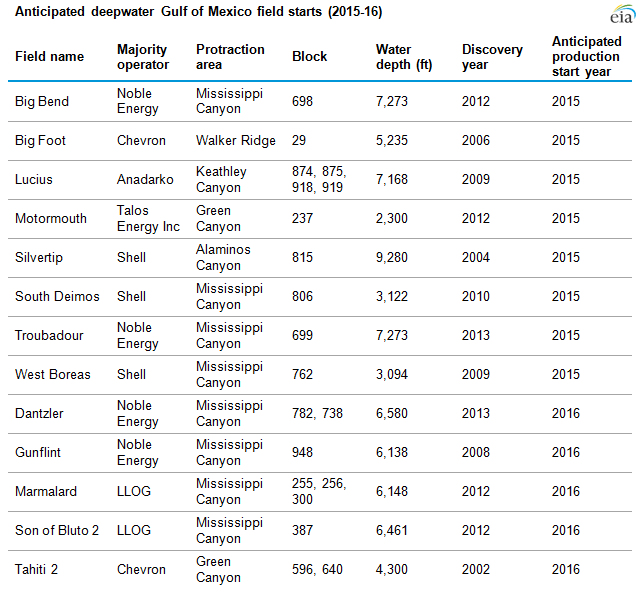
There are sound reasons to think that next year's graph may look quite different, starting with oil. The petroleum industry is still in turmoil from its turning point in late 2014, when OPEC declined to cut its output quota to restore the global oil market to balance. In North America and much of the world, drilling and investment in new projects are down sharply, and US oil production is retreating from the 44-year peak it reached in April. The subsequent decline would have been even more pronounced without the contribution of new deepwater platforms  in the Gulf of Mexico that were planned long before oil prices fell.

However, anyone identifying 2015 as the start of a global shift away from oil, rather than another cyclical low point, must contend with some contrary statistics. Global oil demand appears to have increased by around 2%--equivalent to the output of Nigeria--in response to a 70% drop in oil prices. And despite a lot of media attention, electric vehicles--the leading contender to replace the internal-combustion cars that are the main users of refined oil--have yet to catch on with mainstream consumers.

Based on data from Hybridcars.com, US sales of battery-electric vehicles (EVs) grew slightly faster than the 6% pace of the entire US car market in 2015 but still accounted for less than 0.5% of all new cars. In fact, the combined US market share of hybrids, plug-in hybrids and battery EVs fell by 18%, compared to 2014, to below 3%. This is a respectable start for vehicle electrification, but it's not much different from the beachhead that hybrids alone occupied in 2009.

Although we might look back on this situation in a few years as a turning point, I believe that will depend on the condition of OPEC and the global oil industry, as well as the level of global oil consumption, when supply and demand come back into balance and today's high oil inventories are drawn down.

At the launch of API's latest State of American Energy report earlier this month I had the opportunity to ask Jack Gerard, the President and CEO of API, how he thought the current situation might change the oil and gas industry, and whether it would push it even farther towards shale development, including outside the US. His response focused on ensuring that policies will allow US producers to compete globally and build on the advantages of US resources, capital markets and rule of law to increase their share of the market.

As for US natural gas production, rising per-well productivity and growth in the Utica shale and Permian Basin offset less drilling in general and output declines in the Marcellus shale and elsewhere.  The continued expansion of gas is remarkable, considering that natural gas futures prices (front month) averaged just $ 2.63 per million BTUs for the year and dipped below $2 in December. The LNG exports set to begin this month look very timely.

Renewable energy, mainly in the form of wind and solar power, continues to grow rapidly as its costs decline. US renewables got an unexpected boost in December when the US Congress extended the two main federal tax credits for wind, solar and other technologies, including retroactively reinstating the lapsed wind Production Tax Credit (PTC).  Renewables should also benefit from the implementation of the EPA's Clean Power Plan, and from the effect of the Paris climate agreement on the investment climate for these technologies.

We may not know for years whether the Paris Agreement was truly a turning point for climate change, as many have suggested. Another prescriptive agreement with legally binding targets, along the lines of the Kyoto Protocol, was never in the cards. However, the Paris text is replete with tentative verbs, along the lines of, "requests, invites, recognizes, aims, takes note, encourages, welcomes, etc. "  It remains up to the participating countries whether and how they fulfill their voluntary Intended Nationally Determined Contributions and financial commitments.

The Paris Agreement could turn out to be the necessary framework for firm steps by both developed and developing countries to reduce emissions and adapt to climatic changes that are already "baked in", or it might shortly be overtaken by other events, as previous climate change measures were in the aftermath of the 2008 financial crisis. The current financial problems of the world's largest emitter of greenhouse gases--arguably the most important signatory to the Paris Agreement--are not a positive signal.

With so many uncertainties in play, we should consider all of these potential turning points as signposts of changes that depend on other interconnected factors, if they are to lead to a future that breaks with the status quo. There are enough of them to make for a very interesting 2016, even if this wasn't also a US presidential election year.
 
A different version of this posting was previously published on the website of Pacific Energy Development Corporation.

Tuesday, January 28, 2014

The Pros and Cons of Exporting US Crude Oil

  • Calls for an end to the effective ban on exporting most crude oil produced in the US are based on a growing imbalance in domestic crude quality.
  • At least recently, the ban has likely benefited refiners more than consumers. Assessing the impact of its repeal on energy security requires further study. 
Senator Lisa Murkowski (R-AK), the ranking member of the Senate Energy & Natural Resources Committee, issued a white paper earlier this month calling for an end to the current ban on US crude oil exports. Her characterization of existing regulations in this area as "antiquated" is spot on; the policy is a legacy of the 1970s Arab Oil Embargo. However, not everyone sees it the same way, either in Congress or the energy industry.

This isn't just a matter of politics, or of self-interest on the part of those benefiting from the current rules. Questions of economics and energy security must also be considered. The main reason these restrictions are still in place is that for much of the last three decades US oil production was declining. The main challenges for the US oil industry were slowing that decline while ensuring that US refineries were equipped to receive and process the increasingly heavy and "sour" (high sulfur) crudes available in the global market. The shale revolution has sharply reversed these trends in just a few years.

No one would suggest that the US has more oil than it needs. Despite the recent revival of production, the US still imported around 48% of its net crude oil requirements last year. Even when production reaches its previous high of 9.6 million barrels per day (MBD) as the Energy Information Agency now projects to occur by 2017, the country is still expected to import a net 38% of refinery inputs, or 25% of total liquid fuel supply. The US is a long way from becoming a net oil exporter.

The driving force behind the current interest in exporting US crude oil is quality, not quantity, coupled with logistics. If the shale deposits of North Dakota and Texas yielded oil of similar quality to what most US refineries have been configured to process optimally, exports would be unnecessary; US refiners would be willing to pay as much for the new production as any non-US buyer might. Instead, the new production is mainly what Senator Murkowski's report refers to as "LTO"--light tight oil. It's too good for the hardware in many US refineries to handle in large quantities, and for most that can process it, its better yield of transportation fuels doesn't justify as large a price premium as for international refineries with less complex equipment.

As a result, and with exports to most non-US destinations other than Canada or a few special exceptions effectively barred, US producers of LTO must discount it to sell it to domestic refiners. Based on recent oil prices and market differentials, producers might be able to earn as much as $5-10 per barrel more by exporting it. Meanwhile the refiners currently processing this oil are enjoying something of a buyer's market and are able to expand their margins. The export issue thus pits shale oil producers and large, integrated companies (those with both production and refining) such as ExxonMobil against independent refiners like Valero.

Producers are justified in claiming that these regulations penalize them and threaten their growth as available domestic refining capacity for LTO becomes saturated. Additional production is forced to compete mainly with other LTO production, rather than with imports and OPEC.

I believe producers are also largely correct that claims that crude exports would raise US refined product prices are mistaken. The US markets for gasoline, diesel fuel, jet fuel and other refined petroleum products have long been linked to global markets, with prices especially near the coasts generally moving in sync with global product prices, plus or minus freight costs. I participated in that trade myself in the 1980s and '90s. What's at stake here isn't so much pump prices for consumers as US refinery margins and utilization rates.

Petroleum product exports have become a major factor in US refining profitability, and refiners are reportedly investing and reconfiguring to enhance their export capabilities. This provides a hedge against tepid domestic demand. Nationally, refined products have become the largest US export sector and contributed to shrinking the US trade deficit to its lowest level in four years.  If prices for light tight oil rose to world levels US refineries might be unable to sustain their current export pace. It's up to policymakers to assess whether that risk is merely of concern to the shareholders of refining companies or a potential threat to US GDP and employment.

The quest to capture the "value added"--the difference between the value of manufactured products and raw materials--from petroleum production is not new. It helped motivate the creation of the integrated US oil companies more than a century ago and impelled national oil companies such as Saudi Aramco, Kuwait Petroleum Company, and Venezuela's PdVSA to purchase or buy into refineries in Europe, North America and Asia in the 1980s and '90s.

On the whole, OPEC's producers probably would have been better off investing in T-bills or the stock market, because the return on capital employed in refining has frequently averaged at or below the cost of capital over the last several decades. It's no accident most of the major oil companies have reduced their exposure to this sector. When today's US refiners argue that it is in the national interest to preserve the advantage that discounted LTO gives them they are swimming against the tide of oil industry history.

The energy security case for crude exports looks harder to make. An excellent article from the Associated Press quoted Michael Levi of the Council on Foreign Relations as saying, "It runs against the conventional wisdom about what oil security means. Something seems upside-down when we say energy security means producing oil and sending it somewhere else."  The argument hinges on whether allowing US crude exports would simultaneously promote more production and increase the pressure on global oil prices. That makes sense to me as a former crude oil and refined products trader, but it will be a harder sell to Senators, Members of Congress, and their constituencies back home.

The politics of exports may be easing somewhat, though, as a Senate vacancy in Montana could lead to a new Chair at Energy & Natural Resources who would be a natural partner for Senator Murkowski on this issue. (That shift may incidentally be part of a strategy to help Democrats retain control of the Senate.) Will that be enough to overcome election-year inertia and the populist arguments arrayed against it?

As for logistics, the administration could ease the pressure on producers without opening the export floodgates by exempting the oil output from the Bakken, Eagle Ford and other shale deposits from the Jones Act requirement to use only US-flag tankers between US ports. That could open up new domestic markets for today's light tight oil, while allowing Congress the time necessary to debate the complex and thorny export question.

Senator Murkowski wasn't alone in calling for an end to the oil export ban. In his annual State of American Energy speech presented the day as the Senator's remarks, Jack Gerard, CEO of the American Petroleum Institute, noted, "We should consider and review quickly the role of crude exports along with LNG exports and finished products exports, because of the advantages it creates for this country and job creation and in our balance of payments." In a similar address on Wednesday, the head of the US Chamber of Commerce stated, "I want to lift the ban. It's not going to happen overnight, but it's going to happen."  I'd wager he at least has the timing right.

A different version of this posting was previously published on the website of Pacific Energy Development Corporation.

Wednesday, January 04, 2012

"Energy Reality"

Earlier today I attended a luncheon and press conference rolling out the annual "State of American Energy" report from the American Petroleum Institute. API's President and CEO, Jack Gerard, also used the occasion to launch a new "Vote 4 Energy" campaign, which he described as a non-partisan effort intended to start a conversation about energy during a key election year. He also touched on a number of issues that are very familiar to readers of this blog, including the Keystone XL Pipeline decision, the need for greater access to US energy resources, along with energy security and jobs. A phrase that Mr. Gerard used in his remarks, and that recurred several times during the press conference, was "energy reality." This struck me as an apt encapsulation for the energy policies that should be addressed by President Obama and whomever his Republican challenger turns out to be, from the shrinking pool of candidates.

I was pleased to hear Mr. Gerard cite the need for a full range of energy solutions, with renewables, nuclear energy and energy efficiency prominently mentioned along with the expected references to oil and gas. That is precisely the energy reality we should be pursuing: tapping the hydrocarbon riches with which the US is endowed, in order to reduce our dependence on unstable foreign suppliers, even as we ramp up the wind, solar, biofuel and other renewable energy sources that must take over the energy burden in the long run, and with all of it used more efficiently than today. Yet energy reality should also take account of the tremendous disparities of scale that still exist between conventional energy and renewables, and that are likely to persist for some time. After a decade of rapid growth, wind power accounted for less than 3% of the electricity generated here last year, and solar for much, much less than that--with neither displacing any meaningful amount of imported oil, since less than 1% of our electricity is generated from oil.

Energy reality came up again in the context of a question about the EPA's Renewable Fuel Standard, which was recently finalized for 2012 to require the use of 8.65 million gallons of cellulosic biofuel--a reduction of 98% from the 500 million gallons previously specified for this year in the RFS enacted by the Congress in 2007. Biofuel from corn, soy and animal fat has expanded to contribute nearly 10% of the US gasoline supply and a smaller fraction of diesel fuel. However, a law requiring the use of advanced fuels that don't yet exist in commercial quantities--and may not for many years--and forcing refiners to purchase credits in place of these non-existent gallons is certainly out of touch with objective energy reality and ultimately constitutes another tax on consumers.

I would argue that the decision that the President now has less than 60 days to make on whether to allow the Keystone XL Pipeline to go ahead also hinges on his understanding of energy reality. He must choose between the urgent concerns of employment and energy security articulated repeatedly in Mr. Gerard's answers to numerous questions on the subject, and an objective assessment of the environmental impact it might cause. Stripping away the various red herrings that sprang up in the course of the debates and protests over the pipeline, the latter boils down to the incremental greenhouse gas emissions from the extra oil sands production that the pipeline would facilitate, compared to the emissions from the conventional crude we would otherwise have to import from the Middle East or elsewhere. I've seen some wild exaggerations about that, including the doozy I ran across over the holidays from former Vice President Gore, to the effect that a Toyota Prius running on fuel refined from oil sands crude would have emissions equivalent to a Hummer. (When you do the math, it actually works out to the equivalent of a Ford Fusion hybrid.) In fact, the incremental emissions at stake in the Keystone decision amount to around 0.3% of total 2009 US emissions. That's the basis of the trade-off Mr. Obama must make, and no matter which side he chooses he will infuriate those supporting the other side.

As the 2012 presidential election approaches, I expect to find many opportunities for comparing campaign rhetoric to this kind of energy reality barometer. Elections tend to focus on the differences between candidates, and I have little doubt that the differences on energy will be significant. However, when the dust settles on November 7th it will be high time to start work on a new bi-partisan consensus on energy policy that might actually survive the next change in administrations, unlike the disruptive pattern we've been in for the last five cycles or so. Not reality? Perhaps, but certainly worth aspiring to. Happy New Year!

Friday, March 19, 2010

The Need for Reliable Energy Data

I'm back at my desk after some business travel, and the item in this morning's batch of news that caught my eye concerns the reliability of the oil industry data collected by the Energy Information Agency of the US Department of Energy. The article in today's Wall St. Journal (subscription may be required) described EIA's methods for tallying oil inventories and other industry data as "antiquated and out-of-date." Nor is the Journal the first to draw attention to this issue. Last year US News & World Report published a story that reached a similar conclusion as the Journal: the EIA doesn't have enough money in its budget to do both the work expected of it and improve its processes. Yet I can't help wondering whether the real issue we ought to be focusing on is improving the accuracy of the oil data, or getting the data for other, increasingly important energy sources up to at least the same level of timeliness, comprehensiveness and accuracy as those for oil.

Before writing this, I had a quick conversation with one of the experts at the American Petroleum Institute who is involved in reviewing and analyzing the weekly industry statistics API puts out to subscribers. Although gathered independently and on a voluntary, rather than government-mandated basis, API's reports generally reflect the same underlying data and sources as EIA's. The last time I was actually involved in submitting EIA/API data from an operating facility was in the early 1980s, when everything was faxed in and compiled manually. I was surprised to hear that some of the data still comes in that way, though most of it is apparently gathered electronically, either though electronic data interchange or via email. What he emphasized to me, though, was that regardless of how the data is actually assembled and reviewed, it actually represents an extremely accurate survey, covering something like 85-90% of the industry, with non-filers' results estimated from less frequent census-type reports. That's much more comprehensive than the sampling rate for many of the other economic statistics on which the market depends--and to which it sometimes reacts violently.

One of the problems with any such system involves how the information is used. As long as traders focus so keenly on week-to-week changes, rather than the totals, this will tend to amplify the impact of any errors that creep in. For example, in last week's EIA statistics, the entire US commercial inventory of crude oil stood at 344 million barrels, reflecting a 1 million barrel increase from the previous week. An error of just 2 million barrels in either direction--or 0.3% of the total--could have increased that inventory build to 3 million barrels or swung it to a 1 million barrel drop, with very different outcomes for oil prices. While it would be nice to think errors of that magnitude could be avoided entirely, should the market be so sensitive to such changes, knowing that no assessment like this can ever be made 100% accurate, no matter how precisely it is assembled?

While the system might lend itself to improvements such as requiring electronic data submission by all participants and adding more analysts to scrutinize the filings for errors and omissions, I suspect the more urgent priority is expanding its scope to encompass all of the energy sources on which we now depend. After all, when the current national energy information system was first devised petroleum-based fuels were essentially the whole game for transportation energy, while still accounting for a significant portion of the input to fossil fuel power plants. Today ethanol satisfies roughly 8% of US gasoline demand, and the 14-16 million barrels of inventory that the ethanol industry keeps on hand is the energy equivalent of about 7% of the 200-230 million barrels of gasoline and blending components the oil industry has at any point. Those percentages are mandated by law to grow significantly in the next decade, as biofuels displace petroleum products.

How much longer should we be satisfied with production and inventory data for biofuels that are weeks or months out of date, when we require accurate weekly updates on petroleum and its products? And consider that this picture will only become more complicated as an increasing proportion of our needs are satisfied by various renewable and distributed energy sources. If we can spend billions improving the management and storage of health data, wouldn't it be worth widening our net and spending an extra few million to get a better handle on the energy flows and stocks upon which the entire economy depends?

Wednesday, March 14, 2007

Telling the Story

Last week I was invited to participate in a conference call interviewing John Felmy, the Chief Economist of the American Petroleum Institute (API), one of the energy trade associations I mentioned in my posting of February 27th. At the start of the call, Mr. Felmy framed it as part of the API's effort to tell the industry's story, something that has become more urgent after the hurricanes and high energy prices of the last couple of years. I agree that this is a worthy goal, and it's part of what I try to do on this weblog, as well, though from a somewhat different perspective. The call involved several other bloggers, and I encourage you to listen to it on podcast or read the transcript, both of which you'll find on the API's new EnergyTomorrow site. I'd like to expand on two of my questions, which relate to telling a compelling story about the industry's future, not just its present.

I asked Mr. Felmy whether he thought the industry were adequately positioned, in case it turned out that the DOE's forecast of a virtually unchanged energy mix in 2030 proved wrong, for whatever reason. In his affirmative response, Mr. Felmy cited the example of Shell's cellulosic ethanol investment in Iogen and referred to figures indicating that the industry invested $15 billion, or 11% of its aggregate R&D budget, in non-hydrocarbon energy technology between 2000-2005. Still, this represents a small slice of the industry's total capital expenditures, because investments in oil and gas production and oil refining still present much larger dollar and percentage returns than alternative energy investments, which entail higher risk, or at least a different kind of risk. Whether you consider this prudent or lacking in vision--and there are arguments for both--it creates a real chance that the next generation's energy giants will not only look very different from this generation's, but will include some altogether different companies.

Another question that I posed went to the heart of what a trade association can do on behalf of its members, and what it can't. I asked whether the industry might ever push for access to the substantial off-limits oil and gas resources in the US, on the basis that their total environmental impact would be lower than that of alternatives such as oil sands or coal-to-liquids (CTL). Perhaps I had been hoping for an answer close to the classic Ian Richardson line, "You might very well think that, but I couldn't possibly comment," but of course I didn't get it. I actually concur with Mr. Felmy's assessment that we will ultimately need all these fuels--or at least a contribution from all of them--along with efficiency and conservation.

At the same time, I think the basis of my question still has merit, even if it doesn't reflect the consensus of the industry, or the official view of any company within it. The industry might never ask Congress to make an exception for offshore gas drilling, while leaving offshore oil drilling constrained. It might also never publicly weigh the emissions and other environmental impacts of CTL against those of oil drilling in wilderness areas, but as citizens we ought to consider these things, and under any future greenhouse gas cap-and-trade system we must surely do so. The oil and gas industry may hope to avoid a "battle of fuels", but that is just what it faces, on several fronts; this ought to take place on as informed a basis as possible.

I don't envy the API its job of defending a large, profitable industry on which our entire way of life depends, at a time when so many people distrust big corporations and regard them as engines of income inequality and consumer exploitation. That's a shame, because that attitude won't help us find workable solutions to our energy problems. Quite the contrary, in light of the talent and resources within these companies. At the same time, I think it's helpful to have bloggers out there who understand the industry, but are able to say the things that it can't, or won't. This all contributes toward reducing the widespread misunderstanding and suspicion of the way the energy industry functions and the role it plays in modern life.

Tuesday, February 27, 2007

Shifting Trades

Trade associations are extremely useful barometers of industry sentiment on key issues. When a cluster of energy trade associations shifts their positions on climate change, it's noteworthy. Today's Wall Street Journal reports that three of the big energy trade groups have recently expressed their support for mandatory federal regulation of greenhouse gases. Since the energy industry sits at the heart of the global warming challenge, it's important to understand just what these decisions are saying about the overall posture of the industry on the issue. The industry's value chain provides the right context for assessing this.

The three trade associations in question, the American Gas Association (AGA), Edison Electric Institute (EEI) and Electric Power Supply Association (EPSA) represent a large portion of the industry's mid-stream. At least with respect to the fossil fuels most associated with greenhouse gas emissions, the members of these groups are neither the primary producers of energy nor its end-users, but rather convert it from fuel into electricity, or transport it from producer to consumer. That doesn't mean their operations and profitability wouldn't be affected by a cap-and-trade system for CO2, or a carbon tax. But most of the utilities and pipeline companies belonging to these groups could reasonably expect to be able to pass along most of the economic impact of these regulations, in higher prices or tariffs. This is a very different position from that of the primary producers of oil, gas and coal.

Looking at the main oil, gas and coal trade associations confirms that view. The American Petroleum Institute (API) represents most of the big upstream and integrated players, the household-name companies that consumers associate with energy. The Independent Petroleum Association of America (IPAA) covers the smaller producers. The National Mining Association includes most of the country's coal producers. The National Petrochemical and Refiners Association (NPRA) is self-explanatory. None of these groups has come out in favor of carbon limits, nor should we expect to see that soon.

For most of the members of these groups--with the exception of companies with a big stake in natural gas--limits on carbon translate into lower future demand, less growth, and lower profits. Petroleum refiners, in particular, have experienced decades of environmental regulations that added significantly to their capital and operating costs, without providing an opportunity to recoup these costs. Because trade associations generally work on the basis of a consensus of their membership, the bigger changes in this sector will occur first at the company level, rather than by the trades. In fact, when we look at the positions of the big oil and gas firms, we see a diversity of viewpoints, including the recent clarification of ExxonMobil's position and the alignment of BP and Shell with groups such as the Pew Center on Global Climate Change, a big supporter of emissions trading.

At the same time, through their contacts in Congress and the Administration, all of the energy trade associations must be seeing the sea change on this issue since the last election, and reporting to their members on the likelihood of federal carbon controls being enacted within the next three years. These groups may find it increasingly difficult to ensure their participation in the shaping of emissions legislation--and the opportunity to inject important considerations such as the relationship between domestic energy production and energy security--as long as they are seen opposing a US carbon cap in principle. While today's story on the move by AGA, EEI and EPSA is an important signpost, the bigger milestone, in which the API, NPRA, IPAA and NMA would throw their support behind emissions trading, depends on the recognition by most of the nation's producers of primary energy that it's better for them and their shareholders to be seen as part of the solution, rather than part of the problem.