Friday, June 07, 2013

Could US Oil Trends Alter How Oil Prices Are Set?

  • Oil prices weren't always set by a transparent global market. Current pricing mechanisms emerged from much less transparent precursors.
  • Resurgent US production, combined with restrictions on US oil exports, could disconnect the US from the global oil market, with unexpected results.
If you follow energy closely, you've likely lost count of the number of times you've heard an economist, executive or government official explain that oil prices are set by the global market, and not by oil companies or the US government.  Although somewhat over-simplified, this statement has been valid for roughly 30 years.  However, it hasn't always been the case. Current trends in US production, together with existing regulations, make me wonder if it will remain accurate in the future, as the US inches closer to what is commonly referred to as energy independence. 

The market-based system of oil prices, with its transparency and easy trading among regions, didn't appear overnight.  Until the early 1970s, Texas played a role similar to Saudi Arabia's current swing producer role within OPEC.  By limiting the output of the state's oil wells, the Texas Railroad Commission effectively determined the global price of oil--to the extent there was one--until Texas had no spare capacity left.  That set the stage for OPEC, a succession of oil crises, and the US oil price controls that were imposed in the 1970s in an attempt to help manage inflation. There was also no single, representative oil price.  Instead, prices were set by producers' contract terms and the discounts large refiners could negotiate, or by federal regulations.  The current system emerged from a series of developments in the 1980s.

When US oil price controls ended in 1981, oil futures trading was just getting underway on the New York Mercantile Exchange.  The heating oil contract was launched in 1980, followed by the West Texas Intermediate (WTI) crude oil contract in 1983. This combined large-scale oil trading with an unprecedented level of transparency.   It was also significant that the US, the world's biggest oil consumer, had become a major oil importer after domestic production peaked in 1970.  Because refineries on the coasts competed for oil supplies with refiners on other continents, the price of WTI couldn't get too far out of line with imported crudes without creating arbitrage opportunities for traders.  And any part of the US connected by pipeline to the Gulf Coast was effectively linked to oil prices in Europe, the Middle East and Asia.

After OPEC miscalculated the response to the very high prices its members were demanding in that period--reaching $100 per barrel in today's dollars--global oil demand shrank by nearly 10% from 1979 to 1983, while non-OPEC production grew by more than 12%.  Prices soon collapsed, and OPEC's dominance of oil markets faded for most of the next two decades, during which the futures exchanges and trading relationships of the modern oil market took hold. 

What could shake the current system of oil prices?  It has already withstood recessions, wars in the Middle East, the collapse of the Soviet Union, and the explosive growth of Asia, with China alone adding oil demand comparable to that of the EU's five largest economies.  However, since the current system is based on the free flow of oil between regions, anything that impedes that flow could undermine the way oil is currently priced.

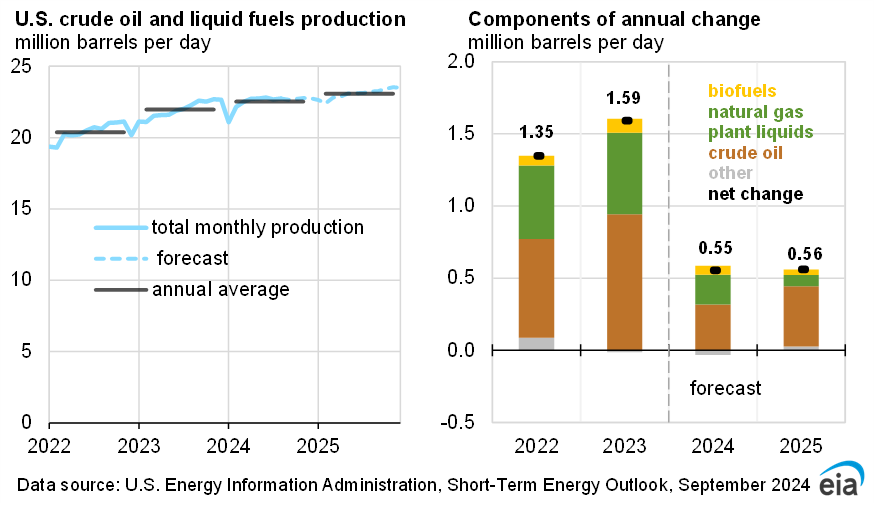
Setting aside conflict scenarios, consider the potential impact of sustained growth in US production, combined with flat or declining demand and no change in the current prohibition on most US crude oil exports.  The gyrating differential between WTI and UK Brent crude, reflecting rising production in the mid-continent and serious logistical bottlenecks, provides a glimpse of what this could be like.  With much of the new US production coming in the form of oils lighter than those for which most Gulf Coast refineries have been optimized, keeping rising US crude output bottled up here could result in US crude prices diverging even farther  from global prices, while forcing US refineries to operate less efficiently and import and export more refined products.  With oil imports drastically reduced and oil exports still banned, US oil prices might be influenced more by the global market for refined products, with its different dynamics and players, than by the global crude oil market .

In some respects, that sounds a lot like what many politicians and "energy hawks" have been seeking for years: a US no longer subject to foreign oil producers' price demands.  Yet this same scenario could yield all sorts of unintended consequences, including a less competitive US refining industry and higher or at least more volatile prices for gasoline, diesel and jet fuel.  And just as we've seen with cheap natural gas, cheaper oil could undermine the economics of the unconventional oil and gas production that makes it possible in the first place. 

US oil export policy merits a thorough reevaluation, and soon, because the regional impacts of a continued no-export stance could become pronounced, even if the US never reached overall oil self-sufficiency. Such a review should include related regulations, such as the Jones Act restrictions on shipping. With crude oil exports to Canada -- virtually the only allowed export destination for our newly abundant crude types--already rising rapidly, some Canadian refineries may be positioned to supply US east coast fuel markets more cheaply than refineries in New Jersey.  That certainly qualifies as an unintended consequence.

A slightly different version of this posting was previously published on the website of Pacific Energy Development Corporation.

Monday, June 03, 2013

...and Two Steps Back for Cleantech

  • The Better Place bankruptcy ends an interesting effort to circumvent some big impediments to the wider adoption of electric vehicles.
  • DESERTEC's original concept would have matched European solar investment with superior North African solar resources, but was no match for European politics.
Within the last week two of the previous decade's Big Ideas for accelerating the shift from fossil fuels to renewable energy--or at least to electricity generated from a variety of cleaner sources--have come up short.  On May 26th electric-vehicle-battery-swapping firm Better Place filed for bankruptcy liquidation in Israel, and just a few days later the DESERTEC Foundation reportedly "abandoned its strategy to export solar power generated from the Sahara to Europe".  Both of these concepts originally looked promising, and I take no satisfaction in their apparent failure.  However, these events must be telling us something.

Better Place was aimed squarely at two of the largest perceived barriers to wider acceptance of electric vehicles (EVs): the limited range of today's EV batteries and the relatively long times required to recharge them, compared to a typical three-minute fill-up at the gas pump.  Better Place's big idea involved the standardization of EV battery packs on a design that could be quickly removed from the vehicle and robotically replaced with a fully charged battery. This required large up-front investments in facilities and hardware, but the firm didn't fail for lack of capitalization. 

Despite having raised around $800 million since its founding in 2008, and convincing French carmaker Renault to produce vehicles designed to work with their technology, Better Place failed to standardize the emerging EV battery market.  Tesla used a different battery configuration from the start and has focused on its own fast-charging technology, while even Renault's global alliance partner Nissan didn't make compatibility with Better Place a standard feature of its Leaf EV in markets like the US or Australia. That led Better Place to invest in building more-conventional EV recharging networks to accommodate other EVs, diluting both its capital and its concept. 

I see two lessons here. First, EVs and related services are still a niche market, and in spite of its aspirations Better Place became a niche within this niche, largely dependent on the success of EV manufacturers at growing their potential market.  That's a poor place from which to launch a business that ultimately depends on achieving high volumes.  The other lesson is that when you can't make sense of a company's revenue and working-capital model, there's probably a good reason.  At this stage in their development, EV battery packs are apparently still too expensive to sit idle in large numbers, waiting for a swap, when the hardware to exchange them requires the same retail footprint as a car-repair bay--all this to support a service arguably only worth a few hundred dollars per year to an EV owner, compared to the normal cost of recharging.

DESERTEC's big idea was even simpler than Better Place's.  A well-sited solar array in North Africa would inherently generate at least twice as much electricity per year as the same array in Germany, the Netherlands, or Belgium.  All else being equal, it would make more sense to invest in solar where the sun shines brightly for more than 6 hours a day, on average, and to send it by wire to the cloudy, northern countries that want more green power.  Of course physics can't always trump politics, and I suspect that this has more to do with DESERTEC's withdrawal from its basic concept than the cited concerns about transmission capacity and grid congestion across Spain and France. 

Politics enter the story in two main ways.  Renewable energy in the EU is deeply entangled with industrial policy and green jobs. From that standpoint, it's even better if a PV panel in Germany produces half the output as one in Morocco, because you can sell twice as many, all installed by local firms and workers. Then there's the interaction between the EU's generous solar subsidies and the solar manufacturing incentives in Asia and elsewhere, resulting in enormous overcapacity, relative to demand, and a now-global wave of solar bankruptcies and defaults.  This has pushed PV module prices down to a level at which the other costs of solar energy, including installation and transmission, begin to outweigh the module costs. That erodes North Africa's solar advantage relative to its northern neighbors. Throw in the lingering effects of the financial crisis, and a once-big idea looks like an unworkable dead end, at least for now.

Neither the failure of Better Place, which might yet find a bargain-hunting savior, nor the retreat of DESERTEC looks like a mortal blow to the long energy transition now underway.  However, they do suggest that the timeline is a little less likely to be shortened by the kinds of big leaps they offered.  EVs will have to gain market share the hard way, with better, cheaper batteries and ample recharging infrastructure--plus continued taxpayer subsidies--while inefficient solar subsidies continue to divert investment away from some of the world's best renewable energy resources, keeping the technology's global contribution smaller for longer.    

Thursday, May 23, 2013

Can Energy Storage Make Wind and Solar Power As Reliable As Coal?

Wind and solar power generated 3.5% and about 0.1%, respectively, of US electricity last year.  These figures represent large increases from much smaller levels in the last decade as the cost of these technologies declined significantly, particularly for solar photovoltaic (PV) modules. However, other barriers to wider deployment remain, including their intermittent output.  Energy storage is often portrayed as the killer app for overcoming the intermittency of renewables, and a number of interesting developments have occurred on this front, including a new "hybrid" wind turbine with integrated storage from GE. To what extent could more and cheaper storage enable wind and solar to function as the equivalent of high-utilization, baseload generation? 

Assessing that potential requires, among other things, recognizing that energy storage is neither new nor monolithic. Nor is the intermittency of renewable energy a single challenge.  For example, the output of a wind turbine and the wind farm in which it operates varies on time scales of minutes, hours and days, as well as months and years.  The output of a PV installation varies somewhat more predictably, but no less dramatically. 

Generating companies and project developers have an array of new storage options, involving various battery technologies, flywheels, and compressed air. Pumped storage, in which water is pumped uphill and generates power later when it flows back downhill, is an old, though hardly obsolete option and already operates on a large scale. According to the National Hydropower Association the US has 22,000 MW of installed pumped storage. This, too, is expanding and remains one of the cheapest forms of power storage in terms of cost per megawatt-hour (MWh) delivered.   Enough new projects have received preliminary permits to more than triple that figure, in 23 states.

All of these storage alternatives have limitations or drawbacks.  Batteries and flywheels, while very responsive, are still expensive.  Compressed air storage often relies on unique local geological features, and some versions essentially function as a supercharger for a gas-fired turbine, resulting in some emissions. Pumped storage works well at a variety of scales but is less responsive than batteries, has a larger physical footprint, and requires suitable terrain. 

What makes GE's "brilliant turbine" with battery storage look clever is that, with the help of predictive models, it requires a very small amount of battery storage--perhaps as little as that in an electric car--to smooth the output of the turbine for 15 minutes to an hour. That provides significant benefits, including financial ones, in terms of integrating it predictably into the power grid. However, it doesn't transform the turbine into a fully dispatchable generator capable of sending power to the grid whenever demanded.  That would require storing much more energy per turbine and delivering it at rates sufficient to replace the entire output of the installation for at least several hours, along the lines of concentrated solar power installations with thermal storage.

Even these techniques don't get us to the point at which a dedicated wind farm or solar installation could replace a baseload coal-fired power plant of similar capacity running 80% of the time.  For starters, energy storage doesn't alter the total amount of energy collected from the wind or sun.  In an area with good onshore wind resources, generating the same energy as 100 MW of coal capacity would take around 267 MW of wind turbines, because the wind doesn't blow at optimum speed all the time, and other times it doesn't blow at all. The wind farm would also need enough storage to absorb any output over 100 MW, and then make up any shortfalls below 100 MW for the longest duration that would be expected.  The figures for a solar installation would be similar. It just doesn't sound very practical, unless storage became dirt cheap.

Fortunately for renewable energy developers, that isn't what grid operators expect of wind or solar.  In most situations the local grid takes their output whenever it's available, though not necessarily at the price that a generator capable of committing its capacity in advance or responding on demand would receive.  So there's a financial incentive for renewables to add a bit of storage to "firm up" some capacity, while bulk storage appears to be more desirable as a separate asset available to the grid, just like a "peaking" gas turbine, to support multiple renewable sources. Of course in that case there's no guarantee that the power stored would come from renewables.  It's likelier to come from whatever is the cheapest off-peak generation in that market.

So while it's easy to see how improved energy storage can enhance the economics of renewable energy and enable it to be integrated into the grid to a greater extent than otherwise, it's less obvious that even cheap, large-scale energy storage is a panacea for intermittent renewables like wind and solar.  It might even have greater benefits for low-emission but more reliable forms of generation, such as nuclear and geothermal, by allowing them routinely to shift a set portion of their output into more valuable segments of the regional power market. 

Disclosure: My portfolio includes investment in GE, which makes products mentioned above.

Thursday, May 16, 2013

The 2013 Energy Trust Barometer: Mixed Readings

Yesterday's panel discussion in Washington, DC on "The Trust Factor" in energy couldn't have been more timely. The stakes for lost trust seemed especially apparent against the backdrop of an EU probe into allegations of price fixing in the spot oil market, involving some of the industry's largest players, and coverage of the IRS and Associated Press wiretapping scandals.  The session was hosted by The Energy Collective and communications firm Edelman, which presented the energy-related findings from its latest annual Trust Barometer.  The theme of this year's survey was a "Crisis of Leadership."

Edelman found a small improvement in the US public's trust for the energy industry, compared to last year.  Yet energy's trust level of 59%, which is slightly better than government's 53%, falls far short of the 80% trust score for the technology sector, followed by the automotive, food and beverage, and alcoholic beverage industries in the 70%'s. Energy's position isn't encouraging, considering its importance to the overall economy, but the details resist a blanket assessment.  Meanwhile, non-governmental organizations (NGOs) enjoyed a big jump in trust from 2012 to 2013, up to 70%.

Trust levels within energy differed widely by energy source, with a 30% gap between renewables, which garnered 65%, and oil at 35%.  Natural gas and utilities came in near the average for energy as a whole, reflecting closer customer connections for the latter, and the technology-driven, cost-saving growth of the former, notwithstanding concerns about hydraulic fracturing.  Although renewables have been involved in some messy bankruptcies and an ongoing debate over subsidies, their reduced environmental impacts and links to cutting-edge R&D puts them closer to the technology end of the trust spectrum.  Oil--arguably just as technology-focused as renewables--suffers from the fallout from events like Deepwater Horizon, and perceptions of inadequate stakeholder engagement.  Yet this disparity in trust levels also creates mutually beneficial opportunities for partnership.

I thought the most surprising findings were those describing how the factors that affect trust have evolved in recent years. In the past trust could be earned by simply focusing on operational results, including financial performance and company rankings; now that's just the cost of admission. Engagement with customers and employees, along with business ethics and transparency, topped the list of today's trust factors. This might explain at least part of the gulf between oil and renewables.  In my experience, oil executives live and breathe operations and shareholder returns, although broader definitions of stakeholder relations have been gaining ground in the last decade or so.  Yet the insular nature of these businesses, which have lived under decades of regulatory and anti-trust scrutiny, works against their embrace of new media and other tools of open engagement with both customers and critics.

The panel discussion that followed the Edelman presentation was also quite interesting.  Paula Gant of the American Gas Association memorably described the synergies between natural gas, renewables and energy efficiency as a symphony.  Jason Walsh of the Department of Energy's Office of Energy Efficiency and Renewable Energy addressed concerns about the reform of subsidies for renewable energy, while reminding the audience that private investment in renewables stood at $269 billion last year.  Peter Nelson, communications director of Resources for the Future, a nonpartisan, highly trusted NGO, offered his thoughts on the politicization of environmental issues, which seems linked to polarization over climate change.  Robert Dillon, communications director of the US Senate's Energy and Natural Resources Committee, pointed out that much of the current debate is over facts, asking, "Who owns the facts?"  The panel was moderated by Paul Bledsoe, a veteran of Congress, the White House and policy circles.  His comment that, "It's a stakeholder world, not a shareholder world," encapsulated what might have been the key takeaway of the day for companies. 

As good as the panel discussion was, when I left I was still mulling over an implication raised by Amy Hemingway of Edelman in her remarks at the start of the session.  Energy policy involves the intersection of government and energy companies.  It surely complicates the challenging tasks we face, with regard to resource management and environmental stewardship, that much of the public doesn't trust government or energy to solve our important problems.  Both institutions suffer from serious trust gaps, while NGOs, who as one panelist observed have significantly fewer constraints on their statements and actions, enjoy more trust than either one (or both together?)  Especially for the energy industry, getting things done increasingly requires more than good plans and solid returns. Its "license to lead", as another panelist described it, must be earned by engaging in activities that usually aren't second nature for experienced engineers and finance experts.

Thursday, May 09, 2013

How Is Expanding Oil and Gas Production Consistent with Addressing Climate Change?

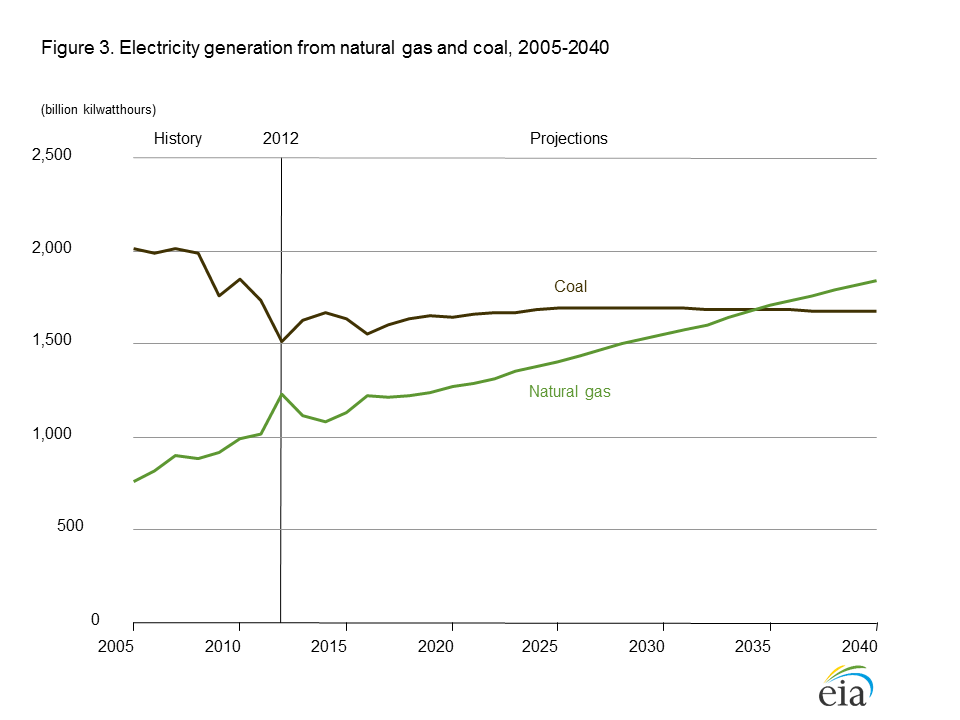
Last month the International Energy Agency (IEA) reported that the amount of carbon dioxide emitted for each unit of global energy use was essentially unchanged between 1990 and 2010, despite the implementation of global climate agreements and the expenditure of hundreds of billions of dollars for renewable energy projects and incentives. Just a few days earlier, the US Environmental Protection Agency released its annual inventory of US greenhouse gas (GHG) emissions, showing a 1.6% reduction from 2010 to 2011. US emissions were up 8% since 1990 but have fallen 5% since 2000 and nearly 8% from their pre-recession peak in 2007. Much of the US's recent divergence from the global trend is attributable to the displacement of coal from the power sector by shale gas.

As unwelcome as the IEA's finding was, it is unlikely to have shocked anyone who understands the scale of global energy systems and the continued reliance of many developed and developing countries on coal for power generation. The transition to lower-carbon energy systems is underway, as reflected in the details of the IEA report. However, it will take additional decades to reach targets consistent with limiting the projected global temperature increase to 2° C, which the IEA indicates would require a 60% reduction in the carbon intensity of energy by 2050 from current levels. That implies that energy companies still need to develop additional oil and gas resources in the interim, in order to support the economic activity that--among other things--will be necessary to fund the recommended investments in cleaner energy and energy efficiency.

At first glance that might seem paradoxical. After all, oil and gas account for 55% of US GHG emissions and around 40% of global emissions today. However, when gas displaces a higher-emitting fuel like coal, global emissions fall. This has been a matter of some controversy, due to uncertainty about the contribution of fugitive methane emissions from shale gas wells. Yet the estimates in the EPA inventory indicate that methane emissions from US natural gas systems actually fell by 9% between 2005 and 2011, even though US natural gas production grew by 27% over that interval, with shale gas output increasing by 950%. A new analysis from ExxonMobil indicates that on a lifecycle basis, replacing coal with shale gas in power generation reduces GHG emissions by an average of 53%, while also reducing overall freshwater consumption by half.

Assessing the role of oil in the decarbonization of global energy is more complicated. Oil exploration and development must continue, even in a static or eventually shrinking market, because reserves that have been produced must be replaced, by either new discoveries or further development of existing fields. Simply allowing today's oil fields to decline and hoping to make up their energy contribution from other sources would be very risky, particularly for the transportation sector with its extremely high reliance on oil. Moreover, four-fifths of the emissions from petroleum occur during end-use combustion. That means that most emission reductions from petroleum must come about through reduced demand, via some combination of increased fuel efficiency, fuel substitution--particularly in those markets where oil is still used in electricity generation--and/or reductions in transportation metrics such as vehicle miles traveled.

In a recent Bloomberg op-ed, Michael Levi of the Council on Foreign Relations considered the impact of increasing US oil production from the standpoint of both the "social cost of carbon" and its incremental contribution to global emissions. He concluded that even at a high estimated environmental cost, the climate impact of an extra barrel of US oil would come in under $10 per barrel, well below its economic value. He also concluded that significantly higher US oil production would add little to global emissions. Its impact would be even smaller if OPEC producers reduced output to try to preserve high oil prices. Mr. Levi addressed that scenario in an earlier op-ed.

Last month's IEA report concluded that the world is not yet on track to reduce emissions by enough to limit temperature increases to 2° C, and more must be done. Yet even if we were on that track, the IEA forecasts upon which the report was based suggest that combined oil and gas consumption in 2035 would still be about 2% higher in 2035 than in 2010, with a bit of a shift from oil to gas. On today's trajectory, both oil and gas will grow, even as renewable energy and energy efficiency expand significantly. On either basis, an all-of-the-above approach to energy encompassing oil and gas, along with renewables, carbon sequestration, nuclear power and efficiency is fully consistent with addressing climate change.

A slightly different version of this posting was previously published on the website of Pacific Energy Development Corporation. 
Wednesday, May 01, 2013

Ex-Shell Chief Hofmeister Promotes US Fuel Diversity

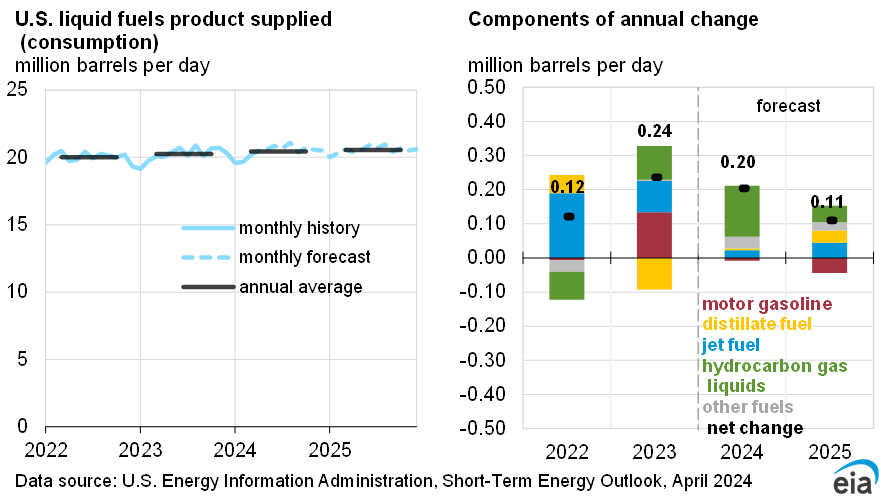
Alternative fuels have lost some of their luster in the US, lately, for understandable reasons.  Oil production here is booming based on shale resources that keep expanding, while the market for ethanol, our most successful alternative fuel, has stalled at the long-anticipated "blend wall", resulting in ethanol plant closures and bankruptcy filings.  More advanced cellulosic biofuel is still only available in minute quantities, and last year's sales of electric vehicles will displace less than 24 million gallons per year of gasoline--around 0.02% of US gasoline demand.  With all this in mind, it seemed like an excellent time to speak with former Shell Oil Company President John Hofmeister, who recently joined the advisory board of the Fuel Freedom Foundation, a group dedicated to expanding fuel diversity. 

I don't conduct many interviews for Energy Outlook, but I wouldn't have missed the opportunity to discuss energy with Mr. Hofmeister.  Given the focus of Fuel Freedom Foundation, which arranged the call, I started by asking him what kind of changes he expects in the US fuel mix over the next 10 years.  Mr. Hofmeister replied that his outreach efforts at Fuel Freedom, together with Citizens for Affordable Energy, which he founded after retiring as head of Shell's US operations, are intended to "make sure something has changed 10 years out. Left to our own devices, not much will change."  With plans and "enablers of change" from government, he sees an opportunity to "transform the nation in 10 years." He went on to describe what that transformation might include, in the form of further decreases in our dependence on imported oil and more "inward investment".  He also clarified that he includes domestic oil in his list of alternatives. 

When I asked him about the barriers impeding the fuel diversity that he advocates, he immediately mentioned the interest groups that spring up, pro and con, whether concerning oil, natural gas, the lifecycle and materials for advanced vehicle batteries, or infrastructure for hydrogen fuel cell vehicles.  He would like to see federal and state governments enable change and "tell the interest groups to back off."  He observed that despite the shale revolution, "we still rely on imports and can't agree on creating new markets for natural gas" or to build the Keystone XL pipeline.  These disagreements stifle development. Together with federal regulation of hydraulic fracturing, this results in "government as disabler", not enabler of change.

We had a lively conversation about some of the specific fuels that would make up the more diverse mix Mr. Hofmeister would like to see in the marketplace, such as methanol, ethanol, natural gas and electricity.  I expressed some of my own concerns about the energy-equivalent cost of methanol and the safety risks involved in its use on the service station forecourt.  He replied that with expanded supply based on abundant US natural gas, the price of methanol could fall significantly from today's level of $1.60/gal. (equivalent to wholesale gasoline at $3.25/gal.)  That's certainly conceivable, because at a typical 70% conversion efficiency, the natural gas feedstock to produce a gallon of methanol would only cost about $0.37 at recent industrial gas prices.  He also envisioned fuels like this being dispensed in a closed system, to maximize safety.

We discussed natural gas as a bridge fuel for vehicles and whether it might be hard to get off this bridge, later.  In response he pointed to what he called the "EV lifestyle"--the improved convenience and driveability already experienced by EV owners who don't need extended driving ranges--and seemed to agree with my own view of electrification as  a given in the long-run.  He also suggested that this transition could be promoted by a coherent and comprehensive plan.  Earlier, he had pointed out that the administration's "all of the above" approach was just a concept, not a plan, because it lacks the targets, milestones and accountability necessary for a real plan--a point on which an ex-CEO and current strategist were bound to agree.

I couldn't end the interview without asking Mr. Hofmeister whether the tremendous recent turnaround in US oil production had led him to alter his idea, expressed in various talks and in his book, "Why We Hate the Oil Companies," for the US to establish an energy equivalent of the Federal Reserve Bank.  "I'm convinced it's the way to go," he said. "There's too much politics in energy policy now." He believes an "Energy Reserve Board" would stimulate the economy with investments focused on short, medium and long-term goals.  "What energy needs is consistency."

My half-hour conversation with him validated my view that John Hofmeister isn't your typical oil guy.  His ideas are grounded in the scale and complexity of the energy industry, but not bound by its conventional wisdom.  Although I didn't agree with all of them--particularly concerning the degree of government intervention necessary--his responses to my questions were forthright and reflected long and careful analysis, along with a strong sense of the benefits available to the US from a more rational and planned approach to our national energy endowment and opportunities.

Friday, April 26, 2013

Engineering Carbon Out of Energy

  • Because of the slow progress in displacing fossil fuels with renewables, carbon capture and sequestration should receive much more attention as a game-changing technology.
  • The challenges that must be overcome for CCS to be deployed on a large scale remain significant.

Yesterday I ran across an excellent article in The Atlantic on the importance of carbon capture and sequestration (CCS).  In light of last week's warning from the International Energy Agency that efforts to reduce the carbon intensity of global energy have yielded minimal results over the last two decades, the authors' chosen title, "Learning to Live with Fossil Fuels", seems particularly apt. Although neither they nor the IEA are suggesting we abandon renewable energy, they do effectively question the conventional wisdom that climate change can only be addressed by abandoning coal, oil and natural gas within the next decade or two. 

I'm predisposed to their argument, because it aligns with my own view--the result of long and careful analysis--that the transition to a low-carbon economy is going to take a lot longer than optimists hope.  A speaker at yesterday's policy briefing on renewable energy from the Worldwatch Institute and REN21, marking the annual release of the latter group's always-useful Renewables Global Status Report, stated that long-term energy scenarios in which renewables don't significantly increase their market penetration are no longer credible, and that only scenarios including medium-to-high penetration rates by mid-century are credible today.  I had to wonder whether he had been looking at the same data as the IEA, even though he cited their "2DS" scenario in support of his view.  Sarewitz and Pielke, Jr. appear to take quite the opposite view in The Atlantic: We cannot ignore the potential of CCS, because it is not self-evident that renewables will sweep away carbon-based energy any time soon, for reasons of economics, politics, and "complex social arrangements." 

In their brief article, they do a good job of summing up the major options for capturing CO2, including some of the major challenges to be overcome, as well as how the captured CO2 might be used or disposed.  Underground storage, enhanced oil recovery, and conversion back into fuels are all technically feasible, despite significant obstacles of public acceptance, logistics, and cost. However, I believe they seriously underestimate the challenges of capturing CO2 from the air, instead of power plant smoke stacks. 

The desirability of doing so is clear; the atmosphere is everywhere, convenient to whatever use to which me might put the captured CO2, while power plants aren't always located near the oil fields, saline aquifers, or fuel markets that offer the best potential for storage or reuse. The problem is that, while 397 parts per million (ppm) of CO2 in the air is high enough to cause great concerns about global warming, it is still quite low in engineering terms.  Expressing it as a percentage it's 0.04%, or about 1/1000th the typical concentration of CO2 in flue gas.

Before writing this post I literally dusted off one of my old chemical engineering texts to look up the equations of mass transfer.  I was reminded that the flux, or flow, of molecules from one fluid into another--from air into the capture medium, for example--is proportional to the difference in their concentration in the two fluids.  What that means in practical terms is that extracting the same quantity of CO2 from the air as from flue gas will entail larger and more complex hardware, more energy, and probably a much higher cost per ton, barring a breakthrough that emulates green plants, which use chlorophyll, sunlight, water and nutrients to do this cheaply on a vast scale every second of the day during the growing season.

In any case, have a look at the article and give some thought to how CCS might, as the authors suggest, "transform the political debate" around mitigating climate change.

Monday, April 22, 2013

Will Water Limit Fracking in Arabia?

  • Poor water availability could hamper efforts to develop Saudi Arabia's shale gas resources, in order to meet growing gas demand from Saudi industry.
  • Water recycling and alternative fracking fluids could provide the solution.  

Recent comments by Saudi Arabia's oil minister, Ali Al-Naimi, indicated that Saudi Aramco would soon begin exploring the country's shale gas resources. As another means of reducing oil consumption in the Kingdom's electricity sector, in order to preserve oil exports, this appears to make both practical and economic sense. However, as noted by the Wall St. Journal, compared to the US Saudi Arabia has much less water available for the hydraulic fracturing of shale and tight gas reservoirs. Absent a reallocation of its substantial conventional gas production, Saudi shale gas could become a key factor in global energy security. However, the techniques employed to extract it might be different from those that currently dominate the US shale gas scene.

It must seem odd that Saudi Arabia would even be interested in shale gas, a resource that wasn't exploited in the US until conventional gas production was declining steadily. Saudi Arabia might still be the world's largest oil producer, at least for now, but it is not the "Saudi Arabia of natural gas". Although the country has proved gas reserves comparable to those of the US, it apparently didn't win nature's gas lottery on the Arabian Peninsula. Saudi gas reserves and production amount to only about 10% and 19%, respectively, of the Middle East's gas totals. Iran and Qatar are far ahead. And while Saudi gas production has doubled since 2000, output in neighboring Qatar has expanded by a factor of six in the same interval.

Much of the Kingdom's conventional gas reserves are associated with oil production and are often required to be reinjected to maintain reservoir pressure and oil output. Available Saudi gas has been preferentially allocated to industrial projects, such as petrochemicals expansion. As a result, little new gas was supplied for power generation, so the Saudi electricity sector has been burning large and increasing quantities of oil that could otherwise be exported. The need for additional gas has become acute, but exploration in the vast Empty Quarter has not yielded the expected gas bonanza, while the internal price of natural gas has been constrained at levels well below even recent low US natural gas prices--too low to make most new production attractive on its own merits.

As if the economics of shale gas development weren't challenging enough in such an environment, the key ingredient that has fueled the US shale revolution, water, is in short supply in Saudi Arabia. The needs of cities and industry in this arid country exceed the water supply from aquifers to such an extent as to require 27 desalination facilities, delivering nearly 300 billion gallons annually. At several million gallons of water per hydraulically fractured shale gas well, the logic of burning oil to desalinate water to produce gas looks questionable. Fortunately, there are multiple emerging pathways for reducing or eliminating net water consumption in "fracking".

For starters, many US producers now routinely recycle the 10-30% of injected water that typically flows back from the well after hydraulic fracturing, for use in subsequent wells. Recycling has become the standard in places like Pennsylvania's portion of the Marcellus shale, reducing the call on fresh water for fracking. The oil services industry offers various techniques for cleaning "flowback" water, and new ones are under development, including the use of algae.

Drillers can further reduce freshwater consumption through the use of nitrogen in foam or other forms. ERDA, a precursor of the US Department of Energy, conducted research on that technique in the 1970s, and it has been refined since then. Nitrogen is readily available from air separation plants and does not depend on water, though it does require energy.

Another approach for waterless fracking has been field-tested in Canada, using gelled propane. A blog post in Scientific American described some of the pros and cons of this method, which is more expensive where water is cheap but might fit the bill in dry regions where LPG is readily available. For that matter, it might make sense in New Mexico if the Mancos Shale of the San Juan Basin turns out to be another viable tight oil play.

The upshot is that a shortage of fresh water shouldn't constitute an insurmountable obstacle to exploiting Saudi Arabia's unconventional gas resources, which Mr. Al-Naimi cited at 600 trillion cubic feet. However, it remains to be seen whether shale gas development is the best answer to a problem that has been created by selling natural gas to industry for as little as $0.75 per million BTUs, while burning $100 oil ($17 per million BTU) to generate electricity. Whether the ultimate solution is shale gas or something else, resolving this gap in Saudi industrial policy could have a significant impact on future oil prices.

A slightly different version of this posting was previously published on the website of Pacific Energy Development Corporation.  

Wednesday, April 17, 2013

How Will Oil's Current Slide Affect Gasoline Prices?

  • How far could crude oil prices fall, and what does it mean for US pump prices this summer?
  • The broad trends behind oil's current weakness could persist for some time. 

We all carry assumptions around with us.  For many who follow energy one such assumption is that oil prices, and thus gasoline prices, generally rise over time.  In an otherwise fairly well-reasoned blog post I read yesterday, that logic underpinned the case for electric vehicles (EVs) becoming more attractive to consumers.  Yet if we review the history of oil prices, it becomes clear that they don't only rise.  Just recently, the price of Brent crude oil, the current world benchmark, has declined roughly 11% since the start of April, prompting speculation about where it's headed from here and what that might mean for motorists.  It's worth stepping back from the day-to-day volatility of the market to consider what's behind this drop, as well as how OPEC might respond if the recent trend continues.

Start with the fundamentals of demand and supply.  Demand in the developed world remains weak. Despite modest GDP growth in 2012, US oil demand fell by 2% last year and is now 11% below its 2005 high.  This year, the unemployment rate is down a bit, but economists see signs of another  "spring swoon." The outlook seems no better in the other big economies, including China, prompting the International Energy Agency last week to cut its estimate of annual oil demand growth to just below 800,000 barrels (bbl) per day, with the US government cutting its estimate even further.  Meanwhile, many refineries are either undergoing maintenance or about to, reducing the most direct element of demand, at least temporarily. 

On the supply side, US production growth remains the big story.  US crude oil output is currently 7 million bbl/day, up nearly a million bbl/day in just the last year, and projected to average at least 300,000 bbl/day more than that for 2013. Overall, the IEA anticipates non-OPEC oil supply to increase by 1.1 million bbl/day this year.  Whenever non-OPEC growth exceeds the growth of demand, while inventories and spare production capacity are adequate, that puts pressure on OPEC and oil prices tend to weaken.  North Korea, Iran and a few other hot spots provide ample geopolitical risk, but the market has already absorbed the loss of about half of Iran's exports due to sanctions, while some other problem areas, such as Sudan/South Sudan, are being resolved. 

Taking all this into account, the market seems to have concluded prices were too high.  This is the other face of speculation that is never subjected to Congressional investigations.  Yet it also seems premature to assume this is the start of a major move downward, or an imminent oil price collapse.  Nick Butler of the Financial Times suggested that normal economics would take us to around $70/bbl, though I think he underestimates OPEC's cohesion and their willingness to absorb pain to defend a crucial price threshold.  Their experience in 2008-9 provides a vivid recent reminder that selling 10% less oil at something close to the current price is a much better deal for them than selling all the oil they can at $35/bbl.

It's also not clear how quickly a sharp drop in prices would undermine the output of the Bakken, Eagle Ford and other big US shale oil plays. These reservoirs require more intensive drilling than conventional oil fields, and many of the drilling rigs in use there were redeployed from gas-rich opportunities after the US price of natural gas slid sharply in the last several years.  It also seems that some of the weakness in Brent is specific to its market. West Texas Intermediate (WTI) crude hasn't dropped as quickly, thus narrowing the gap between the two from $20/bbl as recently as February to about $11 today.  So those parts of the US where refiners still import significant quantities of foreign crude pegged to Brent, such as the east coast, might see more gasoline price relief than those where abundant supplies of cheaper, WTI-related crude have kept pump prices lower.

And that's what it boils down to for most Americans, who don't burn crude oil or invest in oil futures.  The Energy Information Administration (EIA) of the US Department of Energy recently issued its Summer Fuels Outlook, projecting that US gasoline prices would average $3.63 per gallon for the April-September "driving season", down from $3.69 last year and up just slightly from last week's $3.61/gal. However, that forecast was based on a July Brent crude price of $107/bbl.  Crude oil makes up around two-thirds of the retail cost of a gallon of gasoline in the US, where fuel taxes are relatively low compared to other developed economies. If Brent merely held where it is today we could see summer gasoline prices below $3.50/gal. for the first time in several years.

Longer-term, oil and gasoline prices remain as unpredictable as ever.  However, the trends combining to produce today's weaker prices could well have staying power.  It's still relatively early days in the US shale, or "tight oil" upsurge, with more growth expected, and new-car fuel economy continues to improve.  Those factors support the trend of falling US oil imports, which will take pressure off global markets, no matter what happens to demand in Asia.  At least until we see a different configuration of factors the argument for suspending our assumption of steadily rising future oil and motor fuel prices looks pretty robust.  That suggests that the case for EVs and alternative fuels must be made on the basis of other factors and, if anything, be prepared to weather another period of lower fuel prices should oil continue to weaken.

Thursday, April 11, 2013

The White House 2014 Budget Energy Proposals: Stuck in A Timewarp

  • The President's budget proposal would increase taxes on energy in ways that would harm US competitiveness and consumers.
  • Presenting the Energy Security Trust as a zero-sum game undermines its potential effectiveness and bi-partisan appeal.

After spending some time going through the White House's proposed budget for 2014-23, several conclusions were inescapable.  First, this administration still hasn't thought through the implications of the energy revolution that's currently unfolding in the US, as a result of the technology to develop our enormous shale oil and gas resources, which grew even larger this week. Not satisfied to see tax revenues and royalties from oil and gas expand as production grows, they miss no opportunity to seek to slice more from the current pie. This failure of imagination extends to the proposed Energy Security Trust Fund, which sounded intriguing when President Obama mentioned it in this year's State of the Union speech, but now appears to be mainly an accounting gimmick based on a zero-sum mentality.  Meanwhile, the budget's proposals for renewable energy and advanced technology vehicles seem largely divorced from our experience of the last several years.

Let's start with the tax changes and quickly dismiss them, because they're mostly a rehash of provisions in the administration's last four budgets and stand no better chance of Congressional approval this side of comprehensive tax reform.  Once again, we see proposals to eliminate about $4 B per year worth of tax treatment for the oil and gas industry, including provisions like the Section 199 deduction enjoyed by all US manufacturers.  Now add proposed changes in the treatment of foreign taxes, which would subject this highly international industry to double taxation on its activities outside the US, under the misappropriated label of "reform."  (True reform would move toward the territorial system used by most advanced economies.) Finally, the President's budget would eliminate both the widely used last-in, first-out (LIFO) and lower-of-cost-or-market (LCM) methods of cost accounting for inventories.  I don't know how much of the $87 B of higher revenue over ten years ascribed to that shift would come from the oil and gas industry, but it would certainly be in the billions, if this weren't all dead on arrival.

That brings me to the Energy Security Trust Fund, described in the State of the Union as a way to employ revenue from oil and gas development to fund R&D on reducing our dependence on oil.  That looked clever, if applied to incremental resource opportunities.  More production would fund more research, in an almost virtuous cycle.  Yet that's not how the idea would be implemented in this budget.  Instead of opening up new areas for drilling, and earmarking the royalties that would generate, the $2 B for the Trust would come mainly from diverting royalties from leases already in the budget, and from further "reform": higher royalties on US production and higher rentals and shorter lease terms to provide "incentives to diligently develop leases."  The latter echoes the "idle leases" canard we've heard since 2008, reflecting a continued misunderstanding of how the industry actually works, along with the real-world factors that often impede faster lease development, such as permitting delays and lawsuits.

So at least this part of the President's "all of the above" energy agenda is reduced to measures that, rather than "encouraging responsible domestic energy production", would make the US a much less attractive place to invest in developing oil and gas resources, and likely reverse our recent successes.  Yet if the new budget treats conventional energy as a slush fund to be raided, renewables and efficiency are treated to what would amount to a reprise of the 2009 stimulus.  I tallied $39.8 B through 2023 for programs such as alternative fuel vehicles, advanced technology vehicle manufacturing, advanced energy equipment manufacturing, bioenergy crop assistance, home energy efficiency retrofit credits, efficient buildings, and the Energy Security Trust Fund.  44% of the total would go to a single measure: making the production tax credit (PTC) for wind and other renewable energy permanent, instead of phasing it out, as even the American Wind Energy Association has suggested.  That's a bad idea for two reasons. 

First, it ignores a growing body of analysis pointing to the need for significant innovation in wind, solar and other renewable energy technologies, rather than continuing to pay project developers indefinitely to deploy the current technologies.  It also exposes a basic logical flaw in the argument for more subsidies: Renewables cannot simultaneously be approaching the point of becoming competitive with conventional energy, as they must if they are to capture significant shares of the energy market--wind accounted for 3.5% of US net electricity generation last year, and solar just 0.1%--while still needing permanent subsidies at rates orders of magnitude higher, on an energy-equivalent basis, than the tax breaks for oil & gas that the administration seeks to end.

After four years in office, it's reasonable to expect an administration to have learned what works and what doesn't. The President and his officials seldom miss an opportunity to brag about the enviable record of oil and gas production growth that has occurred since 2008, yet continue to propose and enact policies that, had they been in place in the previous decade--when the seeds of this growth were actually planted in an environment of rapidly rising energy prices--might well have nipped that growth in the bud. Nor do they seem to have learned much from the track record of business failures that has dogged their efforts in the renewable energy and advanced vehicles space--a record that extends well beyond the over-used example of Solyndra.  Taxing oil and gas much harder won't lead to more US production, nor will handing investors additional billions in taxpayer funds make renewables and electric vehicles competitive, without significant further improvements in the technologies.

Monday, April 08, 2013

Crude Oil Rides the Rails

Last month's publication of the State Department's latest environmental impact report on the Keystone XL pipeline project has sparked great interest in the logistics of shipping crude oil by rail. As described in a long article in the Washington Post, the availability of a rail option for oil sands crude could prove to be a crucial element in determining whether the pending decision to permit the pipeline to cross the US border would actually affect Canada's oil sands output, and thus its greenhouse gas emissions. As the article makes clear, however, oil's rail trend is already well underway , thanks to the surge of "tight oil" production from shale formations. Moving crude oil by train is experiencing a "Back to the Future" moment.

Oil shipments in rail cars are nothing new; the practice dates back to the earliest days of the oil industry. In fact, control of key railroad routes for oil and petroleum products was an important aspect of the US government's anti-trust case against the original Standard Oil a century ago. My first exposure to crude-by-rail was in the 1980s, when significant quantities of heavy crude from California's San Joaquin valley were routinely transported to Los Angeles refineries by dedicated "unit trains", because there wasn't sufficient pipeline capacity available.

The same dynamic applies today, with the rapid expansion of tight oil production in North Dakota's Bakken fields quickly outstripping the capacity of the state's few existing pipelines to transport the oil to market. A tank car loading rack requires much less time and money to build than a new pipeline or pipeline expansion. US railroads are also eager for the traffic, since coal deliveries, which accounted for 45% of US rail traffic in 2011, fell by nearly 11% last year as natural gas eroded coal's share of power generation. Meanwhile oil shipments by rail grew by 46% in 2012.

Precise data on just how much crude oil is currently moving by rail are hard to find. The American Association of Railroads doesn't differentiate between crude oil and refined petroleum products, which until recently accounted for most oil-related rail shipments. The US Energy Information Agency (EIA) reported last summer that crude oil had grown to roughly 30% of total petroleum rail deliveries, which would equate to around 300,000 barrels per day (bpd) on average for 2012. Yet EIA's analysis of recent trends suggested that crude-by-rail increased by nearly 250,000 bpd last year alone. The CEO of the Burlington Northern Santa Fe recently indicated that his railroad's total oil-related shipments alone could expand to around 1 million bpd, roughly double today's level.

It would be easy to conclude that all this growth reflects a temporary expedient, until North American pipeline capacity can be expanded and realigned to match rising output and the reversal of long-standing import trends. That view is clearly not shared by oil companies and traders who are lining up to purchase or lease new tank cars for this service. Perhaps that's because rail provides a degree of flexibility that would be nearly impossible to match by pipeline. For example, it creates an opportunity to supply domestic crude to East Coast refineries like Delta Airlines' Trainer, Pennsylvania facility, which had previously become uneconomical to operate on a diet of imported crude cargoes. Similarly, even if a pipeline from North Dakota to the San Francisco Bay Area could be justified economically, it would likely never receive the necessary permits. Yet Valero's Benicia refinery might soon receive up to 70,000 barrels per day of Bakken crude by rail.

Railroads are also surprisingly efficient. At an industry average of 480 ton-miles per gallon, my analysis indicates that shipping a barrel of crude from North Dakota to a refinery in either Houston or Philadelphia consumes a quantity of diesel fuel equivalent to just 1% of the energy content of the oil, while adding slightly over 1% to the typical well-to-wheels emissions for gasoline refined from it. That's higher than for pipelines, but not by enough to render the option unattractive.

Pipelines remain the preferred option for moving high volumes of oil safely over long distances and, when capacity exists, are usually cheaper for shippers. However, rapidly shifting sources of production and the high capital costs of new pipelines, combined with an increasingly challenging regulatory environment, could provide a durable opportunity for oil-by-rail, just as it has for moving petroleum products and ethanol by train

A slightly different version of this posting was previously published on the website of Pacific Energy Development Corporation.
Tuesday, April 02, 2013

Two Energy Revolutions Vie across the Atlantic

A front-page article in today's Washington Post reported on the trend of energy-related investments in the US by European companies.  This is another aspect of the competing energy revolutions I mentioned a few weeks ago, in my comments on President Obama's State of the Union speech.  Germany's 2000 Renewable Energy Law introduced feed-in tariffs for wind and solar power that have made that country a global leader in green energy implementation, yet it has also become increasingly apparent that this carefully planned transformation paid insufficient attention to the cost of the new energy sources it was embedding at the heart of the German economy.  The Post describes how leading German firms are looking across the Atlantic to invest where energy is cheaper, thanks to the unplanned, largely unanticipated extraction of hydrocarbons from shale. 

The Ludwigshafen, Germany dateline of the article caught my eye immediately.  Having just returned from a family trip to California with a packet of letters I wrote to my parents during a temporary work assignment in Germany in the early 1980s, I had only yesterday re-read the account of my visit to BASF's sprawling petrochemicals complex there.  I recall being greatly impressed by the site, which dwarfed the Los Angeles refinery at which I worked at the time. The BASF facility was part of the post-war boom--the Wirtschaftswunder--that made Germany the economic and industrial center of Europe, where it remains today two decades after reunification and a decade after relinquishing its cherished Deutchmark for the Euro.  Now the company apparently wonders whether Ludwigshafen can remain competitive in a global market dominated by US shale gas.

The divergence of energy prices that worries German industrialists is the result of conscious choices made by that country's government and a set of developments that occurred here largely out of sight of the US government, while its attention was focused elsewhere. In the same decade in which production from shale gas deposits in Arkansas, Louisiana, Oklahoma, Pennsylvania and Texas--output that now sets the price of both gas and electricity in much of the US--was gathering momentum, the German government was negotiating for more imported natural gas from Russia, via a pipeline built by a company led by a former German Chancellor.  It also set up a mechanism for consumers of electricity to fund the payment of up to $0.70 per kilowatt-hour that was necessary to support the initial solar power installations in one of the world's least sunny countries.

German solar tariffs have declined significantly since then, thanks in part to ruinous competition with China-based solar manufacturers.  However, in the aftermath of the nuclear accident at Fukushima, the German government agreed to retire the country's nuclear power plants, which supplied 22% of its electricity in  2010.  New solar might soon be cheaper than new nuclear capacity, but there aren't many energy sources cheaper than an existing, fully-depreciated nuclear reactor, even after allowing for waste disposal and site cleanup.  As a consequence of these policies, German managers such as those at BASF face natural gas prices that are a multiple of those here, along with the prospect of steadily rising electricity rates.  The option to offshore production must seem as obvious for them as it did for US companies in 2005, when US natural gas prices reached $10 per million BTUs.

Of course this comparison is just a snapshot in time; the competition between these two energy revolutions will likely ebb and flow for years.  However, the current energy divergence between Germany and the US should remind us that the cost of energy remains a very important economic parameter, even in highly developed countries.  Measures that inevitably raise it are very likely to bring adverse consequences, no matter how well-intended or carefully justified they might seem.  That's worth considering here, as well, when Congress debates new energy taxes and the administration proposes new rules that could raise energy costs or constrain output. 

Wednesday, March 20, 2013

Natural Gas Vehicles Already Big in Italy, Iran

The sudden abundance of natural gas in the US triggered a startling divergence of crude oil and natural gas prices that, in turn, has energized the advocates of using more gas in transportation. Yet despite the availability of wholesale natural gas at less than $0.60 per gasoline gallon equivalent (GGE), and with retail compressed natural gas (CNG) prices under $2.00/GGE in many locations, natural gas accounted for less than 3% of US transportation energy consumption in 2011--most of it attributable to pipeline compressors. The picture is very different in countries like Italy and Pakistan, where CNG has a significant market share in motor fuels. As the US looks ahead to greater reliance on secure domestic gas for road transport, it's worth considering why other countries have such a big head start.

The obstacles to greater market penetration by natural gas in transportation are well known. CNG and LNG (liquefied natural gas) require new infrastructure. Many more retail gas facilities would be needed to assure motorists of convenient access at service stations. CNG takes a separate dispenser and compressor on the forecourt, while LNG requires both a new pump and insulated storage. Where pipeline gas is unavailable, such as in parts of the northeast, additional investments in the local "gas grid" may also be necessary.

Vehicle conversion costs represent another significant barrier. Engine modifications and crash-resistant fuel tanks add significant costs for both new vehicles and retrofits. Even with gas priced well below gasoline or diesel fuel, the payback for these costs can be lengthy. That's one reason that gas has made greater strides in bus, truck and delivery fleets in the US than for personal cars, since the more intensive use of such vehicles substantially shortens the resulting payout periods. Countries with high gas-vehicle penetration typically have government policies and incentives in place to promote the use of gas by mitigating these obstacles.

Italy leads the EU in CNG vehicle adoption, with more than 11% of new passenger cars equipped for natural gas last year. That compares to 0.01% for the US in 2012, where only one CNG model, a Honda, was sold. The Italian government promotes natural gas use in vehicles both directly and indirectly. The country provides a subsidy of €700 ($945) to purchasers of CNG automobiles, while manufacturers like Fiat offer discounts to expand their market for CNG cars. Incentives were even larger a few years ago. The government also makes retail petroleum products extraordinarily expensive with high taxes. So even though Italy is a large net importer of natural gas, CNG is much cheaper than gasoline or diesel at the pump.

Fuel availability may also have something to do with the disparity in adoption rates. Despite having an 83% smaller overall vehicle population , Italy has over 40% more CNG or "Autogas" refueling stations than the entire US, at around 900. This is due in part to state-level incentives, with 50-70% of the cost of a new CNG filling station reimbursed by regions such as Liguria, Lombardy, and Piemonte.

In terms of market penetration, Pakistan, which appears to be self-sufficient in gas, leads the world in natural gas vehicles, at 80%. That translates into over 2 million CNG vehicles, the result of a determined effort on the part of the government to reduce imports of petroleum by shifting to domestic fuels, with gas as its best option. This is a common theme in the non-oil-exporting developing world, where oil imports impose a large drag on national trade balances. CNG use in Iran is even higher than in Pakistan, as an unintended consequence of protracted international sanctions.

For the US, where oil production is increasing and oil imports declining, a shift to natural gas for transportation is likely to remain an opportunity, rather than a matter of necessity. The "NATGAS Act", a bill proposing incentives for CNG and LNG along the lines of the Italian model has languished in the US Congress for several years. It remains to be seen whether this will become a higher priority in the new Congress, which has shown early signs of interest in breaking the recent logjam on energy legislation.

In the meantime, adoption of natural gas vehicles in the US will proceed based on market forces, supported by a small advantage in the way CNG cars are counted in manufacturers' fleets under the stringent federal fuel economy regulations issued last summer. That could lead to natural gas fueling 3% of US vehicles --mostly trucks--by 2020, based on the analysis of a partner at McKinsey & Co. Much like the case for energy efficiency investments, the available savings indicate a much larger potential, but funds for CNG/LNG transport must compete with other priorities.

A slightly different version of this posting was previously published on the website of Pacific Energy Development Corporation.

Thursday, March 14, 2013

Is Small Nuclear Reactor R&D Fleecing the Public?

Two weeks ago I received an email announcing that Taxpayers for Common Sense (TCS), a D.C.-based watchdog organization, had awarded this year's Golden Fleece for wasting tax dollars to the federal government's efforts to promote the development of small, modular nuclear reactors (SMRs).  My quick perusal of the award's justification left me with distinctly mixed reactions, before I filed it away with the other announcements I received that day.  Since then, every time I ran across a reference to SMRs I was drawn back to the group's assertions about the technology, while questioning whether my opinion of the award would have been different had they singled out the renewable energy loan guarantee program, renewable energy cash grants, or some other example of recent federal generosity toward emerging energy technologies. 

The Golden Fleece awards were started in the mid-1970s by Senator William Proxmire (D-WI).  He had a knack for highlighting egregious examples of government waste and bureaucratic excess, though he also periodically skewered legitimate scientific research.  My view at the time was that he possessed a genuine passion against waste but a poor understanding of how science benefits society. TCS apparently revived the award in 2000.  Its targets since then have included projects such as Alaska's infamous Bridge to Nowhere.  Fair enough.  Yet as I reread the group's claims about the government's support for this technology, it came across less as a balanced critique and more like a one-sided attack that misinterprets the concepts involved, thus falling into the same trap that the late Senator occasionally did. 

Let's set aside the question of cost for a moment.  The US is exiting an era in which government could unquestioningly pay for any idea that anyone in the administration or Congress could think up.  Programs and projects like this should indeed have to vie with each other for scarce funding, guided by a clearly articulated list of our national priorities, a consensus on which is long overdue.  However, that's not the argument TCS is making.  It rests instead on four points specific to SMRs:

First, they treat SMRs as an entirely unproven technology with no cost-performance track record, despite having reminded us a few paragraphs earlier that at least some SMR designs are an outgrowth of extremely successful naval reactor programs.  Their contention that "no one is clamoring to buy an SMR because there is no assurance that the electricity will be remotely competitive with power from other sources" could have been made about any early-stage energy technology.  That raises basic questions about the legitimate role of all federal energy R&D spending, but in the context of a single technology that happens to be at the starting blocks today.  Moreover, disqualifying SMRs on the basis of today's low natural gas prices conflates a genuinely challenging commercial environment with a standard that, if applied consistently, would soon leave us 100% reliant on natural gas for electricity generation.  Not even the most ardent supporters of shale gas would advocate that.  The better question to ask is how nuclear--small or large--fits into a diverse future energy mix.

Next TCS states that the case for SMRs contradicts the logic behind large-scale nuclear power--implying that both can't be valid--rather than viewing them as distinct and different models for nuclear generation.  If anything, the real contradiction lies in saddling SMRs with the history of cost overruns in large-scale nuclear, much of which has resulted from protracted permitting delays and lawsuits, or on-site construction problems that SMRs are specifically intended to circumvent. 

I agree with TCS when they say, "There is no assurance that SMRs would pass regulatory muster."  Yet when has any new energy technology arrived with such a guarantee?  Their concerns about the organizational challenges that the Nuclear Regulatory Commission (NRC) would face if SMRs progressed strike me as a better argument for reviewing the funding, structure and processes of the NRC, than one against SMRs.

Finally, the award text evokes unmanaged nuclear waste and terrorist attacks on SMRs emplaced in suburban locations.  There's little I can add to the decades-long debate on nuclear waste other than to observe that the challenges involved fall more into the realm of politics than science and engineering.  As for SMRs in suburbs, although that might be the vision of some nuclear entrepreneurs it seems realistic now only if we define "suburb"--a word that TCS went out of its way to repeat-- as any part of the country not within some urban zone.  The likeliest locations for at least the first generation of SMRs are within the site boundaries of operating or retired large-scale nuclear power plants: locations already well-protected against terrorism and other threats.  SMRs are not coming to a neighborhood near you any time soon, with or without federal funding.

Returning to my discomfort with my initial, somewhat reflexive reaction to the award, Taxpayers for Common Sense raised some concerns about federal support for small modular reactors that could fairly be aimed at a wide array of programs within the roughly $10 billion per year portion of the Department of Energy's budget that isn't related to nuclear weapons, along with the recent federal stimulus.  Despite that, SMRs have significant potential as a future source of low-emission electricity on a scale that could prove more compatible with the current capital budgets of the power industry, and with an emerging, renewables-intensive, smart-grid-enabled energy mix.  Without singling out this technology, I agree that in a post-sequestration world of limited budgets we should be asking more of the kind of hard questions that TCS raises about "market-distorting subsidies."   However, if their intention was to stimulate that kind of debate across the whole energy space, their cause might have been better served by taking it on directly, rather than targeting a concept that enjoys wide support as a legitimate focus of federal R&D spending.