An article in Tuesday's Washington Post described the current funding woes of US research into nuclear fusion, focused on anticipated budget and job cuts at the Princeton Plasma Physics Laboratory, MIT and several other sites. Aside from the general challenge of funding all of the Department of Energy's programs at a time of huge federal deficits and ballooning debt, it appears that domestic fusion research is being cut mainly to meet our commitments to the International Thermonuclear Experimental Reactor (ITER) being built in France. The article goes on to suggest that fusion has been excluded from the list of "all-of-the-above" energy technologies that the administration has embraced. That raises questions that would merit attention at any time but seem particularly relevant in an election year.
Before discussing its proper priority in US federal energy research and planning, it's important to recognize, as the article does, that fusion is very much a long-shot bet. We know that nuclear fusion works, because it's the process that powers our sun and all the stars. However, that doesn't guarantee that we can successfully harness it safely here on earth for our own purposes. I've heard plenty of energy experts who think that the only fusion reactor we need is the one 93 million miles away, which remains the ultimate source of nearly all the BTUs and kilowatt-hours of energy we use, except for those from nuclear (fission) power plants and geothermal energy.
Unfortunately, the challenges of harnessing the sun's energy bounty in real time, rather than via the geologically slow processes that produced fossil fuels or the faster but still ponderous growing cycles of biofuels, are distinctly non-trivial--hence the debate about whether and how to overcome the intermittency and cyclicality of wind and solar power through optimized dispersal, clever use of Smart Grid technology, or with energy storage that requires its own breakthroughs if it is to be an economical enabler of wind or solar. A working fusion reactor would provide an end-run around all those problems and fit neatly into our current centralized power grid, with what is expected to be negligible emissions or long-term waste. Who wouldn't want that?
Of course fusion power isn't easy, either; it's the definition of difficult. Scientists around the world have been chasing it for at least five decades. I recall eagerly reading about its potential when I was in my early teens. Then, it was seen to be 30-40 years from becoming commercial, and that's still a reasonable estimate, despite significant progress in the intervening decades. I admit I don't follow fusion research nearly as closely as I used to, in all its permutations of stellarators, tokamaks, laser bombardment chambers and other competing designs, all pursuing the elusive goal of "net energy"--getting more energy back than you must put into achieving the temperatures and pressures necessary to fuse the chosen hydrogen isotopes.
So where does a high-risk, high-reward investment like fusion fit into the concept of all-of-the-above energy that now dominates the energy debate on both sides of the political aisle, and in the trade-offs that must accompany any serious energy strategy or plan for the US? After all, "all of the above" is an attempt to recognize the widely differing states of readiness of our various energy options, the time lags inherent in replacing one set of sources with another, and the need to continue to supply and consume fossil fuels during our (long) transition away from them. While I've never seen an official list of what's in and what's out, my own sense of all of the above is that it's composed of technologies that are either commercial today or that have left the laboratory but still require improvement and scaling up to become commercial. In contrast, fusion hasn't left the lab and it's not clear when or if it will, at least on a timescale that's meaningful either for energy security or climate change mitigation. No one can tell us when the first fusion power plant could be plugged into the grid, and every attempt at predicting that has slipped, badly.
Fusion wasn't mentioned once in the Secretary of Energy's remarks to Congress concerning the fiscal 2013 Energy Department Budget, and it was only shown as a line item in his latest budget presentation. Yet I can't think of any other new technology that's customarily included in all of the above that has even a fraction of fusion's potential for delivering clean energy in large, centralized increments comparable to today's coal or nuclear power plants. We could spend all day arguing whether that's as desirable now (or in the future) as it was just a few years ago, but from my perspective it contributes to the option value of fusion. No one would suggest fusion as a practical near-term alternative, but with the prospect of a shale-gas bridge for the next several decades, it might be an important part of what we could be bridging towards.
Overall, the DOE has budgeted just under $400 million for fusion R&D in fiscal 2013, out of a total budget request of $27 billion. That's not insignificant, and devoting 1.5% of the federal energy budget to fusion might be about the right proportion for such a long-term endeavor that is decades from deployment, relative to funding for medium-term efforts like advanced fission reactors and near-term R&D on renewables and efficiency. The problem is that DOE is cutting deeply into US fusion capabilities, not just at Princeton but also at Lawrence Berkeley Laboratory, Livermore, Los Alamos and Sandia, in order to boost US funding for ITER from $105 million to $150 million next year. Only the fusion budgets for Oak Ridge Laboratory, which is managing the US role in ITER, and for the D.C. HQ grew.
I'm certainly not against international cooperation in science, which has become increasingly important as the costs of "big science" projects expand. However, even if ITER represented the very best chance to take fusion to the next level on its long path to deployment, the long-term implications of these cuts for US fusion science capabilities look significant. As with the space program, once the highly trained and experienced fusion workforce and teams are laid off and broken up, it becomes enormously difficult to reconstitute them, if needed. This is particularly true of those with advanced degrees in fields that have declined in popularity at US universities, or for which the majority of current graduates are non-US students who will return to their countries of origin in search of better opportunities. I wouldn't support keeping these programs going just to provide guaranteed employment for physicists, but we had better be sure that we won't need them later. I am skeptical that we can be sufficiently certain today of the likely deployment pathways for fusion to be able to make such an irreversible decision with confidence.
I understand that in times like these we must make tough choices; that's the essence of budgeting. I'm also sympathetic to those who might think that fusion researchers have had ample time and support to deliver the goods, already. Yet I can't help being struck by the contradiction of a DOE budget in which US R&D for such a long-term, high-potential technology is cut, at the same time that Secretary Chu and the President are pushing hard for multi-billion dollar commitments to extend the Production Tax Credit for renewable energy and reinstate the expired 1603 renewable energy cash grant program, a substantial portion of the past benefits from which went to non-US manufacturers and project developers. The total 2013 budget cuts for the US fusion labs are equivalent to the tax credits for a single 90 MW wind farm, which would contribute less than 0.01% of annual US power generation. Although we clearly can't fund every R&D idea to the extent researchers might wish, I believe it is a mistake to funnel so much money--about 40% of which must be borrowed--into perpetual support for the deployment of relatively low-impact and essentially mature technologies like onshore wind, when the same dollars would go much farther on R&D.
Wednesday, June 27, 2012
Wednesday, June 20, 2012
Does Energy-Related Drilling Trigger Earthquakes?
Last week the National Research Council published a comprehensive study of the seismic hazards and risks of a variety of energy-related drilling activities. Despite widely publicized reports of drilling-related quakes in Ohio and Arkansas, the report concluded that such events are very rare, compared to both the total number of wells drilled and to naturally occurring earthquakes. Nor are the technologies with the highest rates of induced seismicity necessarily the ones that come first to mind. Rather than ignoring these risks because of their rarity, the committee of university and industry experts that produced the report recommended the development of new protocols for monitoring and managing these risks, as well as further research into the potential for induced seismicity from emerging technologies like carbon capture and storage (CCS.)
The study encompassed four categories of energy-related drilling, including oil & gas exploration and production, geothermal energy, liquid disposal wells, and CCS. Within oil & gas, they looked at conventional production and "enhanced recovery", along with hydraulic fracturing or "fracking". The latter two techniques involve pumping water or some other fluid into a reservoir to stimulate production. For geothermal, they considered conventional geothermal, both liquid- and vapor-dominated reservoirs, and "enhanced" or engineered geothermal systems, which pump fluid into hot, dry rock to extract useful heat. They found recorded seismic events in all categories and sub-categories, though again the numbers are small, particularly for quakes large enough to cause damage: Fewer than 160 recorded events globally over magnitude 2.0 within a period of about 30 years from a well population in the millions, and against a natural annual background of 1.4 million small earthquakes of 2.0 or greater and more than 14,000 larger quakes of 4.0 or greater.
In assessing the incidence of seismic events attributed to or suspected to have been caused by energy activities, the committee set a threshold for what they called "felt seismic events". This is crucial, because all of these technologies routinely cause minuscule events--"microseisms"--that can be detected by a seismometer in close proximity, but would go unnoticed by anyone standing on the surface. Magnitude 2.0 seems to be the lowest level event likely to be felt by an observer in the vicinity, while an event of 4.0 would be accompanied by more shaking over a larger area, and thus felt by many more people. Having grown up in earthquake country, I can attest to this. Anything below about 4.0 would often be mistaken for a train or large truck passing by, while most damage was due to quakes of 5.0 or greater. For comparison, last year's quake in Mineral, VA that affected the Washington Monument and National Cathedral registered 5.8. Only about a dozen of the induced seismic events included in the study were larger than that.
It's important to note that the mechanisms by which various energy-related drilling and injection processes trigger felt seismic events are fairly well understood. Scientists and engineers have known since the 1920s that human activities can trigger quakes, and the geosciences have advanced enormously since then. The main contributing factors identified in the report were the effect of fluid injection on increasing the pressure in the pores of subsurface rocks near faults, along with the "net fluid balance", which they defined as the "total balance of fluid introduced into or removed from the subsurface." As a result of these factors, drilling approaches in which the net fluid balance isn't materially altered, such as in waterflood enhanced oil recovery, or for which the changes are short-lived, as in hydraulic fracturing, tend to have very low rates of inducing felt seismic events. In particular, the study found only one documented felt seismic event, of magnitude 2.8, attributable to shale fracking, out of 35,000 fracked shale gas wells.
By contrast, liquid disposal wells, which steadily increase subsurface pore pressure over time, along with several types of geothermal production, exhibit somewhat higher rates of felt seismic events, though these are still relatively rare and generally minor in impact. At least theoretically, CCS seems to have a somewhat higher potential for causing seismic events, although this has apparently not been manifested in the substantial number of wells injecting CO2 for enhanced oil recovery--cited in the report as 13,000 as of 2007 and many more today. Surprisingly, the largest quakes attributed to human activities were associated with conventional oil production, including a couple of 6+ quakes in California and one measuring 7.3 in Uzbekistan.
One of the most interesting findings in the report was that there is no single government agency in the US with jurisdiction over induced seismic events associated with energy production. Responsibility--and capabilities--appear to straddle the Environmental Protection Agency, US Geological Survey, Forest Service and Bureau of Land Management, along with various state agencies. The committee proposed the development of new coordination mechanisms to address these events, as distinct from the ad hoc cooperation that has taken place to date.
I'm not sure what policy makers--the report was commissioned by the Chairman of the Senate Energy and Natural Resources Committee--and the public will make of these findings. At least from a statistical perspective the technologies assessed here look safe in terms of their seismic risks, and it would be hard to justify sweeping new regulations on the basis of this report. (I don't know how practical the "traffic light" monitoring system the authors propose would be.) On the other hand, with the exception of a few people in naturally quake-prone areas--including one neighbor back in California who thinks they are "fun"--earthquakes are fear-inducing, in both anticipation and experience. Arriving at a consensus on how low a risk of felt seismic events is acceptable might not be easy, especially where natural earthquakes are rare. Although the public's appetite for reassurance seems to be fairly low these days, it's clear that the National Research Council, an arm of the private, non-profit National Academies chartered by Congress during the Lincoln administration, sees no reason to panic about the seismic hazards and risks entailed in energy-related drilling.
The study encompassed four categories of energy-related drilling, including oil & gas exploration and production, geothermal energy, liquid disposal wells, and CCS. Within oil & gas, they looked at conventional production and "enhanced recovery", along with hydraulic fracturing or "fracking". The latter two techniques involve pumping water or some other fluid into a reservoir to stimulate production. For geothermal, they considered conventional geothermal, both liquid- and vapor-dominated reservoirs, and "enhanced" or engineered geothermal systems, which pump fluid into hot, dry rock to extract useful heat. They found recorded seismic events in all categories and sub-categories, though again the numbers are small, particularly for quakes large enough to cause damage: Fewer than 160 recorded events globally over magnitude 2.0 within a period of about 30 years from a well population in the millions, and against a natural annual background of 1.4 million small earthquakes of 2.0 or greater and more than 14,000 larger quakes of 4.0 or greater.
In assessing the incidence of seismic events attributed to or suspected to have been caused by energy activities, the committee set a threshold for what they called "felt seismic events". This is crucial, because all of these technologies routinely cause minuscule events--"microseisms"--that can be detected by a seismometer in close proximity, but would go unnoticed by anyone standing on the surface. Magnitude 2.0 seems to be the lowest level event likely to be felt by an observer in the vicinity, while an event of 4.0 would be accompanied by more shaking over a larger area, and thus felt by many more people. Having grown up in earthquake country, I can attest to this. Anything below about 4.0 would often be mistaken for a train or large truck passing by, while most damage was due to quakes of 5.0 or greater. For comparison, last year's quake in Mineral, VA that affected the Washington Monument and National Cathedral registered 5.8. Only about a dozen of the induced seismic events included in the study were larger than that.
It's important to note that the mechanisms by which various energy-related drilling and injection processes trigger felt seismic events are fairly well understood. Scientists and engineers have known since the 1920s that human activities can trigger quakes, and the geosciences have advanced enormously since then. The main contributing factors identified in the report were the effect of fluid injection on increasing the pressure in the pores of subsurface rocks near faults, along with the "net fluid balance", which they defined as the "total balance of fluid introduced into or removed from the subsurface." As a result of these factors, drilling approaches in which the net fluid balance isn't materially altered, such as in waterflood enhanced oil recovery, or for which the changes are short-lived, as in hydraulic fracturing, tend to have very low rates of inducing felt seismic events. In particular, the study found only one documented felt seismic event, of magnitude 2.8, attributable to shale fracking, out of 35,000 fracked shale gas wells.
By contrast, liquid disposal wells, which steadily increase subsurface pore pressure over time, along with several types of geothermal production, exhibit somewhat higher rates of felt seismic events, though these are still relatively rare and generally minor in impact. At least theoretically, CCS seems to have a somewhat higher potential for causing seismic events, although this has apparently not been manifested in the substantial number of wells injecting CO2 for enhanced oil recovery--cited in the report as 13,000 as of 2007 and many more today. Surprisingly, the largest quakes attributed to human activities were associated with conventional oil production, including a couple of 6+ quakes in California and one measuring 7.3 in Uzbekistan.
One of the most interesting findings in the report was that there is no single government agency in the US with jurisdiction over induced seismic events associated with energy production. Responsibility--and capabilities--appear to straddle the Environmental Protection Agency, US Geological Survey, Forest Service and Bureau of Land Management, along with various state agencies. The committee proposed the development of new coordination mechanisms to address these events, as distinct from the ad hoc cooperation that has taken place to date.
I'm not sure what policy makers--the report was commissioned by the Chairman of the Senate Energy and Natural Resources Committee--and the public will make of these findings. At least from a statistical perspective the technologies assessed here look safe in terms of their seismic risks, and it would be hard to justify sweeping new regulations on the basis of this report. (I don't know how practical the "traffic light" monitoring system the authors propose would be.) On the other hand, with the exception of a few people in naturally quake-prone areas--including one neighbor back in California who thinks they are "fun"--earthquakes are fear-inducing, in both anticipation and experience. Arriving at a consensus on how low a risk of felt seismic events is acceptable might not be easy, especially where natural earthquakes are rare. Although the public's appetite for reassurance seems to be fairly low these days, it's clear that the National Research Council, an arm of the private, non-profit National Academies chartered by Congress during the Lincoln administration, sees no reason to panic about the seismic hazards and risks entailed in energy-related drilling.

Friday, June 15, 2012
Politics and The Global Cleantech Shakeout
For all the enthusiastic comparisons of the cleantech sector to infotech or microelectronics that we've encountered in the last decade, one rarely employed analogy is turning out to be more apt than the rest: Cleantech seems just as capable as dot-coms and chip makers of undergoing an industry shakeout and consolidation at the same time it experiences growth rates that most other industries would envy. US and European solar firms continue to fall by the wayside, and this week saw the sale by the world's leading wind turbine manufacturer, Vestas, of one of its Danish plants to a China-based competitor. Because the cleantech industry has been driven mainly by policy rather than market forces, and has thus been deeply intertwined with politics, the global shakeout now underway will continue to have political repercussions. Should Europe's monetary problems unleash a new financial crisis, then both the cleantech shakeout and its political fallout could expand.
The strained comparisons this week between the failures of Solyndra and Konarka, a much smaller solar panel maker, likely won't be the last example of this that we'll see this year. Although I can understand the temptation to link these two situations, the contrast between an award-winning company that took more than eight years to go bankrupt in an economic and competitive environment vastly different than the one in which it was launched, and a business that was already doomed on the day that its half-billion dollar federal loan was inked should have dissuaded anyone from raising this issue. The analogy looks even worse when you realize that Solyndra was only able to undertake the massive expansion that drove it into bankruptcy as a result of serious deficiencies in the DOE's due diligence process, which failed to spot the crashing price of polysilicon, the previous spike in which had underpinned Solyndra's business model.
Past shakeouts have left other industries in excellent shape, despite the pain they entailed. Numerous US automakers went out of business during the Great Depression, which was also a period of great innovation that set up the survivors to become a pillar of the US economy for the next half-century. It's premature to write the epitaph of US cleantech, which could yet emerge much stronger. At the same time, have we ever experienced such a shakeout in an industry so dominated by government subsidies and industrial policy, against the backdrop of globalized competition with similarly supported industries in Europe and Asia? The ultimate outcome looks highly uncertain.
In the long run, the administration's investments in cleantech will either look farsighted and courageous or tragically mistaken, rooted in a "green jobs" fallacy that emerged as an expedient Plan B after successive failures to legislate a price on CO2 and other greenhouse gas emissions. Of course this year's election won't take place with the benefit of history's verdict. Its energy aspects are likely to be dominated by the behavior of oil and gasoline prices and a potential string of further high-profile cleantech bankruptcies, if the economy remains weak. (The list of DOE loan guarantee recipients doesn't lack for candidates.) Is it due to defects in our system or merely human nature that such events seem destined to overshadow the positive energy visions that both sides will present to voters?
The strained comparisons this week between the failures of Solyndra and Konarka, a much smaller solar panel maker, likely won't be the last example of this that we'll see this year. Although I can understand the temptation to link these two situations, the contrast between an award-winning company that took more than eight years to go bankrupt in an economic and competitive environment vastly different than the one in which it was launched, and a business that was already doomed on the day that its half-billion dollar federal loan was inked should have dissuaded anyone from raising this issue. The analogy looks even worse when you realize that Solyndra was only able to undertake the massive expansion that drove it into bankruptcy as a result of serious deficiencies in the DOE's due diligence process, which failed to spot the crashing price of polysilicon, the previous spike in which had underpinned Solyndra's business model.
Past shakeouts have left other industries in excellent shape, despite the pain they entailed. Numerous US automakers went out of business during the Great Depression, which was also a period of great innovation that set up the survivors to become a pillar of the US economy for the next half-century. It's premature to write the epitaph of US cleantech, which could yet emerge much stronger. At the same time, have we ever experienced such a shakeout in an industry so dominated by government subsidies and industrial policy, against the backdrop of globalized competition with similarly supported industries in Europe and Asia? The ultimate outcome looks highly uncertain.
In the long run, the administration's investments in cleantech will either look farsighted and courageous or tragically mistaken, rooted in a "green jobs" fallacy that emerged as an expedient Plan B after successive failures to legislate a price on CO2 and other greenhouse gas emissions. Of course this year's election won't take place with the benefit of history's verdict. Its energy aspects are likely to be dominated by the behavior of oil and gasoline prices and a potential string of further high-profile cleantech bankruptcies, if the economy remains weak. (The list of DOE loan guarantee recipients doesn't lack for candidates.) Is it due to defects in our system or merely human nature that such events seem destined to overshadow the positive energy visions that both sides will present to voters?
Wednesday, June 13, 2012
The Summer Oil Slump
Instead of US consumers facing $5 gasoline this summer, as some analysts had predicted, we now find prices slipping well below $4 per gallon as oil prices respond to weakening demand, a stronger dollar, and steady supply growth. Yet as welcome as this is, it's largely the result of a mountain of bad news: Not only does financial turmoil threaten the very existence of the European Monetary Union and its currency, the Euro, but economic growth in the large emerging economies is also slowing, at least partly in response to the weakness in the developed countries that constitute their primary export markets. The engine of global growth for the next year or two just isn't obvious. That's the backdrop for this week's OPEC meeting in Vienna.
Before we become too enthusiastic about the prospect of a period of cheaper oil, we should first put "cheap" in context. Even ignoring West Texas Intermediate (WTI), the doldrums of which I've discussed at length, the world's most representative current crude oil price, for UK Brent, has fallen consistently below $100 per barrel for the first time since the beginning of the Arab Spring in 2011. Yet even if it fell another $10/bbl, to about where WTI is currently trading, it would still exceed its annual average for every year save 2008 and 2011. So while oil might be less of a drag on the economy at $90/bbl than at $120, that's still short of the kind of drop that would be necessary for it to provide a substantial positive stimulus, particularly when much of the drop reflects buyers around the world tightening their belts.
The US is in a somewhat better position, thanks to surging production of "tight oil" in North Dakota and onshore Texas. This has more than made up for the inevitable slide in output from the deepwater Gulf of Mexico, two years after Deepwater Horizon and the ensuing drilling moratorium. With much of the new production trapped on the wrong side of some temporary pipeline bottlenecks, parts of the country are benefiting from oil prices that are $10-15/bbl below world prices, although short-term gains are a poor reason to perpetuate those bottlenecks, rather than resolving them and allowing North American production to reach its full potential.
Then there's the issue of speculation, which some politicians blamed for the recent spike in oil prices. To whatever extent that was true--and I remain skeptical that the impact was nearly as large as claimed--we could be about to see what happens when the dominant direction of speculation flips from "long" to "short"--bullish to bearish--as noted in today's Wall St. Journal. Since the main effect of speculation is to increase volatility, we could see oil prices temporarily drop even further than today's weak fundamentals would suggest they should.
All of this will be on the minds of the OPEC ministers meeting in Vienna Thursday, along with the usual dynamics between OPEC's price doves and hawks. The pressures on the latter have intensified as Iran copes with tighter sanctions on its exports and Venezuela's ailing caudillo faces a serious election challenge. OPEC meetings are rarely as dramatic as last June's session, but the global context ensures a keenly interested audience for this one. Given the impact of gas prices on US voters, both presidential campaigns should be watching events in Vienna as closely as any traders. $3.00 per gallon by November isn't beyond the realm of possibility. It would only require a sustained dip below $80/bbl.
Before we become too enthusiastic about the prospect of a period of cheaper oil, we should first put "cheap" in context. Even ignoring West Texas Intermediate (WTI), the doldrums of which I've discussed at length, the world's most representative current crude oil price, for UK Brent, has fallen consistently below $100 per barrel for the first time since the beginning of the Arab Spring in 2011. Yet even if it fell another $10/bbl, to about where WTI is currently trading, it would still exceed its annual average for every year save 2008 and 2011. So while oil might be less of a drag on the economy at $90/bbl than at $120, that's still short of the kind of drop that would be necessary for it to provide a substantial positive stimulus, particularly when much of the drop reflects buyers around the world tightening their belts.
The US is in a somewhat better position, thanks to surging production of "tight oil" in North Dakota and onshore Texas. This has more than made up for the inevitable slide in output from the deepwater Gulf of Mexico, two years after Deepwater Horizon and the ensuing drilling moratorium. With much of the new production trapped on the wrong side of some temporary pipeline bottlenecks, parts of the country are benefiting from oil prices that are $10-15/bbl below world prices, although short-term gains are a poor reason to perpetuate those bottlenecks, rather than resolving them and allowing North American production to reach its full potential.
Then there's the issue of speculation, which some politicians blamed for the recent spike in oil prices. To whatever extent that was true--and I remain skeptical that the impact was nearly as large as claimed--we could be about to see what happens when the dominant direction of speculation flips from "long" to "short"--bullish to bearish--as noted in today's Wall St. Journal. Since the main effect of speculation is to increase volatility, we could see oil prices temporarily drop even further than today's weak fundamentals would suggest they should.
All of this will be on the minds of the OPEC ministers meeting in Vienna Thursday, along with the usual dynamics between OPEC's price doves and hawks. The pressures on the latter have intensified as Iran copes with tighter sanctions on its exports and Venezuela's ailing caudillo faces a serious election challenge. OPEC meetings are rarely as dramatic as last June's session, but the global context ensures a keenly interested audience for this one. Given the impact of gas prices on US voters, both presidential campaigns should be watching events in Vienna as closely as any traders. $3.00 per gallon by November isn't beyond the realm of possibility. It would only require a sustained dip below $80/bbl.
Thursday, June 07, 2012
Five Stars for Robert Rapier's "Power Plays"
It's a pleasure to have the opportunity to recommend a new book by a fellow energy blogger, especially when the blogger in question has the kind of deep, hands-on industry experience that makes Robert Rapier's work so authoritative. Robert has been communicating about a variety of energy-related topics for years, first at his own "R-Squared Energy" site, where I encountered him in about 2006, and lately at Consumer Energy Report and at The Energy Collective. You should not assume from the book's title, "Power Plays: Energy Options in the Age of Peak Oil" or the image on its cover that it is just another in a long line of recent bestsellers proclaiming an imminent and permanent global oil crisis. Robert's description of the risks of peak oil is nuanced and balanced, as is his assessment of the many other timely subjects included in the book. The chapter on "Investing in Cleantech" is worth the price of the entire book for would-be inventors and investors, as well as for those setting or administering government renewable energy policies and programs.
In some respects this is the hardest kind of book for me to review. It covers much of the same territory as my own writing, drawing on similar educational and career experiences, so I'm hardly representative of its intended or ideal audience. It is also very close to the book that I've long been tempted to write, myself, after well over a thousand blog posts on the same set of topics and issues. With those caveats, I enjoyed reading "Power Plays", mainly because despite superficial similarities, our perspectives are still different enough that I found it thought-provoking. I even picked up a few new facts. And I should make it very clear that although the book certainly reflects the large body of writing Robert has produced over the last half-dozen years or so, it does not read like a collection of recycled blog posts. It is also as up-to-date as any project like this could be, including assessments of the Keystone XL pipeline controversy, the Fukushima nuclear disaster, and other recent events.
"Power Plays" is structured as an overview of the complex set of energy sources and applications in use today, including their intimate connection to domestic and geopolitics. (The book includes a sobering, non-partisan analysis of the efforts of eight US presidents to promote energy independence.) It is also based on an explicit point of view about the need to reduce our dependence on fossil fuels and to attempt to mitigate human influence on climate change, while being exceptionally realistic about our available options and likely success. Robert has definite ideas on energy policies that would be useful, particularly in guiding our long transition away from oil. I don't agree with all of them, but they're well-reasoned and well-articulated.
The book is also very sound on the facts. I didn't spot any notable errors, with the possible exception of a brief explanation of why hybrid cars are more efficient than conventional cars--in my understanding this derives from the optimization of engine output and the recycling of energy otherwise lost in braking, rather than from inherent differences in energy conversion efficiencies between electric and combustion motors. Otherwise, aside from the natural differences of interpretation one would expect, Robert delivers 250 pages of straight talk about energy.
One word of warning along those lines: If you come to this book as a firm and uncritical advocate of any particular energy technology to the exclusion of most others, you should prepare either to have your feathers ruffled or find yourself questioning some of your beliefs. That is particularly true for renewable energy and biofuels, which constitute Robert's current main focus as Chief Technology Officer of a forestry and renewable energy company. On the other hand, if you'd like to learn more about why fuels like corn ethanol are less-than-ideal substitutes for oil, and why cellulosic biofuel is more challenging to produce and scale up than the promoters of many start-up companies would like you to think, this is a great place to start. And in addition to the obligatory assessment of vehicle electrification and electric trains, his chapter on oil-free transportation features a serious discussion of bicycling and walking, something it might never have occurred to me to include. All of this is handled with rigor, ample references, and a leavening of tables and graphs that shouldn't overwhelm those who are more comfortable with words than numbers or data.
I highly recommended "Power Plays" for my readers. It is available in print and e-book formats from Barnes & Noble and Amazon, where it has garnered exclusively five-star ratings at this point. I intend to post my own five-star review there when time permits.
In some respects this is the hardest kind of book for me to review. It covers much of the same territory as my own writing, drawing on similar educational and career experiences, so I'm hardly representative of its intended or ideal audience. It is also very close to the book that I've long been tempted to write, myself, after well over a thousand blog posts on the same set of topics and issues. With those caveats, I enjoyed reading "Power Plays", mainly because despite superficial similarities, our perspectives are still different enough that I found it thought-provoking. I even picked up a few new facts. And I should make it very clear that although the book certainly reflects the large body of writing Robert has produced over the last half-dozen years or so, it does not read like a collection of recycled blog posts. It is also as up-to-date as any project like this could be, including assessments of the Keystone XL pipeline controversy, the Fukushima nuclear disaster, and other recent events.
"Power Plays" is structured as an overview of the complex set of energy sources and applications in use today, including their intimate connection to domestic and geopolitics. (The book includes a sobering, non-partisan analysis of the efforts of eight US presidents to promote energy independence.) It is also based on an explicit point of view about the need to reduce our dependence on fossil fuels and to attempt to mitigate human influence on climate change, while being exceptionally realistic about our available options and likely success. Robert has definite ideas on energy policies that would be useful, particularly in guiding our long transition away from oil. I don't agree with all of them, but they're well-reasoned and well-articulated.
The book is also very sound on the facts. I didn't spot any notable errors, with the possible exception of a brief explanation of why hybrid cars are more efficient than conventional cars--in my understanding this derives from the optimization of engine output and the recycling of energy otherwise lost in braking, rather than from inherent differences in energy conversion efficiencies between electric and combustion motors. Otherwise, aside from the natural differences of interpretation one would expect, Robert delivers 250 pages of straight talk about energy.
One word of warning along those lines: If you come to this book as a firm and uncritical advocate of any particular energy technology to the exclusion of most others, you should prepare either to have your feathers ruffled or find yourself questioning some of your beliefs. That is particularly true for renewable energy and biofuels, which constitute Robert's current main focus as Chief Technology Officer of a forestry and renewable energy company. On the other hand, if you'd like to learn more about why fuels like corn ethanol are less-than-ideal substitutes for oil, and why cellulosic biofuel is more challenging to produce and scale up than the promoters of many start-up companies would like you to think, this is a great place to start. And in addition to the obligatory assessment of vehicle electrification and electric trains, his chapter on oil-free transportation features a serious discussion of bicycling and walking, something it might never have occurred to me to include. All of this is handled with rigor, ample references, and a leavening of tables and graphs that shouldn't overwhelm those who are more comfortable with words than numbers or data.
I highly recommended "Power Plays" for my readers. It is available in print and e-book formats from Barnes & Noble and Amazon, where it has garnered exclusively five-star ratings at this point. I intend to post my own five-star review there when time permits.
Monday, June 04, 2012
Does A Golden Age of Gas Depend on Golden Rules for Gas?
Last Friday I was in Washington, DC for the presentation of the International Energy Agency's latest report on natural gas, "Golden Rules for A Golden Age of Gas." It is a follow-up to last year's IEA scenario describing the enormous gas potential now being unlocked by new combinations of technology. According to IEA's chief economist, Fatih Birol, who was the lead speaker at the event at the Carnegie Endowment for International Peace, the new report addresses the key uncertainty in delivering on that potential, including the potential of new gas supplies to "fracture established balances in the world energy system." In IEA's view the resources and technologies are in place, but environmental and social challenges represent serious potential roadblocks; overcoming those obstacles calls for a new set of principles along the lines of the ones included in the report. Fundamentally, as Dr. Birol put it, the industry must focus on its "social license to operate", if it is to develop the massive global resources of shale and other unconventional gas to the extent now being envisioned. I believe many in the industry would agree that that license can't be taken for granted.
The report spells out seven principles that IEA sees as prerequisites for securing the necessary concurrence from governments and publics. While several of them merely enunciate common sense, others will likely be controversial on one side or the other--if not in theory then in their implementation. IEA's description of these principles can be found in the report's executive summary. I would paraphrase them as:
1. Operate with transparency
2. Choose appropriate sites
3. Contain potential contaminants
4. Be vigilant with water!
5. Control emissions
6. Recognize scale
7. Regulate carefully
None of these is likely to startle my regular readers, since I've been writing about shale gas extraction and its potential economic, environmental and geopolitical consequences for several years. The aspect of these principles that got my attention during Friday's presentation concerned IEA's admonition to "Be ready to think big." Dr. Birol cited statistics indicating that there are currently around 100,000 unconventional wells in the US today--a figure that might include unconventional oil wells. Supplying the levels of shale gas forecasted by IEA and other agencies would require on the order of one million wells. That compares to a total US well population of roughly a half-million. Drilling on that scale requires that we get it right, because if we don't, even small consequences could compound. However, Dr. Birol also made it very clear that in the view of the IEA, the industry is entirely capable of getting it right.
The findings of this report--at least the high-level findings--have been widely embraced across the environmental and business spectrum. Among groups embracing the report are the American Petroleum Institute and the Investor Environmental Health Network, while EPA Assistant Administrator Gina McCarthy, who was also on Friday's panel, seemed to place her agency's regulatory approach to shale gas in the context of IEA's principles. The harshest criticism I've seen so far is that while it acknowledges the industry's work on best practices, it fails to recognize that much of this is already standard practice, at least in the US. Along those lines, API and the American Natural Gas Alliance (ANGA) are jointly issuing a new report on methane emissions from hydraulically fractured ("fracked") gas wells today.
IEA's report and the early reactions to it clearly illustrate that despite the many thousands of unconventional gas wells that have already been drilled, and the dramatic impact of shale gas on both natural prices and gas-dependent industries, we are still in the early days of a possible global energy revolution. The extent of that revolution hasn't yet been determined, and it will be shaped as much by the reactions of numerous stakeholders as by the investment plans of producers. Whether you see that as a good or bad thing, it's an indisputable feature of the world in which we now live. However, I don't think it's appropriate to view IEA's seven principles exclusively as a set of rules to be imposed on a reluctant industry; they're as much about getting the rest of society comfortable with an energy resource that could provide enormous economic and environmental benefits, globally, particularly with regard to greenhouse gas emissions. Although Dr. Birol emphasized that unleashing all this shale gas won't be sufficient to solve the climate problem, he also demonstrated that without it, our chances of reining in emissions look even worse, because the main trade-off globally is not gas vs. renewables, but gas vs. coal. Getting this right is crucial for many reasons, and the IEA's report looks like a helpful contribution to the dialogue that must take place.
The report spells out seven principles that IEA sees as prerequisites for securing the necessary concurrence from governments and publics. While several of them merely enunciate common sense, others will likely be controversial on one side or the other--if not in theory then in their implementation. IEA's description of these principles can be found in the report's executive summary. I would paraphrase them as:
1. Operate with transparency
2. Choose appropriate sites
3. Contain potential contaminants
4. Be vigilant with water!
5. Control emissions
6. Recognize scale
7. Regulate carefully
None of these is likely to startle my regular readers, since I've been writing about shale gas extraction and its potential economic, environmental and geopolitical consequences for several years. The aspect of these principles that got my attention during Friday's presentation concerned IEA's admonition to "Be ready to think big." Dr. Birol cited statistics indicating that there are currently around 100,000 unconventional wells in the US today--a figure that might include unconventional oil wells. Supplying the levels of shale gas forecasted by IEA and other agencies would require on the order of one million wells. That compares to a total US well population of roughly a half-million. Drilling on that scale requires that we get it right, because if we don't, even small consequences could compound. However, Dr. Birol also made it very clear that in the view of the IEA, the industry is entirely capable of getting it right.
The findings of this report--at least the high-level findings--have been widely embraced across the environmental and business spectrum. Among groups embracing the report are the American Petroleum Institute and the Investor Environmental Health Network, while EPA Assistant Administrator Gina McCarthy, who was also on Friday's panel, seemed to place her agency's regulatory approach to shale gas in the context of IEA's principles. The harshest criticism I've seen so far is that while it acknowledges the industry's work on best practices, it fails to recognize that much of this is already standard practice, at least in the US. Along those lines, API and the American Natural Gas Alliance (ANGA) are jointly issuing a new report on methane emissions from hydraulically fractured ("fracked") gas wells today.
IEA's report and the early reactions to it clearly illustrate that despite the many thousands of unconventional gas wells that have already been drilled, and the dramatic impact of shale gas on both natural prices and gas-dependent industries, we are still in the early days of a possible global energy revolution. The extent of that revolution hasn't yet been determined, and it will be shaped as much by the reactions of numerous stakeholders as by the investment plans of producers. Whether you see that as a good or bad thing, it's an indisputable feature of the world in which we now live. However, I don't think it's appropriate to view IEA's seven principles exclusively as a set of rules to be imposed on a reluctant industry; they're as much about getting the rest of society comfortable with an energy resource that could provide enormous economic and environmental benefits, globally, particularly with regard to greenhouse gas emissions. Although Dr. Birol emphasized that unleashing all this shale gas won't be sufficient to solve the climate problem, he also demonstrated that without it, our chances of reining in emissions look even worse, because the main trade-off globally is not gas vs. renewables, but gas vs. coal. Getting this right is crucial for many reasons, and the IEA's report looks like a helpful contribution to the dialogue that must take place.
Wednesday, May 23, 2012
Can the US Military Afford More Biofuels?
Last week the US House of Representatives passed the fiscal 2013 National Defense Authorization Act by a wide, bi-partisan margin. It included two controversial provisions relating to energy that will presumably be debated when the Senate Armed Services Committee takes up the bill this week. Sections 313 and 314 would exempt the Department of Defense from a provision of the Energy Independence and Security Act of 2007 (EISA) barring the government from purchasing alternative fuels with higher emissions than conventional fossil fuels, while prohibiting the purchase of any alternative fuel that costs more than the conventional fuel it would replace, except for testing and certification purposes. If enacted, the bill would require drastic revisions to the current alternative energy strategies of the US military branches.
It would be easier to attribute these provisions to partisan maneuvering, if our economic and fiscal circumstances hadn't changed so dramatically subsequent to the passage of EISA in 2007. Although I don't dismiss the influence of election-year politics in such matters, we are now in the third full year of a recovery so weak that many Americans still think we're in a recession, and we face deficits and a ticking debt bomb that forced a reluctant Congress to agree to deep spending cuts starting next January. Nearly $500 billion of those cuts are targeted at military spending. Moreover, our perspective on US energy security has been altered by the emergence of shale gas and so-called "tight oil", and by our recent shift from net importer to net exporter of petroleum products--though certainly not of crude oil. While it remains desirable for the US military to diversify its energy sources, the value of that diversification has arguably fallen. Meanwhile, the biofuels industry, despite tremendous growth and advances, has been unable thus far to compete with petroleum-based fuels without either large subsidies or strict mandates, even with a global price of oil that has remained consistently above $100 per barrel since January 2011.
Last year I had a couple of opportunities to question Defense Department officials about their alternative energy strategies, as part of an Army/Air Force energy forum and a subsequent Air Force media briefing at the Pentagon. Although I was impressed by the changing military culture concerning energy and the methodical way they were approaching the introduction of new fuels, I was concerned that at some point the services' procurement of higher-cost renewable fuels would conflict with their other priorities, including the need to replace equipment worn out in Iraq and Afghanistan and to field the next generation of aircraft and naval vessels. What I thought I heard very clearly from the Air Force Deputy Assistant Secretary for energy was that his service was not going into the fuel-production business, and would only buy renewable fuels--other than for certification with their fleet--if they were competitive with conventional fuels. That approach seems very different than the one embodied in the Navy's "Great Green Fleet" initiative.
The rationale behind the military's adoption of alternative fuels rests on many complex issues, including the vulnerability of military supply chains and budgets to potential disruptions in oil supplies and price spikes, consistency with the government's imposition of renewable energy mandates on the private sector, and the desirability of reducing the environmental footprint of the military's global activities. There's also the human dimension of personnel put at risk delivering fuel to front-line units, although it's not clear how biofuels would alleviate that risk unless they were produced in forward locations. In any case, however, all these concerns must be reconciled with a realistic response to budget constraints. That looks extremely challenging, and it shouldn't be divorced from deeper questions about the evolving drivers for biofuels or other alternative fuels for the US military.
Consider the question of supply disruptions, for example. US oil production looks set to continue increasing and oil imports to keep falling, while we now enjoy a refining surplus that is supporting new product exports. We also have a Strategic Petroleum Reserve that could replace up to half of our net crude oil imports for up to 5 months, or a smaller disruption for much longer. As a result of these factors, it's become more difficult to envision a scenario in which an oil market event affected the military's access to fuels in a manner that the present renewable energy industry could alleviate. And with the cost of most alternatives still above even today's elevated prices for oil and its products, the investment required to develop an alternative fuel industry capable of making a meaningful dent in the military's needs under such a scenario would be very substantial. Should the military make that investment, should someone else, or should it be left to the market? And that doesn't begin to address the issues related to the non-renewable alternative fuels that would be enabled by Section 313, including synthetic fuels derived from natural gas or coal, though these would still be subject to the restriction that they must be price-competitive with conventional fuels.
I suspect that the House bill will not be the last word on this subject, though I also imagine that in the new world of "sequestered" budgets and the fiscal challenges that lie ahead, the US military may need to rethink what can be achieved in this area without sacrificing readiness and combat capabilities. It's also important to note that the 2013 Defense Authorization Act's provisions on alternative fuels shouldn't affect the services' efforts to integrate renewable electricity generation, which looks like a real boon for some forward-deployed applications.
It would be easier to attribute these provisions to partisan maneuvering, if our economic and fiscal circumstances hadn't changed so dramatically subsequent to the passage of EISA in 2007. Although I don't dismiss the influence of election-year politics in such matters, we are now in the third full year of a recovery so weak that many Americans still think we're in a recession, and we face deficits and a ticking debt bomb that forced a reluctant Congress to agree to deep spending cuts starting next January. Nearly $500 billion of those cuts are targeted at military spending. Moreover, our perspective on US energy security has been altered by the emergence of shale gas and so-called "tight oil", and by our recent shift from net importer to net exporter of petroleum products--though certainly not of crude oil. While it remains desirable for the US military to diversify its energy sources, the value of that diversification has arguably fallen. Meanwhile, the biofuels industry, despite tremendous growth and advances, has been unable thus far to compete with petroleum-based fuels without either large subsidies or strict mandates, even with a global price of oil that has remained consistently above $100 per barrel since January 2011.
Last year I had a couple of opportunities to question Defense Department officials about their alternative energy strategies, as part of an Army/Air Force energy forum and a subsequent Air Force media briefing at the Pentagon. Although I was impressed by the changing military culture concerning energy and the methodical way they were approaching the introduction of new fuels, I was concerned that at some point the services' procurement of higher-cost renewable fuels would conflict with their other priorities, including the need to replace equipment worn out in Iraq and Afghanistan and to field the next generation of aircraft and naval vessels. What I thought I heard very clearly from the Air Force Deputy Assistant Secretary for energy was that his service was not going into the fuel-production business, and would only buy renewable fuels--other than for certification with their fleet--if they were competitive with conventional fuels. That approach seems very different than the one embodied in the Navy's "Great Green Fleet" initiative.
The rationale behind the military's adoption of alternative fuels rests on many complex issues, including the vulnerability of military supply chains and budgets to potential disruptions in oil supplies and price spikes, consistency with the government's imposition of renewable energy mandates on the private sector, and the desirability of reducing the environmental footprint of the military's global activities. There's also the human dimension of personnel put at risk delivering fuel to front-line units, although it's not clear how biofuels would alleviate that risk unless they were produced in forward locations. In any case, however, all these concerns must be reconciled with a realistic response to budget constraints. That looks extremely challenging, and it shouldn't be divorced from deeper questions about the evolving drivers for biofuels or other alternative fuels for the US military.
Consider the question of supply disruptions, for example. US oil production looks set to continue increasing and oil imports to keep falling, while we now enjoy a refining surplus that is supporting new product exports. We also have a Strategic Petroleum Reserve that could replace up to half of our net crude oil imports for up to 5 months, or a smaller disruption for much longer. As a result of these factors, it's become more difficult to envision a scenario in which an oil market event affected the military's access to fuels in a manner that the present renewable energy industry could alleviate. And with the cost of most alternatives still above even today's elevated prices for oil and its products, the investment required to develop an alternative fuel industry capable of making a meaningful dent in the military's needs under such a scenario would be very substantial. Should the military make that investment, should someone else, or should it be left to the market? And that doesn't begin to address the issues related to the non-renewable alternative fuels that would be enabled by Section 313, including synthetic fuels derived from natural gas or coal, though these would still be subject to the restriction that they must be price-competitive with conventional fuels.
I suspect that the House bill will not be the last word on this subject, though I also imagine that in the new world of "sequestered" budgets and the fiscal challenges that lie ahead, the US military may need to rethink what can be achieved in this area without sacrificing readiness and combat capabilities. It's also important to note that the 2013 Defense Authorization Act's provisions on alternative fuels shouldn't affect the services' efforts to integrate renewable electricity generation, which looks like a real boon for some forward-deployed applications.
Friday, May 18, 2012
E15's Problems Are Symptomatic of A Failing Biofuels Policy
A new report on automobile engine durability casts further doubt on the compatibility of mid-level ethanol blends such as E15 (15% ethanol, 85% gasoline) with the existing US light-duty vehicle fleet. The report was issued this week by the Coordinating Research Council (CRC) under the auspices of API, Global Automakers, and the Alliance of Automobile Manufacturers. It found that at least some of the vehicles included in EPA's certification of E15 for use in cars manufactured since 2001 experienced excessive valve wear and other mechanical problems over the course of a simulated engine lifetime. Together with previous research highlighting the risks of E15 for gas station pumps, the report's findings raise serious questions about the federal government's current ethanol policy and who will ultimately bear its hidden costs.
I've written extensively about the EPA's approval of E15 for use in vehicles and the underlying rationale for increasing the ethanol content of most gasoline beyond the 10% limit (E10) for which most cars on the road today were designed. At current volumes, domestically produced corn-based ethanol accounts for roughly 10% of all US gasoline and displaces the energy equivalent of 600,000 barrels per day of imported petroleum products. However, without increasing the amount of ethanol blended into each gallon of gasoline, and in the absence of a miraculous transformation in the public's minuscule appetite for E85 (the 85% ethanol blend sold for flexible fuel vehicles) the US ethanol strategy has hit its natural limit. Since US gasoline consumption, which prior to the recession routinely grew at 1-2% per year, has stalled at a level comparable to what we used ten years ago, the enthusiasm of the US ethanol industry for E15 to expand its market is entirely understandable.
The CRC's results have been criticized by both the ethanol industry and the Department of Energy. Although I don't have the background to judge CRC's report assumption by assumption and result by result, it does appear that many of the criticisms raised by the DOE were addressed in the body of the report, including the choice of ethanol-free gasoline as the reference fuel. As for complaints that the auto and oil producers have a vested interest in making E15 look bad, ethanol producers are at least as conflicted for their part. Moreover, without impugning the integrity of the fine folks at the DOE, the federal government also has a significant conflict of interest in this matter: The administration and its cabinet agencies are stewards of a 2007 national biofuels policy that now depends on the adoption of mid-level ethanol blends like E15 if it is to have any chance of reaching its goal of 36 billion ethanol-equivalent gallons per year by 2022, from around 15 billion gallons per year today. The apparent damage to some engines running on E15 under test conditions similar to those used by the car manufacturers for their own product testing highlights risks that must be addressed before consumers should be asked to put this fuel into their cars.
In addition to concerns about the safety of this fuel for the mechanical integrity of the tens of millions of vehicles for which the EPA has approved it, including both of my family's vehicles, E15 still faces substantial practical obstacles to its widespread distribution--obstacles that will likely require significant new federal funding to overcome. My industry contacts tell me that gasoline retailers considering selling E15 must install brand new gas pumps, because the nationally recognized testing laboratories like UL won't certify existing product dispensers for use with E15. Anyone who ignores this requirement faces serious liabilities and could end up in violation of local fire codes. So not only would retailers selling E15 instead of E10 be excluding a large portion of their existing market--at a minimum all pre-2001 cars--but they would have to make significant investments to do so. Such investments are unlikely to be repaid by higher prices for E15 than for E10, because if anything, E15 should sell for a discount to E10. Its nearly 2% lower energy content than E10 would translate into a requirement for roughly one extra fill-up a year for the average driver, or a penalty of about $37 per year at current prices.
There's an obvious solution for the risks that the administration is asking motorists to take on with E15 fuel. Since neither vehicle manufacturers nor fuel retailers are prepared to accept the liability for excessive engine wear or fuel system damage from using E15 instead of E10 or purer gasoline--a position the Congress is considering granting statutory protection--the federal government should step up to this role. The DOE and EPA claim E15 is safe for cars. In the private sector, such claims would have to be backed up by warranties, explicit or implied. Why should this situation be any different? The President should therefore instruct DOE and EPA to carve out a portion of their annual budgets--after cuts--to fund a new federal warranty program for vehicles damaged by E15. If these agencies are unwilling to stand behind their assessment of E15, then perhaps this fuel is not as ready for prime time as they suggest. In any case, foisting this liability on consumers would represent a hidden and likely regressive new tax.
I've written extensively about the EPA's approval of E15 for use in vehicles and the underlying rationale for increasing the ethanol content of most gasoline beyond the 10% limit (E10) for which most cars on the road today were designed. At current volumes, domestically produced corn-based ethanol accounts for roughly 10% of all US gasoline and displaces the energy equivalent of 600,000 barrels per day of imported petroleum products. However, without increasing the amount of ethanol blended into each gallon of gasoline, and in the absence of a miraculous transformation in the public's minuscule appetite for E85 (the 85% ethanol blend sold for flexible fuel vehicles) the US ethanol strategy has hit its natural limit. Since US gasoline consumption, which prior to the recession routinely grew at 1-2% per year, has stalled at a level comparable to what we used ten years ago, the enthusiasm of the US ethanol industry for E15 to expand its market is entirely understandable.
The CRC's results have been criticized by both the ethanol industry and the Department of Energy. Although I don't have the background to judge CRC's report assumption by assumption and result by result, it does appear that many of the criticisms raised by the DOE were addressed in the body of the report, including the choice of ethanol-free gasoline as the reference fuel. As for complaints that the auto and oil producers have a vested interest in making E15 look bad, ethanol producers are at least as conflicted for their part. Moreover, without impugning the integrity of the fine folks at the DOE, the federal government also has a significant conflict of interest in this matter: The administration and its cabinet agencies are stewards of a 2007 national biofuels policy that now depends on the adoption of mid-level ethanol blends like E15 if it is to have any chance of reaching its goal of 36 billion ethanol-equivalent gallons per year by 2022, from around 15 billion gallons per year today. The apparent damage to some engines running on E15 under test conditions similar to those used by the car manufacturers for their own product testing highlights risks that must be addressed before consumers should be asked to put this fuel into their cars.
In addition to concerns about the safety of this fuel for the mechanical integrity of the tens of millions of vehicles for which the EPA has approved it, including both of my family's vehicles, E15 still faces substantial practical obstacles to its widespread distribution--obstacles that will likely require significant new federal funding to overcome. My industry contacts tell me that gasoline retailers considering selling E15 must install brand new gas pumps, because the nationally recognized testing laboratories like UL won't certify existing product dispensers for use with E15. Anyone who ignores this requirement faces serious liabilities and could end up in violation of local fire codes. So not only would retailers selling E15 instead of E10 be excluding a large portion of their existing market--at a minimum all pre-2001 cars--but they would have to make significant investments to do so. Such investments are unlikely to be repaid by higher prices for E15 than for E10, because if anything, E15 should sell for a discount to E10. Its nearly 2% lower energy content than E10 would translate into a requirement for roughly one extra fill-up a year for the average driver, or a penalty of about $37 per year at current prices.
There's an obvious solution for the risks that the administration is asking motorists to take on with E15 fuel. Since neither vehicle manufacturers nor fuel retailers are prepared to accept the liability for excessive engine wear or fuel system damage from using E15 instead of E10 or purer gasoline--a position the Congress is considering granting statutory protection--the federal government should step up to this role. The DOE and EPA claim E15 is safe for cars. In the private sector, such claims would have to be backed up by warranties, explicit or implied. Why should this situation be any different? The President should therefore instruct DOE and EPA to carve out a portion of their annual budgets--after cuts--to fund a new federal warranty program for vehicles damaged by E15. If these agencies are unwilling to stand behind their assessment of E15, then perhaps this fuel is not as ready for prime time as they suggest. In any case, foisting this liability on consumers would represent a hidden and likely regressive new tax.
Wednesday, May 16, 2012
Are Chesapeake's Problems A Red Flag For Shale Gas?
Chesapeake Energy has been in the news a lot, lately, concerning both the significant challenges it faces in financing its ambitious development program, and its high-profile CEO, who was recently forced to relinquish his role as Chairman. The company's stock is trading for half its value one year ago and less than a fourth of its 2008 peak. Chesapeake is the second-largest producer of natural gas in the US after ExxonMobil, and probably the company most associated with the shale gas revolution, yet it is struggling. I wouldn't be surprised if skeptics regarded the firm's travails as a warning that the transformative potential of shale gas for the US has been oversold. However, in evaluating that concern it's important to distinguish among the physical resource, the economics of the industry, and the unusual business model of this one company. Investors and policy makers may not share the same perspective on these issues.
Start with this key fact: If Chesapeake is in trouble, it isn't because the gas resource isn't there or can't be exploited profitably at a reasonable gas price. We'll come back to that. Fundamentally, Chesapeake is on the wrong side of a historic divergence between US crude oil and natural gas prices, and it is playing catch-up to get on the right side of that spread. This is the downside of natural gas that is trading for the equivalent of $15 per barrel when the global crude oil price--and the price of the most valuable US crude--is still over $100 per barrel. That relationship is great for US energy consumers but lousy for US gas producers. It's particularly difficult for Chesapeake, because the company has embarked on a strategy of reducing its focus on natural gas and increasing its production of liquids--crude oil and natural gas byproducts like pentane, butane and propane. That shift requires significant new investments at a time when the cash flow from its core gas properties has fallen off, despite steadily increasing output. It also doesn't help that Cheseapeake began this strategic shift later than competitors like EOG Resources.
Chesapeake's problems are further complicated by its business model, which has focused on finding and proving resources and then selling them down to fund the next big project. Consider transactions such as last year's sales of one-third interests in Chesapeake's Eagle Ford and Niobara shale holdings to China-based CNOOC for around $1.6 B plus a substantial share of development costs. This isn't your father's gas company. But with natural gas prices so low--even a year out they're still only equivalent to $20/bbl--its existing portfolio of gas assets is worth less to potential buyers. Other companies such as BHP that have bought shale assets in the last couple of years are reportedly considering write-downs. As a result of these market conditions, Chesapeake is apparently looking at a variety of new funding opportunities, including selling interests in oil-bearing properties and pre-selling production streams.
I don't have an opinion on whether they'll navigate these rapids successfully or not. I'm not in the business of providing investment advice to my readers, nor do I have any financial interest in Chesapeake. My interest here is in the implications of Chesapeake's dilemma for the larger US energy situation. The current low natural gas prices are clearly putting a lot of stress on independent producers, including the majority that have much simpler business models than Chesapeake's, based on acquiring leases, producing gas, and generating revenues that exceed their costs. If low prices persist, then a lot of producers could be in deep trouble, and some of them won't make it. That's the risk they took. However, the more salient question is what all that means for US natural gas production, which last year broke the production record set in 1973, when we produced 60% more crude oil than today. Could an industry shakeout lead to lower US natural gas production?
One indicator is that drilling for gas has already slowed significantly. According to Energy Information Agency statistics, the number of exploration and development wells targeting gas is down sharply, while those pursuing more valuable oil are up. Sometime soon that switch should be reflected in output trends, though because of the higher productivity of shale gas wells actual gas production may not decline before demand picks up. In its latest investor presentation Chesapeake forecasted producing nearly as much gas in 2013 as last year, despite its big shift to liquids.
As odd as it may sound, the future trajectory of US gas production likely depends on a race between potential supply and potential demand, both of which are enormous. The oil & gas industry hasn't seen the likes of this since the 1980s, and perhaps not since the early 20th century. Today's shale gas output is just scratching the surface of a new resource conservatively estimated at 482 trillion cubic feet (TCF), or 96 times 2010's shale gas output of 5 TCF. Meanwhile, gas is already eating coal's lunch in the utility sector, reducing the latter's share of electricity generation by about 6 percent of the market in the first two months of this year, compared to 2011. The opportunity in transportation is even larger, though clearly more difficult to exploit, because of infrastructure and fleet investments. Chesapeake seems to understand this, given the money it's investing in market development, on both advocacy and specific projects to turn gas into transportation fuels or use it directly in cars and trucks.
If natural gas could be stored and shipped as easily as oil, the current oversupply wouldn't be a problem, nor would domestic producers be forced to pace their expansions to match the growth of demand or exports. However, gas producers have always had to develop major new resources in tandem with markets, with that discipline often enforced by price, as we are seeing today. Time will tell whether Chesapeake expanded too rapidly, or like so many others merely missed the warning signs of the recession and financial crisis that hobbled demand growth at just the wrong time for them. Yet no matter how their story turns out, the fate of US shale gas is not dependent on the fortunes of a single company, and there will be plenty of larger, better-capitalized players waiting to snap up the assets of any first-generation shale gas producers that don't make it. That's because no matter how challenging today's low prices are for producers, the prices that prevailed just a year or two ago were adequate to support the growth of both production and new demand.
Start with this key fact: If Chesapeake is in trouble, it isn't because the gas resource isn't there or can't be exploited profitably at a reasonable gas price. We'll come back to that. Fundamentally, Chesapeake is on the wrong side of a historic divergence between US crude oil and natural gas prices, and it is playing catch-up to get on the right side of that spread. This is the downside of natural gas that is trading for the equivalent of $15 per barrel when the global crude oil price--and the price of the most valuable US crude--is still over $100 per barrel. That relationship is great for US energy consumers but lousy for US gas producers. It's particularly difficult for Chesapeake, because the company has embarked on a strategy of reducing its focus on natural gas and increasing its production of liquids--crude oil and natural gas byproducts like pentane, butane and propane. That shift requires significant new investments at a time when the cash flow from its core gas properties has fallen off, despite steadily increasing output. It also doesn't help that Cheseapeake began this strategic shift later than competitors like EOG Resources.
Chesapeake's problems are further complicated by its business model, which has focused on finding and proving resources and then selling them down to fund the next big project. Consider transactions such as last year's sales of one-third interests in Chesapeake's Eagle Ford and Niobara shale holdings to China-based CNOOC for around $1.6 B plus a substantial share of development costs. This isn't your father's gas company. But with natural gas prices so low--even a year out they're still only equivalent to $20/bbl--its existing portfolio of gas assets is worth less to potential buyers. Other companies such as BHP that have bought shale assets in the last couple of years are reportedly considering write-downs. As a result of these market conditions, Chesapeake is apparently looking at a variety of new funding opportunities, including selling interests in oil-bearing properties and pre-selling production streams.
I don't have an opinion on whether they'll navigate these rapids successfully or not. I'm not in the business of providing investment advice to my readers, nor do I have any financial interest in Chesapeake. My interest here is in the implications of Chesapeake's dilemma for the larger US energy situation. The current low natural gas prices are clearly putting a lot of stress on independent producers, including the majority that have much simpler business models than Chesapeake's, based on acquiring leases, producing gas, and generating revenues that exceed their costs. If low prices persist, then a lot of producers could be in deep trouble, and some of them won't make it. That's the risk they took. However, the more salient question is what all that means for US natural gas production, which last year broke the production record set in 1973, when we produced 60% more crude oil than today. Could an industry shakeout lead to lower US natural gas production?
One indicator is that drilling for gas has already slowed significantly. According to Energy Information Agency statistics, the number of exploration and development wells targeting gas is down sharply, while those pursuing more valuable oil are up. Sometime soon that switch should be reflected in output trends, though because of the higher productivity of shale gas wells actual gas production may not decline before demand picks up. In its latest investor presentation Chesapeake forecasted producing nearly as much gas in 2013 as last year, despite its big shift to liquids.
As odd as it may sound, the future trajectory of US gas production likely depends on a race between potential supply and potential demand, both of which are enormous. The oil & gas industry hasn't seen the likes of this since the 1980s, and perhaps not since the early 20th century. Today's shale gas output is just scratching the surface of a new resource conservatively estimated at 482 trillion cubic feet (TCF), or 96 times 2010's shale gas output of 5 TCF. Meanwhile, gas is already eating coal's lunch in the utility sector, reducing the latter's share of electricity generation by about 6 percent of the market in the first two months of this year, compared to 2011. The opportunity in transportation is even larger, though clearly more difficult to exploit, because of infrastructure and fleet investments. Chesapeake seems to understand this, given the money it's investing in market development, on both advocacy and specific projects to turn gas into transportation fuels or use it directly in cars and trucks.
If natural gas could be stored and shipped as easily as oil, the current oversupply wouldn't be a problem, nor would domestic producers be forced to pace their expansions to match the growth of demand or exports. However, gas producers have always had to develop major new resources in tandem with markets, with that discipline often enforced by price, as we are seeing today. Time will tell whether Chesapeake expanded too rapidly, or like so many others merely missed the warning signs of the recession and financial crisis that hobbled demand growth at just the wrong time for them. Yet no matter how their story turns out, the fate of US shale gas is not dependent on the fortunes of a single company, and there will be plenty of larger, better-capitalized players waiting to snap up the assets of any first-generation shale gas producers that don't make it. That's because no matter how challenging today's low prices are for producers, the prices that prevailed just a year or two ago were adequate to support the growth of both production and new demand.
Wednesday, May 09, 2012
Where Gas is Already $10 per Gallon
I've just returned from a business trip to Norway. One of the first things I noticed upon my arrival there, on the way into town from the airport, was the price of gasoline. Since Norway still uses its own currency rather than the Euro--lucky them--I had to look up the exchange rate before I could calculate that 15.40 Norwegian Kroner per liter equated to a penny or two under $10 per gallon. I'll bet that Norwegians would be ecstatic if it were only $4 a gallon. Gasoline isn't the only thing that's expensive in Norway--a draft beer was $9--but the remarkable thing about its price there is that, unlike nearly all European countries, Norway is a net exporter of both oil and refined products, including to the US. Most major producing countries subsidize motor fuel for their populations; Norway taxes it exorbitantly and effectively puts the proceeds into its Government Pension Fund.
As a result, there's at least one developed country that is well-positioned to manage its public pension liabilities. Although I wouldn't advocate adopting exactly the same system here, since among other differences we're still a significant net importer of crude oil--despite the weak economy having made us a net exporter of products--it does suggest some possibilities. Could Congress compromise on opening up more US oil and gas resources for development if the royalties were slated for infrastructure investment or a new Social Security trust fund that amounted to more than just an accounting exercise involving government paper? It's an interesting model to contemplate.
As a result, there's at least one developed country that is well-positioned to manage its public pension liabilities. Although I wouldn't advocate adopting exactly the same system here, since among other differences we're still a significant net importer of crude oil--despite the weak economy having made us a net exporter of products--it does suggest some possibilities. Could Congress compromise on opening up more US oil and gas resources for development if the royalties were slated for infrastructure investment or a new Social Security trust fund that amounted to more than just an accounting exercise involving government paper? It's an interesting model to contemplate.
Thursday, May 03, 2012
Resources from Space?
Last week a company called Planetary Resources, Inc. announced its intention to develop the means of exploiting minerals from near-earth asteroids on a for-profit basis. This news got some attention for its novelty, particularly at a time when the concerns of most companies are distinctly earthbound. It also attracted sneers from some in the financial press, though the author of a particularly scathing analysis in the Financial Times seems to have confused recovering material on the scale of a NASA space probe with the kind of large-scale mining that Planetary Resources contemplates. I don't know whether there's a pony in there or not, somewhere down the road, but there's certainly a larger message to be gleaned: The company's announcement serves as a useful reminder that the earth we live on is not a closed system. Anyone interested in truly long-term sustainability must take account of that.
Every aspect of our lives is affected by energy received from outside the earth's atmosphere. Other than nuclear, geothermal and tidal power, all our energy sources make direct or indirect use of sunlight that has been stored via photosynthesis or redistributed by the atmosphere and the hydrolologic cycle. And at least some of the resources we use arrived here during the bombardment this planet received from space in its early stages. You can carry that logic all the way to Carl Sagan's memorable comment that we are "made of star stuff." However, my main interest in this--and apparently that of the impressive list of staff and investors in Planetary Resources, Inc.--is on a practical, rather than philosophical level.
Start with the negative side of the ledger, which reminds us that although greatly diminished, the bombardment of earth from space still continues. A chapter in Neil deGrasse Tyson's latest book, "Space Chronicles", includes a sobering chart on the scale, relative damage, and frequency of impacts large enough to merit a comparison to nuclear weapons. As the Spacewatch project has documented, the volume of space through which we orbit the sun is not nearly as empty as we'd wish. Sooner or later we or our descendants will need capabilities such as those the Planetary Resources folks hope to develop--not for mining but to move a big rock like Apophis out of our way. Tackling climate change won't matter much if a nasty like that drops into the Pacific Ocean or turns part of a continent into dust. Dealing with low-probability, high-consequence risks is never easy, as we've learned to our regret in the last few years.
On a more positive note, the resources available in space are enormous, though at this point the cost of capitalizing on them is even larger. If that gap is ever to narrow, it will happen through the efforts of groups like Planetary Resources. Pure science only takes you so far, and building defenses against a global threat that might not materialize for a thousand or a million years is unlikely to galvanize governments that aren't even sure how to navigate the next year or decade, yet. But getting rich remains a pretty reliable motivation. If someone succeeds in overcoming the numerous obstacles that an effort such as that described on the company's website faces, rich won't begin to describe them.
Pursuing an opportunity like this isn't a substitute for addressing our present challenges on earth. My long-time readers know that I'm very interested in--and was even briefly involved in--space solar power. Its potential is also enormous, but that doesn't mean we should stop drilling for the hydrocarbons we'll need for the next several decades, while developing the renewable energy sources and other technologies that will help to reduce our greenhouse gas emissions. Space solar power isn't a bridge to a future energy technology; it's the kind of technology toward which we need a bridge. I view space resources in much the same light. We talk a lot about the impact on the climate a century from now of the emissions we're producing today. Why wouldn't we also plan for the resource base that the world of the late 21st century might need, unless we expect our descendants to be many fewer in number and so frugal that they consume less per person than the citizens of today's least developed countries? That vision might appeal to some environmentalists, but it doesn't appeal to me.
Planetary Resources faces huge risks, not the least of which are the customary ones faced by any startup. MIT's Technology Review has a thought-providing article on the difficulties that energy startups face today, and many of the points it makes would also apply to a space development company. It's not entirely irrelevant that the company's announcement came in the same month that one of our last space shuttles was flown to its new home in the Smithsonian's Udvar-Hazy aerospace museum not far from where I live. In order to succeed they must do something no one else has done before, in an environment as unforgiving as any that humanity has faced. Yet while I'm not in a position to bet my retirement savings on an idea like this, I'm very glad that some of those who have made their fortunes starting companies in other industries are willing to wager a portion of their wealth on this proposition. In the slim chance that they win their bet, it will change the world.
Every aspect of our lives is affected by energy received from outside the earth's atmosphere. Other than nuclear, geothermal and tidal power, all our energy sources make direct or indirect use of sunlight that has been stored via photosynthesis or redistributed by the atmosphere and the hydrolologic cycle. And at least some of the resources we use arrived here during the bombardment this planet received from space in its early stages. You can carry that logic all the way to Carl Sagan's memorable comment that we are "made of star stuff." However, my main interest in this--and apparently that of the impressive list of staff and investors in Planetary Resources, Inc.--is on a practical, rather than philosophical level.
Start with the negative side of the ledger, which reminds us that although greatly diminished, the bombardment of earth from space still continues. A chapter in Neil deGrasse Tyson's latest book, "Space Chronicles", includes a sobering chart on the scale, relative damage, and frequency of impacts large enough to merit a comparison to nuclear weapons. As the Spacewatch project has documented, the volume of space through which we orbit the sun is not nearly as empty as we'd wish. Sooner or later we or our descendants will need capabilities such as those the Planetary Resources folks hope to develop--not for mining but to move a big rock like Apophis out of our way. Tackling climate change won't matter much if a nasty like that drops into the Pacific Ocean or turns part of a continent into dust. Dealing with low-probability, high-consequence risks is never easy, as we've learned to our regret in the last few years.
On a more positive note, the resources available in space are enormous, though at this point the cost of capitalizing on them is even larger. If that gap is ever to narrow, it will happen through the efforts of groups like Planetary Resources. Pure science only takes you so far, and building defenses against a global threat that might not materialize for a thousand or a million years is unlikely to galvanize governments that aren't even sure how to navigate the next year or decade, yet. But getting rich remains a pretty reliable motivation. If someone succeeds in overcoming the numerous obstacles that an effort such as that described on the company's website faces, rich won't begin to describe them.
Pursuing an opportunity like this isn't a substitute for addressing our present challenges on earth. My long-time readers know that I'm very interested in--and was even briefly involved in--space solar power. Its potential is also enormous, but that doesn't mean we should stop drilling for the hydrocarbons we'll need for the next several decades, while developing the renewable energy sources and other technologies that will help to reduce our greenhouse gas emissions. Space solar power isn't a bridge to a future energy technology; it's the kind of technology toward which we need a bridge. I view space resources in much the same light. We talk a lot about the impact on the climate a century from now of the emissions we're producing today. Why wouldn't we also plan for the resource base that the world of the late 21st century might need, unless we expect our descendants to be many fewer in number and so frugal that they consume less per person than the citizens of today's least developed countries? That vision might appeal to some environmentalists, but it doesn't appeal to me.
Planetary Resources faces huge risks, not the least of which are the customary ones faced by any startup. MIT's Technology Review has a thought-providing article on the difficulties that energy startups face today, and many of the points it makes would also apply to a space development company. It's not entirely irrelevant that the company's announcement came in the same month that one of our last space shuttles was flown to its new home in the Smithsonian's Udvar-Hazy aerospace museum not far from where I live. In order to succeed they must do something no one else has done before, in an environment as unforgiving as any that humanity has faced. Yet while I'm not in a position to bet my retirement savings on an idea like this, I'm very glad that some of those who have made their fortunes starting companies in other industries are willing to wager a portion of their wealth on this proposition. In the slim chance that they win their bet, it will change the world.
Monday, April 30, 2012
US Natural Gas Price Nears $10 per Barrel Equivalence
While the average pump price of gasoline has held the attention of most Americans for much of this year, the price trend for natural gas has been equally dramatic in the opposite direction. Gasoline prices flirted with the psychologically important $4 per gallon mark for several weeks before receding to around $3.82 today. Meanwhile natural gas prices continued their steady drift downward, briefly crossing $2 per million BTUs (MMBTU) before recovering slightly. To put this in perspective, when the spot price of natural gas bottomed out at $1.82 earlier this month, it was selling for the energy equivalent of oil at $10.56 per barrel. The last time oil prices were that low was during the Asian economic crisis of the late 1990s, and we're still feeling the consequences of that crash. The longer-term impact of today's dirt cheap natural gas is likely to be quite different, however.
Oil and natural gas used to be joined at the hip, and in the minds of many people they still are, even though the days when most US natural gas was a direct or indirect byproduct of oil production--either produced with oil or found by accident when a company was drilling for oil--are long past. The vast majority of our gas comes from dedicated gas wells in fields that were explored because of their gas potential, with shale gas and other so-called "tight gas" increasingly dominating output. The widely discussed shale gas revolution is the main reason natural gas is so cheap today, instead of costing over $10 per MMBTU as it would if shale gas hadn't happened and the industry's expectations about increasing LNG imports had materialized instead. Unfortunately for producers, because the surge of shale production has coincided with a weak US economy that is still struggling to get out of first gear, post-recession, the shale gas bounty is turning into a temporary glut.
Here's why the distinction between modern oil and gas production dynamics matter. When oil prices crashed in the late 1990s due to the combination of weaker-than-expected global demand and growing production, producers cut investments and scaled back new projects. Because of the time lags inherent in big oil projects the impact of those decisions was felt in the middle of the last decade, just as demand growth in the developing world hit its stride. Other things were happening, as well, but there's a good case that $10 oil in the late '90s helped set up $145 oil in 2008 and contributed to the persistence of prices well over $100/bbl today. So is the current natural gas price slump setting up a spike back over $10/MMBTU within a few years? I think that's unlikely, though I do believe gas prices will recover somewhat.
My reasoning involves several key differences between the oil and gas markets. First, the gas lifecycle is much quicker, at least where pipeline infrastructure is already in place. More than half of today's US gas production comes from wells drilled in the last 5 years. Gas drilling has already slowed, and more rigs are being redeployed to pursue much more valuable oil plays, but drilling could switch back to gas just as quickly. Then there's the underlying resource, which would support even higher gas production than today's for many decades. Finally, we have the factor referenced by Chesapeake Energy's controversial CEO, Aubrey McClendon in an interview in this weekend's Wall St. Journal: new demand.
The only reason that additional demand from utilities, petrochemicals, transportation, and exports hasn't already sopped up the gas surplus and boosted prices is that all of these developments involve time lags of their own. It will take time to build the new ethylene crackers announced by Shell and Dow Chemical. Natural gas power plants have already ramped up output and seized market share from coal, but bigger shifts will require more gas turbines. Converting long-haul trucking to natural gas requires expensive modifications to trucks and new refueling infrastructure. Meanwhile the first liquefied natural gas export terminal just received the go-ahead from FERC. Yet while none of these things can happen overnight, and there isn't enough gas to push them all to their maximum potential in any case, they are all being propelled by the enormous driving force of natural gas at the oil equivalent of $12-20/bbl in a $100-per-barrel world. The developers of renewable energy technology must also figure out how to compete with that, if they're going to prosper without fiscally unsustainable subsidies.
As scaled-back drilling and new demand mop up the current gas glut, only one thing can happen to prices. The $64,000 question is how high they could rise and still keep the demand expansion going. A return to $10 natural gas would halt the shift from coal to gas and stop the penetration of gas in transportation in its tracks, but it would also unleash an even larger wave of new production. Mr. McClendon's latest guess for the medium-term price is between $3 and $5, and that sounds reasonable. Even at the latter the BTUs in gas would still cost just $29/bbl. We won't see oil at that price any time soon, so gas doesn't need to remain at $2 to create a world-beating energy advantage for the US. If natural gas can fulfill even a portion of the potential we see today, we will soon need to rethink most of our assumptions of energy scarcity embedded by four decades of recurring oil crises. That will be uncomfortable for some people.
Oil and natural gas used to be joined at the hip, and in the minds of many people they still are, even though the days when most US natural gas was a direct or indirect byproduct of oil production--either produced with oil or found by accident when a company was drilling for oil--are long past. The vast majority of our gas comes from dedicated gas wells in fields that were explored because of their gas potential, with shale gas and other so-called "tight gas" increasingly dominating output. The widely discussed shale gas revolution is the main reason natural gas is so cheap today, instead of costing over $10 per MMBTU as it would if shale gas hadn't happened and the industry's expectations about increasing LNG imports had materialized instead. Unfortunately for producers, because the surge of shale production has coincided with a weak US economy that is still struggling to get out of first gear, post-recession, the shale gas bounty is turning into a temporary glut.
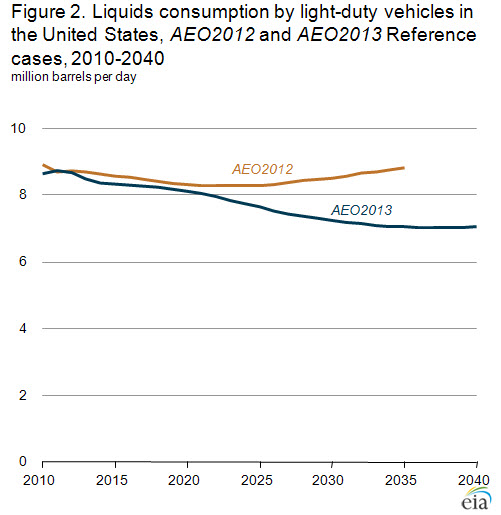
Here's why the distinction between modern oil and gas production dynamics matter. When oil prices crashed in the late 1990s due to the combination of weaker-than-expected global demand and growing production, producers cut investments and scaled back new projects. Because of the time lags inherent in big oil projects the impact of those decisions was felt in the middle of the last decade, just as demand growth in the developing world hit its stride. Other things were happening, as well, but there's a good case that $10 oil in the late '90s helped set up $145 oil in 2008 and contributed to the persistence of prices well over $100/bbl today. So is the current natural gas price slump setting up a spike back over $10/MMBTU within a few years? I think that's unlikely, though I do believe gas prices will recover somewhat.
My reasoning involves several key differences between the oil and gas markets. First, the gas lifecycle is much quicker, at least where pipeline infrastructure is already in place. More than half of today's US gas production comes from wells drilled in the last 5 years. Gas drilling has already slowed, and more rigs are being redeployed to pursue much more valuable oil plays, but drilling could switch back to gas just as quickly. Then there's the underlying resource, which would support even higher gas production than today's for many decades. Finally, we have the factor referenced by Chesapeake Energy's controversial CEO, Aubrey McClendon in an interview in this weekend's Wall St. Journal: new demand.
The only reason that additional demand from utilities, petrochemicals, transportation, and exports hasn't already sopped up the gas surplus and boosted prices is that all of these developments involve time lags of their own. It will take time to build the new ethylene crackers announced by Shell and Dow Chemical. Natural gas power plants have already ramped up output and seized market share from coal, but bigger shifts will require more gas turbines. Converting long-haul trucking to natural gas requires expensive modifications to trucks and new refueling infrastructure. Meanwhile the first liquefied natural gas export terminal just received the go-ahead from FERC. Yet while none of these things can happen overnight, and there isn't enough gas to push them all to their maximum potential in any case, they are all being propelled by the enormous driving force of natural gas at the oil equivalent of $12-20/bbl in a $100-per-barrel world. The developers of renewable energy technology must also figure out how to compete with that, if they're going to prosper without fiscally unsustainable subsidies.
As scaled-back drilling and new demand mop up the current gas glut, only one thing can happen to prices. The $64,000 question is how high they could rise and still keep the demand expansion going. A return to $10 natural gas would halt the shift from coal to gas and stop the penetration of gas in transportation in its tracks, but it would also unleash an even larger wave of new production. Mr. McClendon's latest guess for the medium-term price is between $3 and $5, and that sounds reasonable. Even at the latter the BTUs in gas would still cost just $29/bbl. We won't see oil at that price any time soon, so gas doesn't need to remain at $2 to create a world-beating energy advantage for the US. If natural gas can fulfill even a portion of the potential we see today, we will soon need to rethink most of our assumptions of energy scarcity embedded by four decades of recurring oil crises. That will be uncomfortable for some people.
Wednesday, April 25, 2012
A World Without Oil Price Speculators
The quality of media reporting on energy has improved significantly since I started this blog in 2004. However, one subject on which I think the state of energy reporting still leaves much to be desired concerns the role of market speculation in setting oil prices. It's a complex issue, and it has become highly politicized this year. Doing it justice requires more than just the obligatory video of the New York Mercantile Exchange (NYMEX) or interview with a "floor trader". I've encountered plenty of speculation on how much lower prices might be without the influence of speculators, but I've yet to see anyone go the next step to ask how prices might be set in the absence of any speculation at all. This is an important question, because the primary benefit of the futures markets in which speculators participate is transparent price discovery. I'd like to offer some perspective on that from my own experience trading oil and its products in the 1980s and early 1990s.
Imagine a world in which we're not really sure what the price of oil is on a given day. If that seems a bizarre notion, it's because the media have made the prices of oil futures contracts in New York and London nearly as ubiquitous as those of the Dow Jones and other stock market indices. That wasn't always the case. I can remember many occasions on which the price of an energy commodity was hard to determine, or was simply what a particular buyer or seller said it was that day.
When I started trading petroleum products in the mid-1980s, the NYMEX contract for West Texas Intermediate crude oil was relatively new, and the heating oil contract had only been around a few years longer. Their influence wasn't nearly as pervasive as now, beyond the localized Gulf Coast light crude and New York Harbor heating oil markets they were devised to support. The spot market transactions that I executed on behalf of Texaco's US west coast operations normally involved a fixed price arrived at through one-on-one negotiation, based on the buyer's and seller's perceptions of the market from other conversations, with input from limited and often suspect reporting on recent, similar transactions. When I shifted over to trading crude oil a few years later, most deals were still based on the system of "posted prices" that had existed for decades, in which producers and refiners issued periodic bulletins listing the current prices at which they solicited offers for each specific grade of oil in which they were interested. We bought or sold at small premia or discounts to the relevant posting--up to "P-plus" a dollar per barrel or so--with minor adjustments for actual quality received. Transactions for OPEC crude were similarly based on the producing country's official posted prices, which sometimes didn't change for months.
In other words, it's not so long ago that prices for many grades of oil or refined products were often either obscure or inflexible, and largely determined by an exclusive "club" of participants. Moreover, there were times when it simply wasn't possible to buy or sell a commodity when needed, because there were no active sellers or buyers. The management of my business unit had a strong bias against doing business with independent trading companies, the speculators of the day, but when we needed to buy gasoline or a cargo of crude oil because we were about to run out, and they were the only ones selling because our competitors were either in the same position as we were or didn't care to assist us in competing with them, then managers were usually willing to set aside those scruples. The nascent futures markets were an exception to that system, and as they grew in influence--complete with speculation--more and more business was transacted on the basis of an agreed premium or discount to a particular NYMEX contract. It wasn't a perfect system, but it had the advantage of greatly increased transparency and liquidity.
When I hear people who have never participated in the oil markets suggest that only those parties with "legitimate" needs to do so should be able to buy or sell futures and options, I wonder if they understand that this path could lead back to a market with inherently less transparency and less competition--one that might in some respects be easier to manipulate, with prices set more arbitrarily than the result they accuse speculators of producing.
In my view the old way of trading oil still has a few things to recommend it, even though it was roughly as prone to sudden spikes as the current system is. However, it's hard for me to imagine that the public and politicians would really prefer to revert to a situation in which oil prices were set between producers and refiners--by OPEC and oil companies, if you will--instead of the present one in which they are determined in a market with much broader participation. I don't even think oil companies would want to go back, because they're in a much better position to defend their profitability when they can state with confidence that they don't actually set prices.
I realize that I've set up a more extreme choice than most of those who are unhappy with the current situation would advocate; most of them appear to want to restrain speculation, rather than eliminating it entirely. Yet I wonder whether that nuance is any more realistic, or helpful. I believe that the distinction that ought to be drawn more sharply is not between speculation and the participation of "legitimate" players, but between trading for either hedging or profit and attempts to manipulate prices. It's one thing to bet on the price of oil going up or down, which after all requires someone else to take the opposite bet. It's quite another to try to rig the game in your favor.
Imagine a world in which we're not really sure what the price of oil is on a given day. If that seems a bizarre notion, it's because the media have made the prices of oil futures contracts in New York and London nearly as ubiquitous as those of the Dow Jones and other stock market indices. That wasn't always the case. I can remember many occasions on which the price of an energy commodity was hard to determine, or was simply what a particular buyer or seller said it was that day.
When I started trading petroleum products in the mid-1980s, the NYMEX contract for West Texas Intermediate crude oil was relatively new, and the heating oil contract had only been around a few years longer. Their influence wasn't nearly as pervasive as now, beyond the localized Gulf Coast light crude and New York Harbor heating oil markets they were devised to support. The spot market transactions that I executed on behalf of Texaco's US west coast operations normally involved a fixed price arrived at through one-on-one negotiation, based on the buyer's and seller's perceptions of the market from other conversations, with input from limited and often suspect reporting on recent, similar transactions. When I shifted over to trading crude oil a few years later, most deals were still based on the system of "posted prices" that had existed for decades, in which producers and refiners issued periodic bulletins listing the current prices at which they solicited offers for each specific grade of oil in which they were interested. We bought or sold at small premia or discounts to the relevant posting--up to "P-plus" a dollar per barrel or so--with minor adjustments for actual quality received. Transactions for OPEC crude were similarly based on the producing country's official posted prices, which sometimes didn't change for months.
In other words, it's not so long ago that prices for many grades of oil or refined products were often either obscure or inflexible, and largely determined by an exclusive "club" of participants. Moreover, there were times when it simply wasn't possible to buy or sell a commodity when needed, because there were no active sellers or buyers. The management of my business unit had a strong bias against doing business with independent trading companies, the speculators of the day, but when we needed to buy gasoline or a cargo of crude oil because we were about to run out, and they were the only ones selling because our competitors were either in the same position as we were or didn't care to assist us in competing with them, then managers were usually willing to set aside those scruples. The nascent futures markets were an exception to that system, and as they grew in influence--complete with speculation--more and more business was transacted on the basis of an agreed premium or discount to a particular NYMEX contract. It wasn't a perfect system, but it had the advantage of greatly increased transparency and liquidity.
When I hear people who have never participated in the oil markets suggest that only those parties with "legitimate" needs to do so should be able to buy or sell futures and options, I wonder if they understand that this path could lead back to a market with inherently less transparency and less competition--one that might in some respects be easier to manipulate, with prices set more arbitrarily than the result they accuse speculators of producing.
In my view the old way of trading oil still has a few things to recommend it, even though it was roughly as prone to sudden spikes as the current system is. However, it's hard for me to imagine that the public and politicians would really prefer to revert to a situation in which oil prices were set between producers and refiners--by OPEC and oil companies, if you will--instead of the present one in which they are determined in a market with much broader participation. I don't even think oil companies would want to go back, because they're in a much better position to defend their profitability when they can state with confidence that they don't actually set prices.
I realize that I've set up a more extreme choice than most of those who are unhappy with the current situation would advocate; most of them appear to want to restrain speculation, rather than eliminating it entirely. Yet I wonder whether that nuance is any more realistic, or helpful. I believe that the distinction that ought to be drawn more sharply is not between speculation and the participation of "legitimate" players, but between trading for either hedging or profit and attempts to manipulate prices. It's one thing to bet on the price of oil going up or down, which after all requires someone else to take the opposite bet. It's quite another to try to rig the game in your favor.
Tuesday, April 17, 2012
How Green Is My Electric Vehicle?
One of the biggest challenges in assessing the environmental benefits of electric vehicles is that electricity is generated in so many different ways, with differing costs and consequences, and that patterns of generation vary by region, season, and time of day. As a result, categorical claims that EVs are always greener than the hybrids against which they compete most directly, or even compared to efficient non-hybrid compact gasoline or diesel-powered cars, must be suspect. The Union of Concerned Scientists (UCS) has just issued a report that takes some of the mystery out of such comparisons, including a helpful map showing likely greenhouse gas emissions associated with EV use expressed in terms of equivalent miles per gallon from a gasoline vehicle. The takeaway is that as of now, the emissions advantage of purchasing an EV depends heavily on where you live, with equivalent emissions from average grid power in many parts of the country about on a par with those from a small car like the Chevrolet Cruze, and not even as good as from a Prius-type non-plug-in hybrid.
This apparent paradox becomes clearer when you examine the cities map that the New York Times distilled from the report, reflecting the local basis of electricity generation. An EV operated in L.A. or San Francisco would unambiguously beat a Prius on emissions, while an EV in my neighborhood in Northern Virginia would have only a slight edge, and one in Denver would yield emissions comparable to an ordinary car getting 33 mpg, unless the owner was scrupulous about recharging only when greener power was available. That's because despite the declining share of coal-fired power in our national generation mix, there are still many regions and locales where coal dominates the grid, and the GHG emissions from coal-fired generation are considerably higher than from natural gas or low-emission nuclear and renewables.
Any report such as this must incorporate a number of assumptions, and from my fairly quick perusal of the details they seem generally well-identified here. The UCS's emission-equivalent miles per gallon calculation is based on a Nissan Leaf getting 3 miles per kilowatt-hour (kWh.) Grid emissions are calculated using a model of average hourly emissions over the course of the year. It didn't appear that these hourly-averaged figures were weighted for seasonal variations in driving patterns, but that's probably more nuance than is necessary at this level of scrutiny.
The report also includes information about recharging costs in different locations under different rate plans. Prospective EV buyers would benefit from taking the time to understand what these issues mean in their specific locations before investing in one. From my perspective, the report should also provide serious food for thought for policy makers concerning the wisdom of a single federal tax credit for EV purchasers in the US. As hard as that policy is to justify in the best of locations, based on the equivalent cost per ton of CO2 avoided, it looks positively senseless in locations where coal is still king. And while the report makes the point that the generation mix in many regions will become cleaner over time as utilities respond to renewable portfolio standards and other policies, buying an EV in a high-emissions region and counting on that factor to improve the car's environmental benefits during its lifetime seems like a risky bet, particularly in economic terms.
The biggest caveat I'd offer about the report concerns its emphasis on comparing EVs to non-hybrid compact cars, both on costs and emissions. That just doesn't seem realistic, given the array of choices and types of consumers in the market. While the number of consumers willing to consider an electric vehicle is increasing, the "take rate"--the number who actually convert their interest into a purchase decision, remains minuscule, resulting in sales of just 0.3% of all US cars sold in March. Meanwhile hybrids have benefited from rising gas prices to hit 3.4% of sales. It's also worth recalling that the fuel, emissions and dollar savings from improved fuel economy decline with each additional increment. Hybrids already capture the most valuable savings over conventional cars, while the incremental fuel savings from stepping up from a hybrid to an EV are roughly comparable to what hybrids achieve, but require additional battery capacity and electricity, neither of which is free. That makes hybrids the technology for EVs to beat. As helpful as the information provided in the UCS report should be for consumers, the ultimate decision to buy an EV seems driven more by values than value, at least until EV costs fall significantly.

This apparent paradox becomes clearer when you examine the cities map that the New York Times distilled from the report, reflecting the local basis of electricity generation. An EV operated in L.A. or San Francisco would unambiguously beat a Prius on emissions, while an EV in my neighborhood in Northern Virginia would have only a slight edge, and one in Denver would yield emissions comparable to an ordinary car getting 33 mpg, unless the owner was scrupulous about recharging only when greener power was available. That's because despite the declining share of coal-fired power in our national generation mix, there are still many regions and locales where coal dominates the grid, and the GHG emissions from coal-fired generation are considerably higher than from natural gas or low-emission nuclear and renewables.
Any report such as this must incorporate a number of assumptions, and from my fairly quick perusal of the details they seem generally well-identified here. The UCS's emission-equivalent miles per gallon calculation is based on a Nissan Leaf getting 3 miles per kilowatt-hour (kWh.) Grid emissions are calculated using a model of average hourly emissions over the course of the year. It didn't appear that these hourly-averaged figures were weighted for seasonal variations in driving patterns, but that's probably more nuance than is necessary at this level of scrutiny.
The report also includes information about recharging costs in different locations under different rate plans. Prospective EV buyers would benefit from taking the time to understand what these issues mean in their specific locations before investing in one. From my perspective, the report should also provide serious food for thought for policy makers concerning the wisdom of a single federal tax credit for EV purchasers in the US. As hard as that policy is to justify in the best of locations, based on the equivalent cost per ton of CO2 avoided, it looks positively senseless in locations where coal is still king. And while the report makes the point that the generation mix in many regions will become cleaner over time as utilities respond to renewable portfolio standards and other policies, buying an EV in a high-emissions region and counting on that factor to improve the car's environmental benefits during its lifetime seems like a risky bet, particularly in economic terms.
The biggest caveat I'd offer about the report concerns its emphasis on comparing EVs to non-hybrid compact cars, both on costs and emissions. That just doesn't seem realistic, given the array of choices and types of consumers in the market. While the number of consumers willing to consider an electric vehicle is increasing, the "take rate"--the number who actually convert their interest into a purchase decision, remains minuscule, resulting in sales of just 0.3% of all US cars sold in March. Meanwhile hybrids have benefited from rising gas prices to hit 3.4% of sales. It's also worth recalling that the fuel, emissions and dollar savings from improved fuel economy decline with each additional increment. Hybrids already capture the most valuable savings over conventional cars, while the incremental fuel savings from stepping up from a hybrid to an EV are roughly comparable to what hybrids achieve, but require additional battery capacity and electricity, neither of which is free. That makes hybrids the technology for EVs to beat. As helpful as the information provided in the UCS report should be for consumers, the ultimate decision to buy an EV seems driven more by values than value, at least until EV costs fall significantly.
Wednesday, April 11, 2012
Could Solar Power Boost Saudi Oil Exports?
How often have we heard that installing renewable energy sources like wind and solar power will improve US energy security and reduce oil imports? There are other reasons for promoting these technologies, but this one has little substance, because we generate less than 1% of our electricity from oil. Ironically, this logic looks much more relevant to the part of the world with the largest oil reserves and that accounts for the lion's share of global oil exports, the Middle East. This week's Economist reports that Saudi Arabia generates 65% of its power from oil, and the impact on its oil exports could grow dramatically as the country's population and economy expand. Other Gulf producers have similar profiles. The Saudi government's strategy to increase its use of nuclear and renewable energy could pay big dividends in preserving oil for exports, though the volumes freed up by such means wouldn't be cheap.
Saudi Arabia has set a goal of deriving 10% of its electricity from renewable sources by 2020. Solar power looks like the leading option, and a Saudi company recently announced a deal to build a plant to produce polysilicon, the raw material for many of today's photovoltaic (PV)cells. (Its output would likely be exported for some time, until the downstream value chain developed.) Saudi Arabia has tremendous solar potential, with much of the country receiving more than 6 hours per day of peak sunlight, on average. Based on recent electricity demand of around 200 billion kilowatt-hours (kWh) per year, it would take roughly 9,000 MW of PV capacity to achieve their goal. How much oil would that save, and at what effective cost?
With average Saudi power generation operating at 31% efficiency, according to a report by ABB, saving the oil used to generate 20 billion kWh would free up roughly 100,000 bbl/day for other uses, including exports. That doesn't sound like a lot for a country that's currently producing 10 million bbl/day, but it's the equivalent of a medium-to-large offshore oil platform. However, the more interesting aspect of this strategy is its cost, both in aggregate terms and in the effective cost of the oil it would release.
A recent report from Lawrence Berkeley National Laboratory estimated the installed cost of utility-scale solar power in the US last year at around $4 per Watt. Assuming current costs are 10% lower--module costs have fallen by more, but balance-of-system costs typically fall more slowly--that would result in a required investment of $32 billion at today's prices. That's about what ExxonMobil spent on its entire global oil & gas development program last year, which will presumably yield a lot more than 100,000 bbl/day of future production. Moreover, using NREL's simplified model for calculating levelized electricity costs from different technologies, the output of PV in Saudi Arabia at $3.60/W installed would cost around $0.13/kWh without subsidies. Using that same 31% efficiency factor for oil-fired power generation yields an effective cost for each barrel saved by solar power of $70. That looks cheap compared to current oil prices, but it's almost an order of magnitude higher than what many assume it costs the Kingdom to produce a barrel of oil today. Even if we assumed installed PV costs fell to $2/W before they're done, that's still around $40/bbl. If that looks attractive to them, what does it say about their other opportunities?
One way to address that without getting into thorny questions about peak oil is to consider the alternative of using gas-fired generation to displace oil from Saudi Arabia's power sector. The Kingdom has the world's fifth-largest natural gas reserves. At 264 trillion cubic feet they appear more than ample for the purpose, if developed. Even if gas from new fields cost $5 per million BTUs, the effective cost of the oil freed up by switching to efficient gas-fired combined cycle power generation would be about $25/bbl. And with recent trends showing the energy intensity of the Saudi economy getting worse, not better, the scale of the efficiency opportunity there indicates that the cheapest displaced barrels might be from investments in improving energy efficiency, rather than new generation of any kind.
I'm not suggesting that solar power has no place in Saudi Arabia's energy mix. If the technology makes sense anywhere, it is in sunny countries like this that rely on expensive fuels for most of their current generation. Yet as clever and appealing as the idea of using abundant solar energy to free up Middle East oil for export might sound, from both an environmental and oil-consumer perspective, the numbers suggest that it's probably not even their second- or third-best option for that purpose.
Saudi Arabia has set a goal of deriving 10% of its electricity from renewable sources by 2020. Solar power looks like the leading option, and a Saudi company recently announced a deal to build a plant to produce polysilicon, the raw material for many of today's photovoltaic (PV)cells. (Its output would likely be exported for some time, until the downstream value chain developed.) Saudi Arabia has tremendous solar potential, with much of the country receiving more than 6 hours per day of peak sunlight, on average. Based on recent electricity demand of around 200 billion kilowatt-hours (kWh) per year, it would take roughly 9,000 MW of PV capacity to achieve their goal. How much oil would that save, and at what effective cost?
With average Saudi power generation operating at 31% efficiency, according to a report by ABB, saving the oil used to generate 20 billion kWh would free up roughly 100,000 bbl/day for other uses, including exports. That doesn't sound like a lot for a country that's currently producing 10 million bbl/day, but it's the equivalent of a medium-to-large offshore oil platform. However, the more interesting aspect of this strategy is its cost, both in aggregate terms and in the effective cost of the oil it would release.
A recent report from Lawrence Berkeley National Laboratory estimated the installed cost of utility-scale solar power in the US last year at around $4 per Watt. Assuming current costs are 10% lower--module costs have fallen by more, but balance-of-system costs typically fall more slowly--that would result in a required investment of $32 billion at today's prices. That's about what ExxonMobil spent on its entire global oil & gas development program last year, which will presumably yield a lot more than 100,000 bbl/day of future production. Moreover, using NREL's simplified model for calculating levelized electricity costs from different technologies, the output of PV in Saudi Arabia at $3.60/W installed would cost around $0.13/kWh without subsidies. Using that same 31% efficiency factor for oil-fired power generation yields an effective cost for each barrel saved by solar power of $70. That looks cheap compared to current oil prices, but it's almost an order of magnitude higher than what many assume it costs the Kingdom to produce a barrel of oil today. Even if we assumed installed PV costs fell to $2/W before they're done, that's still around $40/bbl. If that looks attractive to them, what does it say about their other opportunities?
One way to address that without getting into thorny questions about peak oil is to consider the alternative of using gas-fired generation to displace oil from Saudi Arabia's power sector. The Kingdom has the world's fifth-largest natural gas reserves. At 264 trillion cubic feet they appear more than ample for the purpose, if developed. Even if gas from new fields cost $5 per million BTUs, the effective cost of the oil freed up by switching to efficient gas-fired combined cycle power generation would be about $25/bbl. And with recent trends showing the energy intensity of the Saudi economy getting worse, not better, the scale of the efficiency opportunity there indicates that the cheapest displaced barrels might be from investments in improving energy efficiency, rather than new generation of any kind.
I'm not suggesting that solar power has no place in Saudi Arabia's energy mix. If the technology makes sense anywhere, it is in sunny countries like this that rely on expensive fuels for most of their current generation. Yet as clever and appealing as the idea of using abundant solar energy to free up Middle East oil for export might sound, from both an environmental and oil-consumer perspective, the numbers suggest that it's probably not even their second- or third-best option for that purpose.
Friday, April 06, 2012
Buying Your Own Refinery
Has the high cost of fuel got you down? Why not buy your own oil refinery? That's apparently what Delta Air Lines is considering. With jet fuel purchases constituting one of the largest operating costs for carriers like Delta, and with several refineries in the Northeast US facing permanent closure due to poor profitability, it's not hard to see why this idea would seem attractive, at least superficially. However, there are a host of reasons why most of the press I've seen on this story is negative, including today's Heard on the Street column in the Wall St. Journal, entitled, "Delta Chases Fuel's Gold." The fundamental problem is the same one that has made me skeptical about the benefits of airlines investing in the production of renewable aviation fuel: Any advantageous pricing they may choose to provide to their airline division must come at the expense of lost opportunities for the fuels business, because the value of that fuel is set by the market.
How a company should reflect such opportunity costs in its inter-departmental transfer pricing is an age-old problem. I dealt with this routinely when I traded refined products for Texaco's west coast refining and marketing business in the 1980s. The marketing department always wanted to receive the output of the refineries at a lower price than we were charging them, so that they could capture market share and justify investments in new and remodeled gas stations. But making them look good at the cost of the refineries just made it harder to justify the investments needed to keep the refineries operating efficiently and in compliance with current and future regulations. Delta might buy ConocoPhillips' Pennsylvania refinery at a low price today, but they could be forced to invest at least as much within a few years to meet new gasoline sulfur regulations or other changes. It doesn't trivialize the situation to put it into the category of no free lunches.
Then there's the question of reorienting a refinery to make a lot more jet fuel that it has done historically, as one article suggested Delta was considering. Modern refineries are fairly flexible, and it would be possible to do that to some degree, though within limits that would require significant investments to exceed, making the proposition look much less attractive. Moreover, refineries optimize their output every day to make the slate of products that yields the highest profit, as crude and product prices fluctuate. Steering a less flexible course would almost certainly make the facility less, not more profitable, and it's only on the market because it wasn't sufficiently profitable as it was.
The only scenario in which I could see this idea actually working to Delta's benefit is if the refinery closures now being planned tightened the supply of jet fuel into the New York market so significantly that Delta was able to effectively corner that market, forcing other airlines to pay it a significant premium, either in cash or in jet fuel supply in other locations, while artificially keeping costs for its own flight operations low and allowing it to expand its share of the important NY air market. But New York isn't some isolated inland location, and they'd always be competing with jet fuel cargoes brought in by vessel, or with fuel shipped from Gulf Coast refineries via the Colonial Pipeline, which is expanding to meet the new demand its faces in light of the pending refinery closures. They might eke out a few extra cents, but would that be enough to justify taking on the enormous capital and operating costs--not to mention the substantial operating risks--of owning a refinery? If Delta has discovered some enticing angle I've missed, I'd love to know what it is.
How a company should reflect such opportunity costs in its inter-departmental transfer pricing is an age-old problem. I dealt with this routinely when I traded refined products for Texaco's west coast refining and marketing business in the 1980s. The marketing department always wanted to receive the output of the refineries at a lower price than we were charging them, so that they could capture market share and justify investments in new and remodeled gas stations. But making them look good at the cost of the refineries just made it harder to justify the investments needed to keep the refineries operating efficiently and in compliance with current and future regulations. Delta might buy ConocoPhillips' Pennsylvania refinery at a low price today, but they could be forced to invest at least as much within a few years to meet new gasoline sulfur regulations or other changes. It doesn't trivialize the situation to put it into the category of no free lunches.
Then there's the question of reorienting a refinery to make a lot more jet fuel that it has done historically, as one article suggested Delta was considering. Modern refineries are fairly flexible, and it would be possible to do that to some degree, though within limits that would require significant investments to exceed, making the proposition look much less attractive. Moreover, refineries optimize their output every day to make the slate of products that yields the highest profit, as crude and product prices fluctuate. Steering a less flexible course would almost certainly make the facility less, not more profitable, and it's only on the market because it wasn't sufficiently profitable as it was.
The only scenario in which I could see this idea actually working to Delta's benefit is if the refinery closures now being planned tightened the supply of jet fuel into the New York market so significantly that Delta was able to effectively corner that market, forcing other airlines to pay it a significant premium, either in cash or in jet fuel supply in other locations, while artificially keeping costs for its own flight operations low and allowing it to expand its share of the important NY air market. But New York isn't some isolated inland location, and they'd always be competing with jet fuel cargoes brought in by vessel, or with fuel shipped from Gulf Coast refineries via the Colonial Pipeline, which is expanding to meet the new demand its faces in light of the pending refinery closures. They might eke out a few extra cents, but would that be enough to justify taking on the enormous capital and operating costs--not to mention the substantial operating risks--of owning a refinery? If Delta has discovered some enticing angle I've missed, I'd love to know what it is.
Subscribe to:
Posts (Atom)